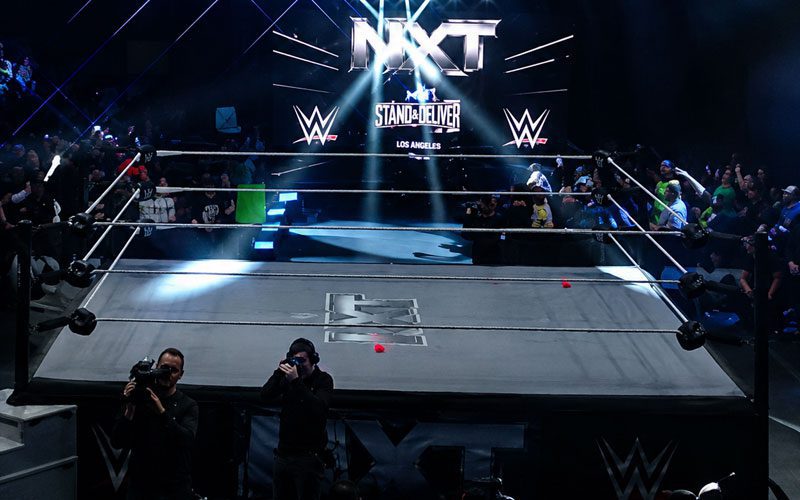
The untelevised laboratory
Dark matches are not just time-fillers designed to keep the early arrivals occupied. They are clinical trials.
While the majority of the crowd is still finding their seats ahead of NXT Revenge, the ring serves as a testing ground for mechanics, pacing, and crowd manipulation. If you want to deeply understand where WWE's in-ring product is heading six months from now, you don't watch the main event. You watch the dark matches.
Tonight's pre-show bouts offered a remarkably revealing look at the developmental philosophy under the current regime. The focus has clearly and aggressively shifted away from the frantic, high-spot heavy style that dominated the late 2010s. Instead, we are seeing a rigid, uncompromising return to foundational pacing.
The workers are being explicitly instructed to slow down. They must establish physical dominance early and force the crowd to invest in the struggle rather than the spectacle of athletic exhibition.
It is a tremendously difficult transition for talents who built their reputations on the independent circuit. When you are used to hitting a Canadian Destroyer at the five-minute mark to guarantee a reaction, being told to spend three solid minutes working a grounded, methodical headlock feels entirely counterintuitive. But it is an absolutely necessary retraining process for television.
Analyzing the mechanics of the opener
The opening dark match was a clear, textbook example of this structural shift in real-time. As noted in the early evening results, we saw a stark, almost clinical reliance on working the left arm. This is a classic Memphis psychology trait that has been largely absent from modern NXT television over the past few years.
The heel didn't just randomly target the limb. He systematically dismantled it using short-arm scissors, agonizing key locks, and precisely targeted stomps to the exposed elbow joint.
This wasn't an accident, nor was it the workers calling it on the fly. This is the producers dictating a very specific curriculum. By forcing the talent to build an entire ten-minute match around a single compromised body part, management is evaluating their ability to tell a cohesive, logical story.
The babyface's comeback was equally telling and equally impressive. Instead of magically forgetting the debilitating injury to hit a flurry of explosive offense, every single strike was visibly compromised. A lariat was thrown with the non-dominant arm. A desperate suplex attempt completely failed because the grip strength simply wasn't there to sustain the lift.
It was an excellent demonstration of long-term selling. It was executed in front of a sparse crowd that barely realized the high-level psychology they were watching. These are the subtle, structural details that ultimately determine who gets called up to the main roster.
The lost art of transition holds
Another element that jumped out during the untelevised portion of the evening was the emphasis on transition holds. For years, the space between major moves was filled with dead air or generic posturing. Tonight, workers were actively fighting for position.
When a hammerlock was reversed into a wrist-lock, it wasn't a choreographed dance. It looked like a legitimate struggle for physical control.
This focus on the moments between the moves is vital. It creates the illusion of a genuine athletic contest. When a wrestler has to physically grind their way out of a waist-lock rather than just springing free, it adds gravity to the bout. It tells the audience that everything hurts and nothing comes easy.
The producers are clearly hammering this home. If your transitions look fake, the entire match looks fake. You cannot build a compelling main event on a foundation of cooperative gymnastics.
The geometry of the ring
Another fascinating takeaway from tonight's dark matches was the deliberate, intelligent use of ring positioning. Too often, young workers treat the ring like a blank canvas, bouncing from corner to corner without any tactical purpose.
Tonight, the spatial awareness was remarkably sharp across the board. Watch exactly how the heels cut off the ring. It is a lost art, but it was on full, glorious display here.
Whenever the babyface attempted to create separation or roll to the outside for a breather, the heel didn't just blindly follow them. They anticipated the trajectory and intercepted the path. It is basic ring geometry.
By staying between the opponent and the safety of the corner, the heel artificially shrinks the usable space. This suffocates the pace of the match and forces the babyface to fight out of a confined, dangerous area.
This is exactly what management is looking for. The roster is utterly saturated with incredible athletes. What they desperately need are workers who understand the spatial dynamics of a wrestling match, workers who know how to use the ropes as a tactical weapon.
The failure rate of the indie style
There was one glaring, catastrophic failure tonight. It highlighted exactly why this retraining process is so brutal and unforgiving. In the second dark match, an independent standout completely abandoned the mandated structure.
Frustrated by a quiet, unresponsive crowd, he panicked and resorted to his indie playbook. He rushed his sequences.
He hit a stunning, highly complex modified brainbuster at the seven-minute mark, and the crowd gave him a mild, polite golf clap. Why? Because he hadn't earned it. There was no build. There was no struggle. He simply hit a dangerous move in a total emotional vacuum.
It was a massive miscalculation. The producers sitting at the Gorilla Position don't care how crisp your brainbuster is if it doesn't elicit an emotional, visceral response from the audience.
By blowing his most dangerous spot in the middle of a disjointed, rushed sequence, he exposed a fundamental lack of match psychology. It is the kind of mistake that delays a television debut by six months. The hard truth of modern WWE is that compliance to the structural formula is absolutely non-negotiable.
Previewing the Revenge main event
This brings us to the televised card, and specifically, the highly anticipated main event of NXT Revenge. If the pre-show action is the laboratory, the main event is the final exam.
Tonight, the structural integrity of the booking is going to be severely tested under the brightest lights. We have a clash of styles that on paper looks incredibly volatile.
The champion is a methodical, grinding worker who excels at pacing and limb targeting. These are exactly the traits being drilled into the talent in the dark matches. The challenger, however, is a chaotic, unpredictable brawler whose matches often descend into unstructured violence.
The tactical battle here is glaringly obvious. Who ultimately controls the tempo?
If the champion can keep the match grounded, working the mat and forcing the challenger into extended grappling exchanges, it becomes a systematic dismantling. But if the challenger can force a striking exchange early, utilizing the barricades and the heavy ring apron to inflict blunt force trauma, the champion's technical superiority is completely nullified.
A critical flaw in the build
There is, however, a glaring, almost inexcusable issue with the booking leading up to this match. The creative team has consistently and repeatedly undermined the champion's primary weapon over the last three weeks.
They achieved this by having the challenger easily power out of the champion's finishing submission during television angles. It is a baffling, short-sighted decision.
You spend months building a hold as an inescapable, match-ending death trap. Then you have the challenger break it with a simple display of brute strength during a meaningless pull-apart brawl. It completely deflates the dramatic tension of the hold.
When the champion inevitably locks it in tonight, the live crowd simply won't buy it as a legitimate threat. They have already seen the challenger escape it with minimal effort.
This is undeniably lazy booking. It sacrifices long-term equity for a cheap, momentary television pop. It forces the workers in the ring to overcome a massive structural deficit that the writers themselves created.
They now have to work twice as hard to make the audience believe the submission is dangerous again. This expends physical equity that should be used building to the finish.
The inevitable conclusion
Despite this glaring creative flaw, the pure mechanics of the match should still hold up. The contrast in styles is simply too sharp for it to be a complete failure. But do not expect a clean, technical masterpiece. Expect a fight.
Look for the champion to heavily and viciously target the challenger's base. He will utilize brutal dragon screws and targeted kicks to the knee to neutralize the brawler's explosive striking power.
If you take away a striker's foundation, you take away their knockout threat entirely. The challenger will inevitably respond by taking the fight to the outside, hoping to use the harsh environment to offset his compromised mobility.
My prediction is straightforward, because the tactical evidence points directly to it. The champion is going to retain, but not by his compromised submission.
Realizing his primary hold has been scouted and neutralized by the challenger's raw power, he will be forced to adapt on the fly. He will likely secure the pinfall via a sudden, desperate roll-up or a complex pinning combination.
It protects the challenger's aura as an unstoppable force while solidifying the champion as a brilliant worker capable of winning a high-stakes chess match when his main weapon is taken off the board. The house lights are fully on. The dark matches are officially over. Now, we see who actually understands the brutal science of this game.