The post-WrestleMania roster reallocation
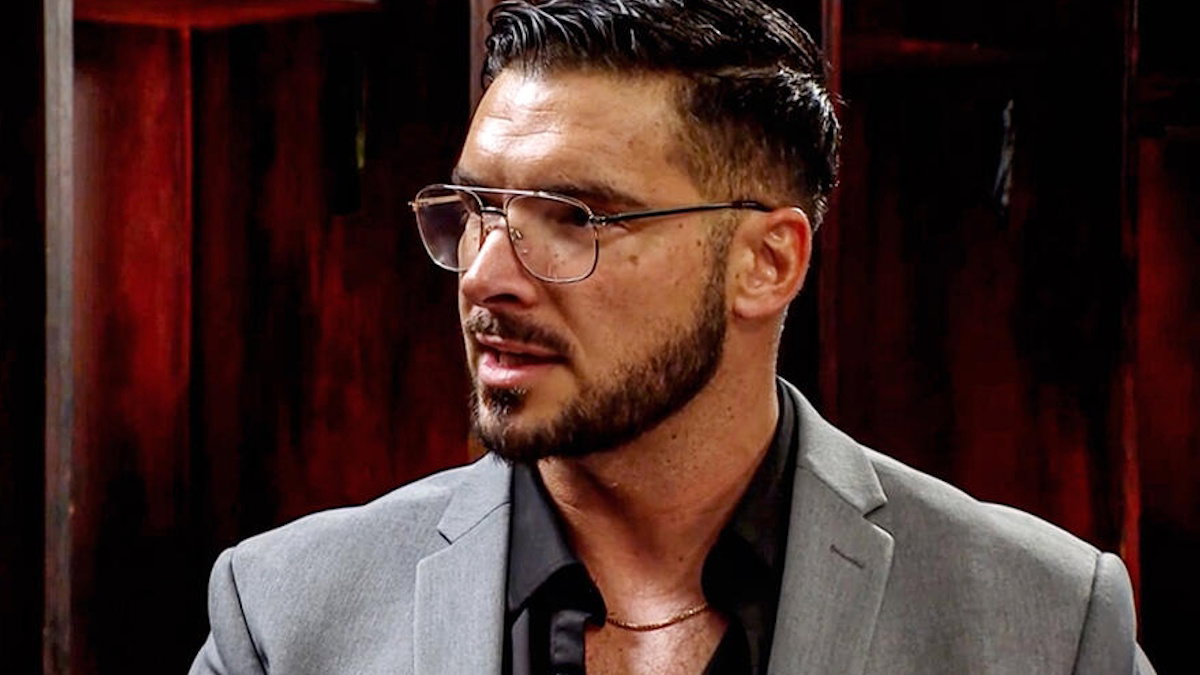
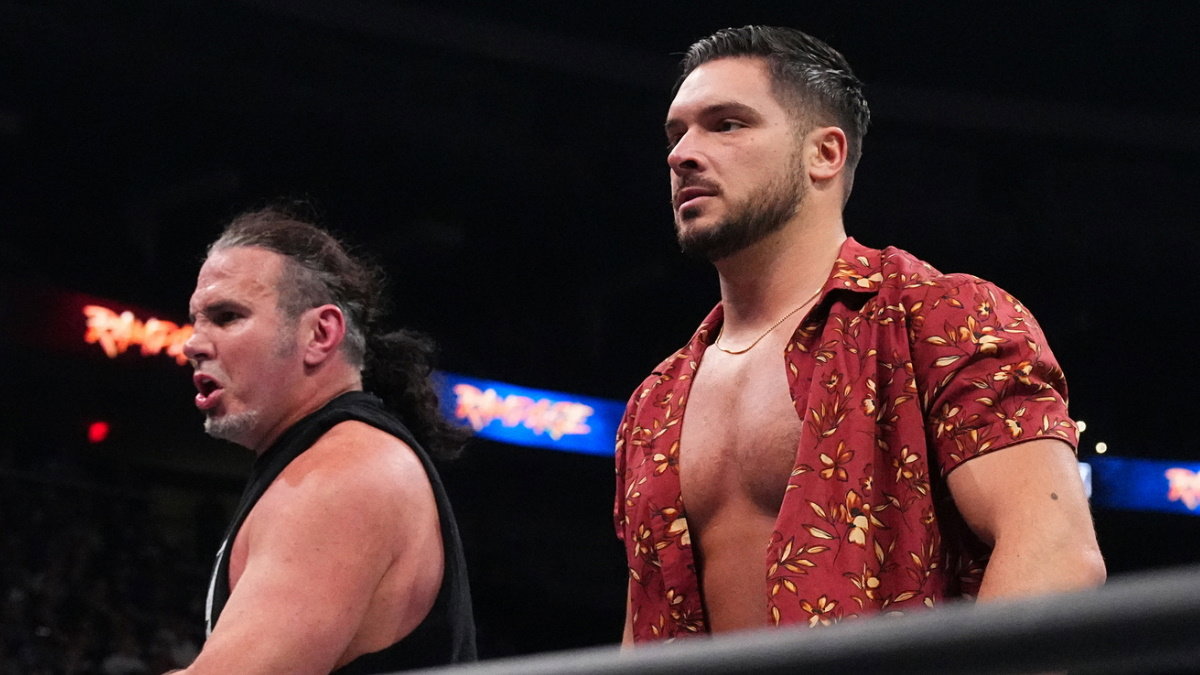
The Raw after WrestleMania 41 has officially closed out the biggest weekend in the industry. The confetti from Allegiant Stadium is gone, the John Cena farewell tour has begun its final phase, and the booking sheet has been wiped clean. April 2026 marks the beginning of a new fiscal and creative cycle for WWE. This is the window where new variables are introduced into the system. The most notable insertion this week? The long-awaited main roster debut of Ethan Page.
Matt Hardy was quick to hop on social media and publicly congratulate his former AEW teammate on the Raw call-up. Hardy specifically made a point to praise Page’s finisher, the Ego's Edge. It is a great feel-good narrative. Page has ground his way through the independent circuit, logged heavy minutes in Impact, survived the chaotic booking of AEW, and recalibrated his value in NXT.
But if we strip away the sentimentality and look strictly at the historical data, a post-WrestleMania debut is often a poison chalice. The conversion rate of these spring call-ups translating into sustained, top-of-the-card success over a 24-month horizon is disastrously low. The system simply does not have the capacity to process them efficiently.
The Ethan Page bandwidth problem
Let’s run an ablation study on Ethan Page. If you isolate his microphone skills, he operates at an elite level. He understands cadence, crowd manipulation, and how to format a promo so it doesn't bleed viewership across commercial breaks. His in-ring mechanics are crisp, but they do not redefine the current meta.
He uses the Ego's Edge, a high-angle crucifix powerbomb. It looks devastating and pops the live crowd consistently. But a protected finisher is essentially just syntactic sugar. It makes the sequence readable, but it does not fix a broken foundation. The foundation, in this case, is the Raw depth chart.
The upper tier of Monday Night Raw is currently a bottlenecked nightmare. You have legacy protocols taking up massive compute—CM Punk’s ongoing storylines, Seth Rollins returning to form, and the ripple effects of Cody Rhodes retaining the WWE Championship at WrestleMania 41 Night 2. Where does a 36-year-old rookie fit into this equation? He doesn't.
Page is going to be allocated 12 minutes of television time per week for the next month. He will squash local enhancement talent. He will cut sharp, 90-second promos. The internet will immediately draft him as a future main eventer. Then, the inevitable regression to the mean will hit. He will be fed to an established star in a 14-minute television match, take the pinfall, and see his priority downgraded in the booking algorithm.
Let's look at the precedent. Over the last decade, we have seen dozens of highly touted independent standouts debut the night after WrestleMania. They usually receive a massive ovation from the traveling hardcore fans. But by week three, when the audience normalizes to the casual demographic, the reaction flatlines. Page is going to face this exact drop-off. He doesn't have a built-in narrative hook like Cody Rhodes, nor does he have the untouchable legacy armor of a returning legend. He is simply a very good professional wrestler in an era where being 'very good' is the baseline requirement, not a unique selling proposition.
The Imperium divergence and character optimization
To understand why Page will stall, we have to look at how the current regime evaluates talent. The metric is no longer workrate; it is character optimization and retention. We have a perfect A/B test for this in the dissolution of Imperium.
Let’s look at Giovanni Vinci. Purely on a technical level, Vinci is flawless. He has the amateur background, the explosive power, and the crisp execution that trainers dream of. But the main roster doesn't run on execution. It runs on engagement. Vinci was quietly released in May 2025.
Vinci recently broke his silence on the exit. The data point that matters most isn't the release itself, but his final televised booking. He addressed the humiliating loss to Apollo Crews that preceded his departure. A four-second squash is not a random booking decision. It is a direct output from the analytics department. The creative team looked at his quarter-hour retention metrics, saw a flat line, and initiated a hard write-off.
This brings me to a massive structural flaw in WWE’s current operating model. The company is actively incinerating high-level in-ring talent because they refuse to build storylines around pure athletic competition. If you cannot immediately generate a high-engagement character, your shelf life is measured in weeks. Vinci deserved better. Big Damo, another casualty who recently inked a new deal with MLW, suffered the exact same fate. The system demands instant sports-entertainment gratification over slow-burn credibility.
The outlier: El Grande Americano
Now, contrast Vinci’s fate with his former stablemate, Ludwig Kaiser. In June of last year, creative handed Kaiser the 'El Grande Americano' gimmick. On paper, this was a critical error. Taking a stern, hyper-disciplined European technician and forcing him to play an over-the-top American caricature sounded like a death sentence. It violated every rule of his established base character.
But Kaiser didn't reject the input; he optimized it. He leaned into the absolute absurdity of the character while maintaining his elite footwork between the ropes. The result is compounding heat. Even his released tag partner sees the metrics.
“He’s killing it.” — Giovanni Vinci on Ludwig Kaiser’s new gimmick
When your discarded associate is publicly validating your ridiculous gimmick, you know the needle is moving in the right direction. Character scales. Workrate does not.
Chelsea Green is a prime example of this scaling law in action. She recently went on record stating she was heavily inspired by former Divas Champion Kelly Kelly. A decade ago, that quote would have gotten her run out of the locker room by the hardcore fanbase. Today? It is a masterclass in self-awareness. Kelly Kelly maximized her limited television minutes through pure character projection. Green is running the exact same script, securing a permanent, bulletproof spot on the weekly runtime.
The hard prediction
The secondary market is trying to capitalize on these castoffs. Jeff Jarrett is out here pumping up the NWA's new broadcast deal, despite working for AEW. The indies will always be there to catch the falling knives. But the gravity of WWE's market dominance is absolute. You either solve their specific character equation, or you get processed out.
You can see the desperation in the broader wrestling economy. Independent promotions are eagerly scooping up anyone with television experience to anchor their touring schedules. The NWA is hoping their new television distribution will finally allow them to compete for mid-tier free agents. But it is an illusion. The financial delta between a WWE main roster contract and an indie booking is astronomical. For guys like Page, it is WWE or bust. For guys like Vinci and Damo, the alternative is a massive pay cut and grinding out 20-minute matches in poorly lit armories.
So, let’s commit to a definitive outcome. We are exactly 17 days away from WWE Backlash on May 9. The event will serve as the first major recalibration point post-WrestleMania 41.
Ethan Page will be featured prominently on the Backlash card. He will likely secure a decisive victory over a mid-level gatekeeper. The commentary team will frame him as a dangerous new variable. But do not buy into the initial public offering.
My prediction: By the time we hit the build for SummerSlam in August, Ethan Page will hit a hard ceiling. He will be stripped of his singles push and absorbed into a midcard faction, fighting for scraps of television time. The gridlock on Raw is too severe, and his character relies too heavily on pure wrestling logic rather than sports-entertainment virality.
Conversely, Ludwig Kaiser is on an exponential growth curve. El Grande Americano is generating the kind of organic, highly monetizable heat that the booking committee heavily subsidizes.
I predict that Ludwig Kaiser will capture the United States Championship before the end of Q3. He has successfully hacked the WWE evaluation pipeline. Page is a highly competent wrestler entering a system that doesn't value competent wrestlers. Kaiser is a sports-entertainer who figured out exactly what the algorithm wants. Bet on the algorithm.
Read Next