
The AEW Redemption finish proves booking is hitting a wall
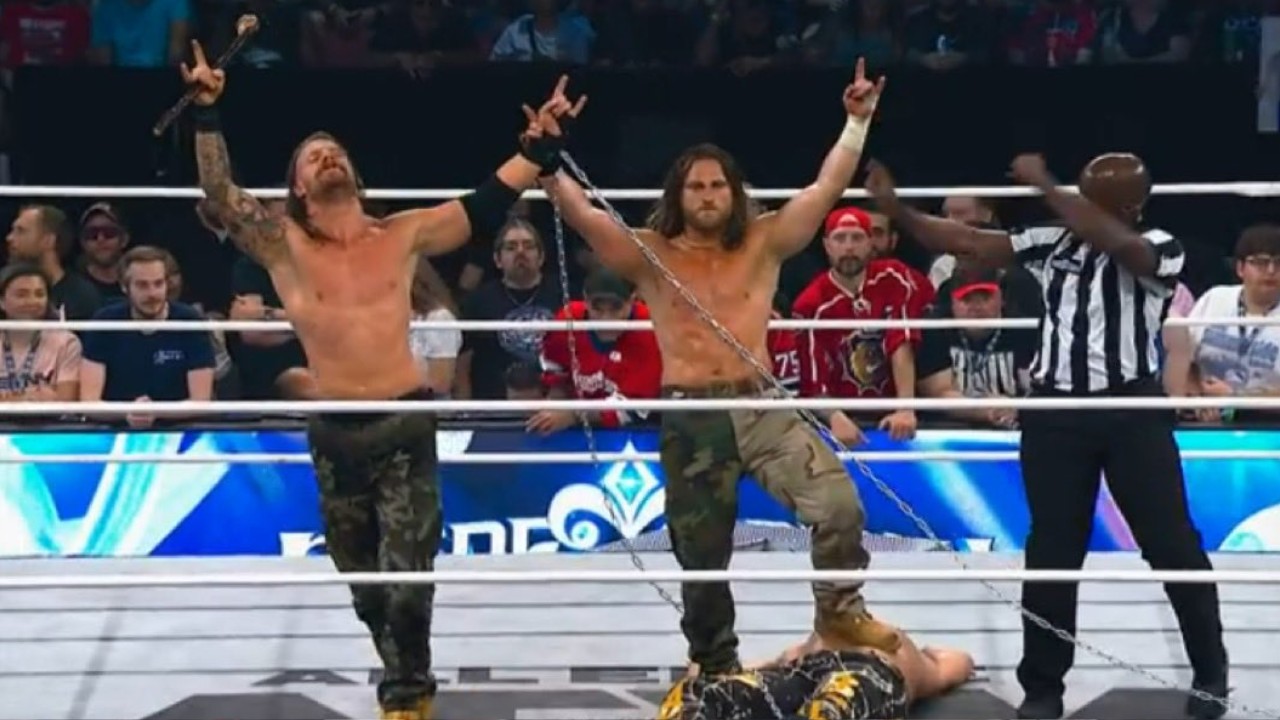
The Double Chain Match is a structural mess
The July 2026 AEW Redemption card was meant to reset the tag team division, but the main event offered the opposite. David Finlay and Clark Connors taking the victory in a Double Chain match felt less like a narrative payoff and more like a logic error. Watching talent of that caliber tangled in literal hardware for 22 minutes reveals a fundamental problem in recent promotion booking: prioritizing spectacle over coherent ring psychology.
Technical analysts in the wrestling space often note the difference between high-impact sequences and purposeful storytelling. Finlay and Connors are undeniably crisp workers, but the stipulations turned them into props. The chain was not a weapon of opportunity; it was a rhythmic anchor that effectively halved their move speed. When internal logic forces workers to wait for the chain to detach or reset, the audience loses the suspension of disbelief.
The move toward gimmick crutches
We are seeing an alarming trend where promotions rely on external objects to substitute for heat. The Double Chain setup creates a fixed constraint that actually limits the variety of spots. Instead of seeing Finlay hit his signature Trash Panda or Connors land a reliable spear, we were left with awkward tugs and predictable tethering. It is a regression that ignores how modern audiences consume matches, especially when AEW Redemption results suggest this was supposed to be the highlight of the night.
Looking at the broader scheduling, the booking team is treating gimmicks like API calls—simple inputs designed to produce a predictable fan reaction. It fails to account for diminishing returns. When every high-stakes match requires a gimmick, none of them feel high-stakes. The psychology of the ring is being sacrificed for the aesthetics of the arena. If you stripped the chain away, would the match hold up on pure workrate? The answer is unfortunately no, and that is a failure of creative development.
Missing the mark on talent utilization
There is also the matter of consistency. Finlay and Connors are currently working at a high frequency, yet they seem to be trapped in these rigid scenarios. Contrast this with the tactical precision we see in other sectors of the sport, where technical variance is rewarded. The booking feels static, reminiscent of previous efforts that attempted to over-engineer conflict rather than letting it happen organically.
Consider the final sequence: a disjointed pinfall that lacked the snap usually associated with a title-contender caliber finish. By the 19-minute mark, the energy in the building had clearly waned. Booking a finish that requires the referee to account for two different tether points is asking for a botch; while they navigated it safely, the pacing was ruined. Pro-wrestling is at its best when the math is simple: talent plus stakes equals payoff. When you add too many variables into the equation, the result is always noise.
The path toward a correction
Booking committees frequently fall into the trap of thinking viewers want more complexity. They do not. Viewers want consequences. When you introduce a gimmick as extreme as a double chain, the stakes should be absolute. Instead, we got a match that functioned as a technical experiment gone wrong. Bringing in top-tier workers like Finlay and Connors implies you want a serious contest, but treating them like toys in a sandbox undermines their status as legitimate killers.
Moving forward, the creative team needs an audit of these stipulations. If the outcome doesn't fundamentally change the character’s trajectory, the gimmick was wasted. We are sitting on 7 months of stagnant tag division shifts that don't seem to be moving the needle in terms of either match quality or long-term heat. It is time to drop the hardware and return to the fundamentals, or risk losing the core audience that values clean, aggressive, and smart wrestling over the latest shiny object.
Funko Pop! WWE: The Rock with Microphone #78
Finally... The Rock has come back to your collection shelf!
Frequently Asked Questions
Who won the Double Chain match at AEW Redemption?
Why did the AEW Redemption Double Chain match receive negative reviews?
How long did the main event match at AEW Redemption last?
What issues occurred during the final pinfall sequence at AEW Redemption?
How does gimmick booking impact talent performance in AEW?
More Coverage
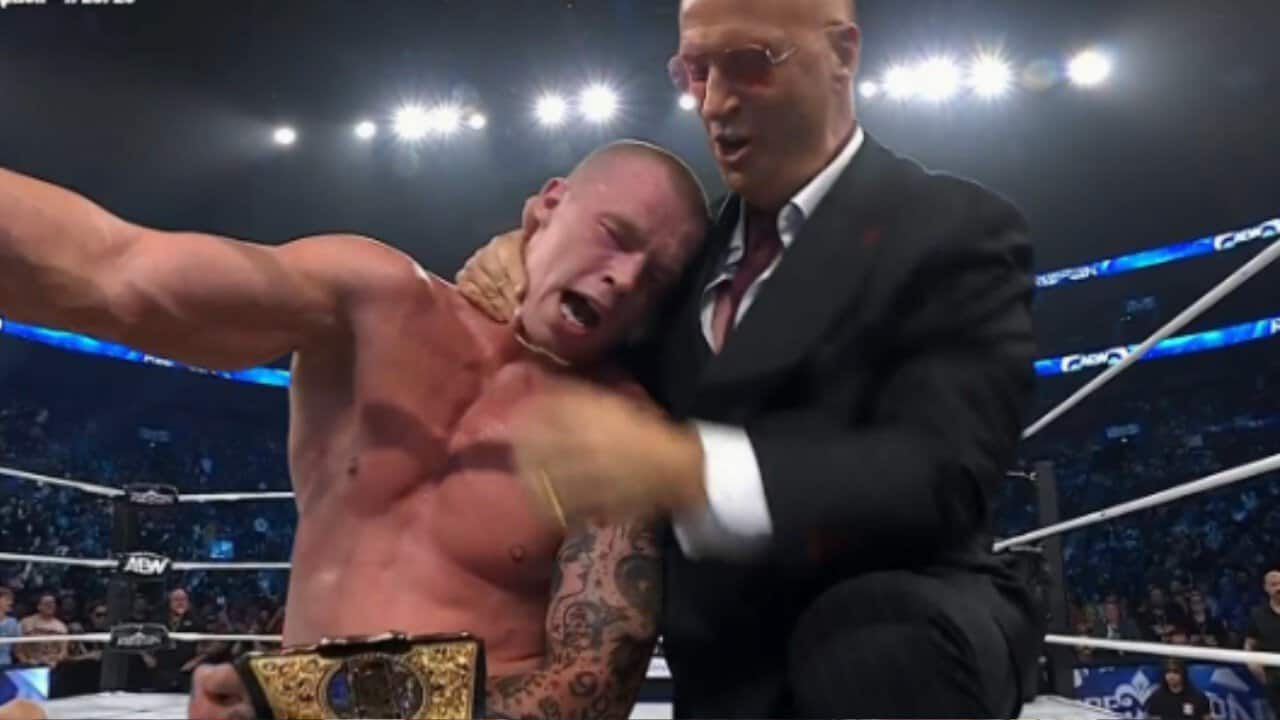
Top 10: Wrestling Moments of 2026
an hour ago
The math behind wrestling's revolving door of talent
3 hours ago
The math behind roster churn and the myth of the perfect return
3 hours agoEric Bischoff and Vince McMahon was the weirdest odd couple in wrestling history
5 hours ago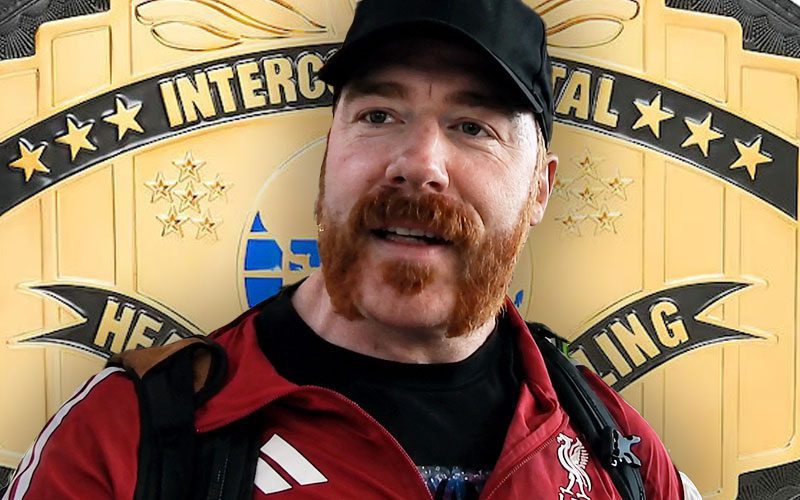
Sheamus isn't losing sleep over the IC title and fans are losing their minds
6 hours ago
Power Ranking the Influence of Tony: From Khan to D’Angelo
6 hours agoMore Analysis
Top 10: Wrestling Moments of 2026
an hour agoOn This Day in Wrestling: July 27
an hour agoOn This Day in Wrestling: July 27
an hour ago
Top 10: AEW Redemption Defining Moments
2 hours ago
Kyle Fletcher is finding his identity at the top of the AEW card
2 hours ago