The handshake heard 'round the wrestling world
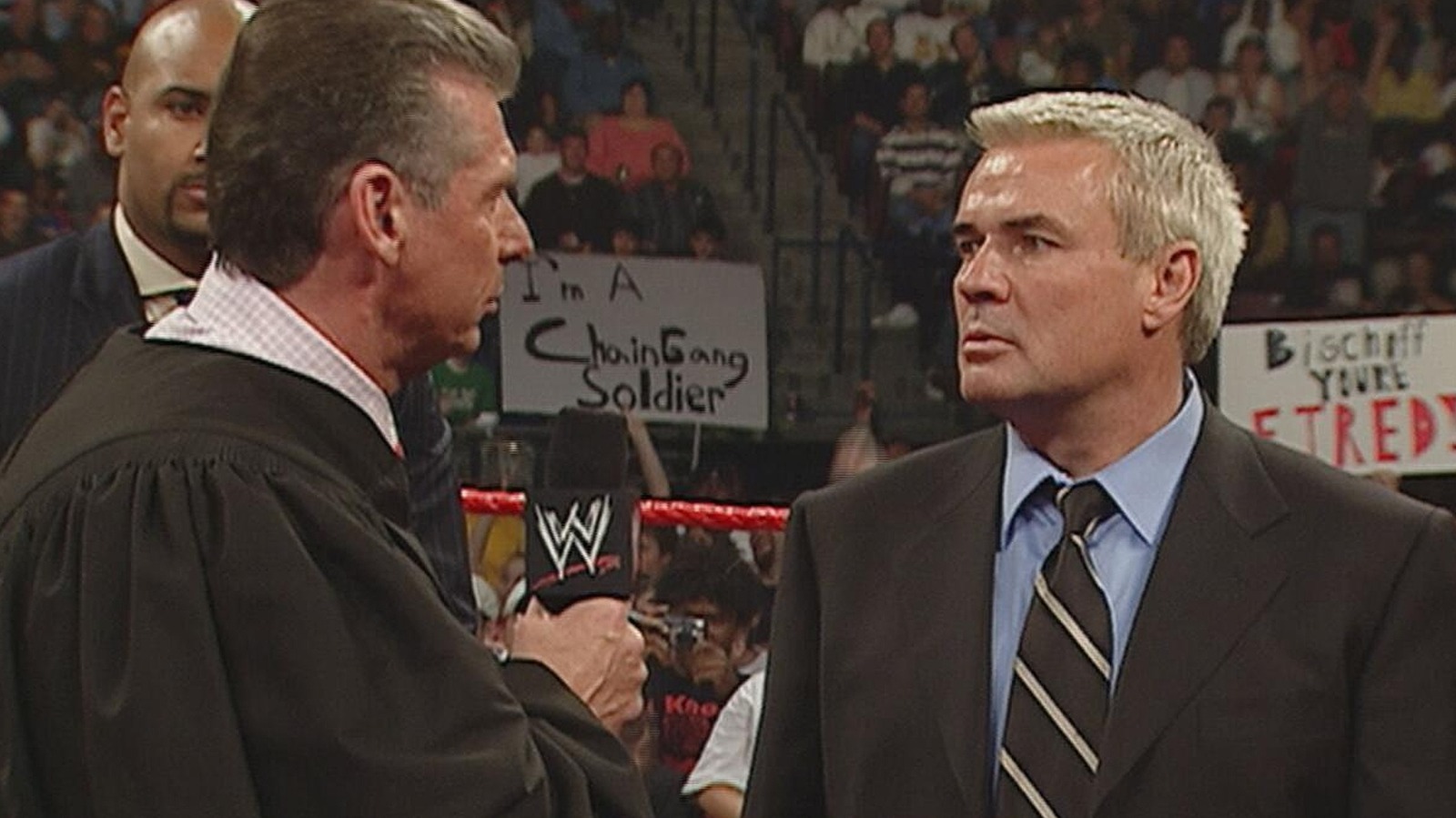
Remember when the world felt like it was ending in 2002? Eric Bischoff, the man who spent five years trying to drive Vince McMahon into a shallow grave, walked out on RAW in a tailored suit. It wasn't just a shock; it was a digital-age glitch in the wrestling matrix. Fans were genuinely convinced a black hole had opened up under the Titan Towers.
Now, we have fresh details on how exactly that first day played out in the office. Bischoff has gone on record detailing that initial sit-down with Vince, and frankly, it sounds like two warlords trying to figure out how to divide the spoils of a scorched-earth campaign. It mirrors the time Ted Turner brought a sledgehammer to a business meeting, except this time, the sledgehammer was actually looking for a paycheck.
The awkward reality of the nWo mastermind in civilian clothes
Bischoff wasn't just some random hire. He was the guy who put Nitro on Monday nights, the guy who made the nWo a household name, and the guy who famously paid Hall and Nash to defect. Watching him navigate the hallways of WWE felt like watching a rival general surrender, only to realize he still kept his gun hidden under the desk. That tension is exactly why his debut made history.
Walking into that office must have felt like stepping into an alternate dimension. Vince, the ultimate ego-driven genius, sitting across from the guy who legitimately tanked his stock prices for half a decade. It is a level of business surrealism that no current AEW or WWE crossover can possibly replicate. You cannot manufacture that level of authentic hatred and professional professional rivalry.
The inevitable reality check
Let's be honest, though: the honeymoon phase didn't last. While the initial Bischoff-as-GM arc gave us some highlights, the creative direction quickly hit a wall. He became a caricature of the suit-wearing, condescending authority figure. It was a role he played well, but it lacked the chaotic, unscripted energy of his 1996 Nitro days. When you strip a rebel of his cause, you get a glorified actor reading lines.
Comparing his time in WWE to his peak in WCW is like comparing a high-budget Marvel movie to an gritty indie thriller. He was a shark in a tank in WWE, whereas in WCW, he was at least building the tank himself. It is a shame that wrestlers like Sheamus never got to work under the absolute peak version of that 1997 Bischoff character. That version needed no script; he just needed a paycheck and a grudge.
What the Bischoff deal reveals about Vince
The real takeaway here is what it says about Vince McMahon's philosophy. He didn't hire Bischoff for his creative prowess in 2002; he hired him to bury the hatchet on screen and monetize the memory of the Monday Night Wars. It was a power move, pure and simple. If you can make your biggest rival play the role of your right-hand man, you have effectively won the argument for all time.
It is the same mentality that led to the acquisition of the WWE library years later. Vince isn't interested in competition; he is interested in assimilation. Bischoff understood this, which is why he played along with the gag for as long as he did. The sad truth is that while the fans got a great 'jump scare' moment, the wrestling business lost its competitive fire the moment that handshake went down. The total number of Monday night rating wars since then is exactly zero. That is the real tragedy of the story.
Looking back, the entire thing feels like a fever dream. The production values shifted, the colors felt different, and the pacing of the show changed overnight. Bischoff brought a distinct, 'sports-entertainment' gloss that felt hollow compared to the grit of the nWo transition. But hey, it made for great memes before memes existed, and it gave us one of the best 5 minutes of television in the history of the industry. Even if the rest of the run was a slow decline into 'General Manager' tropes, that initial appearance remains an all-time great bait-and-switch.
Read Next
- Eric Bischoff in WWE still breaks wrestling fans' brains twenty years later
- Bischoff’s lessons prove why WCW missed the point on talent development
- Vince McMahon’s potential return is nothing but a shareholder gamble
- Arn Anderson's blueprint for a modern Four Horsemen reveals what wrestling is missing