Survival in the Kansai wrestling market
Osaka Pro Wrestling hitting its 27th anniversary is nothing short of a miracle. The Japanese independent scene is a brutal environment, especially outside of Tokyo. Regional promotions frequently come and go, bleeding money until the promoters quietly close up shop. Founded back in 1999, OPW has weathered economic downturns, massive roster exoduses, and a completely transformed wrestling industry.
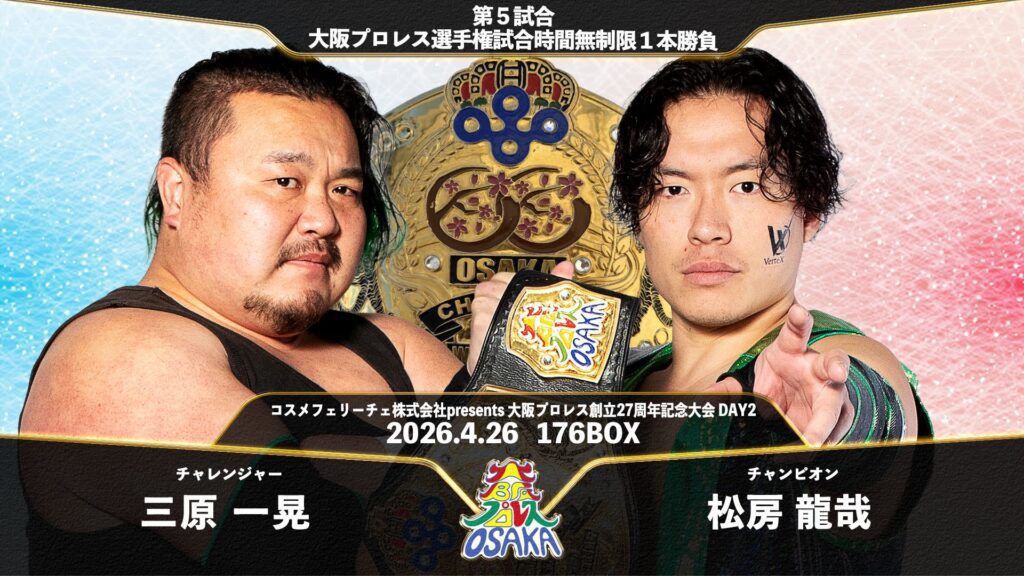
They survived by blending distinct Kansai entertainment with hard-hitting action, carving out a niche that nobody else could perfectly replicate. OPW just wrapped up a two-night anniversary weekend at 176 Box in Osaka on April 26. The venue is intimate, gritty, and the absolute heartbeat of Kansai professional wrestling.
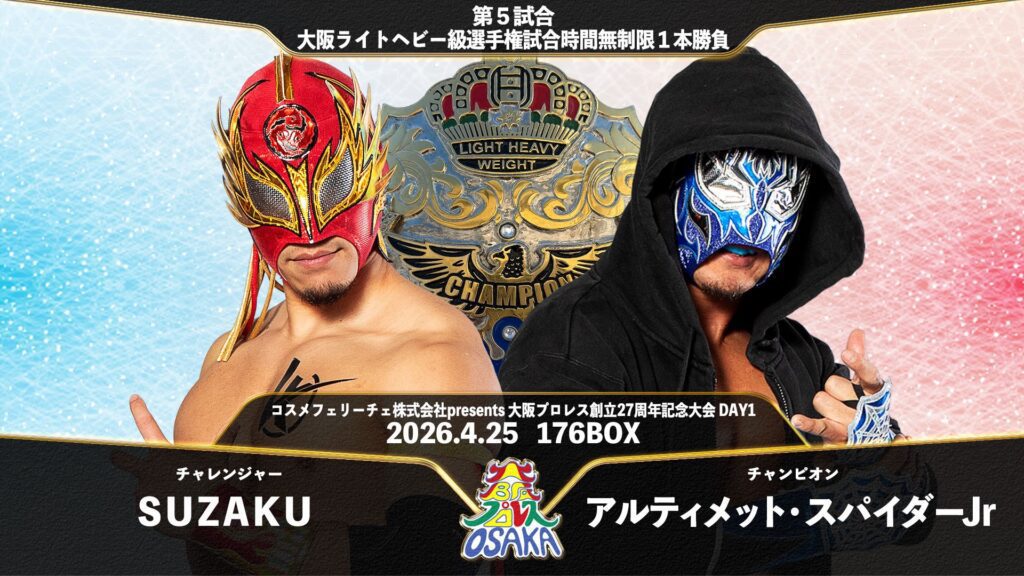
You do not survive 27 years in this industry without knowing exactly how to book a card that keeps your core regulars coming back. Night 2 featured a tag team match that, on paper, looked like standard midcard fare. Light Heavyweight Champion Ultimate Spider Jr teamed with OPW Tag Team Champion Aran Sano to face the powerhouse Shigehiro Irie and local staple Kohei Kinoshita.
The champions picked up the win when Kinoshita was put away via Musou at the exactly 9:05 mark. It was fast, it was decisive, and it told us exactly where the promotion is heading for the next six months.
The mechanics of a nine-minute sprint
Booking two of your reigning champions in a sub-10-minute tag match on your biggest weekend of the year is a deliberate choice. Some fans might look at that short runtime and complain about card placement.
Honestly, they have a valid point. If you hold the Light Heavyweight and Tag Team belts, you should arguably be featured in more prominent, longer bouts on an anniversary card. Throwing your titleholders into a sprint risks making those specific belts feel secondary to the main event.
But functionally, this match did exactly what it needed to do from a structural standpoint. In Japanese indie wrestling, the midcard tag match is an engine for future programs. You don't wrestle for 20 minutes if the primary goal is simply to establish a future challenger.
You go hard, you hit your heavy spots, and you establish a clear hierarchy. Irie is the freelance monster. He travels the globe, hits incredibly hard, and carries a massive aura of danger. He was never going to take the pin in this scenario.
Kinoshita, on the other hand, is the reliable workhorse. He took the fall to protect Irie's momentum while simultaneously keeping the champions looking totally dominant. The Musou was the exclamation point on a highly efficient segment.
Analyzing the champion dynamic
Let's look at the winning team. Ultimate Spider Jr and Aran Sano are not a traditional, established tag team. They are two distinct stars operating on different tracks—Sano is a tag champ, but here he is operating outside his usual tandem.
Pairing them up is a classic booking trope used to reinforce the overall prestige of the roster's hardware. When your champions win, the belts win. Ultimate Spider Jr has been carrying the light heavyweight division, and getting his hand raised on the anniversary weekend immediately cements his reign.
But Sano is the really interesting piece here. As one half of the OPW Tag Team Champions, stepping into a makeshift team and grabbing a win shows his individual versatility. It proves he isn't just a system player reliant on his regular partner.
The chemistry between Spider and Sano in this extremely short window was highly effective. They managed to neutralize Irie just long enough to isolate Kinoshita in the ring. That requires precise timing and excellent ring awareness from both men.
The Shigehiro Irie factor
Whenever Shigehiro Irie is on a card, the internal match psychology has to change. You cannot treat him like a standard opponent. He is a literal bowling ball of muscle who realistically could end a match with a single strike.
His background working deathmatches in BJW, strong style in AJPW, and touring across Europe means he brings a chaotic, unpredictable energy to the ring. Having him on the losing end of this match, even without taking the pinfall, is a fascinating decision.
Irie doesn't just show up to be an extra body. His presence in this specific match elevates Ultimate Spider Jr and Sano simply by association. If you beat a team with Irie on it, you look like a legitimate threat.
However, Irie was undeniably underutilized in a nine-minute window. You bring in a guy with his international pedigree, and you expect violence. Giving him less than ten minutes to work feels like leaving money on the table for the live crowd.
His interactions with Sano were particularly stiff and combative. There is a very real possibility that Irie is eyeing the OPW Tag Team Championships. Using this match as an aggressive scouting mission makes total sense from a storyline perspective.
Predicting the summer fallout
So, where does OPW go from here? The brisk runtime and the clean finish via Musou give us the roadmap. My prediction is absolute: Kohei Kinoshita is going to challenge Ultimate Spider Jr for the Light Heavyweight Championship by July.
You don't have a junior heavyweight regular take a clean pinfall in a high-profile anniversary sprint unless you are setting up a distinct redemption arc. Kinoshita will undoubtedly use this loss as the catalyst to rebuild his momentum.
He will string together a series of singles wins over the next two months, directly referencing his failure at 176 Box. The booking is essentially writing itself. The underdog who cost his team the match works his way back up the card to face the champion who orchestrated his downfall.
As for Sano, this match was a violent statement to the rest of the tag division. By winning with a makeshift partner against a team featuring Shigehiro Irie, Sano has effectively put a massive target on his own back.
Expect Irie to return to OPW with a dedicated powerhouse partner to challenge Sano for those tag belts. Irie rarely forgets a slight, and the fact that his team was outmaneuvered will sit poorly with him. The road to the summer shows is paved with the grudges born in this specific nine-minute sprint.
The final verdict
OPW's 27th anniversary wasn't just a celebration of survival for an indie promotion. It was a tactical placement of chess pieces for the rest of the year. The promotion knows exactly what it is doing with its top stars.
The Light Heavyweight Champion looks unbeatable right now. The Tag Team Champion looks adaptable and dangerous. Irie remains protected despite the loss, and Kinoshita has a very clear narrative path forward.
Yes, the match was objectively too short. Yes, the belts could have been showcased better in a longer contest. But in terms of pure narrative efficiency, this was a masterclass in setting up the future.