Ganbare Pro is suffocating its youth: A tactical breakdown from Korakuen Hall
The brutal economics of attendance
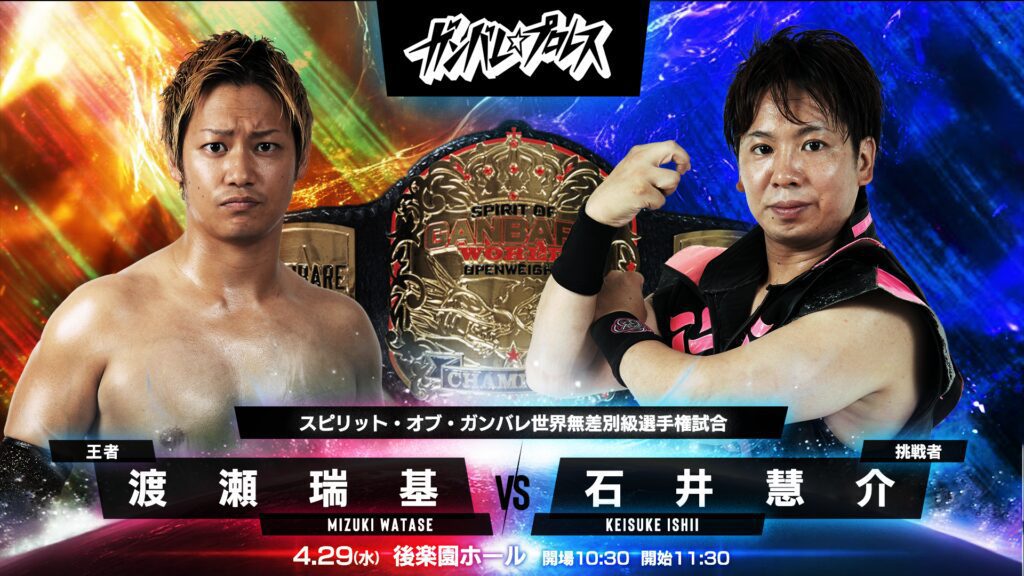
Korakuen Hall is the ultimate measuring stick for every professional wrestling promotion in Japan. On Wednesday, April 29, 2026, Ganbare Pro ran their Mad Max event in that legendary building. The official attendance was 588 fans.
If you are a financial analyst looking at a spreadsheet, 588 is a number that keeps the lights on. It covers the venue rental and ensures the talent gets paid. But if you are a wrestling promoter, it is a glaring red warning light.
That number means you have a highly dedicated base, but zero forward momentum. You are entirely reliant on the exact same group of hardcore fans buying tickets every single month. There is no casual walk-up crowd. There is no viral buzz pulling in new viewers.
When you look at the global wrestling environment right now, the contrast is staggering. WWE is still riding the massive financial high of WrestleMania 41 in Las Vegas, preparing for Backlash on May 9. AEW is exactly 25 days out from Double or Nothing, booking massive American arenas.
Meanwhile, the Japanese independent scene is fighting a brutal, grinding war of attrition in venues that hold fewer than two thousand people.
When a promotion is drawing a crowd of that size, the booking philosophy usually fractures in one of two directions. You either throw caution to the wind and push unproven rookies to create chaotic buzz, or you retreat into the safety of established veterans.
Based on the undercard of the Mad Max show, Ganbare Pro has clearly chosen the latter. And it is suffocating their roster.
The anatomy of a short sprint
Let us examine the six-man tag team match that anchored the early portion of the card. Yuya Susumu, Choun Shiryu, and Psycho defeated Munetatsu Nakamura, Shota Kawakami, and Sentaro Motoshima.
The match lasted exactly 9:57.
There is a very distinct art to a wrestling match that clocks in under ten minutes. You do not have the luxury of a slow feeling-out process. You cannot waste two minutes circling each other, trading collar-and-elbow tie-ups that end in clean, polite breaks against the ropes. You have to establish dominance immediately.
Susumu understands this pacing better than almost anyone on the indie roster. He brings a vicious efficiency from his days grinding in Freedoms and Dragon Gate. From the opening bell, he bypassed the traditional wrist locks entirely.
Instead, he went directly for the neck and shoulders. He uses a very tight side headlock, not as a rest hold to call spots, but as a legitimate mechanism to drain oxygen and disrupt his opponent's equilibrium.
Nakamura tried to match this early intensity, but he fell into a classic rookie trap. He tried to wrestle at Susumu's pace.
When a veteran dictates the speed of the physical exchanges, the younger wrestler will almost always burn out first. Nakamura was throwing wild forearms with maximum torque. Susumu was simply deflecting them, absorbing the glancing blows, and letting Nakamura drain his own stamina meter.
The tactical brilliance of unorthodox striking
The stylistic contrast within the veteran team is what made them so dangerous. If Susumu is the methodical anchor, Choun Shiryu is the disruption angle.
Shiryu's kung fu-inspired offense is heavily criticized by purists as overly theatrical. That criticism misses the tactical advantage completely. Modern professional wrestlers are trained in very rigid dojos. They are taught to expect attacks from very particular, predictable angles.
You expect a lariat to come across the chest. You expect a dropkick to target the sternum or the knee.
Shiryu throws palm strikes and thrust kicks from completely unorthodox elevations. When Kawakami tagged in halfway through the match, he immediately ate a stiff palm strike to the throat. It completely shut down his momentum.
Kawakami had prepared his defensive posture for a standard forearm exchange. He dropped his chin and raised his left shoulder to absorb the impact. Shiryu simply bypassed the guard entirely, slipping his hand through the defensive gap.
This is the hidden, terrifying value of older wrestlers on the independent circuit. They have accumulated bizarre, idiosyncratic offensive traits that younger wrestlers simply do not know how to counter. They have not seen enough tape to recognize the setup.
Psycho served as the chaotic element for the veterans. He spent the match constantly cutting off the ring and deliberately interrupting the referee's line of sight. He fought dirty, but he did it with mathematical precision.
The failure of apron psychology
Psycho's relentless interference highlighted the most glaring weakness of the younger trio. Their apron psychology was abysmal.
In a Japanese six-man tag, the match is won and lost on the apron. When Motoshima was isolated in the ring, taking heavy punishment from Susumu, his partners needed to be hyper-active.
They needed to be slapping the turnbuckles. They needed to be threatening to enter the ring illegally. They had to force Susumu to divide his attention.
Instead, Nakamura and Kawakami stood like statues holding the tag rope.
That dead space kills the emotional investment of the crowd. If the partners do not care that their teammate is getting dismantled, why should the fans in attendance care? The lack of urgency transmitted directly to the audience.
The building went totally quiet, save for the sickening sound of Susumu's forearms landing flush on Motoshima's neck.
This is why the short runtime was essentially a mercy killing. If this match had gone fifteen or twenty minutes, the lack of apron psychology from the younger team would have completely deflated the building.
The mechanics of a defensive collapse
To truly understand why the finish felt inevitable, we have to look closely at Sentaro Motoshima's defensive footwork in the final two minutes. When you are the least experienced man in a trios match, you are naturally going to be the target. Your job is survival, not offense.
Motoshima lacks spatial awareness. When he was caught in the wrong corner, he repeatedly turned his back to Susumu to check his distance from the ropes. You can never turn your back on a striker of that caliber.
By checking his blind spot, Motoshima surrendered his center of gravity. Susumu exploited this immediately, stepping inside Motoshima's guard and establishing the underhooks.
In a standard dojo training session, you are taught to drop your base to fight the underhooks. You widen your stance and make yourself heavy. Motoshima panicked. He tried to stand up straight and throw a desperation elbow to break the grip.
That upward momentum is exactly what Susumu needed. He used Motoshima's own upward thrust to assist the lift for the High Fly Bomb.
It was a masterclass in using an opponent's nervous energy against them. Susumu did not overpower Motoshima. He simply let Motoshima's lack of experience create the mechanical advantage for the finish.
This is the difference between learning moves in an empty gym and executing them in front of a paying crowd. Motoshima knows how to counter an underhook, but under the pressure of the nine-minute mark, his muscle memory failed him.
The veterans punished that hesitation instantly. There was no stalling, no second attempt at the spot. Susumu recognized the error, secured the hold, and dropped him flat on the canvas.
A fatal booking flaw
This brings me to my central criticism of the entire event. The match ended via a High Fly Bomb on Motoshima. The veterans won clean, in the middle of the ring, with absolutely no ambiguity.
This is a catastrophic booking failure.
What does Ganbare Pro gain from Susumu, Shiryu, and Psycho winning a mid-card match in under ten minutes? They do not need the credibility. They are already established entities. They are hired guns brought in to provide a baseline of quality.
Nakamura, Kawakami, and Motoshima are the future of the company, or at least they are supposed to be. By having them lose decisively to a makeshift trio of veterans, the promotion is loudly telling its audience that the younger generation is completely inept.
Management is explicitly stating that the guys you are supposed to invest your time and money in for the next five years cannot even survive a ten-minute sprint against men pushing forty.
If Ganbare Pro wants to break out of this attendance slump, they have to take actual risks. Nakamura needed to win this match. He needed to hit a desperate, sloppy counter-pin on Psycho. He needed to steal a victory to show that the youth movement actually has teeth and poses a threat to the old guard.
Instead, they fed Motoshima to the High Fly Bomb. It was a safe, predictable finish that protected everyone's ego while sacrificing the long-term health of the roster.
The execution of the finish
I cannot criticize the physical execution of the finish itself. Susumu does not get enough credit for his phenomenal base strength.
He lifted Motoshima for the High Fly Bomb with zero hesitation. There was no struggle on the lift. There was no wobbling at the apex of the move. It was just a clean, terrifying elevation followed by a brutal descent.
Motoshima took the bump perfectly flat, protecting his neck while maximizing the impact sound on the mat.
The referee's hand hit the mat for the third time. The crowd delivered a polite, respectful golf clap. And that was it. That polite applause is the sound of a completely missed opportunity.
The disjointed identity of Ganbare Pro
Elsewhere on the card, we got a brief note that Ram Kaichow secured a victory. Kaichow is a fascinating anomaly in this environment. She brings a completely different, highly theatrical energy to her matches.
Her work connects with the crowd on a pure character level that the male undercard roster completely lacks.
But you cannot build an entire promotion on the back of one or two character-driven acts while the rest of the roster is trapped in a generic 2015 puroresu time loop. You need a cohesive vision.
The Japanese wrestling economy in 2026 is unforgiving. Fans have infinite entertainment options. If you want them to spend their Wednesday night at Korakuen Hall, you have to offer them a narrative that is actively moving forward.
You have to give them a reason to believe that the young rookie getting beaten down in the opener today will be main-eventing the show and winning the belt next year.
Right now, Ganbare Pro is just putting on matches. The physical execution is fine. The bumps are hard. The timing is precise. But there are absolutely no stakes.
The ceiling is made of glass
Munetatsu Nakamura deserves better than this holding pattern. He has a violent snap to his suplexes that you cannot teach in a dojo. He possesses a raw, unpolished aggression that fans naturally want to cheer for.
But he needs the promotional machine to actually stand behind him. He needs the booker to pull the trigger.
If you look at the attendance statistics from recent Korakuen shows across the independent scene, the promotions that are actually growing are the ones taking massive risks on their twenty-somethings.
They are putting their primary championships on them. They are letting them close the show. They are allowing them to make mistakes in the main event rather than hiding them in the opening matches.
Ganbare Pro is playing it incredibly safe. Susumu, Shiryu, and Psycho are reliable hands. You can put them in the ring with absolutely anyone and they will not embarrass you or the company.
But reliability does not generate heat. Reliability does not create viral clips on social media. Reliability does not force fans to aggressively renew their monthly streaming subscriptions.
Accepting the bare minimum
The six-man tag at Mad Max was a technical success but a massive philosophical failure. It achieved exactly what it set out to do, which was to fill ten minutes of a wrestling show without any botched moves or blown spots.
That is setting the bar depressingly low for a company running Korakuen Hall.
When you dissect the time these six men spent in the ring, you see the entire Japanese independent scene trapped in a microcosm. The aging veterans are desperately holding the line. The rookies are pushing fruitlessly against a glass ceiling. And the audience is sitting respectfully, accepting the mediocre product without demanding anything better.
The High Fly Bomb on Motoshima was just the exclamation point on a sentence we have all read a thousand times before.
Next month, they will probably run a very similar match. Maybe Kawakami will be the one taking the pin next time. Maybe they will stretch the runtime to twelve minutes just to change the pacing.
But until someone in management decides to finally break the script, until Nakamura decides to shoot on a hold, or the booker decides to actually shock the fans in attendance, Ganbare Pro will remain stagnant. It will continue to be a pleasant, fundamentally sound, and utterly skippable Wednesday night out in Tokyo.
Read Next
McDavid Knee Support with Stays, Knee Brace for Knee Pain, Protection and Stability
Stay protected while you hit the gym to train like your favorite champion.
More Coverage

Booking Bron Breakker requires more than just raw intensity
2 days, 8 hours ago
WWE's heavy-handed editing signals a shift in Lesnar's brand
3 days, 8 hours agoNXT is buckling under the weight of its own roster size
3 days, 13 hours ago
JD McDonagh's calculated gamble in the No DQ match against Danhausen
3 days, 19 hours ago
Why Claudio Castagnoli remains the most tactically sound wrestler in AEW
4 days, 12 hours agoNXT is forcing a reset after the Three Becomes One crisis
5 days, 1 hour agoMore Analysis
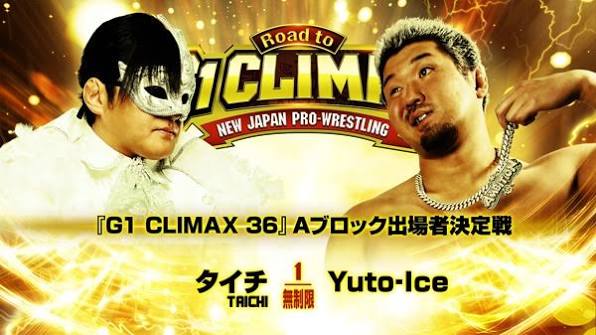
NJPW is playing a dangerous game of seniority before the G1 Climax
3 weeks, 5 days ago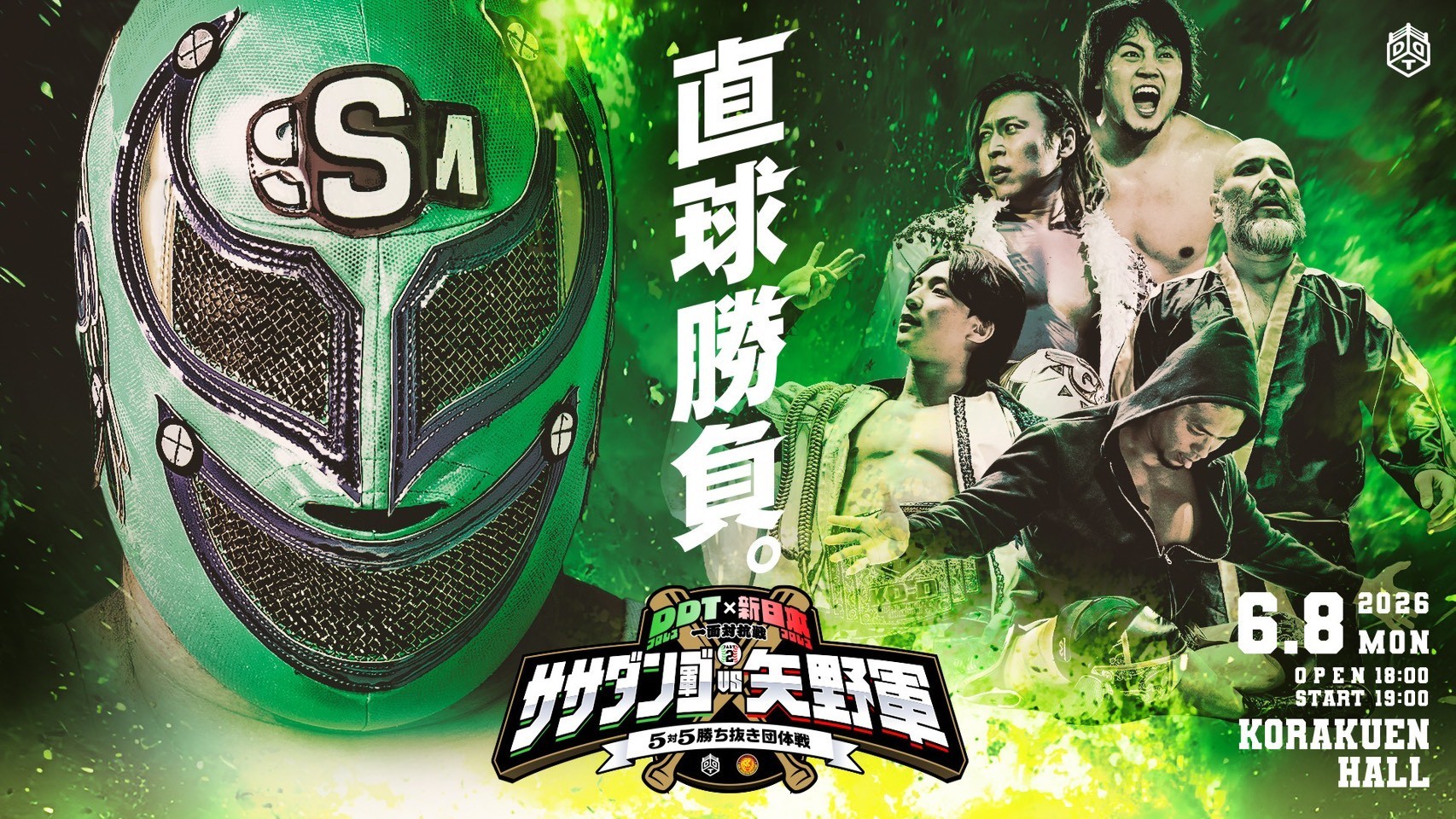
NJPW and DDT are stuck in a creative stalemate
1 month, 1 week ago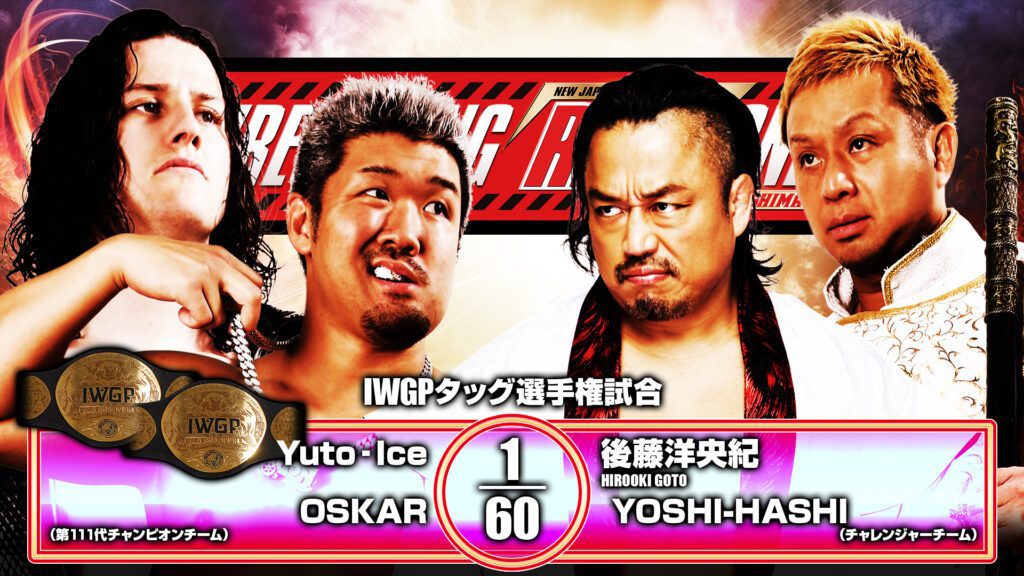
NJPW is heading into the Dontaku season with more questions than answers
2 months, 3 weeks ago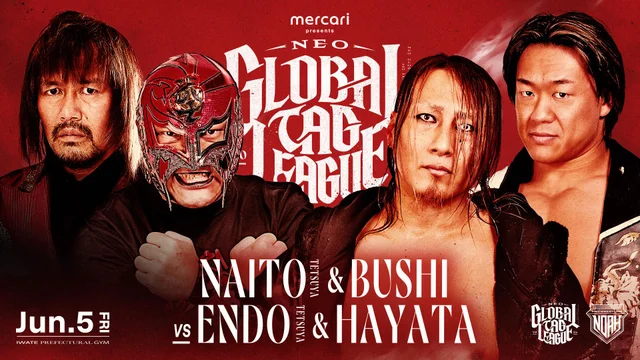
NOAH's Neo Global Tag League is burning through talent at Morioka
1 month, 1 week agoNJPW is stuck in the mud and the G1 Climax needs a spark
3 weeks, 5 days ago