Steph De Lander is the best proof that the NXT 2.0 factory was broken
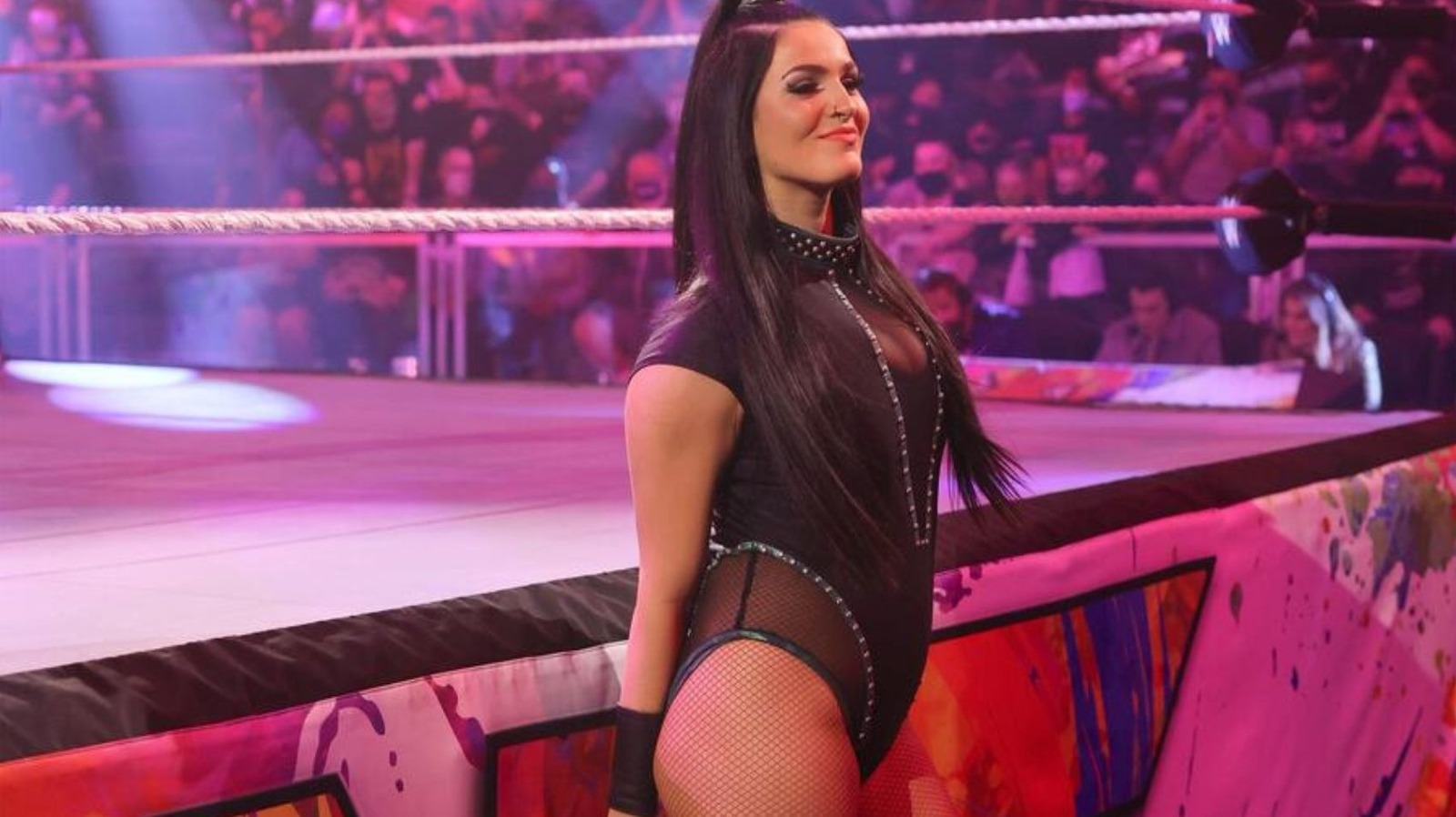
The 12-minute telemetry of a botched developmental transition
As we sit exactly one week away from the spectacle of WrestleMania 41 in Las Vegas, the conversation usually centers on the billion-dollar shiny objects at the top of the card. We talk about Cody Rhodes’ retention rates and Roman Reigns’ part-time efficiency. But to understand why the current WWE roster looks the way it does in 2026, you have to look back at the wreckage of 2021. Specifically, you have to look at Steph De Lander, then known as Persia Pirotta.
De Lander recently went on the record to discuss her favorite memory from her tenure in Orlando, pointing directly at the NXT Halloween Havoc 'Scareway to Hell' ladder match. It was a high-octane Triple Threat involving Toxic Attraction and the pairing of Io Shirai and Zoey Stark. On paper, it was a showcase of the 'new' NXT. In reality, it was the beginning of a tactical mismatch that would eventually force De Lander to find her greatness elsewhere.
The Scareway to Hell match clocked in at 12 minutes of sustained chaos. For a wrestler of De Lander’s physical profile—standing nearly six feet tall with a power-based offensive set—the ladder match is a double-edged sword. You are rarely the person flying off the rungs. You are the base. You are the structural integrity that allows the high-flyers to survive their own ambition. De Lander performed that role with surgical precision.
The mechanics of the Australian powerhouse pipeline
To understand De Lander, you have to understand the Australian wrestling boom of the late 2010s. This was the same pipeline that produced Rhea Ripley, Toni Storm, and Indi Hartwell. It is a school of wrestling built on sturdy fundamentals and a certain jaggedness. It doesn't value the 'smoothness' of the Florida camp. It values impact. De Lander brought a specific kind of violence to the Performance Center that the coaches didn't quite know how to categorize.
In the Halloween Havoc match, her role was clear: neutralize Zoey Stark’s explosive transitions. At the seven-minute mark, De Lander’s positioning during a multi-person tower of doom spot was the only thing preventing a legitimate disaster. She was the anchor. Yet, even as Wrestling Inc reported, her favorite memory isn't about the wins or the gold. It's about the performance itself.
This is the first critical failure of the NXT 2.0 era. The system began prioritizing the 'moment' over the 'mechanic.' De Lander was a superior mechanic. She understood spacing. She understood how to cut off the ring. But the creative team was more interested in her participation in the bloated 'In-Dex' wedding storyline than her ability to outwork 80% of the roster in a dark match. The tactical value of a powerhouse was traded for the cheap heat of a soap opera.
The Scareway to Hell as a technical microcosm
Look at the tape of that October night in 2021. While Io Shirai was doing moonsaults off the top of a ladder, De Lander was busy managing the logistics of the match. There is a sequence where she catches Gigi Dolin during a crossbody that looks effortless, but the weight distribution required is elite-level. She wasn't just a participant; she was the safety net for five other women.
The match ended with Toxic Attraction taking the titles, a decision that felt less like a tactical victory and more like a branding exercise. It was the era of 'Mandate Mandy.' Everything had to be glossy. De Lander, with her indie-honed edge and Australian grit, didn't fit the aesthetic profile that Vince McMahon was demanding from the 2.0 reboot. She was too 'wrestler' for a show that wanted 'superstars.'
If you analyze her movement during that 14-minute window (including entrances), her footwork never faltered. Most wrestlers her size struggle with the uneven footing of a ladder-strewn ring. She didn't. She treated the steel like an extension of the mat. It was a masterclass in 'big man' psychology that was largely ignored because she wasn't the one holding the briefcase at the end.
The Duke Hudson anchor and the creative rot
Here is the negative observation that most fans skip over: the pairing with Duke Hudson was a tactical disaster. It took a woman who could have been the 'Diesel' of the women's division and turned her into a secondary character in a C-plot romance. While Rhea Ripley was being groomed for a generational run on the main carpet, De Lander was stuck in backstage vignettes about dating apps. It was a waste of five years of developmental potential.
The data on developmental releases from that period is staggering. WWE was cutting talent based on 'fit' rather than 'function.' They looked at De Lander and saw a sidekick. They failed to see that her win-loss record in untelevised loops was among the most consistent in the building. She was a reliable hand in an era that was obsessed with unreliable 'potential.'
When she was eventually released in early 2022, it felt like a clerical error. You don't let go of a 5'11" athlete who can work a ladder match without blowing a gasket. But the NXT 2.0 factory wasn't looking for athletes. It was looking for archetypes. And because De Lander didn't fit the 'Diva' mold they were trying to resurrect, she was deemed surplus to requirements.
Reinvention as the Indie Goddess
What happened next is a study in professional spite. De Lander didn't just survive on the independent circuit; she conquered it. By aligning with Matt Cardona, she leaned into the very thing WWE told her she lacked: personality. She became the 'Indie Goddess.' She took the tactical lessons from the Performance Center and applied them to a world that actually valued her size.
Her work in TNA and the NWA over the last few years has shown a much higher level of 'ring IQ' than she was ever allowed to display in Orlando. She uses her reach to stifle opponents. She has developed a lariat that carries more torque than anything we saw in her Persia Pirotta days. She stopped being a base and started being the focal point. This wasn't a change in talent; it was a change in environment.
In 2026, we see the fruits of that labor. The independent scene is currently built on the backs of 'WWE rejects' who proved the system wrong. De Lander is the captain of that squad. When she talks about Halloween Havoc being her favorite memory, there is a subtext of irony. She is fond of the match because it was the one time she was allowed to be a wrestler on a grand stage, before the system tried to turn her into a punchline.
The 2026 roster gap
Looking at the current WWE roster as we head into WrestleMania 41, there is a visible hole. There is a lack of genuine power-brokers in the mid-card of the women's division. We have the flyers and we have the icons, but we lack the 'enforcers.' De Lander was the perfect candidate for that role. Instead, she is likely watching WrestleMania from a hotel room after a sell-out indie show in Vegas.
The tactical cost of her release is still being felt. You can't teach height, and you can't teach the kind of presence she developed during her 2021 run. WWE has tried to manufacture similar talents in the years since, but most of them lack the thousands of hours De Lander put into the Australian territories before she ever stepped foot in Florida. You can't fast-track grit.
Her favorite memory is a reminder of what happens when you give a professional the tools to succeed, even if only for one night. The Scareway to Hell match remains a cult classic because of its intensity. That intensity was provided by De Lander’s willingness to take the heavy bumps and provide the solid foundations. She was the unsung hero of a match that was designed to make others look like stars.
I was the only one who knew how to set the ladder properly while everyone else was trying to figure out their hair.
That quote, often attributed to veteran locker room leaders, defines De Lander’s approach. She is a worker’s worker. In a world of social media clips and ten-second highlights, she understands the long-form narrative of a match. She knows that a match is won in the transition, not the finish.
Final tactical assessment
Steph De Lander’s career is not a tragedy; it is a success story of self-determination. But for WWE, it remains a glaring indictment of their scouting and development priorities during the transition away from Triple H’s original vision. They had a ready-made superstar who was willing to do the dirty work, and they traded her for a few weeks of mediocre television ratings.
As the lights go up on Allegiant Stadium next week, remember the name Persia Pirotta. Remember the woman who held the ladder steady while the world watched someone else climb it. De Lander has since climbed her own ladder, and she didn't need a corporate script to do it. She is the one that got away, and she knows it better than anyone.
The Scareway to Hell was just a preview. The real fire started after she left the building. If WWE ever wants to fix their 'powerhouse' problem, they know exactly whose number to call. But they should be prepared to pay the 'Indie Goddess' tax. She isn't a sidekick anymore.
Cody Rhodes Commemorative Weight Lifting Belt
Channel the American Nightmare's intensity during your next gym session.
Frequently Asked Questions
What is Steph De Lander's favorite memory from her time in WWE NXT?
Who were Steph De Lander’s opponents in the 2021 Scareway to Hell match?
What specific role did Steph De Lander perform in NXT ladder matches?
Which wrestlers emerged from the same Australian pipeline as Steph De Lander?
Why was Steph De Lander’s technical skill overlooked during the NXT 2.0 era?
More Coverage

Drew McIntyre sidelined following brutal SmackDown encounter
2 hours agoWWE's New York gamble is a calculated risk ahead of WrestleMania 42
3 hours ago
WWE's Saturday Night's Main Event math doesn't add up
3 hours agoWWE's return to New York changes the math on stadium attendance
3 hours ago
Top 10: Top Moments from MSG
4 hours ago
SmackDown is drifting into mid-summer malaise
4 hours agoMore Analysis
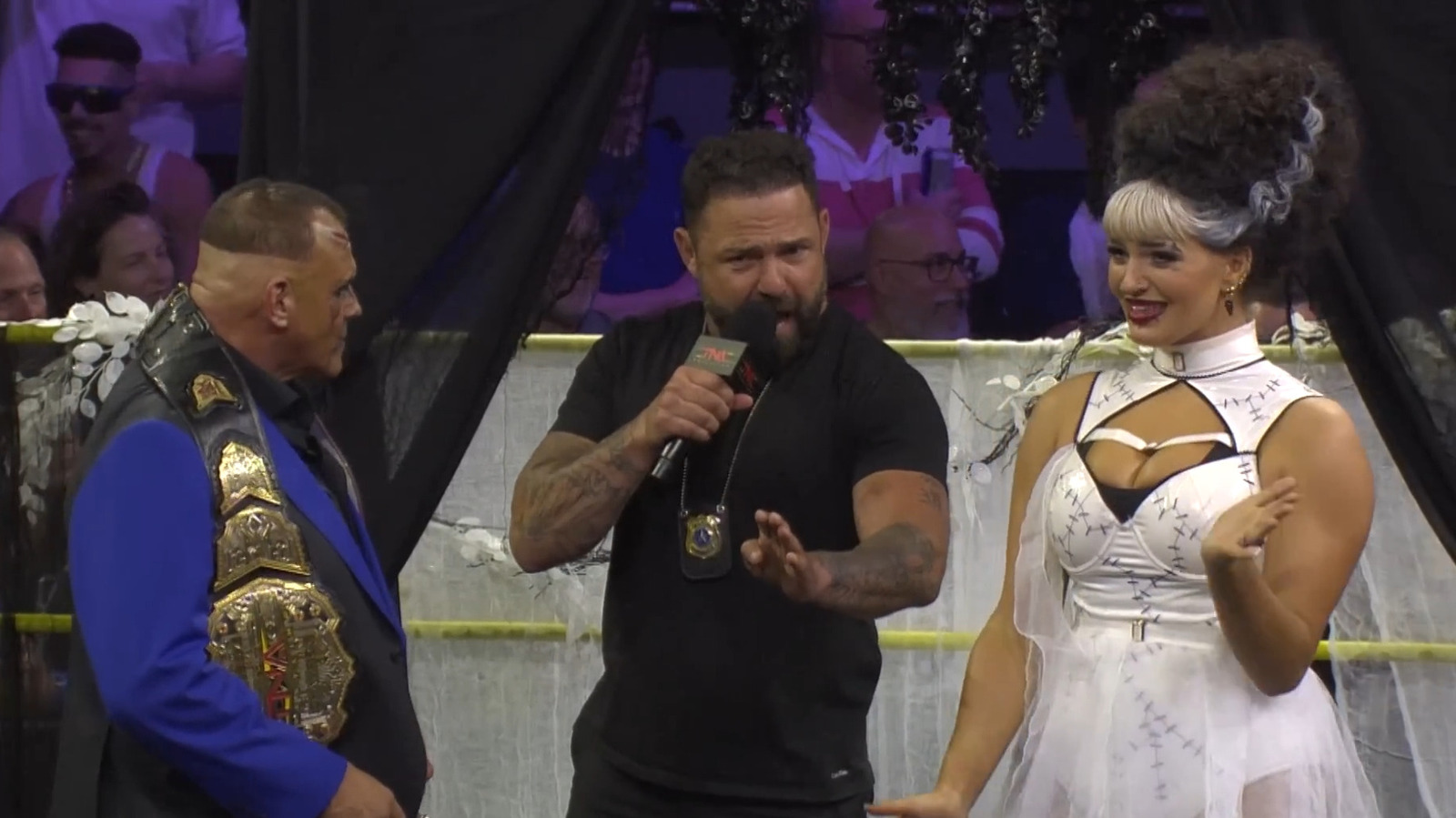
Steph De Lander is moving past her TNA tenure
3 months, 1 week ago
Why the modern NXT pipeline is running slower than you think
2 months, 1 week ago