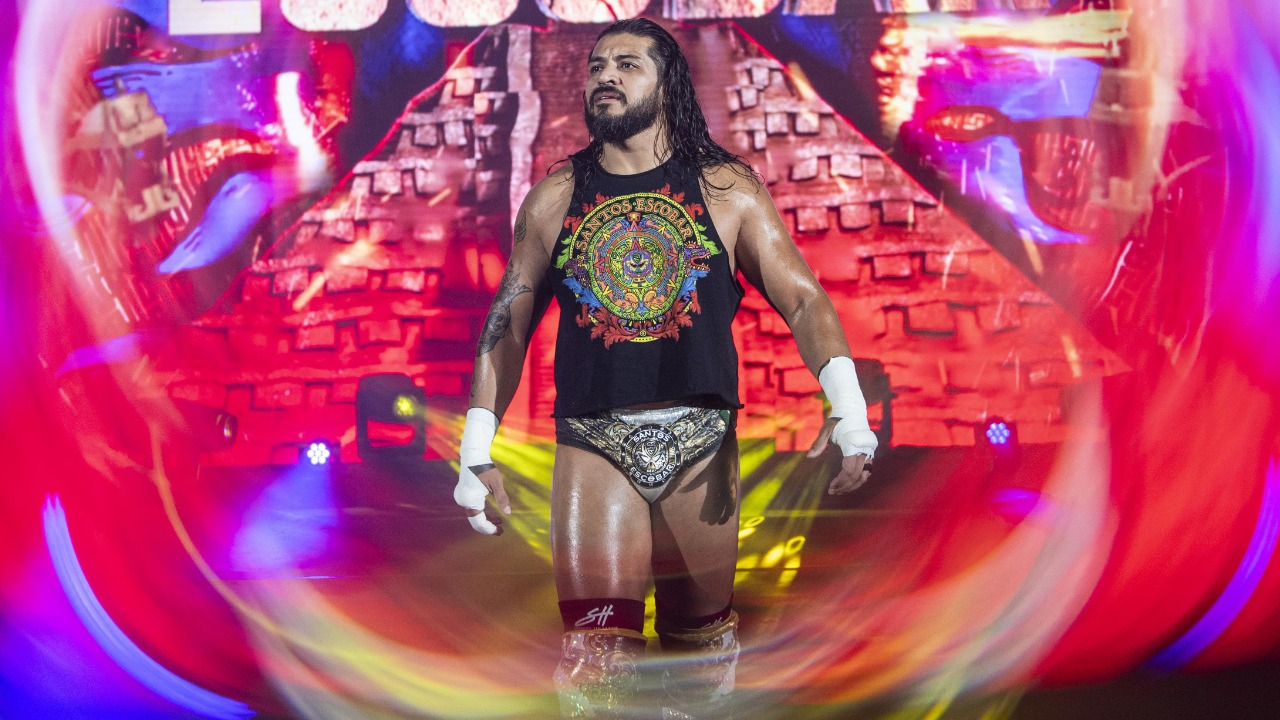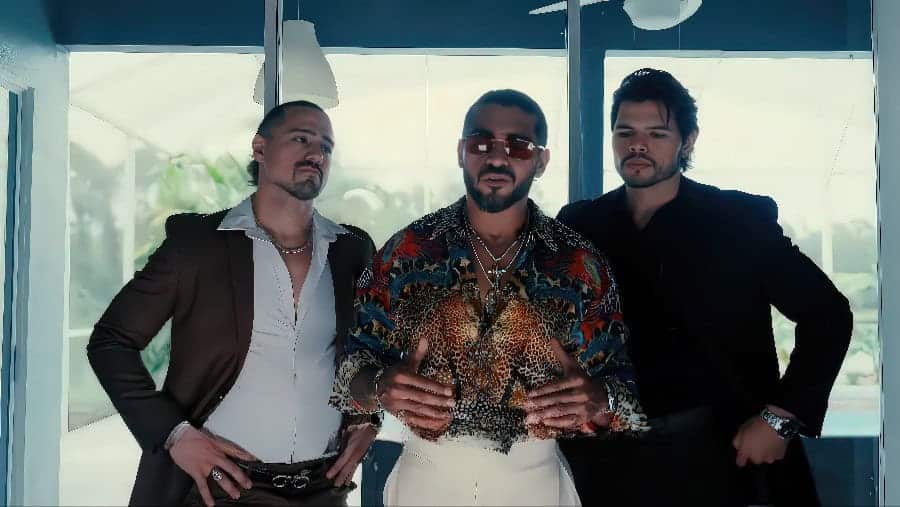
Santos Escobar is no longer a WWE superstar. Following his release, WrestlingNews.co reports that he is already expected to resume talks with another wrestling promotion.
This is not a surprise. It is the logical conclusion to a main roster run that spent two years aggressively missing the point.
Escobar arrived on SmackDown as a fully formed product. He had the presentation, the in-ring psychology, and the aesthetic of a top-tier heel. Legado Del Fantasma looked like money.
They wore tailored suits. They moved with purpose. They treated lucha libre as a lethal, tactical discipline rather than a collection of cooperative high spots.
Then the main roster machine got hold of them, and everything that made Escobar special was sanded down to fit a pre-approved, corporate mold.
The mechanical miscasting of a generational talent
To understand why Escobar failed on Friday nights, you have to understand what he actually does in the ring. He is a base.
In lucha libre, the base is the wrestler who catches the flyer. It is the most dangerous job in the industry. If a base is out of position by three inches, someone breaks a collarbone.
Escobar is arguably the best base of his generation. He possesses a low center of gravity, tremendous core strength, and the spatial awareness to catch a spinning human being and safely transition them to the mat.
He does not just catch his opponents. He absorbs their momentum and turns it into his own offense. It is a brilliant mechanical skill.
WWE never utilized it. Instead of putting him in the ring with elite flyers where he could anchor the match, they fed him to lumbering heavyweights. He was asked to bump around for guys who couldn't match his footwork.
The geometry of his matches was completely broken. He was a precision instrument being used to hammer nails.
The LWO vortex and the erosion of his aura
If you want to pinpoint exactly where Escobar’s WWE career permanently derailed, look at the reformation of the LWO.
Putting Escobar with Rey Mysterio made sense on a spreadsheet in Stamford. Mysterio is the most famous luchador in history. Escobar was the heir apparent. But the execution was a tactical disaster from day one.
The original LWO in WCW, led by Eddie Guerrero, was a faction built on genuine frustration. It was a union of underappreciated workers demanding respect.
WWE turned their version of the LWO into a cheerful merchandise vehicle. Escobar was stripped of his edge. He went from a calculating, cartel-boss inspired villain to a grinning sidekick wearing a retro t-shirt.
It was not just the ring work that suffered on the main roster. WWE completely dismantled his promo psychology.
During the peak of Legado Del Fantasma in NXT, Escobar rarely raised his voice. He spoke with a quiet, measured cadence. In professional wrestling, the loudest guy in the room is usually the weakest.
The man who whispers is the one you need to worry about. Escobar spoke like a cartel boss who had already ordered the hit. He did not need to scream because he knew he was dangerous.
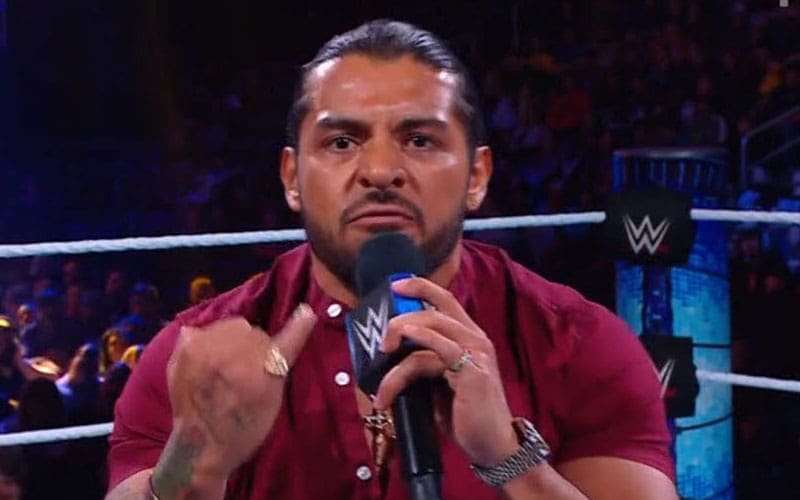
When he arrived on SmackDown, the producers handed him a microphone and told him to project to the cheap seats. Suddenly, the quiet menace was gone.
He was shouting catchphrases. He was pandering for cheap reactions.
A stylistic regression on Friday nights
We need to talk about what happened to Escobar between the ropes during his final year.
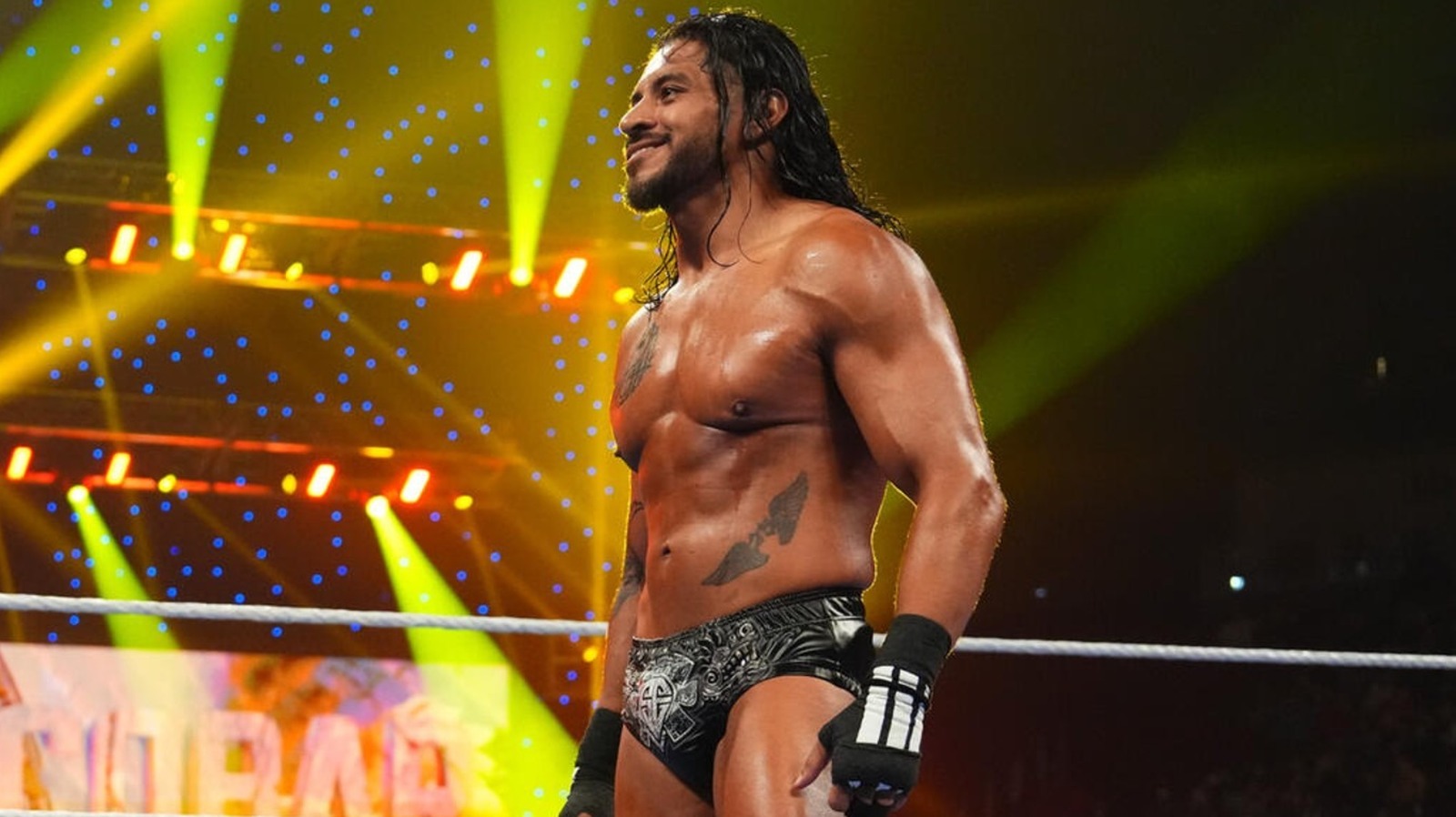
He slowed down. Not physically, but stylistically. He adopted the standard WWE heel formula, which is an absolute death knell for a dynamic worker.
The explosive bursts of offense disappeared. Go back and watch his NXT Cruiserweight title defense against Isaiah "Swerve" Scott at TakeOver 31. That was a masterclass in pacing.
Escobar used the ropes to trap arms. He hit suicide dives that looked like car crashes. He was vicious, relentless, and completely believable.
Contrast that with his recent matches on SmackDown. The structure was identical every single week. An early strike, a prolonged rest hold, some cheap interference from Joaquin Wilde or Cruz Del Toro, and a sudden finish.
It was lazy layout work. When the inevitable heel turn against Mysterio finally happened, it felt entirely hollow. The heat evaporated because the matches did not escalate.
Instead of a blood feud, WWE booked endless, repetitive six-man tags. Escobar sacrificed the lethal agility of El Hijo del Fantasma to fit a mold that wasn't built for him. He was dying a slow death in the midcard.
Where does the King go next?
Now, Escobar is out. And the report that he is expected to "resume talks" is the most interesting piece of the puzzle.
Resuming talks implies a prior relationship. The immediate assumption is AAA in Mexico. He is royalty there.
A return to the El Hijo del Fantasma character would generate massive local business. It would allow him to immediately step into main event programs against El Hijo del Vikingo or Psycho Clown.
But AAA does not offer the global television platform he just left. He is entering the latter stages of his career. He needs national television time while he is still in his physical prime.
That leaves two major players. AEW and TNA.
If Escobar wants to remind people who he is purely through in-ring work, TNA is a fascinating option. The X-Division is currently producing some of the best bell-to-bell television in North America.
Imagine Escobar walking into the Impact Zone to face Mike Bailey. Bailey kicks everything that moves. He works at a blistering pace.
Escobar’s ground game and basing ability against Bailey’s taekwondo strikes is a 20-minute classic waiting to happen. TNA allows its workers to lay out their own matches.
Escobar would instantly become the top heel in the division. He could bring back the tailored suits, the arrogance, and the Phantom Driver without a producer screaming in his earpiece to slow down for a commercial break.
Then there is Tony Khan and AEW. AEW has a bloated roster, but a motivated Escobar provides something very specific.
He is a bilingual worker who understands American television pacing but can easily hang with the hyper-kinetic lucha roster. Look at the stylistic matchups waiting for him in Jacksonville.
Put him against PAC. The sheer violence of those strikes would be worth the price of admission. Or put him against Rey Fenix.
Fenix operates at a terrifying speed, and Escobar is one of the few men alive who can catch him safely without grinding the match to a halt.
People forget how good this guy is when the shackles are off. The Lucha Underground tapes exist for a reason. As King Cuerno, he was an apex predator.
The Arrow from the Depths of Hell — his signature suicide dive — remains one of the best variations of the move in professional wrestling. He didn't just fall through the ropes.
He sprinted, threw his entire body weight forward, and snapped his opponent's neck back upon impact.
Wherever he signs, he has to find that violence again. The window for a dominant, workrate-heavy main event run is slowly closing. He cannot afford another holding pattern.
He needs to immediately insert himself into a top-tier program and remind the industry why he was considered a blue-chip signing in the first place.
He lands in AEW before the end of the summer. Tony Khan loves acquiring ex-WWE talent with a chip on their shoulder. Escobar fits the profile perfectly.
But more importantly, Escobar needs to wrestle. He needs long, grueling matches. He needs to bleed. He needs to wash the stench of that LWO t-shirt off his gear.
Expect him to drop the Santos Escobar name entirely. Expect him to immediately target the Continental or TNT Championship picture.
And expect him to deliver the best matches of his career. He has been trapped in a stylistic cage for two years. The lock is finally broken. Now, we get to see what he does with the freedom.