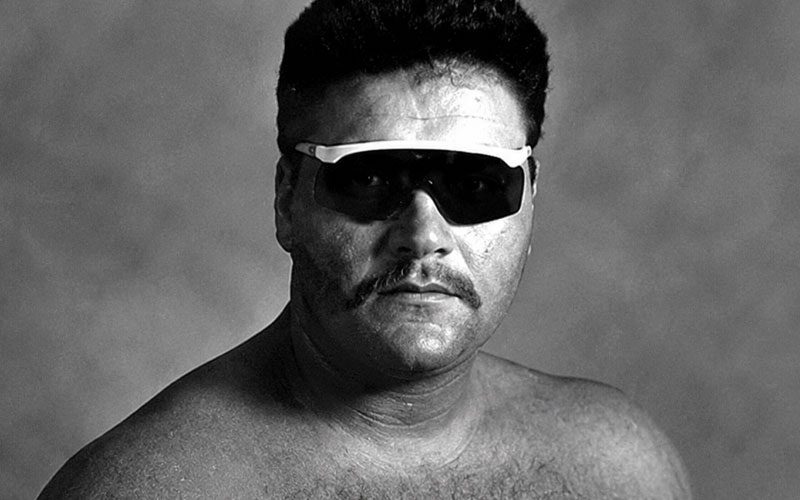
A technician from a different era
The squared circle lost a piece of history this week as Jerry Grey, known to generations as the Golden Boy, passed away at 62. While modern fans might scour the internet for high-spots and video game simulation sequences, Grey represented the transition between regional territory grit and the television-heavy production of the 1990s.
Reports confirmed by PWInsider document a career that spanned nearly four decades of active duty. He was never the largest man in the locker room, nor the flashiest, but he understood floor psychology in a way that remains rare in the current high-octane environment.
The mechanics of an effective heel
Grey’s work in the mid-80s remains a masterclass in drawing heat without relying on external interference. He managed to force disqualifications purely through aggressive application of illegal leverage in the ropes, often breaking a submission hold exactly one count after the referee reached the 4-count limit.
His timing was impeccable. A typical match structure from his prime involved a 10-minute segment of heat where his opponent would attempt three distinct comebacks before being snuffed out by a thumb to the eye. It was simple, repeatable, and highly effective for house show business.
Yet, looking back, his refusal to modernize his offense toward the end of his tenure became a friction point. By the late 90s, when the industry pivot toward high-risk aerial maneuvers accelerated, Grey famously mocked the necessity of the moonsault in a wrestling magazine interview. That stubbornness preserved his legacy as a purist, but arguably limited his main event ceiling in larger promotions.
Evaluating a legacy of toughness
Reflecting on Grey's longevity, one must admire the durability required to work that style for thirty-plus years. He didn't use the padded mats that grace most training facilities today. He took bumps on concrete floors inside drafty armories, a reality that makes his 62 years feel like a hard-earned milestone.
His influence remains visible in regional circuits where the "old school" rulebook is still gospel. You can see it in how some younger workers use a wristlock to regain composure or how they cut off a vertical leap by targeting the small of the back. It is a dying art form, increasingly replaced by athletic choreography.
He was a transitional figure, a man who survived the collapse of the territories by moving to the next pay window without complaint. Whether he was working the bottom of the card or holding a regional secondary belt, the intensity was constant. He treated a 10-minute opening match with the same seriousness as a title defense at a sold-out arena.
The current generation could learn a great deal from his restraint. Today's reliance on 450-degree splashes and rapid-fire strikes often leaves the audience desensitized before the final three minutes of a bout. Grey understood that a snap mare and a well-placed forearm could elicit a louder reaction if the build-up was executed with precision.
The industry is better for the years he spent in it. He didn't just fill time on a card; he provided a contrast to the high-flying spectacle that now dominates the screens of every fan. We might not see his style return to the spotlight, but the fundamentals he practiced are the foundation upon which every technical wrestler still builds their craft.