The Big Picture
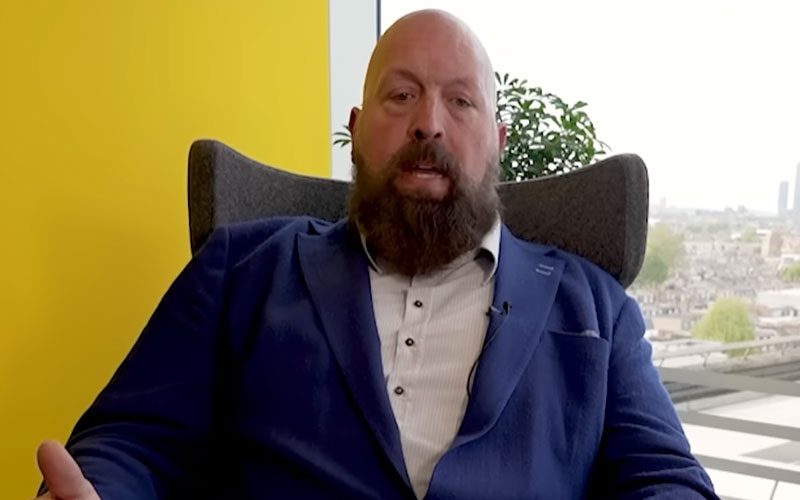
Paul Wight is done pretending. In an industry built on the illusion of eternal youth and 'one more match' promises, the man formerly known as the Big Show just dropped a massive dose of reality. During a recent set of interviews and media appearances, Wight admitted that the finish line isn't just visible—it is rapidly approaching. He isn't looking for a year-long retirement tour or a gold-plated send-off at a stadium show. He is looking at his knees, his scale, and his surgical history, and he is coming to a startling conclusion: he might just walk away without a final bell.
This is a rare moment of clarity from a veteran who has spent three decades as the most recognizable giant in the business. While legends like John Cena are currently mapping out elaborate multi-month farewells for later this year, Wight is operating on a much tighter timeline. He knows that at his size, every step in the ring is a gamble against biology. The days of him tossing heavyweights around like lawn furniture are over, replaced by a pragmatism that many of his peers lack. He isn't bitter about it; he is just being honest about the 'short window' he has left.
The Short Window and the Vanishing Retirement Match
Wight’s admission that he might not get a traditional retirement match is a pivot from the usual wrestling trope. Most stars of his stature demand a high-profile exit, often at the expense of younger talent or logical booking. Wight seems to have bypassed that ego trap. He acknowledged in recent comments that his physical state might dictate the end before the creative team can even book it. He has been open about the fact that his body is the primary shot-caller now, not Tony Khan or a scriptwriter.
I may not get a retirement match. There is a short window left for me to do what I can in the ring. I’m okay with that. I’ve had a hell of a run.
This honesty is refreshing, but it also highlights the mismanagement of his AEW tenure. Since arriving in 2021, Wight has been caught in a creative limbo. We were promised the 'Captain Insano' character, which finally materialized in a blink-and-you-miss-it capacity, and a series of matches that mostly served to show how much he struggled to move. His knee surgeries and hip issues have turned every appearance into a stressful watch for fans who remember his prime. If he doesn't get that final match, it might be for the best. Seeing a legend struggle to climb the ropes isn't the memory most fans want to take home.
The 537-Pound Burden
To understand why the window is so short, you have to look at the numbers. Wight recently revealed that at his heaviest, he was 537 pounds. For a man who stands nearly seven feet tall, that kind of mass is a death sentence for joints. Even with his recent weight loss and a new goal in sight, the cumulative damage of carrying a quarter-ton for thirty years is irreversible. Wrestling is hard on a 200-pound cruiserweight; it is a slow-motion car crash for a man of Wight's proportions.
His current focus on health isn't about getting back to his WCW 'Giant' physique—it is about quality of life. Wight has been vocal about working toward a specific weight goal that allows him to move without constant pain. This isn't just about wrestling; it is about being able to walk in his fifties and sixties. The industry is littered with giants who couldn't move by the time they hit fifty. Wight is trying to avoid that fate, even if it means sacrificing the 'one last big match' that promoters love to sell.
The physical toll has also changed how he views his legacy. He isn't talking about five-star matches or technical masterpieces. He is talking about survival and transition. His move to the commentary desk was supposed to be that transition, but even that has been inconsistent. It feels like AEW hasn't quite figured out how to use his brain while his body fails. He is a walking encyclopedia of psychology, yet he often feels like an afterthought on the weekly broadcasts.
Regrets and Nightmares from Backlash 2003
When you have a career as long as Wight's, you accumulate a highlight reel of moments you'd rather forget. One specific spot continues to haunt him: the stretcher spot with Rey Mysterio at Backlash 2003. For those who don't recall, Wight strapped Mysterio to a backboard and swung him like a baseball bat into the ring post. It was a visual that defined the 'ruthless aggression' era, but for Wight, it remains a source of genuine distress.
I hate that spot. That gives me nightmares. It was so dangerous, and if anything had gone wrong, I could have ended Rey’s career or worse.
This perspective is vital because it separates the performer from the character. On screen, he was a monster who didn't care about human life. In reality, he was a terrified giant trying to protect a much smaller coworker while performing a stunt that lacked any real margin for error. The fact that he still thinks about it 23 years later tells you everything you need to know about his mindset. He has always been a 'safe' worker, a rarity for someone of his size, and that spot represents the antithesis of his professional philosophy.
Analyzing that moment today, it’s clear how much the industry has changed. We don't see those kinds of 'collision' spots often anymore, and for good reason. The risk-to-reward ratio is broken. Wight knows that his legacy is built on being the guy who *didn't* hurt people, which makes the Mysterio spot a glaring outlier in a career defined by professional care. It’s a reminder that even the strongest men in the business carry the weight of their dangerous mistakes.
The AEW Reality and the Road to WrestleMania 41
As we sit just 11 days away from WrestleMania 41 in Las Vegas, the contrast between Wight and his former employer is sharp. WWE is leaning heavily into nostalgia, bringing back legends for 'final' moments. Wight, meanwhile, is in a locker room full of twenty-somethings doing 450 splashes. He is a relic of a different era—the last of the true territory-style giants. His value to AEW shouldn't be in the ring, but as a bridge between the old-school psychology and the modern high-octane style.
The tragedy of Paul Wight's AEW run is the lack of a clear mission statement. Is he a coach? A commentator? A special attraction? He has been all and none of these things. If the 'short window' closes tomorrow, his AEW legacy will be a handful of squash matches and a lot of 'what ifs.' He deserved a program where he could pass the torch to a younger giant—someone like Satnam Singh or even a powerhouse like Will Hobbs—but the booking has been too scattered to make it stick.
Wight’s willingness to walk away without a retirement match might be his most 'giant' move yet. It takes a massive amount of self-awareness to admit you can't do it anymore. In a business that thrives on the sad spectacle of legends staying too long, Wight choosing the quiet exit is an act of dignity. He has nothing left to prove. He has been a world champion, a WrestleMania headliner, and a pop-culture icon. If his body says it's time to stop, we should listen.
Final Thoughts on the Giant's Exit
The wrestling world is about to lose its last link to the Andre the Giant style of performance. Paul Wight was never just a big man; he was an athlete who could do moonsaults in his youth and carry a main event in his prime. But the bill always comes due. Whether he gets one last match in an AEW ring or simply fades into a permanent backstage role, Wight has earned the right to go out on his own terms.
The nightmare spots and the 537-pound weights are in the rearview mirror. What’s left is a man trying to navigate the hardest part of the business: the end. We should appreciate the honesty he is offering. It isn't 'slop' or promotional hype; it is a veteran looking at the calendar and realizing that the clock eventually hits zero for everyone, even giants.