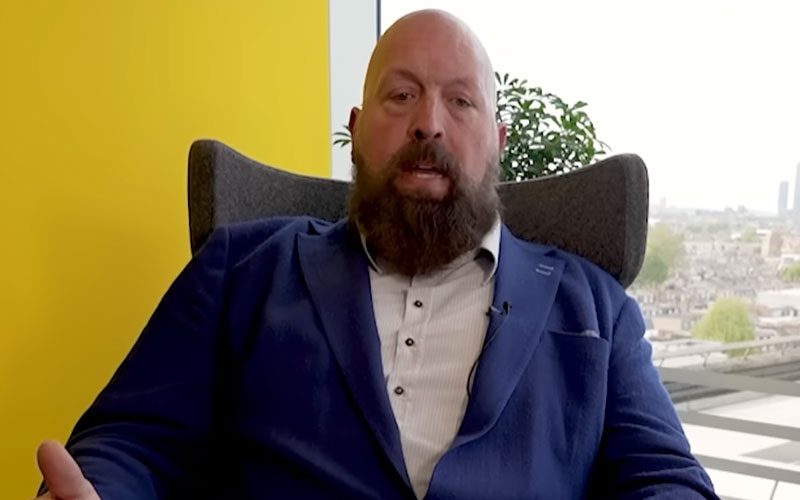
Paul Wight is facing the reality that giants don't always get a final bow

The Swiss Army Knife is finally running out of edges
In the high-gloss world of professional wrestling, the retirement match is the ultimate currency. We saw it with Sting in 2024, a masterclass in nostalgia and physical protection that allowed a legend to exit on his own terms. We are seeing the build-up for John Cena’s year-long farewell tour as we approach WrestleMania 41 in Las Vegas. But for Paul Wight, the man once billed as the successor to Andre the Giant, the exit ramp looks considerably more cluttered.
Wight recently admitted that a formal retirement match might not be in the cards for him. It is a sobering admission from a man who has spent over three decades as a foundational element of the industry. The reality of being 7 feet tall and weighing over 350 pounds is that the body does not negotiate. It dictates. While smaller workers like Bryan Danielson can pivot to a technical, ground-based style to preserve their longevity, a giant is always fighting gravity. And gravity is currently winning.
His tenure in AEW has been more of a slow fade than a final charge. Since arriving in 2021, his in-ring appearances have been sporadic at best, often serving as a special attraction rather than a competitive fixture. We saw the attempts to revive the Captain Insano character, a fun nod to The Waterboy, but even that felt like a creative placeholder for a man whose knees and hips have seen better decades. When Wight talks about not getting that final match, he isn’t being humble; he’s being a realist about the physical toll of a career spent bumping for men half his size.
The cost of being the promotion's most reliable prop
To understand why Wight is in this position, you have to look at the unique and often frustrating way he was booked for twenty years. Wight recently explained that his frequent, almost meme-worthy flips between being a heel and a babyface were born out of necessity. He was the Swiss Army Knife of the locker room. If a top babyface got injured, Big Show turned heel to fill the void. If a monster was needed to put over a rising star, Wight was the one to take the fall.
This versatility was a blessing for his bank account but a curse for his legacy. It is hard to maintain the aura of an unstoppable giant when your character motivations change with the weather. According to Ringside News, Wight acknowledged the frustration of these turns but viewed them as his contribution to the company. He was the bridge. He was the guy who could work with Floyd Mayweather at WrestleMania 24 one year and then lose to a celebrity or a mid-carder the next to help build their profile.
But there is a heavy price for that kind of utility. By the end of his WWE run, the "Please Retire" chants weren't just about his age; they were about a fanbase that had been conditioned to stop caring about his character. When you turn 30 or 40 times in a career, the audience stops trying to follow the logic. You become a prop. A giant prop, certainly, but a prop nonetheless. This lack of a consistent, decade-long narrative arc makes it difficult to construct a retirement match that feels like a necessary conclusion rather than just another booking segment.
The Andre shadow and the burden of size
Wight entered WCW in 1995 as The Giant, literally billed as the son of Andre. It was a massive burden to place on a 23-year-old. His debut match against Hulk Hogan at Halloween Havoc 1995 remains one of the more bizarre spectacles in wrestling history, featuring a monster truck battle and a fall off the roof of the Cobo Hall. From day one, his career was defined by spectacle rather than psychology. He was never allowed to just be a wrestler; he had to be a force of nature.
As he aged, that force of nature became increasingly human. The surgeries piled up. His 2021 move to AEW was supposed to be a fresh start, a chance to be the "Paul Wight" that WWE never let him be. Instead, it has mostly been a commentary role on Dark: Elevation and a series of squash matches. The sad truth is that the modern wrestling audience, which prizes workrate and high-speed transitions, has moved past the era of the lumbering giant. Even Omos in WWE or Satnam Singh in AEW struggle to find a meaningful place in an industry that now moves at 100 miles per hour.
Wight's realization that he might not get a retirement match is a reflection of this shift. He told WrestlingNews.co that he is content with his contributions, but there is an undeniable sting in seeing contemporaries like Sting get the grand send-off while he potentially fades into an ambassador role. It is the final indignity for the Swiss Army Knife: being tucked back into the handle because the promotion no longer needs that specific blade.
The critical failure of the AEW transition
If we are being honest, Wight’s move to AEW has been a disappointment from a creative standpoint. The initial hype of "no more BS" suggested a reinvention that never materialized. Instead of becoming a final-boss style gatekeeper for young talent, he was relegated to the commentary desk and occasional segments that felt out of place with the rest of the show. His match against QT Marshall at All Out 2021 was a 3-minute squash that did nothing for either man. It was a waste of a legend’s debut on a major pay-per-view.
The attempt to lean into the Captain Insano gimmick was another misfire. While it provided a few seconds of nostalgia for fans of 90s cinema, it felt like AEW was leaning into the same goofy, non-threatening giant tropes that Wight supposedly left WWE to escape. There is a disconnect between the man who wants to be taken seriously as an industry veteran and the man who puts on a singlet for a comedy bit. This creative indecision has likely contributed to the lack of momentum toward a final match. If you don't know who the character is, how can you write the ending?
Furthermore, the physical limitations are impossible to ignore. Watching Wight move in the ring during his limited AEW action has been difficult for long-time fans. The power is still there, but the mobility is gone. A retirement match requires a dance partner who can carry the load, but it also requires a protagonist who can still hit the notes. Wight is self-aware enough to know that a sub-par performance in a retirement match would do more harm to his legacy than no match at all. He doesn't want to be the guy who stayed five minutes too long at the party.
The legacy of the man behind the giant
Despite the booking frustrations and the lack of a clear end-point, Paul Wight’s impact on the business is massive. He was the only man to hold the WCW, WWE, ECW, and World Heavyweight Championships. He main-evented WrestleMania 16. He survived the Monday Night Wars and remained a top-tier earner for three different decades. That doesn't happen by accident. It happens because Wight was a professional who did what was asked of him, even when what was asked was a turn that made no sense.
The lack of a retirement match might actually be the most "giant" way for him to go. Andre didn't have a grand retirement match; he just stopped being able to do it. Big John Studd, King Kong Bundy, Bam Bam Bigelow—the history of giants in wrestling is often a history of quiet exits. The spectacle is for the entrance; the exit is usually a matter of health and necessity. Wight is simply joining a long line of men who were too big for the world to keep holding them up forever.
As F4WOnline reported, Wight remains focused on his future with AEW in whatever capacity they need him. Whether that is behind the microphone or in the front office, he seems at peace with the idea that the boots might already be hung up. In an industry that often doesn't let go until it's forced to, there is a certain dignity in Wight recognizing his own limit. He doesn't need to bleed in a ring in 2026 to prove he was one of the greats. The receipts are already in the books.
A final assessment of the 7-foot career
If Paul Wight never wrestles again, the story of his career will be one of immense talent hampered by a lack of protection. He was too good at being a utility player for his own good. While Stone Cold Steve Austin or The Rock could say "no" to bad creative because their characters were singular and protected, Wight said "yes" because he was a team player. He was the man who kept the show moving, even when the show was moving in the wrong direction.
The wrestling world in April 2026 is a different beast than the one he entered in 1995. The focus has shifted to the UCL-style precision of the elite workrate era. There is less room for the circus-act spectacle that defined the 90s. But that doesn't mean Wight is irrelevant. His experience is a vital resource for a locker room full of young stars who haven't yet learned how to work with size. He can teach Omos things that no coach in the Performance Center can. He can show Satnam Singh how to carry himself as a threat without needing to do 450 splashes.
In the end, the retirement match is just a trope. The real legacy is the 31-year journey from a monster truck on a roof to a respected veteran at the commentary desk. Paul Wight might not get his "one more match," but he has had more matches, more turns, and more impact than almost anyone who has ever stepped through those ropes. If he chooses to walk away now, he does so with the knowledge that he was the last of a specific kind of giant—one who could do it all, even when he shouldn't have been asked to.
We should stop looking for the perfect ending and start appreciating the volume of the work. Wight was a 2-time WWE Champion and a 2-time World Heavyweight Champion during an era of absolute icons. You don't reach those heights without being exceptional. The Swiss Army Knife might be blunt now, but it helped build the house that everyone else is currently living in. And that is more than enough for any career, retirement match or not.
WWE Elite Series 110 - Roman Reigns
Acknowledge the Tribal Chief with this premium Elite figure.
Frequently Asked Questions
Why is Paul Wight unlikely to have a formal retirement match?
How did frequent character turns affect Paul Wight's legacy?
What role has Paul Wight played since joining AEW in 2021?
Who has Paul Wight helped build during his wrestling career?
How does Wight's career exit compare to Sting and John Cena?
More Coverage
When Ozzy wasn't looking: The weirdest wrestling crossover of the year
3 hours ago
AJ Styles is reflecting on his legacy while others look elsewhere
3 hours ago
Ethan Page is playing a dangerous game with his ego in NXT
3 hours ago
Ethan Page says his custom NXT title was the real top prize and fans are split
3 hours agoGear Check: Sorting the Must-Haves from the Merch Table Filler
4 hours ago
Why CM Punk vs Cody Rhodes is a game of psychological chicken
5 hours agoMore Analysis
Paul Wight is finally being honest about the end of the road
3 months, 1 week ago
Paul Wight knows the clock is ticking on his AEW career
3 months, 1 week ago
Paul Wight says he might skip the retirement match and fans are losing it
3 months, 1 week ago
Paul Wight deserves a better final act than these injury-prone tropes
3 months, 1 week agoPaul Wight's 'Giant Frame' isn't just a gimmick, it's a war story
2 months ago