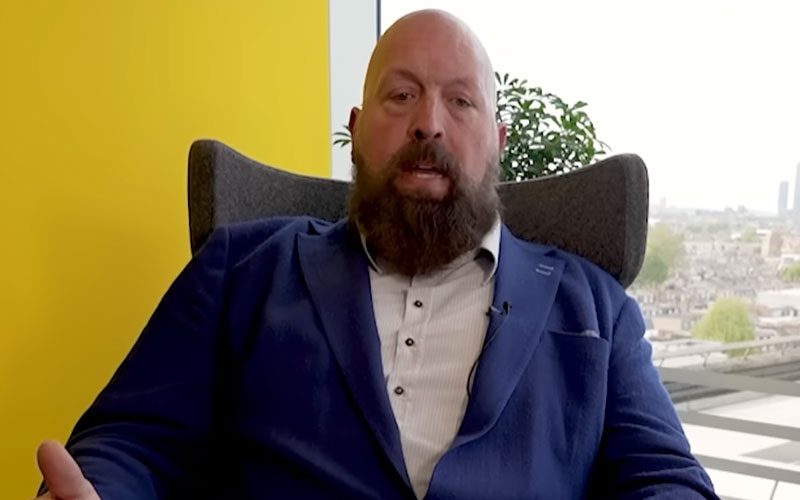
The giant weight of a three-decade career
Paul Wight is currently the human equivalent of a classic car that looks stunning in the driveway but starts making terrifying grinding noises the second you try to take it above forty miles per hour. He stands seven feet tall, weighs more than a small hatchback, and has spent the better part of thirty years being thrown onto wooden planks and concrete. Eventually, the bill comes due. According to a recent report from WrestlingNews.co, Wight is starting to admit what most of us have suspected since he first hobbled onto AEW television: he might never get that official retirement match.
For a guy who has been through more character turns than a revolving door at a busy hotel, this is a rare moment of stark, grounded reality. Wight has spent the last few years undergoing major surgeries, including a full knee replacement that sounds less like medical progress and more like a construction project. He has titanium in places where most people just have cartilage. You can see it in his walk. There is a specific hitch in his gait that tells you his body is essentially a collection of spare parts held together by sheer willpower and a really good insurance policy.
We like to pretend that every legend gets the Sting treatment. We want the confetti, the high-production video package, and the final bell where the hero goes out on their own terms. But for every Sting, there are a dozen guys who just sort of fade away because their knees decided they were finished before the creative team did. Wight seems to be coming to terms with the fact that he might be in the latter category. It is a tough pill to swallow for a man who was once marketed as the literal successor to Andre the Giant.
From The Giant to the guy behind the desk
Looking back at Wight’s career is like scrolling through a history book of professional wrestling’s various identity crises. He debuted in WCW as The Giant, winning the world title in his first match against Hulk Hogan. That is a level of pressure that would have crushed most twenty-year-olds, yet he carried it. He moved to WWE in 1999, tearing through the ring canvas to debut in a cage match between Stone Cold Steve Austin and Vince McMahon. For twenty-two years, he was the reliable monster that every promotion needed to make their top babyface look like a world-beater.
The problem is that being a giant is a job with a very steep expiration date. Biology is a jerk. It does not care how many fans you have or how much merch you sell. When you are that big, gravity is your primary opponent, and gravity eventually wins every single match. We saw the decline start years ago. There was that period in WWE where the fans were literally chanting for him to retire. It was cruel, sure, but it was also a reflection of a fan base that was tired of seeing a legend struggle to do the things that once came naturally.
The AEW gamble that didn't quite pay off
When Paul Wight jumped to AEW in 2021, the hype was massive. People thought we were going to get a revitalized version of the Big Show. We were promised the return of Captain Insano, the character from The Waterboy that has lived in the back of our brains for decades. Instead, we mostly got a guy in a very nice polo shirt sitting at a commentary desk. Aside from a few sporadic matches where he looked understandably protected, the "in-ring future" has felt more like a hypothetical than a reality.
Let’s be honest for a second: the AEW run has been a disappointment. He was signed as a massive marquee name, but he has largely been invisible in the grand scheme of the promotion's storytelling. If his career ends tomorrow without another match, his AEW tenure will be remembered as a strange, quiet epilogue to a loud, chaotic book. It is a classic case of a promotion buying a Ferrari and then only using it to drive to the mailbox at the end of the driveway. You have one of the greatest big men in history, and you have him calling matches for YouTube.
Why the 'one last match' trope is overrated
Wrestling fans are obsessed with closure. We want the narrative arc to be perfect. We want the veteran to put over the young star in a twenty-minute epic before leaving their boots in the center of the ring. But why? Paul Wight has nothing left to prove. He has won every title that matters. He has shared the ring with everyone from The Rock to Brock Lesnar. He even fought a sumo wrestler at WrestleMania and survived a match with Floyd Mayweather where he actually looked like a terrifying threat.
If he never wrestles again, his legacy is perfectly safe. He is the only man to hold the WCW, WWE, and ECW world titles. He was a cornerstone of the industry during its most profitable era. Trying to squeeze one last match out of a body that has already given thirty years of service feels less like a tribute and more like a risk. We have all seen the legendary icons who stayed too long. We have seen the matches that make you wince because you’re afraid someone is actually going to get paralyzed in real time. Wight is smart enough to know that a retirement match isn't worth a lifetime in a wheelchair.
"I may not get a retirement match. I’ve had a lot of surgeries. I’ve had both knees replaced, a hip replaced."
That quote is the sound of a man who has finally looked in the mirror and realized that the monster in the reflection has some rust on the gears. It is refreshing to hear a wrestler speak with that kind of honesty. Usually, these guys will tell you they have one more run in them until they are eighty-five years old and can't find their car keys. Wight is being a realist. He knows that his job now is to mentor the next generation and keep his name in the conversation without having to take a bump on his surgically repaired hips.
The shadow of WrestleMania 41
With WrestleMania 41 only twelve days away in Las Vegas, the nostalgia is hitting an all-time high. Everyone is looking for those surprise appearances and legendary cameos. John Cena is on his farewell tour. CM Punk is back in a major spot. It would be easy for a guy like Wight to feel the itch to get back out there under the bright lights. But the grass isn't always greener, especially when you have to walk on it with artificial joints. The spectacle of the modern game has passed him by in terms of pure athleticism.
The current crop of giants, guys like Omos or even Powerhouse Hobbs, are moving at a pace that Wight simply can't match anymore. Wrestling has evolved into a high-speed, high-impact sport that doesn't have much room for the slow, methodical giants of the nineties. If Wight tried to keep up with the current AEW or WWE rosters, he would likely end up back in the hospital within five minutes. That isn't a knock on him; it's just the reality of 2026. The game changed, and he was lucky enough to be the king of the old version for a very long time.
A legacy defined by more than a final pinfall
If we never see Paul Wight step through the ropes again, we should celebrate it. It means he got out with his faculties intact. It means he didn't become a parody of himself. He can spend the rest of his days telling stories, making movies, and being the massive, charismatic presence that he has always been. He doesn't need a three-count to validate a career that spanned three different decades and saw him become a household name.
The critical truth is that Wight’s transition to AEW was never about the wrestling. It was about the branding and the veteran presence in the locker room. If the fans feel cheated because they didn't get one last choke slam, that is on them. Wight has given enough. He has broken his body for our entertainment for thirty years, and if he wants to spend the rest of his life sitting in a comfortable chair and talking about the business, he has more than earned that right. Sometimes the best retirement match is the one you decide not to have.
In the end, Paul Wight’s honesty is his best attribute. He isn't selling us a dream that he can't deliver. He isn't promising a comeback that will only end in disappointment. He is telling us that the Giant is tired, and honestly, we should be tired for him. Let the man enjoy his retirement, whether it comes with a bell or just a quiet exit stage left. He has earned the silence.