The shadow of the Performance Center is fading
With NXT Stand & Deliver 2026 officially in the books as of this morning, April 7, 2026, the industry is forced to reckon with a transformation that has been brewing for eighteen months. The Wrestling Inc. staff recently asked where we go from here, and the answer isn't found in a scouting report. It is found in the tactical shift of how these matches are structured.
For years, NXT was a classroom where we tolerated missed cues and clunky transitions because it was developmental. That era is dead. What we saw in the Allegiant Stadium-adjacent venue was a product that, in many ways, outshines the main roster in terms of technical pacing and logic. Shawn Michaels has moved away from the 'spot-fest' mentality and toward a grueling, psychology-heavy style that demands more from the athletes.
Oba Femi and the gravity of the main event
The standout performance of the night was undoubtedly Oba Femi. At **245 pounds**, Femi is currently the most efficient worker in the company. He doesn't waste energy on unnecessary theatricality. In his defense of the NXT Championship, he controlled the center of the ring for the first ten minutes, forcing his opponent to burn through their stamina with lateral movement that led nowhere.
Most 'big man' workers in WWE history rely on the hope-spot comeback. Femi does the opposite. He uses a suffocating front-headlock and subtle weight distribution to kill the momentum of smaller flyers before they can even hit the ropes. When he finally hit the pop-up powerbomb at the **18:42** mark, it wasn't a sudden finish; it was the inevitable conclusion of a twenty-minute structural demolition.
The women's division has a pacing problem
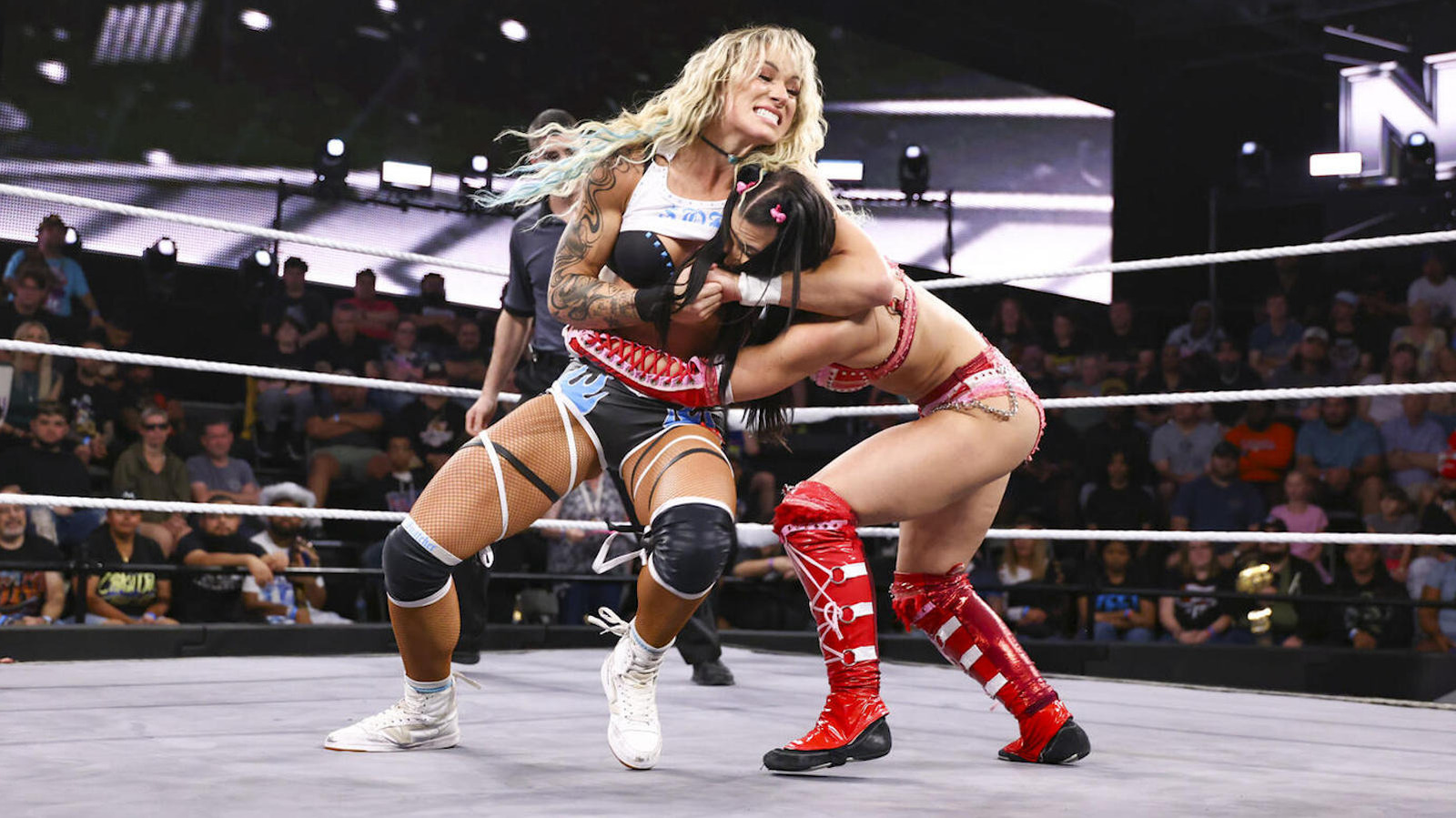
It is impossible to ignore the sheer depth of the women's locker room, but Stand & Deliver exposed a growing issue with match length. We are seeing a trend where every match is booked to be an epic, regardless of the story. Sol Ruca and Roxanne Perez are incredible athletes, but their encounter suffered from 'near-fall fatigue' by the fifteen-minute mark.
A critical observation that needs to be made: not every title match needs seven kick-outs from a finishing move. When Perez kicked out of a top-rope variant of the Sol Snatcher, the live crowd didn't roar; they exhaled in confusion. This kind of booking devalues the internal logic of the match. If the strongest move in a wrestler's arsenal doesn't end the fight, the rest of the match feels like a choreographed rehearsal rather than a competition.
The mid-card tactical vacuum
While the top of the card is thriving, the North American Title picture feels stagnant. The multi-man ladder match was a chaotic mess that lacked a cohesive narrative thread. We saw three different instances of wrestlers standing around on the floor, clearly waiting to catch a diving opponent. This is the 'indie' habit that NXT was supposed to have ironed out by now.
Tony D’Angelo’s recent work has been a bright spot, particularly his transition into a more grounded, submission-based style. He has realized that he cannot out-jump the younger recruits. By focusing on the 'Family' business as a tactical advantage—using distractions to setup a localized attack on the left knee—he is bringing back a level of heel psychology that has been missing since the Black and Gold era.
The main roster call-up trap
As we look toward WrestleMania **41** in just twelve days, the draft rumors are swirling. But history suggests that 'moving up' is often a lateral move at best. The tactical freedom these wrestlers have in NXT is rarely granted on Monday Night Raw. In the Performance Center, they are allowed to fail and iterate. On the main roster, a single blown spot in a three-minute TV segment can result in a six-month stint in catering.
Je'Von Evans is the name on everyone's lips, but he should stay put. His high-flying offense requires a specific kind of 'base' opponent that the current SmackDown roster lacks. If you put Evans in a ring with a lumbering veteran who can't keep up with his **714 days** of accelerated development, his stock will drop. He needs another year of working with varied styles in Orlando before he is ready for the grind of the road.
Tag team wrestling is on life support
If there was one major disappointment from Stand & Deliver, it was the tag team title match. The division has become a collection of 'thrown together' pairings that lack any real chemistry. We saw a total of six blind tags that went nowhere. In a proper tag match, the illegal man is a tactical weapon; here, they were just props waiting for their turn to do a superkick.
The lack of traditional 'tag team psychology'—cutting off the ring, working a limb, the hot tag tease—is glaring. Instead, we are getting 'Tornado' style matches disguised as standard tag bouts. This is a failure of coaching. If NXT wants to be a serious third brand, it needs to stop treating its tag division as a waiting room for future singles stars.
The WrestleMania 41 connection
Everything in NXT right now is being viewed through the lens of Las Vegas. Triple H has been spotted backstage at several recent tapings, and the influence of the 'Paul Levesque Era' is obvious. There is a concerted effort to make the shows look and feel like mini-PLEs. The lighting is darker, the commentary is more focused on sports-like analysis, and the 'gimmicks' are being dialed back in favor of 'characters.'
The critical flaw in this approach is that it strips away some of the charm that made NXT unique. When it becomes just 'Junior Raw,' it loses its soul. We don't need two versions of the same product. We need NXT to remain the experimental lab where a wrestler like Oba Femi can spend twenty minutes dismantling a limb without the pressure of a commercial break every four minutes.
My confident prediction
Despite the flaws in the mid-card and the tag division, the trajectory is clear. By the time we reach WWE Backlash in May, the NXT roster will look vastly different. My prediction: **0-3** will be the record for NXT call-ups in their debut PLE matches this summer. Not because they aren't talented, but because the main roster writers still don't understand how to translate the tactical brilliance of the Shawn Michaels era to the casual audience.
Oba Femi will remain the NXT Champion through the end of 2026. He is a once-in-a-generation foundational piece that you do not move until you have a stadium-ready replacement. There is nobody in the current crop of recruits who can match his presence or his technical discipline. The 'Where do we go from here' answer is simple: we go where Oba Femi tells us to go.