The Price of Being 'Super Cena'
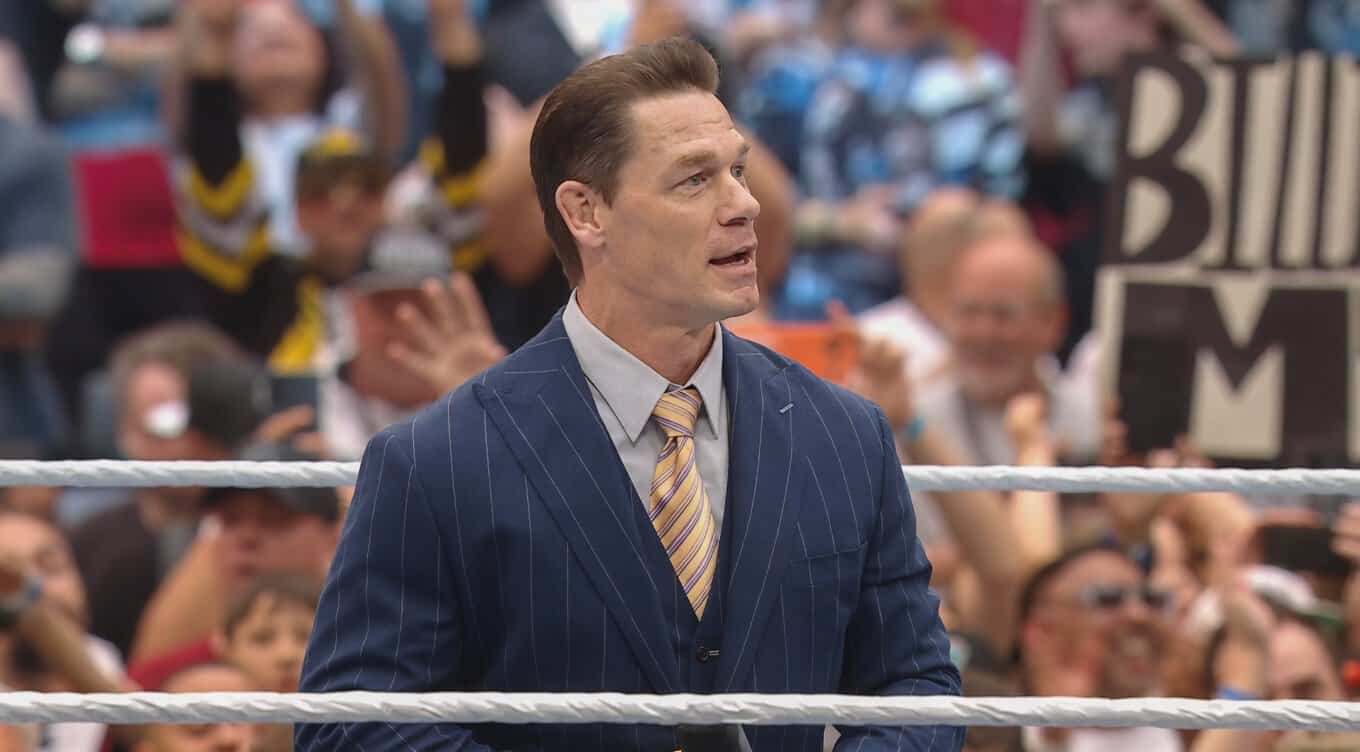
John Cena is talking about the future. In a recent interview, he spoke of wanting to “swing for something new” in a business where every story feels like it’s been told. It’s the kind of ambitious talk that defined his two-decade run on top. But as Cena maps out a potential final chapter culminating at WrestleMania 41, the biggest question isn’t creative, it’s medical.
After a career built on superhuman resilience, what can his body realistically give? We are long past the days of Cena wrestling 250 nights a year. A deep dive into his injury history provides a sobering blueprint for what that “something new” might have to look like — a story defined as much by physical limitations as by creative ambition.
The First Crack in the Armor
For years, John Cena seemed indestructible. Then came October 1, 2007. During a match against Mr. Kennedy on Monday Night Raw, Cena tore his pectoral muscle completely off the bone while executing a simple hip toss. The visual was gruesome; the muscle rolling up into his shoulder. The pop was audible. It was the first time the seemingly invincible hero looked truly broken.
The initial prognosis was a seven to twelve-month recovery. It was an injury that would have ended the year, and possibly the title reign, of any normal performer. It was assumed he would miss WrestleMania. Instead, Cena returned in just four months, making a shocking and legendary entrance as the #30 entrant in the 2008 Royal Rumble. It was a career-defining moment, but it set a dangerous precedent. The miraculous recovery became part of the Cena mythos, obscuring the severe trauma his body had just endured.
That comeback tour wasn't without its costs. Later in 2008, Cena would undergo surgery for a herniated disc in his neck, a consequence of the relentless, hard-impact style he employed. The message was clear: the machine was still running, but the warning lights were beginning to flash.
The Decade-Long Bill Comes Due
If the late 2000s showed the first signs of wear, the 2010s were when the bill truly came due. Cena’s body, pushed to its limit for over a decade, began to break down in ways even his legendary toughness couldn’t hide. In 2013, he entered his blockbuster SummerSlam match against Daniel Bryan with a torn triceps. His left arm was visibly swollen, a grotesque lump the size of a baseball bulging from his elbow.
He worked the entire match, a nearly 30-minute classic, before putting Bryan over for the WWE Championship. It was a gutsy, if not reckless, performance. The subsequent surgery and another multi-month layoff followed. The pattern was becoming familiar: a major injury, a surprisingly quick return, and right back into the fire. But the gaps between injuries were shrinking.
The most significant turning point came in early 2016. WWE announced Cena required major surgery for a shoulder injury, a torn rotator cuff. This one finally broke the cycle, forcing him to miss WrestleMania 32, an event in front of over 100,000 fans in Dallas where he was expected to have a marquee match. It was the clearest sign yet that the era of John Cena as the full-time, year-round centerpiece of WWE was over. Since that surgery, his schedule has been permanently reduced, his appearances becoming special attractions rather than weekly fixtures.
What Does 'Something New' Look Like in 2026?
This brings us back to Cena’s desire to “swing for something new.” His ambition is admirable, but his physical history is undeniable. He has suffered catastrophic tears to his pectoral, triceps, and rotator cuff, along with neck surgery. He is now, in May 2026, a 49-year-old part-time performer with a thriving Hollywood career.
The critical observation here is that his pursuit of a new narrative might be less a creative choice and more a physical necessity. The “new” story cannot be the “old” story — it can’t be Cena absorbing tremendous punishment night after night before hitting the Attitude Adjustment for the win. His body simply won’t allow it. The days of John Cena wrestling grueling, 25-minute main events on a regular basis are gone, and they are not coming back.
Whatever he does next, particularly with his farewell run expected at WrestleMania 41, must be creatively sharp to compensate for what he can no longer deliver physically. It might involve more character work, more cinematic presentation, or a story that cleverly protects him from the high-impact sequences that have taken such a toll. WWE's continued reliance on a star from a previous generation, despite his injury portfolio, is a critique in itself. It speaks to a difficulty in building new headliners who can command the same attention, forcing them to call upon a legend whose gas tank is, understandably, nearing empty.
Cena’s final chapter will be a fascinating case study. He wants to write a new story, but he’ll have to do it with a body that remembers every single chapter that came before. The ending has to be different, because the man writing it is no longer the same.
Read Next
- A 5-Year-Old Podcast Just Became a WWE Crystal Ball
- WWE's World Cup Problem: A Roster of Nations, A Fandom of One
- AEW talent wants The New Day, and Tony Khan should pay whatever it takes
- The Undertaker's Mexican Vacation Is A Bigger Deal Than You Think
- 🏆 WrestleMania 41 — Full Coverage Hub
- 👴 John Cena Retirement Tour 2026