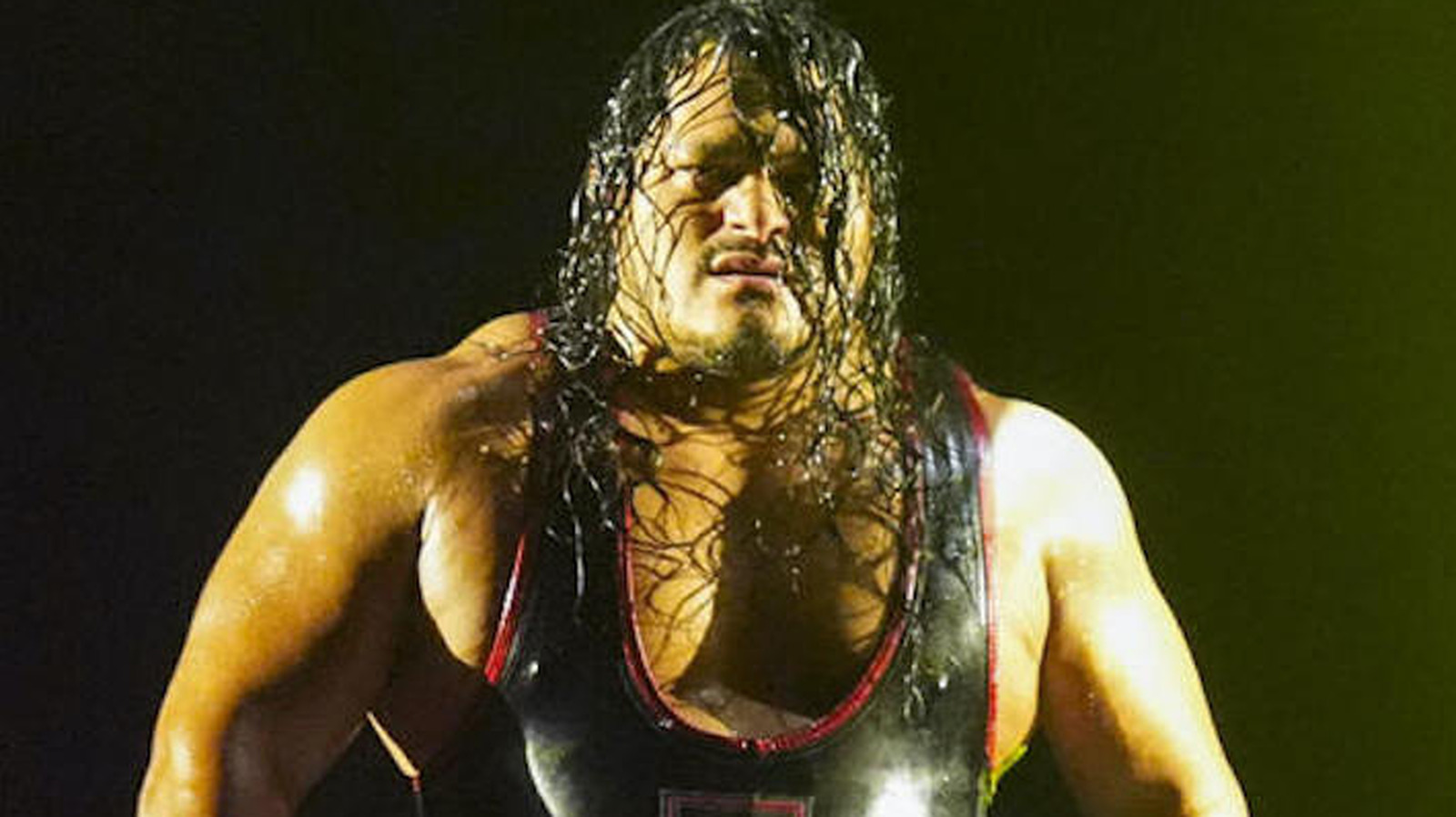
A predictable end to a baffling experiment
Jeff Cobb visiting New Japan Pro-Wrestling immediately following his WWE release isn't exactly a shock. According to a recent report from Wrestling Inc, the former Olympian was spotted backstage at NJPW Dontaku. For a guy who spent eight years dominating the Japanese rings before a brief, forgettable stint in America, this feels less like a visit and more like a necessary homecoming.
Cobb signed with WWE in 2025. From a purely athletic standpoint, it made sense to the executives in Stamford. He is a freakishly strong, agile big man with genuine Olympic credentials. But professional wrestling isn't just a combine test. It requires an alignment of booking, timing, and stylistic fit that simply never materialized.
WWE operates on a very rigid television rhythm. Matches on Raw and SmackDown are heavily structured around commercial breaks. This forces a staccato pacing that disrupts organic storytelling. You get a flurry of offense, a sudden chinlock, a three-minute commercial break, and a rushed finishing sequence.
Cobb thrives in the slow, methodical build. He needs a 15-minute runway to properly dismantle someone. In New Japan, he was an immovable object who slowly broke down the willpower of his opponents. In WWE, he was frequently reduced to playing the heavy in mid-card tag team matches.
It was a fundamental misunderstanding of what makes him effective. You don't take a guy whose entire appeal is throwing heavyweights over his head and stick him in three-minute television sprints. It strips away the aura. The release was inevitable, and frankly, it is the best possible outcome for his career.
The mechanics of a heavy hitter
To understand why Cobb needs New Japan, you have to look closely at the mechanics of his offense. His style is completely reliant on continuous momentum and a low center of gravity. He wrestles like a collegiate standout who figured out how to throw a lariat.
Take his signature Tour of the Islands. It isn't a static, standalone move. It requires an opponent running the ropes, feeding into Cobb's orbit, allowing him to use their own velocity to generate the spin. In a standard NJPW main event, that sequence is the culmination of a dozen escalating counters and reversals.
In his brief WWE run, you could visibly see him struggling to hit it cleanly. The ring positioning was often slightly off. Opponents weren't hitting the ropes with the same reckless abandon. The WWE ring ropes are notoriously tighter and made of actual elevator cable, completely altering the rebound timing compared to NJPW rings.
The result was a finishing move that looked more like a labored scoop slam than a sudden, violent rotation. His timing was completely thrown off by the environment.
His suplex variations suffered the exact same fate. Cobb throws a beautiful, bridging deadlift German suplex. But on American television, the emphasis is heavily placed on striking combinations and quick near-falls. The time required to set up his deadlift power spots killed the crowd heat dead in its tracks.
It was painful to watch a legitimate athletic freak get bogged down by camera cuts and producer notes. He looked like a man trying to run a sprint underwater, constantly fighting against the current of WWE's preferred house style.
Where the blame actually lies
It would be easy to put all the blame entirely on WWE's creative team. The internet is already doing that. But Cobb isn't entirely blameless in this failure. The American product exposed some glaring, undeniable holes in his game.
His pacing is geared entirely toward singles competition. When he was thrown into chaotic multi-man tag matches on Friday nights, he frequently looked lost on the apron. His timing on breaking up pins was consistently a half-second too slow, leading to awkward referee hesitations.
Then there is the promo work. This is the great filter of American television wrestling. NJPW requires you to cut a quick, intense backstage promo after a grueling match, usually while pouring sweat and breathing heavily. WWE requires you to stand in the center of the ring, hold a live microphone, and command a crowd of ten thousand people.
Cobb never figured out the latter. His delivery was painfully wooden. He stumbled over scripted lines and completely failed to connect with the live audience between the bells. If you cannot talk in WWE, you hit a glass ceiling remarkably fast.
He was signed based on his physical tools, but he simply lacked the theatrical polish required to survive the main roster. It was a failed experiment on both sides. WWE didn't know how to book him, and Cobb didn't know how to adapt his presentation.
The state of the United Empire
The backstage visit at Dontaku tells us everything we need to know. Cobb is heading back to where his specific brand of violence is properly valued. The timing could not be better for New Japan.
The heavyweight division has felt surprisingly light over the last six months. The departure of several key main eventers has left a vacuum at the top of the card. The United Empire faction, which Cobb helped build into a dominant force, has been treading water.
Great-O-Khan is an excellent character worker, but the group desperately needs its enforcer back to restore some in-ring credibility. They need the guy who can credibly threaten the IWGP World Heavyweight Champion on any given night.
Cobb brings immediate legitimacy. Japanese fans remember his incredible run in the G1 Climax 31. He strung together an undefeated streak in block competition that felt genuinely terrifying. They remember him tossing guys like Shingo Takagi and Kazuchika Okada around like they were young lions.
He doesn't need to cut 15-minute promos in Tokyo. He just needs to show up, scowl, and hit a stalling vertical suplex that makes Korakuen Hall gasp.
There is a massive difference between being a mid-card afterthought in Orlando and being a protected monster in Osaka. Cobb is built for the grueling, physical style of the cerulean blue mat.
The G1 Climax implications
If we look slightly further ahead, Cobb's return completely reshapes the math for the upcoming G1 Climax tournament. Last year's tournament suffered from a lack of believable super-heavyweights. You need a few immovable objects in the blocks to test the resilience of the top stars.
Cobb serves as the ultimate spoiler in a round-robin format. You can book him to beat absolutely anyone on any given night without hurting the loser's credibility. He is a walking trap game for the current IWGP World Heavyweight Champion.
Think about the sheer physical toll he puts on opponents. A 15-minute block match with Cobb means an opponent is taking at least half a dozen high-impact suplexes. It forces the rest of the roster to adapt their strategies.
You cannot try to out-wrestle him on the mat. His amateur pedigree makes that a suicidal game plan. He competed in the 2004 Olympics in freestyle wrestling. He knows exactly how to control a waistlock and manipulate positioning.
Opponents are forced into high-risk aerial offense or reckless striking exchanges to bypass his grappling. That dynamic alone makes every single one of his matches tactically fascinating.
Predicting the summer schedule
With NJPW Dominion just around the corner in June, the booking writes itself. A surprise appearance in Osaka would instantly reset his career trajectory.
Expect him to bypass the mid-card entirely. He should target a champion immediately upon his return. A NEVER Openweight Championship challenge makes the most tactical sense. That title is designed entirely for bruising, hard-hitting brawls.
He needs a match that reminds everyone exactly who he is. Give him 20 minutes against a tough, heavy-hitting opponent like Tomohiro Ishii or Shingo Takagi. Let him absorb some damage, fire up, and hit the Tour of the Islands for a decisive, violent pinfall.
My prediction is simple and confident. Jeff Cobb will show up at Dominion, lay out the NEVER Openweight Champion, and secure his spot in this year's G1 Climax tournament. He will re-enter the United Empire, assume the role of their premier heavyweight threat, and remind the wrestling world why he was so feared in the first place.
He doesn't need to rebuild his character. The Japanese audience doesn't care about the last twelve months of television time in America. They care about what happens when the bell rings, and Cobb is still one of the most uniquely gifted athletes on the planet.
The WWE run will be quickly forgotten. It will be a footnote on his Wikipedia page. The monster is heading home, and the entire Japanese roster should be very nervous about what he does next.