The Backstage Casino
The back office of WWE has always been a casino. Executives gamble on talent. Vince McMahon gambled on pay-per-view buys. The wrestlers themselves constantly gamble on their own bodies. But sometimes, the bets are literal.
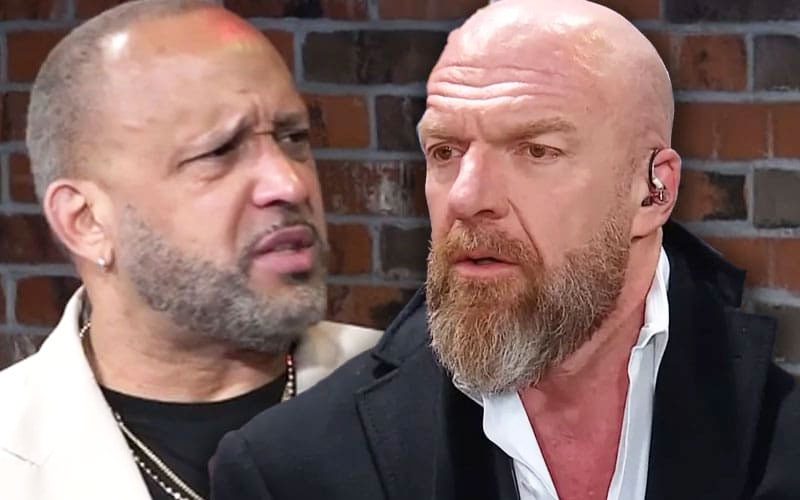
According to recent revelations, MVP put his money where his mouth is. The veteran manager and in-ring talent struck a bet with disgraced former WWE executive John Laurinaitis. The stakes were simple. MVP believed he could take a floundering member of the roster and spin a compelling television program out of them.
Laurinaitis took the under.
The subject of this wager was Apollo Crews.
A Floundering Prospect
To understand the weight of this bet, you have to look at where Crews was positioned before the spring of 2020. He was the definition of a blue-chip prospect who had stalled out on the main roster. He had all the athletic tools. He could hit a standing moonsault with the ease of a man stepping off a curb.
But he lacked a defined character. He smiled. He wrestled well. He lost. That was the loop.
Laurinaitis served as Head of Talent Relations during multiple controversial stints. He clearly did not see top-tier potential in Crews. He saw a reliable worker who could make other people look good on a Tuesday night in Toledo. MVP saw a project he could fix.
The timing of this bet aligns with one of the most bizarre periods in WWE history. The world shut down. WWE moved its operations entirely to the empty Performance Center in Orlando. There were no fans to pop for entrances. There was only a quiet, sterile room and a television camera.
MVP had originally returned to WWE at the 2020 Royal Rumble for a brief cameo. He stuck around, transitioning into a managerial role. He recognized that the empty arena era required a different kind of storytelling. It demanded heavy dialogue, clear character motivations, and physical intensity.
He targeted Crews. At the time, Crews had started to string together some wins on Monday Night Raw. MVP approached him on-screen, offering his services as a manager. He pitched himself as the veteran who could guide the young athlete to the next level.
Crews declined. That rejection was the spark for the entire program.
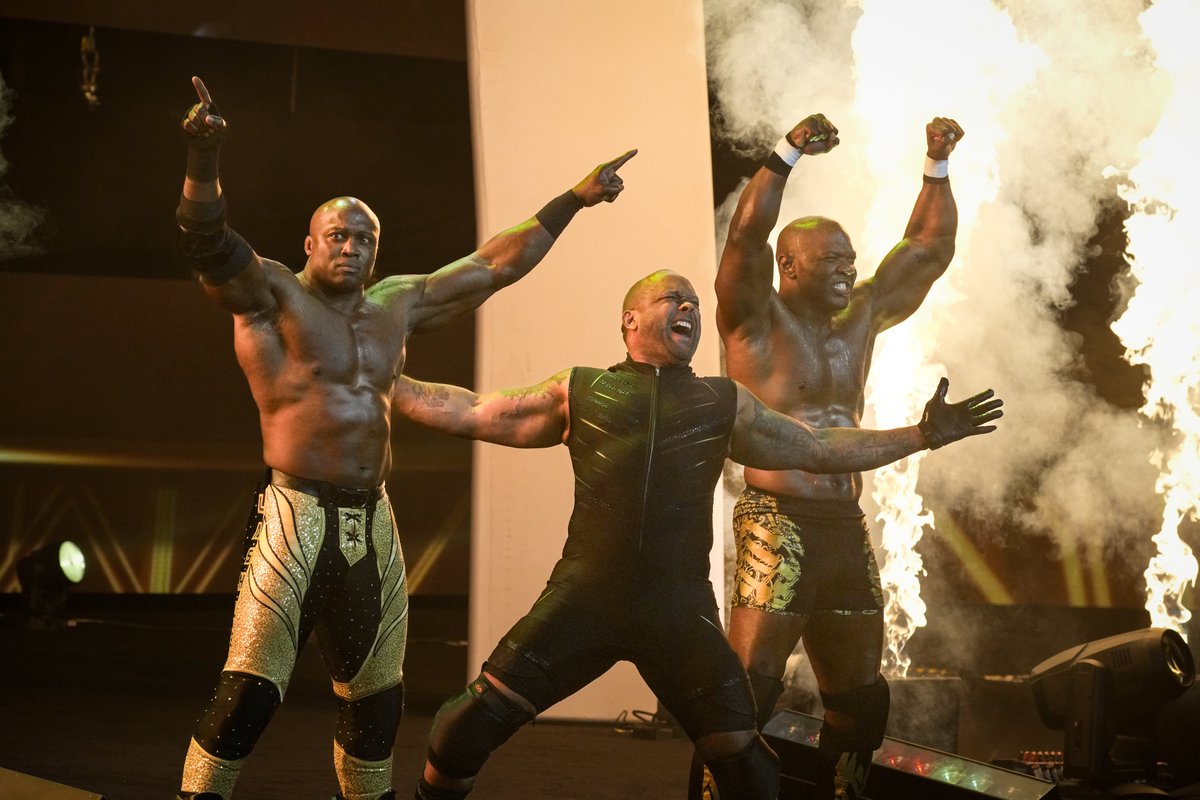
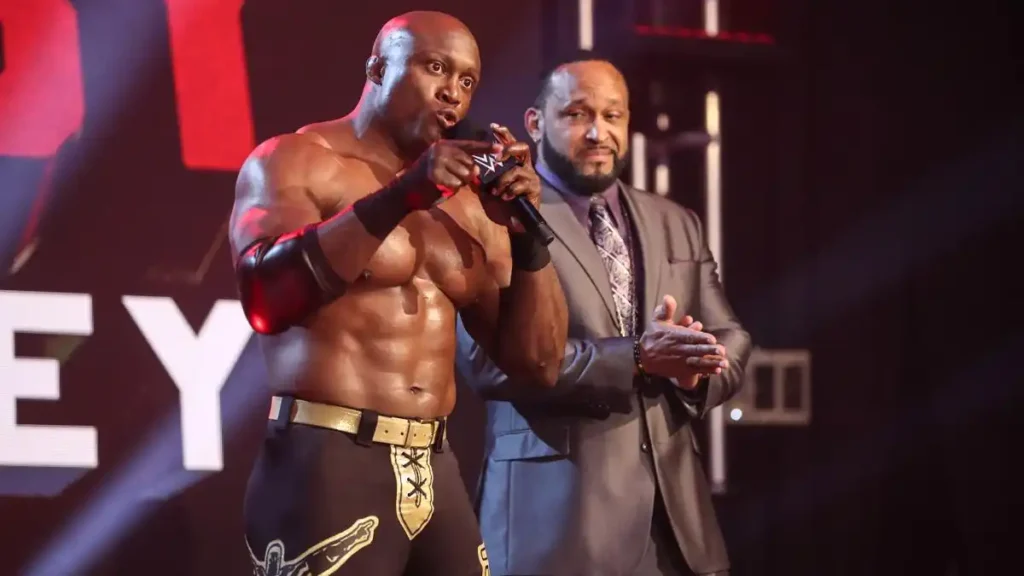
MVP took the rejection personally. He recruited Bobby Lashley, a physical monster who was floating aimlessly after a disastrous storyline involving Rusev and Lana. MVP and Lashley formed an alliance built on violence and expensive suits.
They set their sights on Crews, who had managed to win the United States Championship from Andrade. This is where the booking actually got smart. MVP didn't just challenge Crews to a match. He challenged his pride.
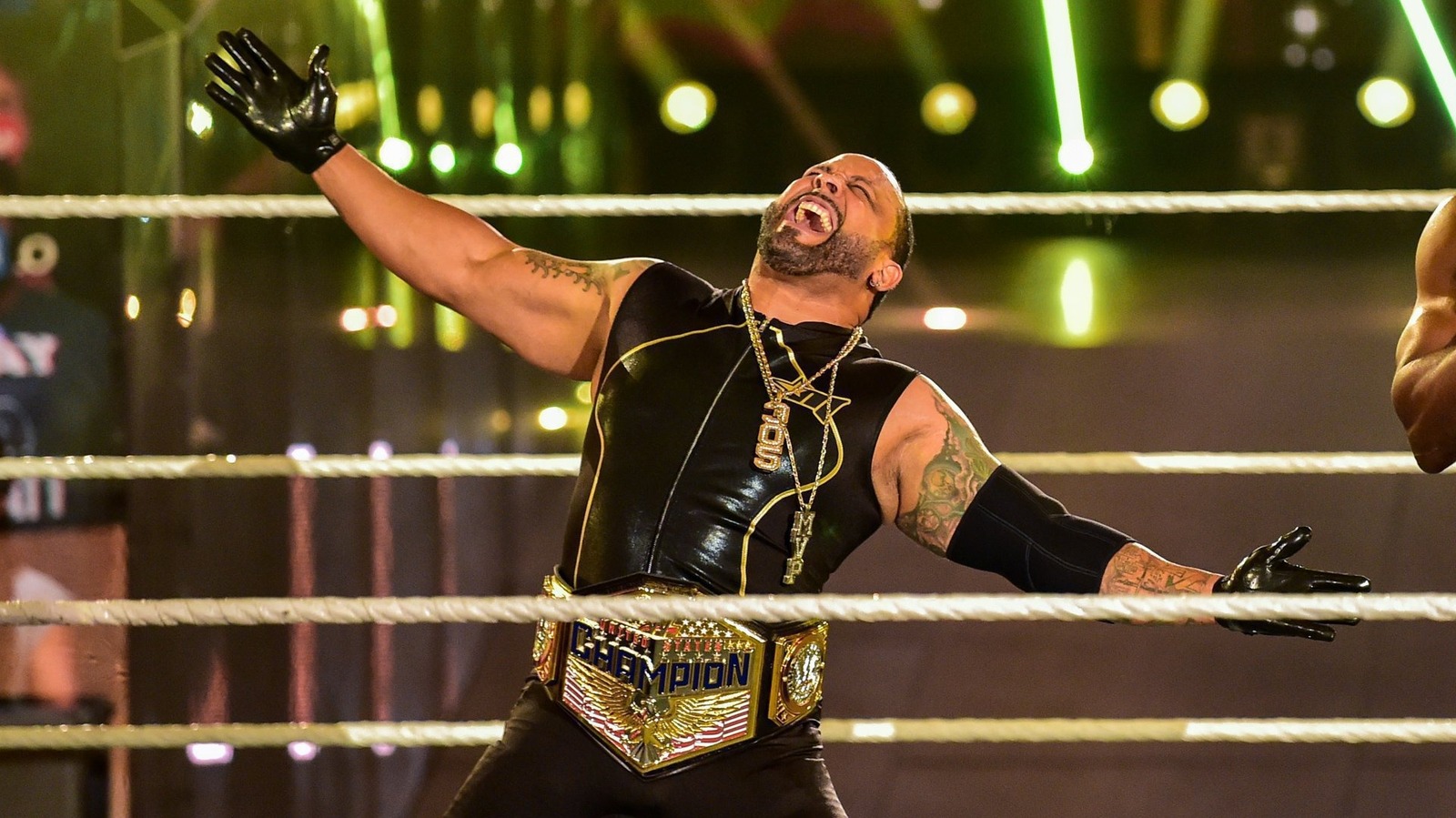
MVP began carrying around a brand new United States Championship belt. He declared himself the true champion. He argued that Crews was keeping the title warm. MVP branded him a paper champion who wasn't ready for the pressure of a featured spotlight.
The Medical Reality of The Hurt Lock
This culminated at Extreme Rules in July 2020. This is where the medical reality of wrestling storylines comes into play. WWE wrote an injury angle to protect Crews and stretch the feud.
Lashley locked Crews in the Full Nelson on Raw. The storyline result was a bulging disc and severe nerve entrapment in his cervical spine. He was forced to miss Extreme Rules.
When looking back at this feud through a medical lens, the trauma inflicted by Lashley was the turning point. The cervical spine is incredibly delicate. A bulging disc in the C5 or C6 region causes radiculopathy. That means shooting pain, numbness, and severe weakness down the arm. This perfectly explains why Crews was unable to compete.
Lashley's application of the hold, rebranded as The Hurt Lock, is a biomechanical nightmare. He locks his hands behind the opponent's neck, applying massive anterior pressure while simultaneously hyperextending the thoracic and cervical spine. The torque generated by a man of Lashley's muscular density forces the intervertebral discs outward.
If a disc bulges and presses against the exiting nerve roots, the bicep and tricep lose their firing capacity. A wrestler cannot perform a toss powerbomb or a standing moonsault if their arms are dead. The medical staff made the right call in pulling Crews from the card. Competing with a compromised cervical spine against a powerhouse risks permanent nerve damage.
MVP walked to the ring at the pay-per-view, grabbed a microphone, and declared himself the winner by forfeit. He strapped his custom belt around his waist. It was classic heel heat, generated in a building with zero paying customers.
The SummerSlam Payoff
Crews underwent intensive storyline physical therapy. Rehabilitation for a cervical disc issue involves traction, reducing the inflammation around the nerve root, and strengthening the supporting musculature of the neck and upper back.
He returned faster than many anticipated. His rapid recovery suggests the disc bulge was managed conservatively, likely with corticosteroid injections to rapidly drop the localized swelling. But the risk of re-injury was extremely high when he finally faced MVP at SummerSlam.
The injury angle worked beautifully. It gave Crews a reason to be angry. When he returned to television, he wasn't just the smiling athlete anymore. He was pissed off. He had a vendetta against MVP and Lashley.
They finally had their sanctioned match at SummerSlam 2020. Crews defeated MVP clean in the middle of the ring. He hit his toss powerbomb and pinned the veteran to consolidate the titles.
MVP's offense is ground-based and methodical. But it lacks the sheer concussive spinal compression of Lashley's power moves. This tactical error by MVP allowed Crews to survive the match and hit his power-based offense to secure the win.
It was a definitive victory. The storyline had successfully elevated Crews from a forgotten midcarder to a credible United States Champion who had overcome a multi-month, faction-based feud.
MVP won the bet. He took a wrestler that Laurinaitis had dismissed and turned him into a featured player on Monday Night Raw. He gave Crews a character arc. He gave him an obstacle to overcome.
The Creative Failure
But this is where WWE's systemic booking failures usually show up. The follow-through was atrocious.
MVP and Lashley immediately pivoted. At the Payback pay-per-view just one week after SummerSlam, Lashley destroyed Crews to win the United States Championship. Crews held the actual title for exactly 97 days before being flattened.
The Hurt Business fully formed, adding Shelton Benjamin and Cedric Alexander. They became the best act on WWE television during the ThunderDome era. MVP proved his worth ten times over by guiding Lashley to the WWE Championship.
He eventually found success again with his Nigerian Royalty gimmick. That run culminated in an Intercontinental Championship win at WrestleMania 37. But that required a complete character overhaul, entirely disconnected from the hard work MVP had put in a year prior.
The bet with Laurinaitis highlights a massive flaw in WWE's internal structure during that era. A talent like MVP shouldn't have to make backstage wagers to get a co-worker properly booked. The fact that a senior executive had written off a gifted athlete, only to be proven wrong by a veteran wrestler willing to put in the effort, is a damning indictment of the talent relations department.
It takes two people to make a wrestling match work. Crews delivered in the ring. He bumped heavily for Lashley. He showed more fire in his promos against MVP than he had in his entire WWE run up to that point.
But MVP was the architect. He recognized that wrestling is entirely about conflict. Without a compelling antagonist, a protagonist has nothing to do. MVP played the antagonist perfectly. He was arrogant, dismissive, and entirely believable.
The bet is a historical footnote now. MVP is no longer with WWE. Laurinaitis is gone from the company under a cloud of controversy and horrific allegations alongside Vince McMahon.
The industry moves fast. Storylines from six years ago are ancient history to a modern viewing audience. But the mechanics of getting someone over never change. It requires investment. It requires a story that makes sense. It requires veterans willing to look at the next generation and figure out how to elevate them.
MVP understood that assignment. He knew he could draw money and interest with Crews. He bet on his own ability to talk people into the building, even when the building was completely empty.
He won the bet. It is a shame the company couldn't figure out what to do with the winnings.