Darby Allin is absolutely right to refuse Mick Foley's final match request
The Dangerous Allure of the Final Bow
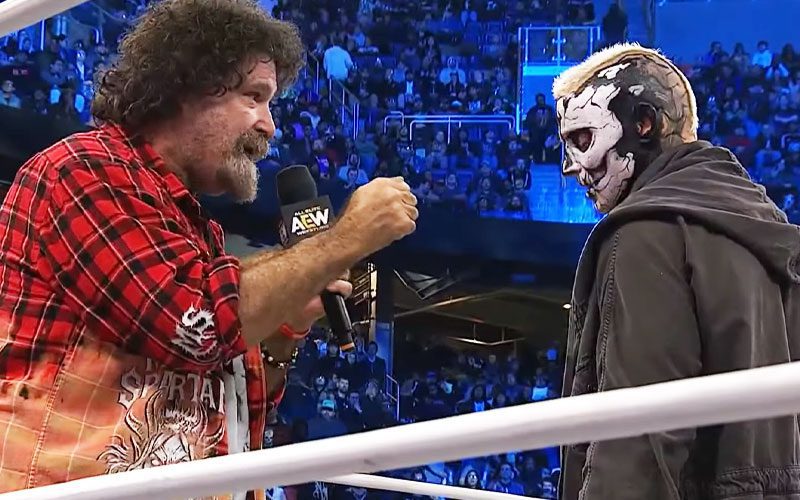
Wrestling has an unhealthy obsession with the final bow. Every legend wants their Shawn Michaels at WrestleMania 24 moment, a perfect theatrical exit that papers over the cracks of physical decay. Mick Foley, the sport's ultimate human pinball, is no exception. For years, the WWE Hall of Famer has chased the ghost of one last match, mooting a 60th birthday deathmatch that was eventually scuttled by concussion-related dizziness in April 2024.
Yet the desire never truly died. Foley recently floated AEW star Darby Allin as his dream opponent for a potential one-off return. The response from Allin, delivered in a Sports Illustrated interview published today, July 1, 2026, was a cold flat refusal: "I would never wrestle Mick. I would never wrestle against Mick."
This is not a slight. It is a rare act of professional sanity in a business that routinely trades the long-term health of its pioneers for cheap nostalgia pops. By closing this door, Allin is protecting Foley from himself, a point reinforced by Ringside News in their report on his refusal.
The Broken Physics of a Foley Comeback
To understand why Allin’s refusal is correct, one must look at the mechanical reality of Mick Foley’s body in 2026. Foley is 61 years old. His medical history reads like a trauma ward registry. He underwent a total hip replacement in 2016 and a total knee replacement in 2019, alongside multiple spinal fusions.
Foley deserves immense credit for his recent physical transformation. By early 2026, he had lost over 100 pounds from his peak weight of 372 pounds. He achieved this through DDP Yoga, swimming, and Wegovy. It is an inspiring health turnaround that will undoubtedly add years to his life.
But losing weight is not the same as absorbing kinetic energy. A standard flat-back bump requires the wrestler to fall from a vertical position, land on their upper back, and dissipate the force across their shoulders. For a person with replaced joints and a fused spine, this impact is not distributed. It is funneled directly into the artificial interfaces of the implants.
Furthermore, the concussion symptoms that stopped Foley's training in April 2024 are a major warning sign. Vestibular damage does not heal like a broken bone. The dizziness Foley experienced during basic rope running indicates that his brain can no longer handle the rapid changes in acceleration that wrestling requires.
The Neuro-Vestibular Reality
When a wrestler runs the ropes, they undergo rapid deceleration and acceleration that whips the head back and forth. For someone with Foley's history of traumatic brain injury, this motion triggers immediate vertigo. Expecting a vestibular system battered by decades of chair shots to navigate a modern wrestling ring is a recipe for disaster.
Even if Foley feels fine during light training, the pressure of a live match changes the physiology. Adrenaline masks pain, but it also increases heart rate and blood pressure, which can exacerbate vestibular issues. A sudden loss of balance during a high-impact spot could lead to a catastrophic fall.
Analyzing the Mechanics of a Darby Allin Match
The second issue is Darby Allin himself. Allin’s entire wrestling identity is built on reckless self-abandon. He is not a technician who works a wristlock; he is a human projectile. He matches his opponent's speed with a high-impact, high-frequency bump card that leaves little margin for error.
Consider Allin's match layout. In a typical singles bout, Allin takes an average of four high-impact bumps on hard surfaces. At Revolution 2024, during Sting’s retirement match, Allin launched himself off a 12-foot ladder through a pane of glass onto folding chairs. The spot occurred at the 11-minute mark and resulted in Allin needing 12 stitches in his back.
How does a 61-year-old Mick Foley fit into that style? If Foley is the opponent, he must either catch Allin or take these high-risk moves himself. A match between them would either be a slowed-down, sad showcase or a terrifying safety hazard.
The Physics of the Catch
Let's look at the mechanical requirements of catching a dive. The defender must execute three actions in sequence:
- Plant their feet and absorb the momentum of a 170-pound body moving at high speed.
- Flex their knees and hips to cushion the landing.
- Support the wrestler's weight to prevent them from landing on their head.
Foley's artificial knee and hip cannot withstand that load. If Foley fails to catch Allin, Allin lands on the concrete. If Foley catches him, Foley’s artificial joint could easily dislocate or fail.
If they wrestle a deathmatch style to bypass athletic maneuvers, the risks remain high. A deathmatch relies on weapons like barbed wire, tacks, and ladders. These require falls, and falls are exactly what Foley's doctors have warned against. There is no safe way to execute a Darby Allin match with Mick Foley in the opposite corner.
The Sting Blueprint vs. The Hardys Caveat
Allin is not opposed to working with legends; he just refuses to fight them. His partnership with Sting provides the perfect blueprint for how to handle aging icons. Sting’s AEW run from 2020 to 2024 was a booking triumph, ending with an undefeated record of 28-0.
The key to this success was the tag team format. In almost every match, Darby Allin did the physical labor. He took the beatdowns, worked the heat segments, and took the high-risk bumps while Sting waited for the hot tag.
This formula protected Sting’s neck and cardiac health while maximizing his star power. Sting didn't have to carry the physical narrative of a 20-minute singles match. He was free to hit his signature spots, deliver the Scorpion Death Drop, and look like a million bucks while Darby did the heavy lifting.
The Workload Split in Detail
Let's look at the numbers from Sting's final matches. At Full Gear 2023, Sting’s active in-ring time was just under four minutes. At Grand Slam 2022, it was less than three minutes. The match structure followed a predictable, yet highly effective, pattern.
Darby would start the match, absorb the heels' offense, and build to the hot tag. Sting would enter, clear the ring with Stinger Splashes, apply the Scorpion Deathlock, and leave the crowd happy.
Contrast this with the run of Matt and Jeff Hardy. In 2022, AEW booked the Hardys in traditional, high-workrate tag matches. At Double or Nothing 2022, Jeff Hardy wrestled a grueling 19-minute match against the Young Bucks, visibly laboring after mistiming a Whisper in the Wind at the 7-minute mark.
Allin understands this difference. In his Sports Illustrated interview, he explained his perspective:
"I wouldn't want to go out there and have that with somebody like Mick that a lot of people are saying he doesn't need to be in the ring. If he's gonna be in the ring, I wanna do everything to help him, like, by his side."
By refusing the singles match, Allin is advocating for the Sting model. He wants to be Foley's shield, not his executioner.
AEW's Nostalgia Trap and the Need for Restraint
AEW has often struggled to balance its appreciation for wrestling history with the reality of aging performers. The promotion has occasionally fallen into a nostalgia trap, putting past stars in positions where their physical limitations are painfully obvious. We saw this with Ric Flair's appearances leading up to Revolution 2024. While Flair was not wrestling, his presence in the ring felt awkward and disconnected from the modern product.
There is a fine line between honoring a legend and exploiting their inability to let go of the spotlight. If Tony Khan were to book Foley vs. Allin, it would cross that line. The match would be built on the morbid curiosity of whether Foley would survive the night.
That is not professional wrestling; it is a sideshow. The performance would quickly descend into a sad spectacle of physical decay.
The Creative Dead End
From a booking standpoint, a singles match between the two is a dead end. If Darby Allin wins, he has beaten a retired senior citizen. If Mick Foley wins, it damages the credibility of a young, active star who is supposed to be the future of the company.
Allin's refusal is a rare display of long-term thinking. He recognizes that the value of Mick Foley in 2026 is not in his ability to take a bump, but in his ability to tell a story. He wants to capture the emotional weight of Foley's character without the physical danger.
"I don't feel like I'd get out of it what we want, I feel like there's a lot more meat on the bone with me teaming with him."
A tag team run with Foley as the manager or occasional partner makes booking sense. Foley can cut promos, bring his legendary charisma, and occasionally hit a signature move like the double-arm DDT. Darby can handle the speed and danger, keeping the match quality high while keeping Foley safe.
Conclusion: The Responsibility of the Modern Wrestler
Wrestlers of Foley's generation were taught to go out on their shields. They were conditioned to believe that their worth was tied directly to their willingness to destroy their bodies. It is why so many of them struggle to retire, chasing one last pop long after their joints have failed them.
We saw this physical decline in Foley's final run in TNA. His match with Abyss at Bound for Glory 2009 lasted 11 minutes and 35 seconds and was a slow-motion walk through tacks and barbed wire. Expecting him to perform in 2026 is a complete detachment from reality.
The modern generation of wrestlers has a responsibility to break this cycle. Darby Allin, despite his own reckless style, understands this. By saying no to Mick Foley, he is showing a deep respect for Foley's legacy and his health.
It is a decision that should be applauded, not criticized. If Mick Foley does return to an AEW ring, it should be at Darby Allin's side, protected by the Sting blueprint. Anything else is a disaster waiting to happen.
WWE Authentic Wear Roman Reigns Bloodline T-Shirt
Acknowledge your Tribal Chief with the official Bloodline tee.
Frequently Asked Questions
Why did Darby Allin refuse to wrestle Mick Foley?
What health issues forced Mick Foley to cancel his 2024 match plans?
How did Mick Foley lose over 100 pounds in early 2026?
What joint replacements and surgeries has Mick Foley undergone?
Why is running the ropes dangerous for Mick Foley?
More Coverage
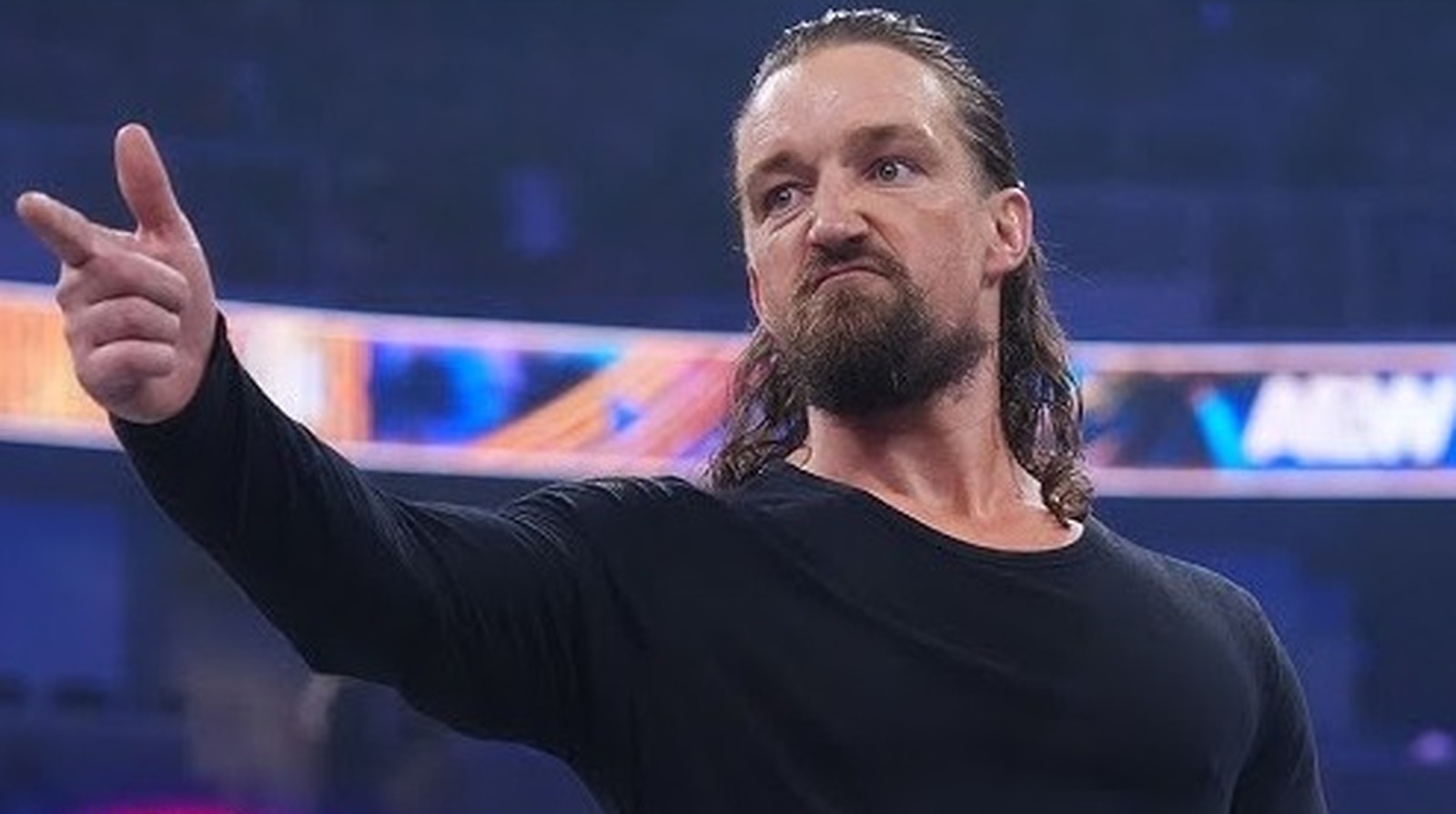
Yota Tsuji's friction with AEW might be leading to a shock US debut
5 hours ago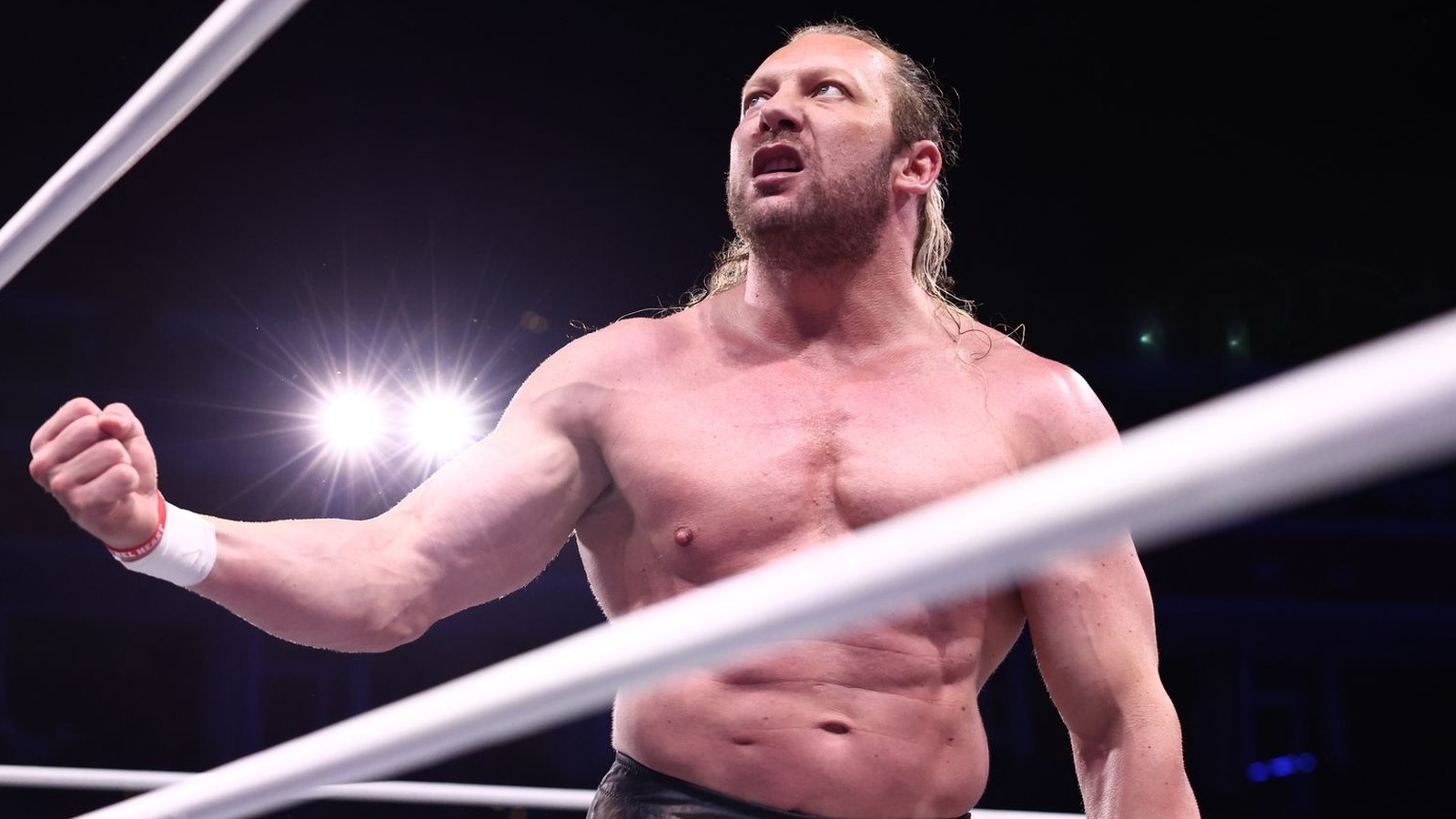
AEW is building its most crowded and dangerous main event scene yet
21 hours ago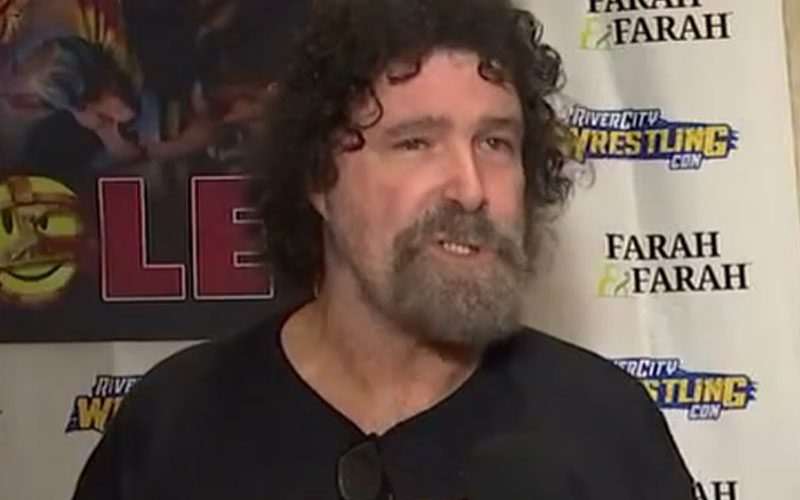
Mick Foley is choosing principles over WWE's easy money
23 hours ago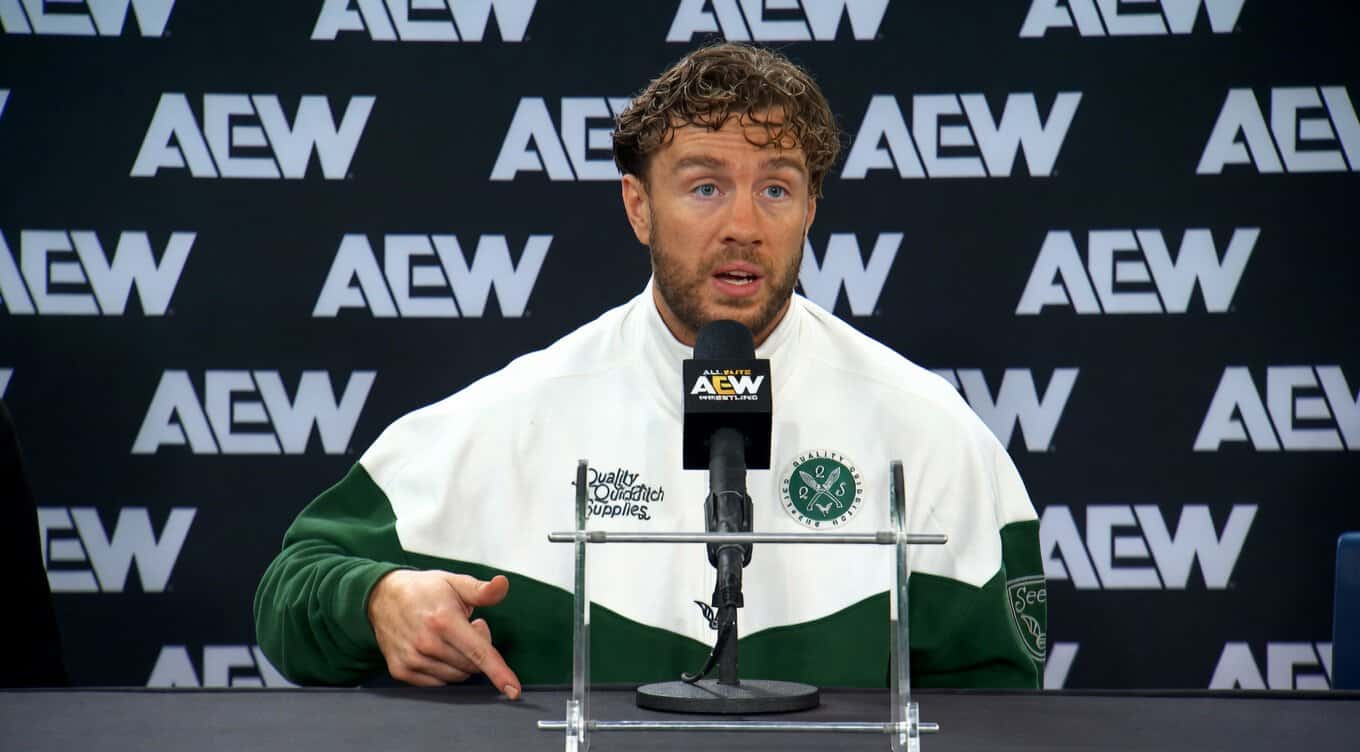
Inside WWE's failed pursuit of Brian Cage and his Hollywood future
23 hours ago
AEW's circular steel cage is a spatial bottleneck that MJF couldn't run from
1 day, 1 hour ago
Why Brian Cage's safe bet in AEW cost him his main-event future
1 day, 3 hours agoMore Analysis
Netflix blurring Bron Breakker is a terrible sign for WWE's future
an hour ago
Why Darby Allin is right to refuse a match with Mick Foley
an hour ago
Netflix and WWE keep fumbling the presentation of actual wrestling violence
an hour ago
Mercedes Moné is not going back to WWE, and Wembley will prove why
an hour ago
Why Seth Rollins is guaranteed to dethrone Roman Reigns at SummerSlam
an hour ago