The digital censor era is officially here
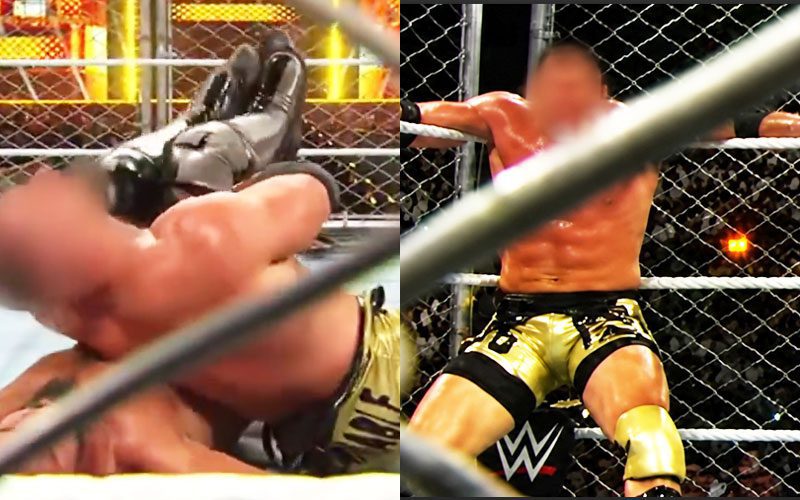
Pull up a barstool, order a pint of whatever cheap lager is on tap, and let’s talk about the absurdity of Netflix deciding to blur out Bron Breakker’s face during a Night of Champions replay. We are supposed to be in the era of gritty, realistic professional wrestling, yet here we are watching a streaming giant treat a genuine crimson mask like it’s a protected identity in witness protection.
If you caught the original broadcast, the steel cage match was a masterclass in controlled chaos. Breakker, who has spent the last year proving he is not just a legacy name but a legitimate powerhouse, took a nasty shot that left him looking like he went ten rounds in a 1980s territory brawl. Instead of letting the drama of the moment stand, the replay on Netflix blurred his face into an abysmal, low-resolution soup.
It looks like a deep-fried meme from ten years ago. When you start sanitizing the violence that is literally the product you are selling, you aren't protecting the audience—you are insulting them. Wrestling is built on the foundation of human struggle, and sometimes, that struggle results in a busted lip or a cut forehead.
The corporate allergy to blood
This Netflix censorship debacle feels like a massive misstep in the partnership between the biggest streaming platform on Earth and the titan of sports entertainment. WWE has spent decades trying to shake the "cartoon" brand it carried through the early 2000s, finally hitting its stride with a more aggressive, high-stakes presentation.
Then, the button-pushers in California decide to hide the reality of the business. You cannot bill yourself as the pinnacle of legitimate competition and then panic when a guy bleeds on camera. It makes the entire presentation look cheap, fake, and terrified of its own shadow.
Think about the classic matches where a blade job or an accidental shot elevated a feud to something meaningful. If we look back at the most iconic moments in wrestling history, many of them involve a competitor staring through a lens of their own blood. Sanitizing it for a "clean" Netflix interface doesn't make the product more accessible, it makes it look like a video game with a glitchy texture pack.
The booking disconnect
There is also a booking problem here that goes beyond the post-production department. If the creative team wants to lean into the "brutal" nature of a steel cage, they have to commit to it. You cannot advertise a match as a bloodbath and then pivot to an algorithm-driven blur filter the second somebody actually gets hurt.
It sends a mixed signal to the performers, too. Bron Breakker is arguably the most intense guy on the roster right now, someone who works with a 100% effort level in every single exchange. When a wrestler puts their body on the line to sell that intensity, having their performance digitally scrubbed is a slap in the face to their work ethic.
We need to stop pretending that wrestling is something it isn't. It is a violent, dramatic, and incredibly taxing sport. If Netflix and WWE cannot agree on a presentation style that respects the actual reality of the ring, they are going to continue having these awkward, cringe-inducing moments that get rightfully roasted on social media.
The bar is in the basement
This isn't just about a bit of blood on a screen. It is about whether the current corporate leadership understands what makes people actually watch this stuff. We don't tune into WWE matches to see perfectly polished, safe, airbrushed content.
We show up for the raw personalities and the physical stakes. When someone hits a spear like they are trying to break a man in half, we want to see the fallout. If the fallout is just a blurry mess, it sucks the air right out of the room. It turns a legendary beatdown into a censored security feed.
Maybe it’s time for the suits to realize that the "PG" era, or whatever label they want to hide behind, shouldn't mean they have to treat their audience like toddlers who can't handle a little bit of red stuff. It’s wrestling. Let it be messy. Let it be violent. Just stop the pixelation nonsense before the next pay-per-view becomes a headache for everyone involved.