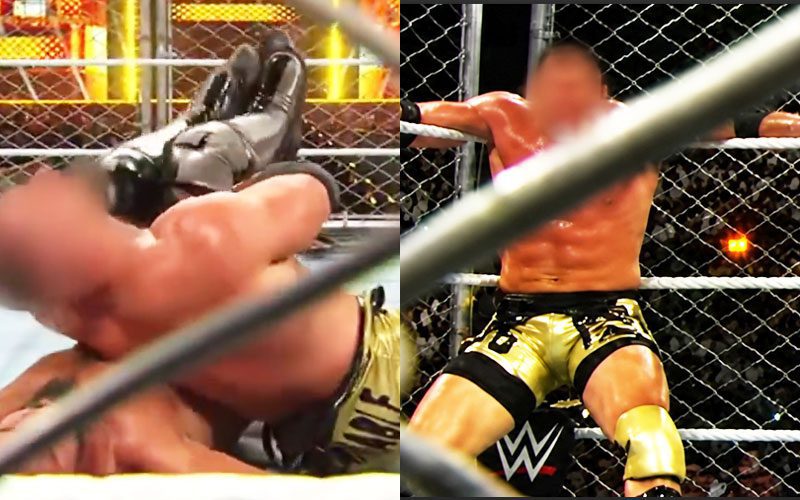
It has been exactly 14 years, 5 months, and 2 days since Mick Foley last competed in a professional wrestling match. That appearance, a brief cameo in the 2012 Royal Rumble, was a nostalgia act. It did not require the sustained physical exertion of a singles contest.
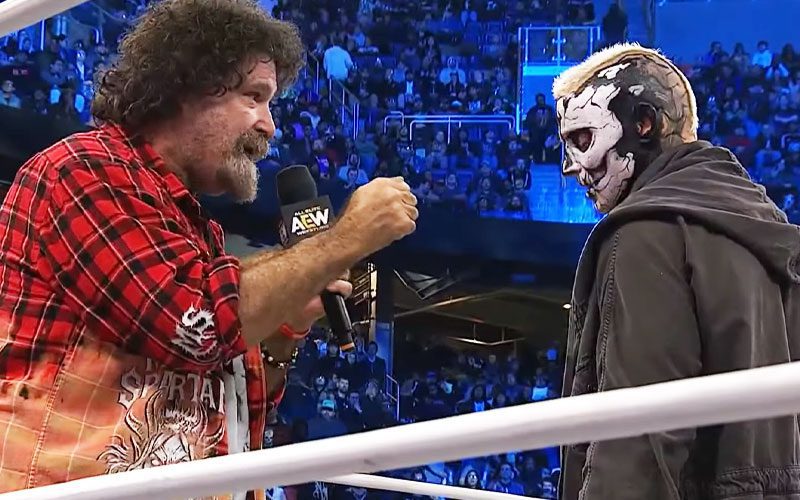
When Foley debuted in AEW at Double or Nothing on May 24, 2026, his presence sparked immediate speculation. During the Zero Hour kickoff show, Foley stood in the ring with MJF and Darby Allin. The segment ended with MJF delivering a low kick to the legend.
Following his arrival, Foley identified Allin as his dream opponent for one final match. Yet, Allin rejected the offer. In a July 1, 2026 interview with Sports Illustrated, Allin stated he would never face Foley in the ring.
"I would never wrestle Mick," Allin said in the interview. "I would never wrestle against Mick." He added that he would team with him in a heartbeat instead.
This decision was quickly reported across the wrestling media, including by Ringside News. Many fans viewed the refusal as a sign of respect. But a close analysis of the numbers reveals it is a cold, mathematical calculation.
Professional wrestling operates on an unyielding principle: the bump card. Every wrestler has a finite number of high-impact falls they can take. Foley, now 61 years old, exhausted his card decades ago.
Allin, at 33, is burning through his own card at a rate never seen before. A match between them is a physical impossibility. It represents a collision between a spent ledger and one nearing its final pages.
The High-Risk Reality of Darby Allin
Allin’s career in AEW has been defined by high-volume physical risk. Since his debut in 2019, he has wrestled 204 matches in the promotion. His record stands at 146 wins, 3 draws, and 55 losses.
This gives Allin a career win rate of 71.6% in AEW. While that percentage is elite, the physical cost of those victories is unsustainable. Allin does not win matches by outwrestling his opponents. He wins them by surviving self-inflicted trauma.
Consider his performance at AEW Revolution on March 3, 2024. During Sting's retirement match, Allin executed a Swanton Bomb from a 12-foot ladder. His target moved, and Allin crashed through a pane of glass on the floor.
The impact cut his back to ribbons. Medical staff used 12 stitches to close the wounds. He finished the match, but the stunt was a massive withdrawal from his physical bank.
Ten days later, the bill came due. At Dynamite: Big Business on March 13, 2024, Allin faced Jay White. Just two minutes into the match, Allin attempted a front flip off the top rope.
He misjudged the distance to the floor. His right foot took the full force of the landing, breaking three bones. Remarkably, he wrestled for another 11 minutes of a 13-minute match before losing.
The injury forced him to cancel a planned climb of Mount Everest. It sidelined him for months, exposing the thin margin of safety in his style. To make matters worse, a NYC bus struck him in April 2024, breaking his nose.
These are not isolated accidents. They are the statistical consequence of a high-risk mechanical system. When you jump off ladders and ropes at that frequency, failure is guaranteed.
The Anatomy of the 39-Day Reign
Allin’s recent run with the AEW World Championship illustrates this tactical instability. On April 15, 2026, at Dynamite Spring BreakThru, Allin defeated MJF. The match lasted a mere 2 minutes and 14 seconds.
Allin caught MJF off guard. He executed four consecutive Coffin Drops and a Scorpion Death Drop. A headlock takeover secured the pinfall.
It was a shocking, rapid victory. However, it did not establish Allin as a dominant champion. A title reign built on fluke speed cannot survive sustained challenges.
Allin’s reign lasted only 39 days. During this brief run, he had only one successful defense against Brody King on April 29. His style does not allow for a dense schedule of championship defenses.
The rematch at Double or Nothing on May 24, 2026, exposed these limits. MJF stretched the match to 24 minutes and 1 second. As the clock ticked past 15 minutes, Allin's offense slowed.
He was forced to take increasingly desperate risks to keep pace. MJF capitalized, hitting an Avalanche Tombstone Piledriver to reclaim the belt. The physical degradation of Allin was obvious.
After the match, Kevin Knight attacked him on a stretcher. This post-match angle was a visual metaphor. Allin’s championship run ended with him immobilized and defenseless.
The Jay White Fracture and Risk Decay
We must examine the physics of Allin's foot injury against Jay White. The front flip off the top rope requires precise rotational speed. At Big Business, Allin lacked the vertical height to complete the rotation.
His heel hit the thin floor mat first. The force of the impact went directly into his tarsal bones. This was a mechanical error, not bad luck.
Wrestling statistics show that high-flyers experience a steep decline after age 30. The joint degradation from landing on thin mats accumulates rapidly. Allin is 33, and his body is already showing signs of this decay.
Compare this to Foley’s career trajectory. Over his career, Foley wrestled 1,524 recorded matches. He retired with a career win rate of 45.5% (693 wins, 743 losses, and 88 draws).
Allin, by contrast, has already logged 445 career matches, including 204 in AEW. While Allin’s win rate is far higher, his velocity of trauma is vastly accelerated. Foley did not jump off the top rope in every match, choosing instead to space his major bumps out over years.
His most famous fall, off the Hell in a Cell cage in 1998, was a singular event. It was 16 feet of pure acceleration into an announce table. Yet, Foley was able to wrestle for another 14 years because he did not repeat that weekly.
Allin, however, takes similar risks on random episodes of Dynamite. He is attempting to run a marathon at a sprinter's pace. The data suggests he will hit his physical limit far sooner than Foley did.
Why the Tag Team Alternative is the Only Logical Play
Knowing these numbers, Allin’s refusal to wrestle Foley makes perfect sense. A singles match would require Foley to take bumps he cannot afford. It would also force Allin to take risks to carry the match's pace.
Instead, Allin proposed a tag team partnership. "Would I team with him? Absolutely," Allin said. "I would team with him in a heartbeat."
This is the Sting model. Sting and Allin compiled a perfect 29-0 record as a tag team in AEW. They vacated the tag titles undefeated after Sting retired at Revolution 2024.
In that partnership, Allin acted as a physical shield. He took 80% of the bumps, protecting the 60-plus legend. Sting was protected, entering the ring only for his signature hot tags.
A partnership with Foley would operate on the same numbers. Allin would absorb the damage, managing the spacing and positioning. Foley could contribute his iconic offense without risking his skeletal structure.
Allin noted there is "more meat on the bone" with a partnership. He is correct. A singles match between them would be a sad display of physical decay.
A tag team match, however, hides Foley's limitations. It keeps the legendary hardcore star safe. It also allows Allin to wrestle a smarter, less suicidal style.
This is the paradox of Darby Allin. He is a daredevil who understands the limits of his own body. He knows the cost of the style he pioneered.
By refusing to wrestle Foley, Allin is protecting a legend. He is also protecting himself. He sees in Foley the ultimate endpoint of his own career path.
The numbers do not lie. The bump card always collects its debt. If Foley returns to the ring, it must be by Allin's side, not across from him.