The calculated drip-feed of the bracket
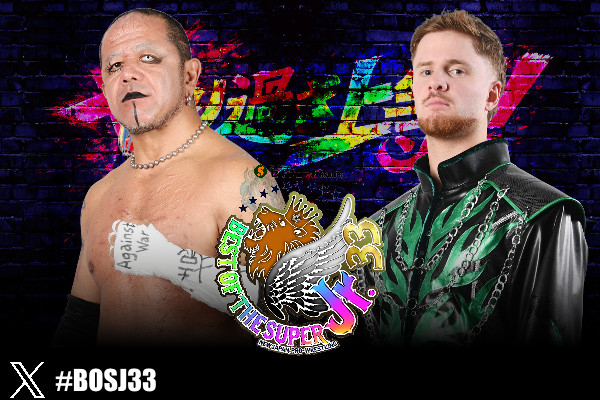
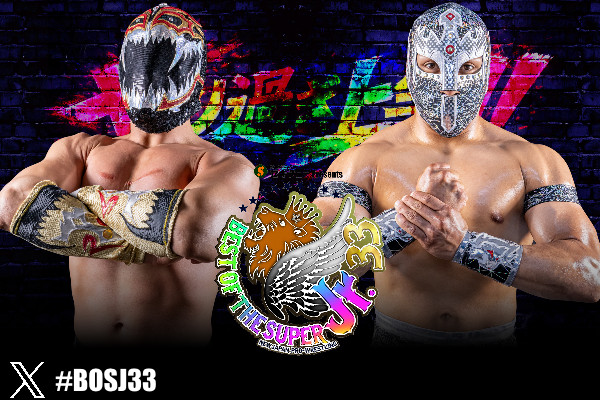
The drip-feed of tournament announcements is one of professional wrestling's most reliable promotional crutches. New Japan Pro-Wrestling has perfected this art over the years, and they are back at it for Best of the Super Juniors 33.
Instead of hitting us with the full graphic and letting us argue over the blocks, they are serving up the roster in bite-sized pieces. The first three participants were confirmed early, setting a baseline of expectation. Almost immediately, the company followed up with another trio of entrants. By the time the third batch dropped today, the strategy was clear. NJPW wants to dominate the timeline for a full week.
It is an agonizing way to consume wrestling news. As analysts, we want the data immediately. We want to see the block distributions, map out the potential spoiler nights, and circle the inevitable 30-minute time limit draws. This staggered release forces everyone to zoom in on individual names rather than the collective field.
The tactical evolution of the Junior Heavyweight
To understand what is at stake in BOSJ 33, you have to look at how the junior heavyweight style has fundamentally altered over the last five years.
We are miles away from the Ricochet versus Will Ospreay sequences that broke the internet. That era of physics-defying, choreographed escalation reached its absolute ceiling. You cannot go any faster or flip any higher than those guys did without completely breaking the suspension of disbelief. The current NJPW junior division realized this and pivoted hard.
The modern NJPW junior style is remarkably violent. It is grounded, spiteful, and heavily reliant on focused limb work. Watch an El Desperado match from the last twelve months. He does not wrestle like a traditional cruiserweight. He wrestles like a frustrated middleweight fighter. He rips at knees. He targets the neck with ruthless efficiency. His use of the Numero Dos submission is never just a rest hold. It is a match-ending threat that forces opponents to completely alter their game plans. The high spots are earned through suffering, not spammed for a cheap pop.
Taiji Ishimori operates in a similar space. He is built like a tank and wrestles with a sudden, snapping aggression. His transitions are flawless, moving from a rapid-fire strike exchange into the Bone Lock before his opponent even hits the mat.
Even Hiromu Takahashi, the undisputed ace of the division, has incorporated much more heavy brawling into his repertoire to compensate for the miles on his bump card. He relies more on lariats and sheer blunt force than the terrifying neck-bump counters of his youth. You can see the wear and tear in how he structures his pacing. He spends the first five minutes of a match establishing physical dominance rather than sprinting to the ropes. It is a smarter, safer way to work, but it completely changes the rhythm of a standard NJPW junior match. He is no longer the reckless kamikaze fighter. He is the grizzled veteran daring younger opponents to out-strike him.
This tactical shift makes the tournament incredibly demanding. A 20-man field wrestling this aggressively over three weeks usually results in a terrifying injury list. The pacing of the block matches will dictate the survivor. If everyone tries to wrestle a Korakuen Hall main event style in the opening matches of the tour in smaller provincial arenas, they will be walking wounded by the time they reach the finals. You have to know when to downshift, when to rely on a count-out tease, and when to actually empty the tank.
The House of Torture problem
No honest preview of a modern NJPW tournament can avoid the elephant in the room.
The booking of SHO and the wider House of Torture faction remains a massive drag on the division's in-ring product. NJPW management seems convinced that the rampant interference and referee bumps generate valuable heat. They do not. They generate apathy.
SHO was arguably one of the best pure in-ring performers in the company before his heel turn. His matches with Shingo Takagi were masterclasses in escalating violence, built on a foundation of legitimate grappling and explosive power. Now, his tournament matches follow a grimly predictable script. A solid five minutes of wrestling, followed by a distraction, a wrench shot, and a deeply unsatisfying finish. He spends more time arguing with the referee than applying holds.
In a round-robin format, momentum dictates everything. The psychology of a tournament relies on the audience tracking points, caring about tie-breakers, and buying into the competitive sport aspect of the presentation. When a hot crowd is invested in a fast-paced sprint, and the finish is ruined by Dick Togo waddling down the ramp to choke someone with a wire, the energy completely evaporates. It essentially renders the previous ten minutes of athletic effort entirely moot. You cannot book a premier workrate tournament and then undercut it with 1990s Memphis finishes. It disrespects the audience, and it severely damages the replay value on NJPW World.
The desperate need for fresh blood
The real drama of these early entrant announcements is the search for something new.
NJPW has relied on the same core group of domestic juniors for far too long. The rivalries have been done to death. We have seen Hiromu versus Desperado in every conceivable permutation. It is always brilliant, but it is no longer fresh.
This is why the international slots are so vital. The relationship with CMLL is arguably NJPW's most valuable asset right now for this specific weight class. When Titan made his run to the finals a few years back, it injected a massive dose of unpredictability into the proceedings. He did not just show up to do spots. He was booked as a legitimate, credible threat to the established hierarchy. His springboard double stomps were treated as lethal finishes.
With AEW's roster currently overflowing with underutilized talent, there is zero excuse for a weak foreign contingent this year. NJPW needs to demand high-level participants from Tony Khan. Not just young guys on excursion or dark match regulars, but established television names who can genuinely disrupt the block standings.
Imagine someone like PAC stepping into a block. The sheer hostility he brings would perfectly match the current NJPW style. His aerial offense is devastating, but his ground game is equally vicious. Or what about Buddy Matthews? He borders on the weight limit, but his punishing, strike-heavy offense would break down the smaller Japanese talent in fascinating ways. He could easily play the role of the unstoppable foreign monster that the junior division historically lacks. NJPW cannot settle for safe, reliable workers who are just happy to be there. They need chaos agents who will actively antagonize the domestic fan base and force the native roster to adapt.
Looking at the domestic pipeline
If the outsiders fail to deliver, the pressure falls entirely on the younger domestic talent.
Kosei Fujita is the name to watch. Since returning from his excursion and aligning with TMDK, he has shown a nasty, technical edge that the division desperately needs. He does not wrestle with the typical polished sheen of a Young Lion graduate. He wrestles like he wants to hurt people, utilizing tight waist-locks, sharp elbows, and a terrifyingly fast suplex game. He does not care about getting his signature poses in. He cares about manipulating joints.
That is the exact energy BOSJ 33 requires. NJPW needs to be brave with their booking. Do not just put the young guys in the tournament to eat pins and finish with four points. Give them a signature win over a former champion on night one. If Fujita forces Ishimori to tap out on opening night, the entire complexion of the tournament changes. Establish the stakes immediately.
The final verdict and prediction
The slow drip of names will eventually end, and we will get the full brackets. Expect a heavily protected set of blocks designed to keep the biggest stars apart until the final weekend.
NJPW is notoriously conservative in the early stages of these tournaments. They map out the essential points early and rely on the talent to fill in the gaps with sheer effort.
But here is my prediction for BOSJ 33, and I am locking it in now. The winner will not be a domestic NJPW star.
The company is in a transitional phase. They need international buzz, and they need to protect the bodies of their top guys. Having an outsider run the table and take the trophy creates an immediate, high-stakes storyline for Dominion or Wrestle Kingdom. It gives the domestic ace a dragon to slay later in the year.
The matches will be physically punishing. The House of Torture will ruin at least three perfectly good nights. But when the dust settles, Best of the Super Juniors 33 will be won by someone who does not have an NJPW contract in their locker. It is the only logical booking choice left to make.