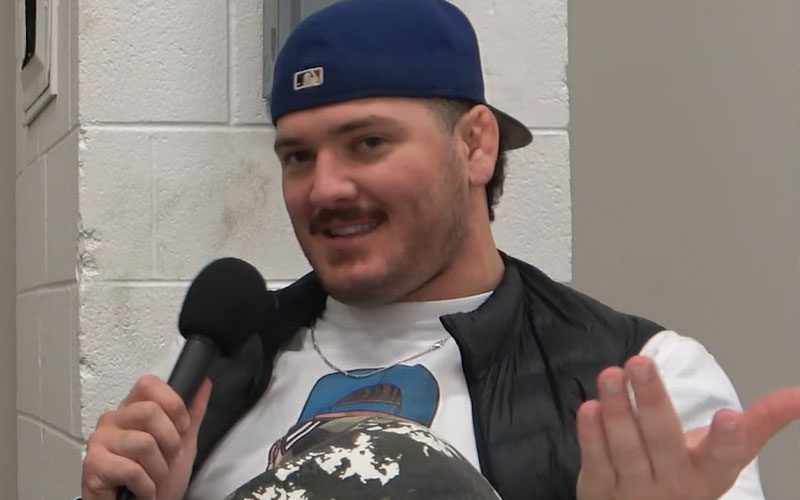
The Post-Op Shock
BJ Ray is currently sitting at home with his arm in a sling and a termination notice in his inbox. The news broke late Thursday that WWE has officially parted ways with the rising star, a move that would be standard roster churn if not for the timing. Ray had undergone major shoulder surgery just days prior to the call. The anesthesia had barely worn off before the 'future endeavors' script was read over the phone.
According to Ringside News, the release came as a total surprise to Ray. It is a ruthless development for a talent who believed he was on the mend and protected by the standard medical protocols of the Performance Center. Instead, he finds himself an independent contractor with a massive physical therapy bill and no guaranteed downside to cover the nine-month recovery ahead.
The Mechanics of the Injury
Shoulder injuries are the silent killers of wrestling careers. While a knee injury like an ACL tear is predictable in its rehab, the shoulder is a complex network of tendons and ligaments that never quite returns to its original state. Ray's procedure was reportedly intended to address chronic instability, likely a labral repair or a Bankart procedure to fix a recurring dislocation issue.
For a wrestler, the shoulder is the primary shock absorber. Every time a talent takes a back bump, the force travels through the scapula and into the glenohumeral joint. When that joint is compromised, the ability to safely 'base' for an opponent or execute overhead slams vanishes. Ray was looking at a 36-week timeline before he could even consider taking a light flat-back bump. By cutting him now, WWE effectively removes a non-active asset from the books during a critical quarterly reporting period.
BJ Ray says the timing caught him completely off guard, especially given that he was literally fresh out of the operating room when the call came.
A Departure from Historical Precedent
In the previous decade, an injury was often seen as a form of job security in WWE. Under the old regime, the company rarely released talent while they were sidelined with major orthopedic issues. In many cases, WWE would actually extend the duration of a contract to 'make up' for the time lost to injury. This kept the talent under the corporate umbrella and ensured their surgery and initial rehab were handled by top-tier specialists like Dr. Jeffrey Dugas at Andrews Sports Medicine.
The TKO era has shredded that playbook. The merger between WWE and UFC has brought a more 'optimized' approach to roster management. If a talent is not on television, and won't be on television for the better part of a year, the new directive is to cut bait. We saw similar moves during the April 2021 cuts, but the optics of firing a man while he is physically incapable of working elsewhere are particularly grim. Ray is now tethered to a 90-day non-compete clause that will expire long before he is medically cleared to step into a ring for AEW or TNA.
Strategic Implications for the Roster
This release sends a chilling message to the locker room at the Performance Center. The 'safety net' is gone. For years, NXT talent viewed the PC as a collegiate-style environment where they could develop, get injured, and recover without the fear of losing their spot. Ray was a project that many scouts felt had main-roster potential, but his durability became a liability that the front office was no longer willing to bankroll.
There is a massive strategic shift happening here. WWE is moving toward a model where they prefer to hire 'ready-made' stars from the indies or international scene rather than investing years into long-term medical recoveries for developmental talent. If you are not in the top 15% of the earners on the roster, an injury is no longer a temporary setback; it is a potential exit ramp. It is a short-sighted strategy that prioritizes immediate balance-sheet health over the development of homegrown stars who might have stayed loyal to the brand for twenty years.
The Critical Failure in Management
The failure here isn't just the release; it is the lack of communication. If Ray was truly surprised, it means the medical staff and the talent relations department were operating on two different frequencies. A talent should never be encouraged to go under the knife with the assumption of company support, only to have that support withdrawn while they are still in the recovery ward. It is a breakdown in the basic duty of care that a multi-billion dollar organization owes to its athletes.
Ray's path forward is now incredibly steep. He must fund his own physical therapy, navigate the mental hurdle of a sudden firing, and try to maintain his physical 'look' while his arm is immobilized. Historically, talent like Chelsea Green or Matt Cardona have turned these setbacks into reinventions on the independent circuit. However, those performers weren't dealing with a post-surgical shutdown during their 90-day window. Ray is effectively being benched for a year without a paycheck.
What Comes Next?
Expect Ray to go quiet for the next few months. There is no 'working the indies' when you can't lift a coffee cup with your dominant hand. His value will be at its lowest point in the third quarter of 2026, which is exactly when he will be looking for a new home. If he can document his rehab process on social media, he might be able to build enough of a 'wronged man' narrative to land a spot in a secondary promotion by the fall.
WWE, meanwhile, will likely continue this trend. As long as the stock price remains the primary driver of roster decisions, we will see more 'BJ Ray' situations. It is a cold, calculated version of the wrestling business that values the spreadsheet more than the person. For the fans, it means the roster they see today might look 20% different by the time the next Premium Live Event rolls around, regardless of who is currently holding a title or in the middle of a push.