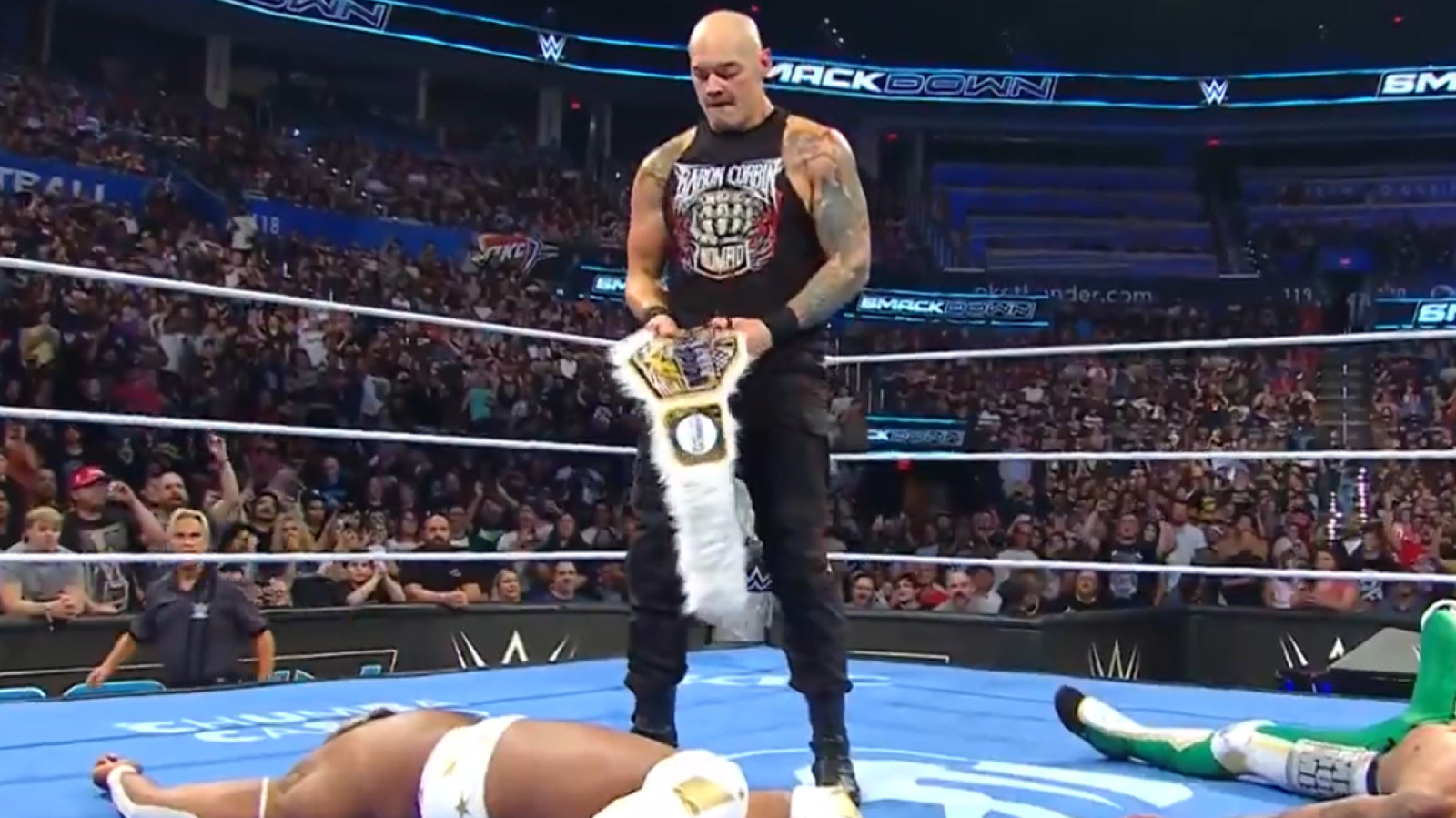
Baron Corbin returning to WWE is the ultimate pragmatic move
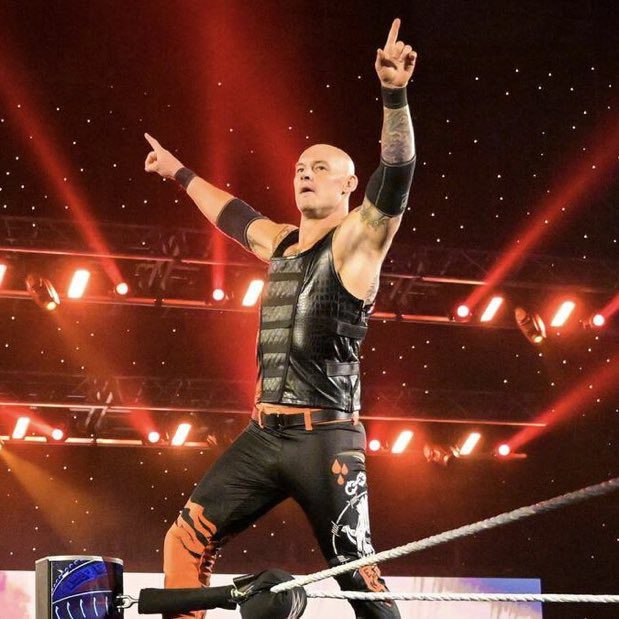
The Anatomy of a Left-Field Return
It is May 18, 2026, and the wrestling internet is currently digesting a bizarre rumor. According to Dave Meltzer over the weekend, whispers are circulating that Baron Corbin is headed back to WWE. The report was immediately backed up by further industry chatter.
"One WWE source indicating it to Fightful as an out of left field thing..."
That might be the understatement of the spring. Why is it surprising? Because his departure felt so final. After years of bouncing between gimmicks—from the Lone Wolf to Constable, King, Happy, and finally back to a gritty NXT veteran—his exit seemed like the natural conclusion of a career that had squeezed every drop of value from its premise. Returning now, just as the post-WrestleMania 41 storylines are solidifying, feels jarring.
Yet, if you look at the mechanics of WWE's current main roster under Triple H, the decision reveals a cold, calculated pragmatism.
The Tactical Gatekeeper
Let us strip away the terrible booking. Ignore the dog food angle with Roman Reigns. Forget the suspenders and the bald head phase that dominated 2018. Look at Baron Corbin the athlete. At 6-foot-8, he possesses an incredibly rare trait in modern wrestling: he is a giant who works a traditional heel style without demanding the monster push.
Modern wrestling is obsessed with the athletic big man. We want big men who do moonsaults. Corbin rejects that. He works a slow, methodical, deeply unpopular style that infuriates internet fans but serves a distinct television purpose. His strike-basing is immaculate. When a smaller babyface needs to string together a comeback, Corbin positions his body perfectly to catch them. He does not overshoot his bumps. He takes a dropkick and falls into the exact quadrant of the ring required for the camera angle.
His signature sequence—sliding out of the ring, sprinting around the post, and sliding back in for a lariat—is often mocked as repetitive. But watch the timing. He exclusively deploys it at the seven-minute mark of television matches right before a commercial break. It is a pacing tool. It resets the crowd and allows the production truck a clean out. You cannot teach that kind of internal clock.
The Finisher Economy
Then there is the End of Days. In an era where finishers are routinely kicked out of on weekly television, Corbin's finisher remained famously protected for years, only broken by Drew McIntyre at WrestleMania 38. The mechanics of the move are fascinating. It is essentially a self-inflicted Rock Bottom, but the rotational force Corbin applies makes it look devastating regardless of the opponent's size. He can hit it on Chad Gable or Braun Strowman with the same snap.
Having a midcard gatekeeper with a credible, instant-kill finisher is incredibly valuable for booking multi-man matches. You need a guy who can take out a main eventer without actually winning the match. Corbin is that guy.
The Danger of Go-Away Heat
But let us not pretend Corbin is a flawless generational talent. His main roster run from 2018 to 2022 was an active deterrent to viewership. The Constable Corbin era, particularly his feud with Seth Rollins over the Universal Championship, featured some of the most lethargic, heatless television WWE has ever produced.
He struggled to cut live promos, often sounding robotic when given more than two sentences. He relied entirely on cheap heat—insulting local sports teams or wearing ugly shirts. It was lowest-common-denominator booking, exposing a performer who lacked the improvisational wit of a Kevin Owens to elevate bad material. His timing on the microphone was often a half-beat too slow, letting the crowd trample his punchlines with relentless chants.
During the Happy Corbin run alongside Madcap Moss, the audience was not booing because they wanted to see him beaten up. They were booing because they wanted the segment to end. That is the danger of bringing him back. If Triple H reverts to the comedy-heel booking that plagued his late-twenties, this signing will be a disaster.
The Defensive Architecture
To understand his true value, you have to look at the geometry of a modern wrestling match. We are in an era where the median in-ring pace has skyrocketed. Look across the dial at AEW, or even internally at the current WWE midcard. You have athletes sprinting from rope to rope, chaining together complex reversal sequences. The standard television match now features three dives and a springboard cutter.
Corbin represents a jarring halt to that momentum. He is a defensive wrestler. In a sports context, he is a low-block defense designed to frustrate an attacking team. When an opponent tries to quicken the pace against him, his entire moveset is built around sudden deceleration. The chokeslam backbreaker. The Deep Six. All of these maneuvers are designed to interrupt the babyface's flow state.
It is brilliant from a structural standpoint. If you are producing a two-hour episode of SmackDown, you cannot have six high-speed workrate matches. The audience burns out. You need valleys to appreciate the peaks. Corbin is the valley. He wrestles at a methodical, plodding pace. He grabs a chinlock. He talks trash to the front row. He actively drains the adrenaline from the arena.
If you review tape from his matches against smaller, quicker opponents—think of his bouts with Rey Mysterio or Finn Balor—you notice a distinct pattern in his footwork. He rarely crosses his feet. This is a subtle detail, often ignored by younger wrestlers, but it is the foundation of his balance. When an opponent attempts a springboard attack, Corbin is already planted.
He does not lunge to catch them. He waits, absorbing the impact into his core rather than his arms, which drastically reduces the risk of injury for the attacking wrestler. This is a skill acquired from his background as an offensive lineman. He understands leverage and base mechanics better than almost anyone in the locker room.
This mechanical soundness extends to his bumping. Watch how Corbin takes a standard lariat. He does not simply collapse backward. He actively pushes off his back foot, propelling his hips upward to ensure a flat back bump. It makes the offensive move look incredibly forceful while minimizing the damage to his own lower back. Over a decade-long career, this technique has preserved his body.
The Psychology of the Brawler
His psychological approach to gimmick matches also warrants examination. In a No Disqualification setting, Corbin strips away the complex, choreographed weapon spots favored by modern talent. He relies on crude, blunt force. He will use a steel chair not for a spectacular top-rope spot, but to slowly, methodically dismantle an opponent's knee. He uses the ring steps as an anvil. It is not pretty, but it creates genuine sympathy for the babyface. The crowd stops waiting for a high spot and starts wanting to see the villain punished. That is the essence of heel work.
Furthermore, consider the tag team division. WWE's tag division is frequently starved for credible monster teams. If you pair Corbin with another physical bruiser—perhaps a called-up NXT heavy or a returning veteran—you instantly create a credible roadblock for the babyface champions. The Wolf Dogs proved Corbin is an excellent tag team wrestler. He understands ring-cutting. He knows how to pull the referee's attention. He knows how to take a blind tag. These are lost arts among a lot of younger talent who view tag team matches purely as a vehicle to hit synchronized dives.
The Roster Math for 2026
So why bring him back now? The answer lies in his recent NXT run. Teaming with Bron Breakker, Corbin finally found a persona that fit his actual personality: a grizzled, bitter veteran who hits hard and ignores the internet. The Wolf Dogs worked because Corbin stopped trying to be a cowardly heel and started working like a bruiser.
Look at the main roster right now, on May 18, 2026. Cody Rhodes is standing tall after defending the WWE Championship at WrestleMania 41 in Las Vegas just last month. The midcard is packed with incredibly talented, fast-paced workers. What is missing? Reliable, safe, durable size.
You need big men who can work a 15-minute house show match, absorb a loss, and make the babyface look like a star. A wrestling roster is a delicate machine. You cannot have fifty main eventers. You need gears that turn quietly in the background. You need performers who understand their job is to lose safely.
The Deep Six is a prime example. A spinning back suplex that uses the opponent's forward momentum against them. It is one of the best cut-off spots in the industry. When a smaller wrestler bounces off the ropes, building speed for a high-risk move, Corbin catches them mid-stride, spins them 360 degrees, and slams them to the mat. It looks violent. It looks conclusive.
When you release a veteran, the assumption is that their spot will be filled by a twenty-something from the Performance Center. But developmental prospects often take years to learn the psychology of a live television broadcast. They miss the hard camera. They rush their heat segments. They do not know how to kill time when the referee receives a message through his earpiece to stretch the match for another 90 seconds.
Corbin knows exactly how to stretch a match. He knows how to grab a hold and stall without looking lost. He is a plug-and-play professional.
Is it an exciting rumor? Absolutely not. Fans will not be clamoring for his return. There will be no massive pop if his music hits. But professional wrestling is a grind. It is a grueling, year-round touring schedule that grinds down bodies at an alarming rate. Protecting your top investments requires putting them in the ring with a safe base on the house show loop.
If Dave Meltzer's report holds true, signing Baron Corbin is not a move designed to pop the ratings on a Monday night. It is an insurance policy. It is a calculated investment in locker room stability and in-ring safety. It is the kind of boring, pragmatic decision that keeps a billion-dollar machine running smoothly while the stars take the glory.
Funko Pop! WWE: CM Punk (Pipe Bomb Promo #182)
The Best in the World, immortalized in vinyl.
Frequently Asked Questions
Who reported that Baron Corbin is returning to WWE?
Why is Baron Corbin's WWE return considered surprising?
What makes Baron Corbin valuable to the modern WWE roster?
Why does Baron Corbin use the sliding ring-post lariat?
How protected is Baron Corbin's End of Days finisher?
More Coverage
Why the Broken Hardy act is a major gamble for Philadelphia
18 minutes ago
WWE reshuffles NXT pipeline as Meghan Walker eyes main roster debut
an hour ago
Andre Chase pulls back the curtain on the Shawn Michaels era at NXT
2 hours ago
The Andre Chase effect: Why Shawn Michaels is the ultimate NXT headmaster
2 hours ago
Drew McIntyre sidelined following brutal SmackDown encounter
6 hours agoWWE's New York gamble is a calculated risk ahead of WrestleMania 42
7 hours agoMore Analysis
Baron Corbin's WWE return signals a wider strategy for former talent
1 week ago
Baron Corbin's WWE return is exactly what the midcard needs
2 months ago
The internet is tearing itself apart over the Baron Corbin WWE return rumors
2 months ago
Baron Corbin and the WWE return rumor mill is hitting a wall
1 month, 3 weeks ago
WWE is discussing a Baron Corbin return and it might actually work
2 months ago