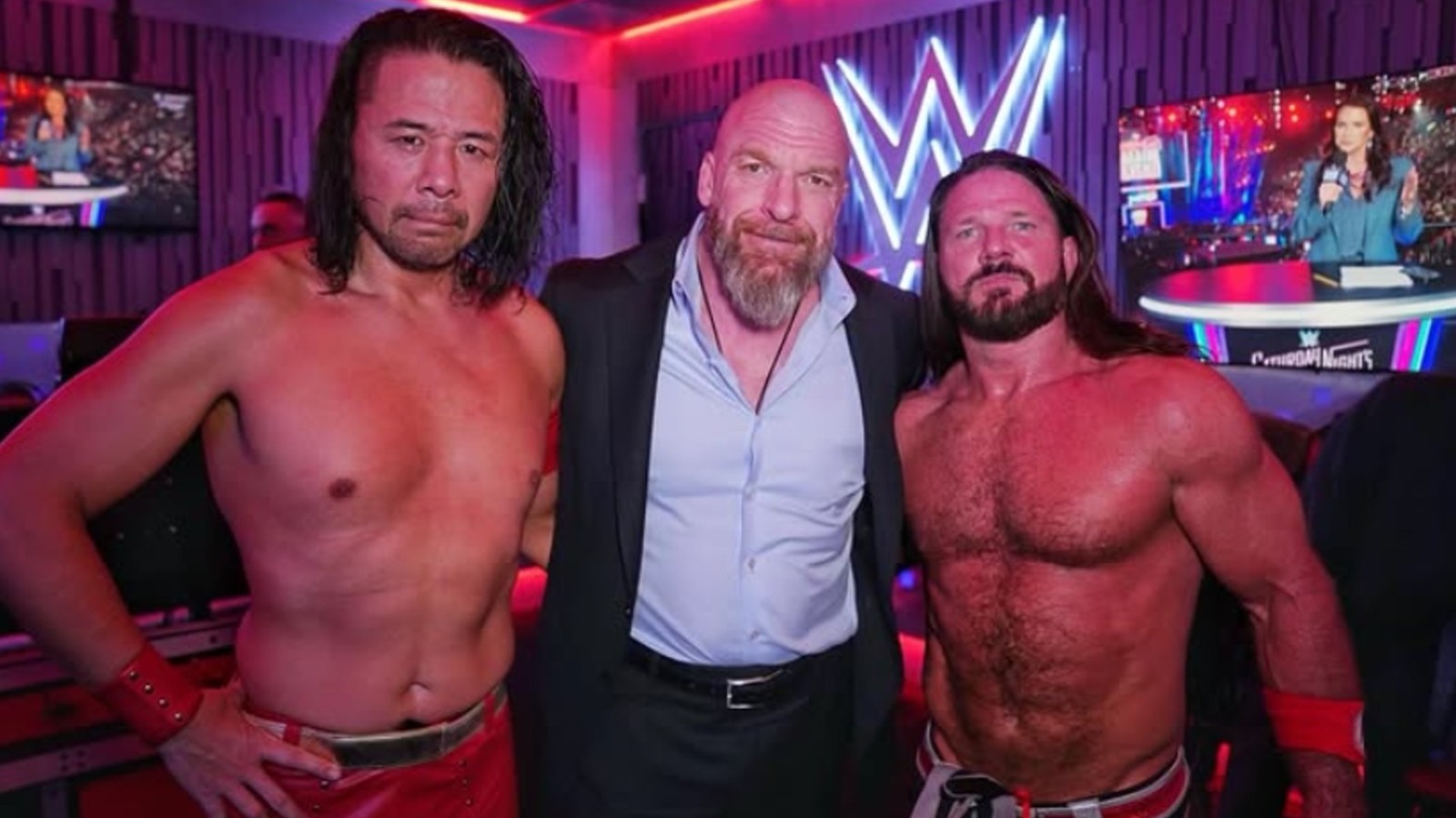
AJ Styles is officially retired, but finding his replacement won't be easy
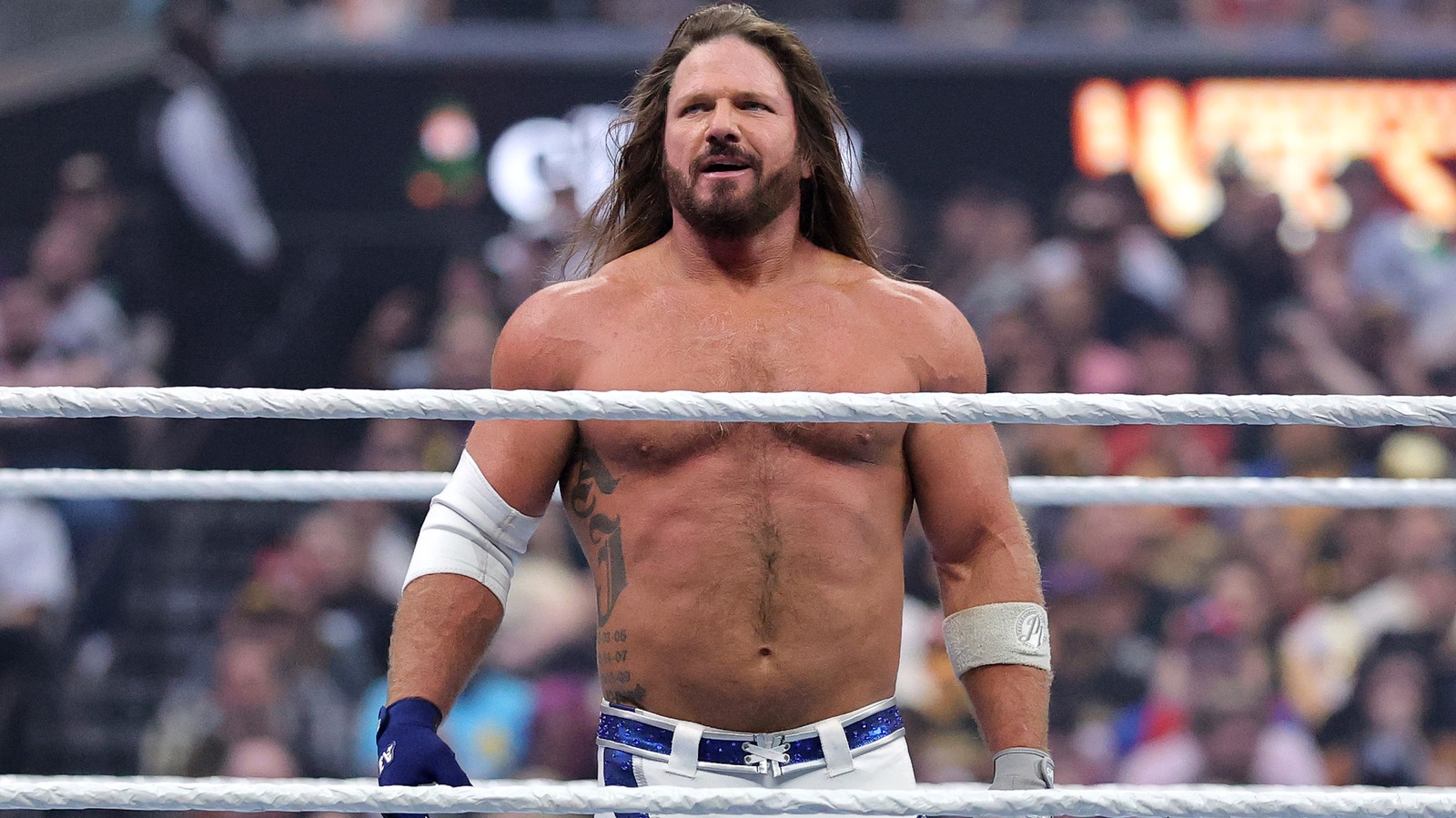
The Next Chapter
AJ Styles is officially done taking bumps. The news broke quietly, as these things often do when a veteran decides their body has finally had enough.
According to an update on his post-retirement life, the former WWE Champion is spending his time doing exactly what you might expect. He is training the next crop of professional wrestlers.
It is a quiet end to a career that was anything but quiet. We are less than a month out from WrestleMania 41 in Las Vegas, a two-night event built around the John Cena farewell tour and Cody Rhodes defending the WWE Championship. For the first time in nearly a decade, Styles will not be lacing up his boots for the biggest show of the year.
Instead, he is in a ring somewhere, probably in Georgia, teaching a twenty-something rookie how to run the ropes without tearing an ACL.
Transitioning from main event talent to trainer is a familiar path. Shawn Michaels runs NXT. Fit Finlay has spent decades shaping the women's division. But Styles taking on students presents a fascinating question. How exactly do you teach someone to be AJ Styles?
You can show a kid how to lock in a side headlock. You can teach them how to take a flat back bump. You cannot teach the freakish spatial awareness required to execute a springboard 450 splash safely.
The Southern Foundation
To understand what Styles brings to the trainer’s mat, you have to look at how he was built. He did not come through a corporate developmental system.
He was a product of the late 1990s independent scene. He eventually found his footing in NWA Wildside before becoming the foundational pillar of TNA Wrestling.
People remember the high spots. They remember the Spiral Tap and the crazy bumps inside the Six-Sided Ring. But the secret to AJ Styles was always his foundational grasp of Southern tag team psychology.
He was trained by Rick Michaels. He grew up watching NWA on TBS. Beneath the flips and the flashy offense, Styles wrestled like a classic 1980s heel or babyface, depending on the night. He understood ring positioning better than almost anyone of his generation.
Look at the Unbreakable 2005 triple threat match against Samoa Joe and Christopher Daniels. Yes, it is a human demolition derby. But watch how Styles paces his comebacks. Watch how he feeds into Joe’s offense.
Every strike has a purpose. There is no wasted motion. That is what he can pass on. The psychology of timing. The understanding of when to sell and when to fire up.
A Critic's View of the Final Chapter
Let’s be honest about the end of his WWE run, though. It was not exactly a blaze of glory.
While his early years on the main roster featured classic bouts against John Cena and Dean Ambrose, his final years were marred by baffling creative decisions. The company wasted arguably his last great athletic years pairing him with Omos.
The idea was obvious. Put the giant with the brilliant worker who can bump around and make the giant look like a monster. It is a tale as old as wrestling.
But watching Styles spend a year playing second fiddle, carrying a giant through plodding tag team matches, was a miserable viewing experience. Then came the endless, heatless feuds with The Judgment Day. Matches that felt like they were booked on a spreadsheet to fill fifteen minutes of Monday Night Raw.
He became a utility player. A guy you put in a match when you need three and a half stars, but never the guy you build the marquee around.
His final heel turn, complete with a new entrance theme and a more physical, grounded style, felt like a desperate attempt to find a spark that was already gone. The matches with LA Knight were fine, but they lacked the undeniable electricity of his 2016 run. The booking failed him, but his body was also clearly slowing down.
The Japanese Influence
If his students only learn his TNA style, they will be incomplete. The most important phase of Styles’ career was his run in New Japan Pro-Wrestling from 2014 to 2016.
Taking over the Bullet Club from Prince Devitt, Styles completely reinvented himself. He stopped relying so heavily on high-flying maneuvers and became a striking-based, limb-targeting assassin.
This is where the Calf Crusher became lethal. This is where he perfected the sequence of teasing the Styles Clash, chaining it into different holds depending on how his opponent countered.
His match against Minoru Suzuki at the G1 Climax 24 is a masterclass in selling. Suzuki tortures his arm for twenty minutes. Styles sells it so well you genuinely believe he might have a torn ligament. He fights from underneath, using bursts of desperate offense to survive.
This is the curriculum his trainees need. Not how to do a springboard forearm, but how to make a crowd believe you are in agonizing pain. How to make a submission hold look like a death sentence.
The Danger of Cloning
The biggest trap for any great wrestler turned trainer is trying to create clones. You see it constantly on the independent circuit. Kids who watched too much Shawn Michaels slapping their thighs and throwing superkicks with zero context.
Styles cannot teach someone to have his vertical leap. He cannot teach the explosive burst of speed he had coming off the ropes in 2005.
If a rookie tries to wrestle exactly like a prime AJ Styles, they are going to break their neck. The Yoshi Tatsu incident with the Styles Clash in NJPW is a grim reminder of what happens when a move requires perfect cooperation and the recipient tucks their chin.
Styles has to teach them how to be themselves, using his framework.
The Cena Trilogy
You cannot discuss Styles' legacy without analyzing his 2016 program with John Cena. It remains one of the most perfectly executed feuds of the modern era.
Cena was the ultimate WWE creation. Styles was the ultimate outsider. The narrative wrote itself, but the matches exceeded all expectations.
Their encounter at SummerSlam 2016 is a clinic in escalating tension. They didn't rely on weapons or outside interference. They just wrestled a remarkably clean, increasingly desperate match.
Styles countered the Attitude Adjustment into a Pele Kick. Cena dug deep into his bag of tricks, pulling out that bizarre springboard stunner he used to do. Styles won cleanly. A rarity against Cena at that stage of his career.
But watch what Styles did in that match. He didn't just hit his spots. He managed Cena's pace. Cena was notoriously vocal in the ring, calling spots loudly. Styles acted as the perfect foil, seamlessly adapting to the chaotic energy of a big-fight crowd while keeping the technical execution flawless.
Teaching a student how to manage the emotional temperature of a stadium crowd is advanced level stuff. You don't learn that running drills in a warehouse. You learn that by standing across from a generational star and realizing you belong there.
The Art of the Bump
Another essential element Styles must pass down is the art of bumping.
Taking punishment is half the job. Styles was one of the greatest bumpers of his generation. He didn't just fall down; he made his opponent's offense look devastating.
When Roman Reigns hit him with a spear or a Superman Punch, Styles would fold like an accordion. He had this unique way of taking a back body drop where he would get almost terrifying altitude, rotating at the last possible second to land safely on his upper back.
It is a selfless style of wrestling. It requires checking your ego at the curtain and dedicating your body to making the other person look like a killer.
This is exactly what made his pairing with Omos so frustrating. He was taking incredible bumps for a guy who couldn't hold up his end of the narrative bargain. The bumps were wasted on a project that never fully materialized.
But the principle remains. If Styles can teach his students how to bump with that level of commitment, he will produce workers who will always have a job. Promoters will always pay a premium for someone who can make their top star look like a million bucks.
The Mechanics of the Phenomenal Forearm
Let's talk about his signature move in WWE. The Phenomenal Forearm.
On paper, it is a simple springboard forearm smash. But watch the mechanics. Styles jumps onto the top rope, but he doesn't just launch himself immediately.
There is a micro-second pause. A moment where he hangs on the rope, spots his target, and then explodes forward. He gets immense height, but more importantly, he gets distance. He doesn't fall on his opponent; he drives through them.
Teaching that timing is nearly impossible. It requires a level of core strength and balance that takes years to develop. A trainee might master the springboard, but they will likely look clunky and mechanical. Styles made it look like a reflex.
Building the Next Generation
So what does a graduate of the AJ Styles school of wrestling look like?
Ideally, they will be fundamentally sound. They will know how to lock up properly. They will know how to work a hold. They won't rush their spots.
Wrestling in 2026 is faster than ever. The current independent scene is dominated by athletes who can do things that make the 2005 X-Division look slow. But many of them lack the connective tissue between the moves.
Styles was the bridge between the old school and the new school. He could do the spectacular, but he always grounded it in a competitive struggle. If he can impart just ten percent of his ring awareness to the next generation, his impact as a trainer will rival his impact as a performer.
The Empty Locker Room
It will be strange watching WrestleMania 41 without him. For a guy who didn't debut in WWE until he was 38 years old, he left a massive footprint.
He walked into the Royal Rumble in 2016, a complete unknown to a segment of the audience, and within eight months, he was the face of SmackDown. He carried the brand.
He was a two-time WWE Champion who made the title feel vital during a period when the main event scene was often chaotic.
Now, the locker room moves on. Cody Rhodes is the standard-bearer. CM Punk is back in the mix. The roster is loaded with talent.
But there is a void. There is no one on the roster right now who moves quite like AJ Styles did. There is no one who combines that level of aerial ability with such a vicious, precise striking game.
He was a one-of-a-kind talent. A kid from North Carolina who conquered the South, took over Japan, and finally planted his flag in the biggest company in the world.
Now, he is just a guy in a gym, yelling at kids to keep their chins tucked and hit the ropes harder. It is the circle of wrestling life. The body breaks down, the boots come off, and the knowledge gets passed down.
We probably won't see another AJ Styles. But if he is half as good a teacher as he was a wrestler, the future of the industry is in very capable hands.
Read Next
- Cody Rhodes is facing a Bloodline that has finally evolved beyond Roman Reigns
- WrestleMania 41 needs Roman Reigns but the Bloodline desperately needs an ending
- Cody Rhodes, Gunther, and the impossible pressure of WrestleMania 41
- Cody Rhodes is just Dusty with a worse tattoo and better suits
- 🏆 WrestleMania 41 — Full Coverage Hub
Frequently Asked Questions
Why did AJ Styles retire from professional wrestling?
What is AJ Styles doing after his retirement from WWE?
Why won't AJ Styles be competing at WrestleMania 41?
How did AJ Styles learn his foundational wrestling skills?
Who was AJ Styles paired with during his final years in WWE?
More Coverage

Data suggests Nick Aldis is manipulating WWE main event windows
16 minutes ago
Top 10: The Most Impactful Pro Wrestling Moments of 2026
an hour agoWhy the Broken Hardy act is a major gamble for Philadelphia
2 hours ago
WWE reshuffles NXT pipeline as Meghan Walker eyes main roster debut
3 hours ago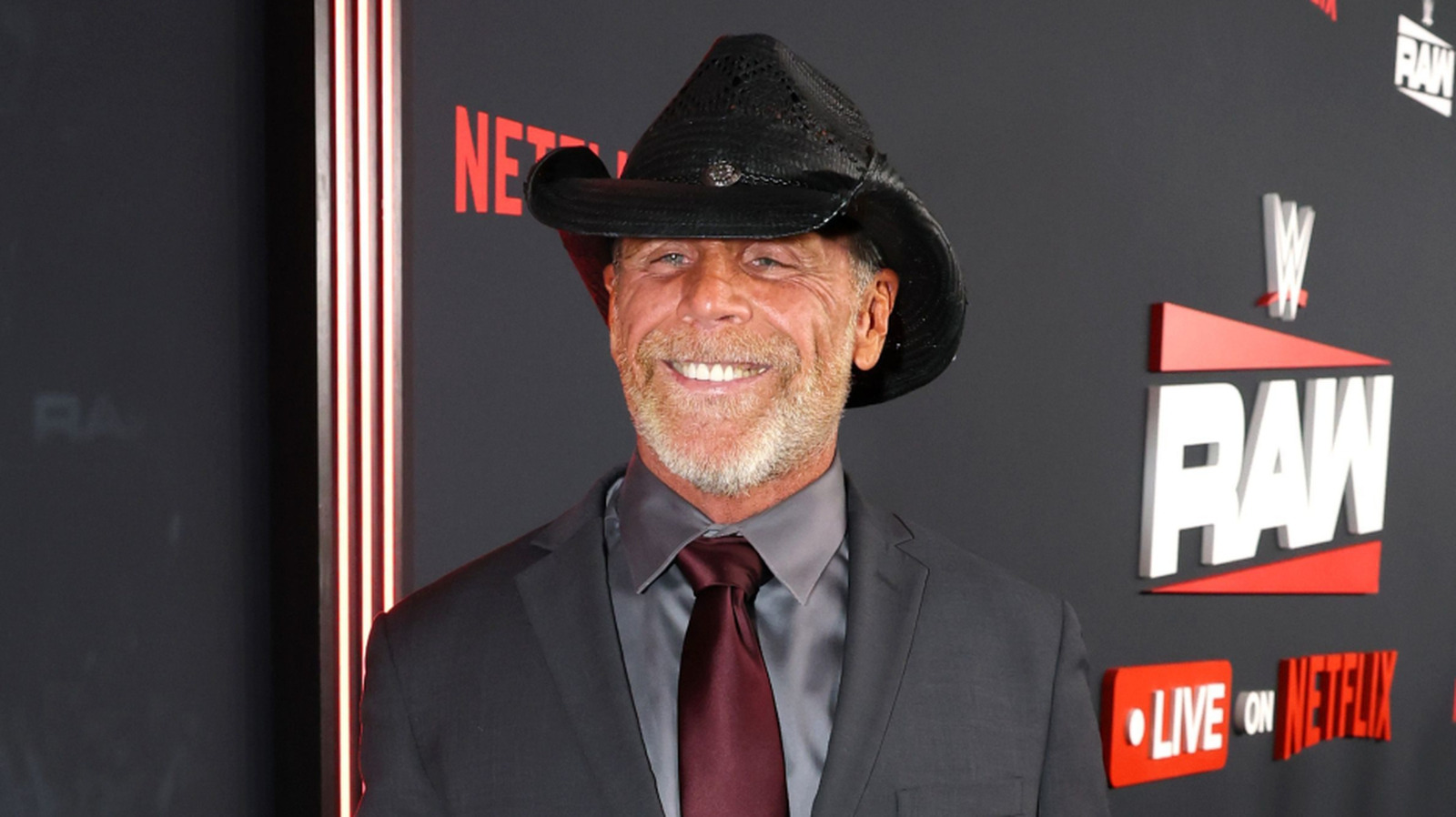
Andre Chase pulls back the curtain on the Shawn Michaels era at NXT
4 hours ago
The Andre Chase effect: Why Shawn Michaels is the ultimate NXT headmaster
4 hours agoMore Analysis
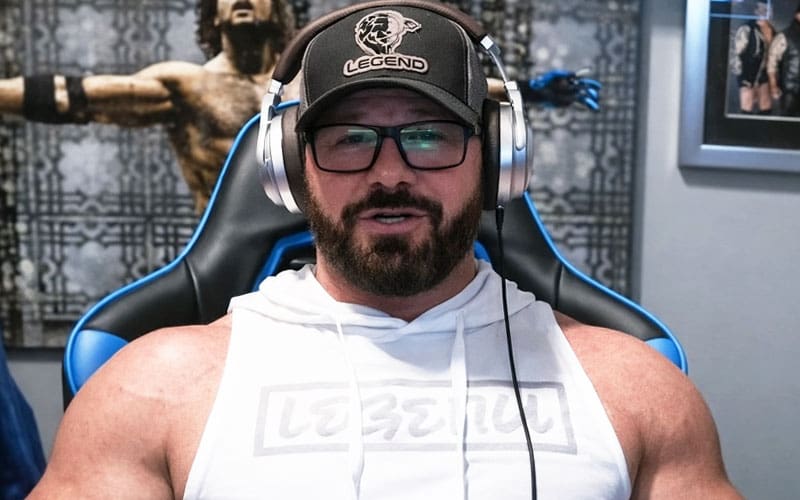
AJ Styles is the ruthless talent scout WWE desperately needs
3 months, 2 weeks ago
The Measured Transition of AJ Styles
1 month, 2 weeks ago
AJ Styles is trading his boots for a whistle but the fire remains
3 months, 2 weeks ago
AJ Styles is thinking about life after the ring
1 month, 2 weeks ago
AJ Styles moving behind the curtain signals a new era for WWE
3 months, 2 weeks ago