
ECW: The Most Dangerous Show in Wrestling History
Extreme Championship Wrestling under Paul Heyman was a cultural earthquake. Operating from a bingo hall in Philadelphia, ECW redefined what professional wrestling could be — edgier, harder and more authentic than anything on mainstream television.
Paul Heyman's Revolution
Eastern Championship Wrestling began as a regional Philadelphia promotion before Paul Heyman took creative control and reimagined it as Extreme Championship Wrestling in 1994. Heyman's vision was radical: strip away the cartoony spectacle that dominated mainstream wrestling and replace it with something raw, violent and real. Wrestlers cut unscripted promos. Blood was not just permitted but expected. Weapons, tables and barbed wire were regular tools. The audience — packed into the ECW Arena, a former bingo hall — became as much a part of the show as the wrestlers themselves.
ECW's influence spread far beyond its small weekly crowds. Wrestling observers, journalists and competing promotions studied what was happening in Philadelphia with a mixture of alarm and fascination. Wrestlers who passed through ECW — including Steve Austin, Mick Foley, Chris Jericho and many others — took its lessons in realism and intensity back to the WWF and WCW, permanently changing the mainstream product.
The ECW Legacy
The ECW Arena
Located at 2300 Arena in South Philadelphia, the ECW Arena held just 1,500 fans but created an atmosphere that WWE arenas ten times the size struggled to match. The intimacy between wrestlers and a crowd that memorised every personality and storyline produced an almost theatrical intensity. Today the building still hosts independent wrestling events and carries an almost mythological status.
Stars Born in ECW
ECW was a finishing school for talent who became global stars. Steve Austin sharpened his anti-hero character there. Mick Foley's hardcore persona was cemented. Chris Jericho, Eddie Guerrero and Rey Mysterio all passed through, as did Taz, Tommy Dreamer, Sabu and The Dudley Boyz. Nearly every major wrestler of the late 1990s and 2000s has an ECW chapter in their story.
WWE's ECW Brand
After ECW closed in 2001 WWE revived it as a third brand from 2006 to 2010. The revival never matched the original's intensity but it served as a developmental platform for talent like CM Punk, John Morrison and Kofi Kingston, who cut their teeth on a show with smaller audiences and more experimental storytelling before graduating to Raw and SmackDown.
The Lasting Influence
ECW's closure in April 2001 did not diminish its legacy — if anything it cemented the mythology. Heyman has gone on record saying he ran out of money, not ideas, and that ECW's innovative programming was constrained only by the economics of a small regional promotion fighting for national television. The annual WWE ECW One Night Stand pay-per-view events in 2005 and 2006 drew enormous demand from fans desperate to relive the original's energy.
Modern wrestling bears ECW's fingerprints everywhere. The emphasis on in-ring realism, edgy character work, unscripted promo moments and the validation of the hardcore fan — all staples of contemporary wrestling culture — trace directly back to what Heyman and his roster did in a bingo hall in Philadelphia for less than a decade.
ECW Highlights & Clips

MADISON SQUARE GARDENHAUSEN!!! Danhausen is here!! 👏👏👏 #SNME

FULL MATCH: Trick Williams vs. Laredo Kid: Saturday Night's Main Event Countdown
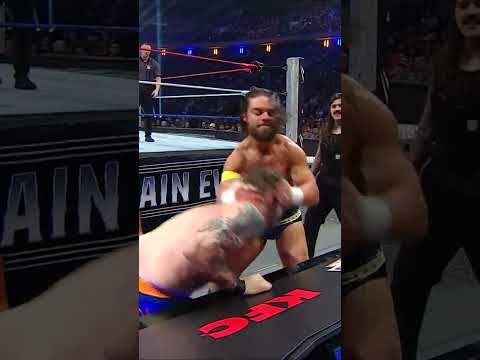
Seems to be 2-on-1 here tonight…🙄 #SNME

DANHAUSEN JUST BROUGHT OUT KARL ANTHONY TOWNS at MSG!!! THIS IS AWESOME! 👏👏👏 #SNME

Fatal Influence WIN WWE Women's Tag Team Title: Saturday Night's Main Event

Karl-Anthony Towns CHOKESLAMS Dominik and JD McDonagh: Saturday Night's Main Event highlights

KAT IS ON FIRE RIGHT NOW!!! 🔥🔥🔥 #SNME
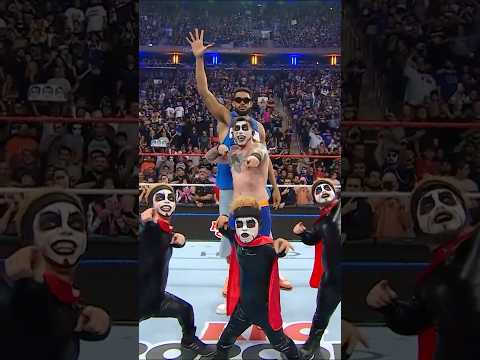
WE. ARE. BLESSED! Karl Anthony Towns and Danhausen killed it tonight! 👏👏👏 #SNME

Danhausen helped The Knicks. KAT helped Danhausen. 🤝 #SNME

Saturday Night's Main Event: July 18, 2026
Zuffa Boxing Media Day: July 18, 2026

10/10 no notes 🙌 #FanaticsFest

THE GOAT has touched down at #FanaticsFest! 🐐

That’s one lucky fanhausen! 👏👏 #FanaticsFest

Looks like Danhausen may have met his match 😂

Tom Brady showed up and showed out at #FanaticsFest! 🔥

The masked man is...Marcello Hernandez?! 😱

Kevin Hart is a Paul Heyman guy! 💪 #FanaticsFest
Analysis & Features
The ECW road stories are even more unhinged than you imagined
12 Jul 2026
Paul Heyman hated the WWE ECW revival and honestly we still do too
28 Jun 2026
Shane McMahon's failed ECW pitch is the wrestling 'what if' of our nightmares
24 Jun 2026
Paul Heyman was right to bail on the 2006 ECW dumpster fire
23 Jun 2026
JBL is right: ECW was never meant for the WWE machine
20 Jun 2026
Why Sandman's latest admission should permanently kill our ECW nostalgia
17 May 2026
Latest ECW News
The Sandman names ECW alum as his favorite opponent
VIDEO: THE 2026 ECWA SUPER 8 TOURNAMENT
2026 ECWA SUPER 8 RESULTS FROM NEW JERSEY
2026 ECWA SUPER 8 RESULTS FROM NEW JERSEY
VIDEO: THE 2026 ECWA SUPER 8 TOURNAMENT
VIDEO: THE 2026 ECWA SUPER 8 TOURNAMENT
Former ECW Star Raven Appears In TNA Impact Vignette Alongside Rosemary & Allie
Former ECW Star Raven Appears In TNA Impact Vignette Alongside Rosemary & Allie
Paul Heyman Says WWE’s Version Of ECW Was ‘An Absolutely Abhorrent Miserable Experience’
Paul Heyman on 2006 ECW relaunch: ‘Abhorrent, miserable experience’
Rob Van Dam Recalls Sid Eudy's ECW Run: 'He Gave Us A Lot Of Credibility'
Paul Heyman On WWE's Revival Of ECW: 'Miserable Experience For Everybody Involved'
Former WWE/ECW Star Admits He Tried To Kill New Jack During A Match
Al Snow Credits Paul Heyman With Shaping Wrestling Talent and ECW Legacy
4/3 THIS DAY IN HISTORY: CHRISTOPHER DANIELS WINS SECOND ECWA SUPER 8, GOTCH BEATS HACKENSCHMIDT
4/3 THIS DAY IN HISTORY:ENDEAVOR BUYS WWE, CHRISTOPHER DANIELS WINS SECOND ECWA SUPER 8, GOTCH BEATS HACKENSCHMIDT
4/10 THIS DAY IN HISTORY: WWE ANNOUNCES SUPERFAN VLADIMIR DOCUMENTARY, THE WCW-ECW-MIKE AWESOME CONTROVERSY
ECW Barely Legal 1997: A look back at ECW’s first PPV | Column
Former WWE/ECW Star Dawn Marie Names Her Favorite WrestleMania Moment
WWE's Jacob Fatu Details Childhood Dream Match With Late ECW Star