WWE's Netflix era is punishing its most reliable stars
The post-WrestleMania reality check
We are sitting in the final week of April 2026, and the dust from WrestleMania 41 has finally settled. The grand spectacle in Las Vegas is in the rearview mirror, and WWE is staring down the barrel of Backlash on May 9. But more importantly, the company is deep into the reality of its Netflix broadcasting era. The demands of this new medium are fundamentally altering how WWE builds its main event picture, and it is creating a brutal bottleneck for some of the roster's most talented performers.
The philosophy under Paul "Triple H" Levesque has shifted from the old-school developmental crawl to a high-speed, high-stakes pipeline. The mandate is clear. If you are coming up from NXT, you need to be ready to anchor a premium live event immediately. You cannot spend two years floundering on secondary programming or wrestling in three-minute heatless television matches while the audience figures out who you are. The modern viewer simply will not wait for you to find your footing.
This sounds fantastic on paper. Who wouldn't want a roster full of instant main-eventers? But this aggressively top-heavy strategy has a dark side. It requires a permanent underclass of highly skilled, incredibly reliable veterans to act as the structural support for these incoming stars. Someone has to take the bumps. Someone has to guide the rookies through the rough patches of a live broadcast. And no one embodies the frustration of this designated role quite like Finn Balor.
The curse of being too good at your job
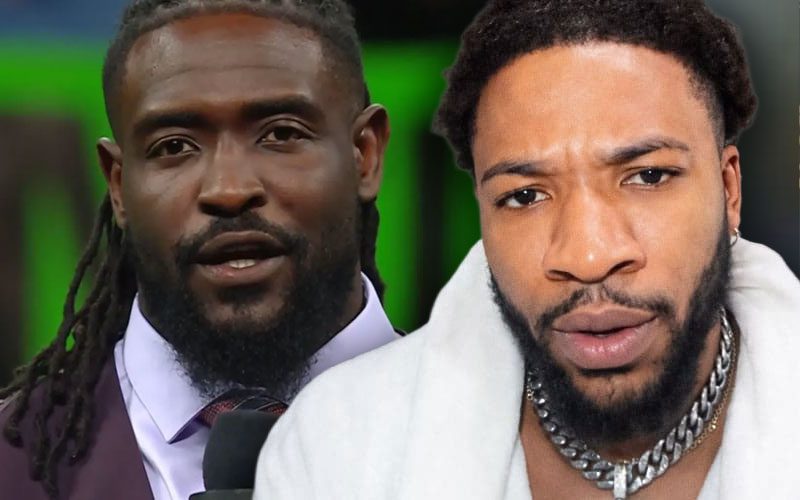
If you want to understand the modern WWE midcard purgatory, look no further than recent comments from a man who knows a thing or two about getting heat. Speaking on his podcast, John Bradshaw Layfield dropped a fascinating assessment of Balor's current position in the company. As WrestlingNews.co reported, JBL bluntly stated that Balor suffers from the "curse of being a great worker" and absolutely deserves a main event push.
JBL is not wrong. In professional wrestling, being labeled a "great worker" by management is often a backhanded compliment. It means you are safe. It means you can take a raw, unpolished powerhouse and drag them to a highly rated television match. It means you can take a terrifying bump onto the ring apron, dust yourself off, and do it again the next night in a different city without complaining.
But it also means you are viewed as a mechanic, not the driver of the sports car. Balor has spent years taking the Slingblade, hitting the Coup de Grace, and eating pins to make other people look like unstoppable monsters. He is the guy WWE calls when a match absolutely cannot fail due to a green opponent. He is rarely the guy they call when it is time to close out the biggest show of the year with a championship celebration. This is a booking flaw that Levesque has inherited and, frankly, exacerbated over the last two years.
Look at Balor's resume. He was the inaugural Universal Champion before a tragic shoulder injury derailed his main event trajectory. He went back to NXT and delivered a masterclass run, putting on absolute clinics with the likes of Pete Dunne and Kyle O'Reilly. He proved he could work a grueling, mat-based style just as well as his traditional high-flying offense. Yet, upon returning to the main roster, that versatility became a trap. Management realized they could slot him into any match, against any opponent, and get a solid television segment. As a result, they stopped trying to write compelling storylines for him.
The Netflix mandate and the NXT factory
To understand why veterans like Balor are trapped, you have to look at what is coming up from underneath them. The integration of WWE into the Netflix streaming environment has changed the visual requirements of a main eventer. The platform demands immediate engagement to stop viewers from scrolling away to a true crime documentary. You need athletes who pop off the screen the second their entrance music hits.
This is where the new breed of NXT call-ups enters the picture. The strategy is deliberate and financially motivated. According to a recent analysis by BodySlam.net, the transition from NXT to the main roster is now a highly calculated effort to build "TV-ready" global brands.
"Under Triple H, the move from NXT to the main roster is a calculated strategy to build 'TV-ready' global brands for the Netflix era."
They are not building wrestlers; they are building content pillars. Shawn Michaels has explicitly stated that the goal is to create stars capable of headlining from day one.
Look at Oba Femi. The man is a terrifying combination of mass and velocity. He does not need a complex backstory to get a reaction from a crowd in Kansas City. When he throws a 250-pound opponent across the ring with a pop-up powerbomb, the audience understands his character instantly. He is the monster waiting at the end of the level. He has the physical charisma that translates globally, regardless of language barriers.
Similarly, Je'Von Evans brings a chaotic, video-game-like aerial dynamic that translates perfectly to short-form social media clips and high-engagement streaming metrics. His springboard cutters and twisting sentons are tailor-made for Instagram Reels. WWE is pushing these athletes hard and fast. They are bypassing the traditional months of dark matches and lower-card feuds because the algorithm demands fresh, spectacular content now.
But when you fast-track an Oba Femi, you immediately need someone credible for him to destroy. You cannot feed him local enhancement talent for six months; the Netflix audience will get bored and the live crowds will go silent. You need to feed him established names. You need to feed him Finn Balor.
The lost art of the slow burn
There was a time when moving from developmental to the main roster meant entering a complex hierarchy. You started by wrestling on the pre-show, slowly working your way through the midcard title scenes, and learning how to manipulate a crowd of 15,000 people. You learned how to call a match on the fly when the fans turned on a segment. You learned how to work a rest hold without losing the building.
Veterans like Balor learned these lessons the hard way. They spent years in New Japan or on the independent circuit, figuring out how to construct a 30-minute narrative without relying on high-spot spam. When they finally hit the WWE main roster, they were fully formed ring generals. They knew how to pace a match so that the final five minutes felt like a life-or-death struggle.
The current developmental system, while incredible at producing polished athletes, often bypasses this gritty learning phase. Performers are drilled in the WWE Performance Center to execute flawless, heavily choreographed sequences. They learn how to hit their marks for the hard camera. But they do not necessarily learn how to read a room that has gone completely dead on a Tuesday night in Corpus Christi.
This is precisely why the mechanics are so vital right now. When a newly promoted NXT star forgets their spot or loses the crowd, it is the veteran in the ring with them who has to salvage the segment. They are the safety net. But being a permanent safety net is a thankless job, and it actively destroys your own character's momentum.
The breaking point of the mechanic
This brings us to the core issue with WWE's current creative direction. The company is treating its reliable workers as an infinite resource. There is an arrogant assumption in creative that Balor, or a Sami Zayn, or a Chad Gable, can lose cleanly on television for six months straight and still maintain their credibility with the audience. This is a dangerous miscalculation.
Credibility is a finite currency in professional wrestling. When you consistently use your best in-ring technicians as stepping stones for the new "TV-ready" giants, you condition the audience to view those technicians as losers. The fans are smart. When the bell rings for a match between a recently debuted Oba Femi and a veteran like Balor, the crowd already knows the finish. The suspense evaporates before they even lock up.
They know Balor is going to bump around the ring, sell his opponent's offense perfectly, perhaps get a brief flurry of hope spots featuring a shotgun dropkick into the corner, and then get caught out of nowhere for the 1-2-3. Because the result is a foregone conclusion, the heat drains from the match entirely. The "great worker" is doing his job flawlessly, but the match itself suffers because the element of unpredictability has been erased by predictable booking patterns.
A critical failure in roster management
This exposes a critical flaw in Levesque's creative regime. For all the praise he receives regarding long-term storytelling and faction warfare, his handling of the upper-midcard gatekeepers has been painfully repetitive. The formula is stale. You cannot build a sustainable main event scene if the audience explicitly understands that half your roster exists solely to pad the stats of the other half.
If you want Je'Von Evans or Oba Femi to truly mean something when they reach the top of the card, the veterans they beat along the way must be perceived as legitimate threats. Beating Finn Balor only matters if Finn Balor occasionally wins big matches on premium live events. If he is just the guy who loses elegantly on Monday nights, beating him is not a career milestone. It is just a routine rite of passage that warrants a polite golf clap.
Balor’s run with The Judgment Day proved he can carry the emotional weight of a major faction. He has the acting chops to cut a menacing promo, he has the physical conditioning to work 30-minute marathons, and he has a dedicated global fanbase that desperately wants to see him succeed. Yet, whenever he sniffs the main event picture, the rug is inevitably pulled out from under him to serve a different narrative or protect a younger investment.
Looking toward Backlash and beyond
As we march toward WWE Backlash next month, the card is taking shape, and the familiar patterns are re-emerging. We will likely see the newly minted WrestleMania champions defending their titles in relatively safe rematches. But we will also see the middle of the card populated by these exact types of transitional feuds, where the workhorses are sacrificed to feed the machine.
You can even see this philosophy bleeding into the secondary programming. PWInsider recently noted that this week's episode of WWE Main Event is now streaming. While that show is often dismissed as skippable content for diehards, it is actually a fascinating microcosm of this systemic problem. It is filled with incredibly talented workers who have hit the glass ceiling, wrestling fundamentally sound matches that ultimately mean nothing to the broader narrative. It is a holding pen for the mechanically gifted.
WWE needs to realize that the "curse" JBL described does not have to be terminal. Being a great worker should be the foundation of a main event push, not a disqualifying factor. If the company wants to maximize the value of its Netflix deal and keep audiences engaged for three hours at a time, it needs a main event scene that features different styles, different body types, and different storytelling methods.
You cannot just serve the audience a steady diet of heavyweights throwing each other through tables, no matter how good Oba Femi looks doing it. You need the grueling technical classics. You need the dramatic near-falls that only a veteran knows how to pace. You need the physical chess matches. And to get those, you need to protect the workers who know how to wrestle them.
The required course correction
Fixing this bottleneck is not complicated, but it requires a level of booking discipline that WWE has historically lacked. It requires the creative committee to look at a talent like Finn Balor and actively decide to give him a string of decisive, high-profile victories against protected talent. It means letting him trap an upcoming star in a crossface and force a tap out every now and then to remind the audience that he is a lethal striker and submission specialist.
If a highly touted prospect loses a grueling, 15-minute technical bout to a veteran like Balor, it does not destroy their aura. It teaches the audience that raw power is not always enough in professional wrestling. It adds a layer of vulnerability that will make their eventual championship victories much more compelling. It gives them a dragon to slay later down the line, rather than handing them the keys to the kingdom on day one.
The "TV-ready" strategy is undoubtedly smart business for the modern streaming era. Shawn Michaels and Triple H are right to prioritize athletes who command the screen and generate social media traction. But an entire roster of alphas with no one credible left to fight is just a synchronized stunt show. Pro wrestling requires give and take. It requires sacrifice and selling.
Right now, the veterans are doing all of the sacrificing and taking all of the pins. It is time for WWE management to recognize that the mechanics keeping their engine running deserve a chance to drive the car. Until they do, the curse of the great worker will continue to hold back the true potential of the roster, and the Netflix era will burn through its supporting cast faster than it can replace them.
WWE CM Punk Best in the World T-Shirt
The iconic ringer tee of the Second City Saint.
Frequently Asked Questions
How is the Netflix era changing WWE's roster strategy?
Why are veteran WWE wrestlers struggling in the current era?
What does JBL mean by the curse of being a great worker?
What role does Finn Balor currently play on the WWE main roster?
When is the WWE Backlash event taking place in 2026?
More Coverage

Drew McIntyre sidelined following brutal SmackDown encounter
an hour agoWWE's New York gamble is a calculated risk ahead of WrestleMania 42
2 hours ago
WWE's Saturday Night's Main Event math doesn't add up
2 hours agoWWE's return to New York changes the math on stadium attendance
2 hours ago
Top 10: Top Moments from MSG
2 hours ago
SmackDown is drifting into mid-summer malaise
3 hours agoMore Analysis
NXT is gambling on a heavyweight collision that could backfire
3 months, 2 weeks ago
WWE's reported summer call-ups are walking into a massive booking trap
2 months ago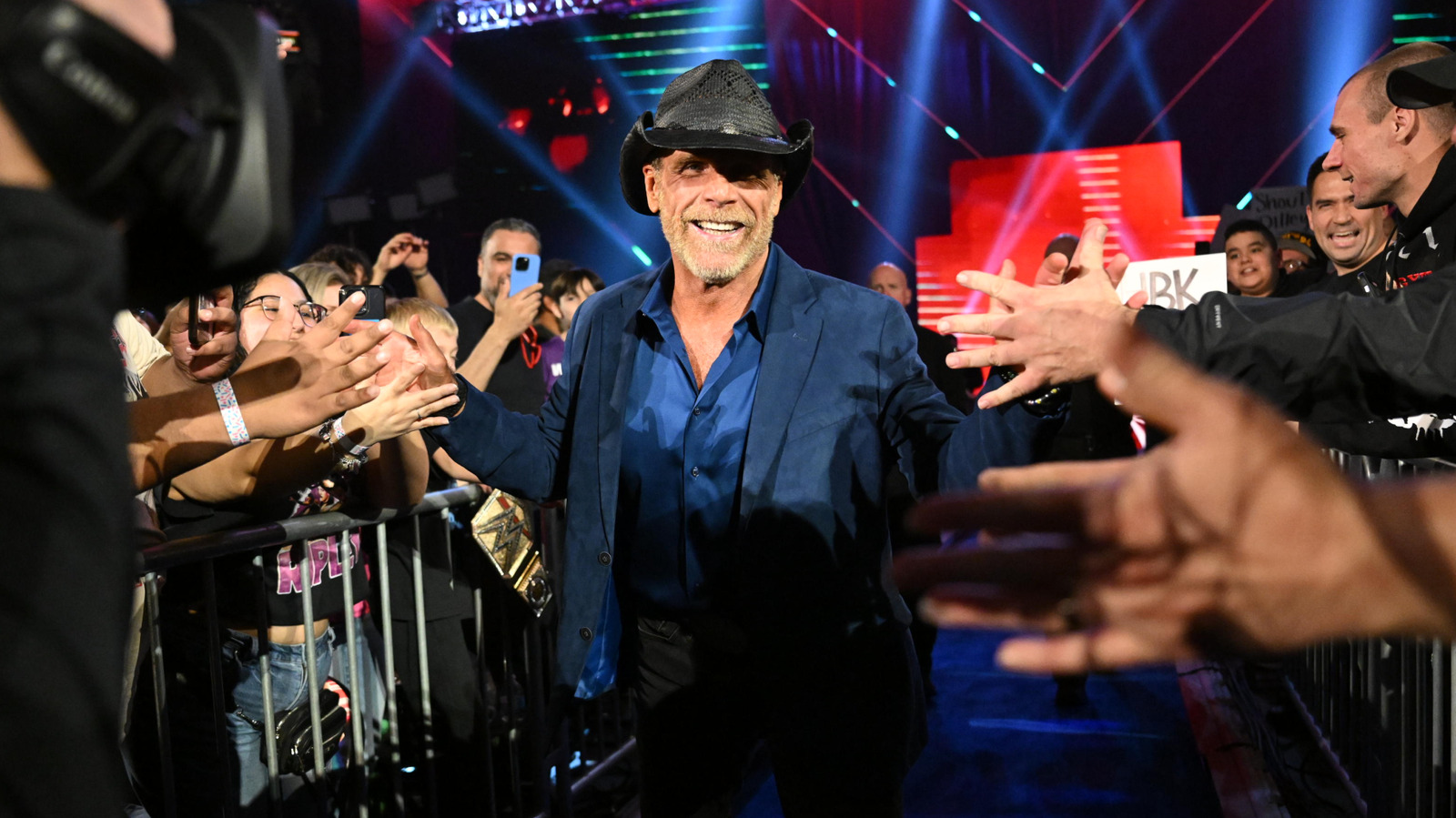
WWE is sacrificing the NXT brand for a main roster patchwork
2 months ago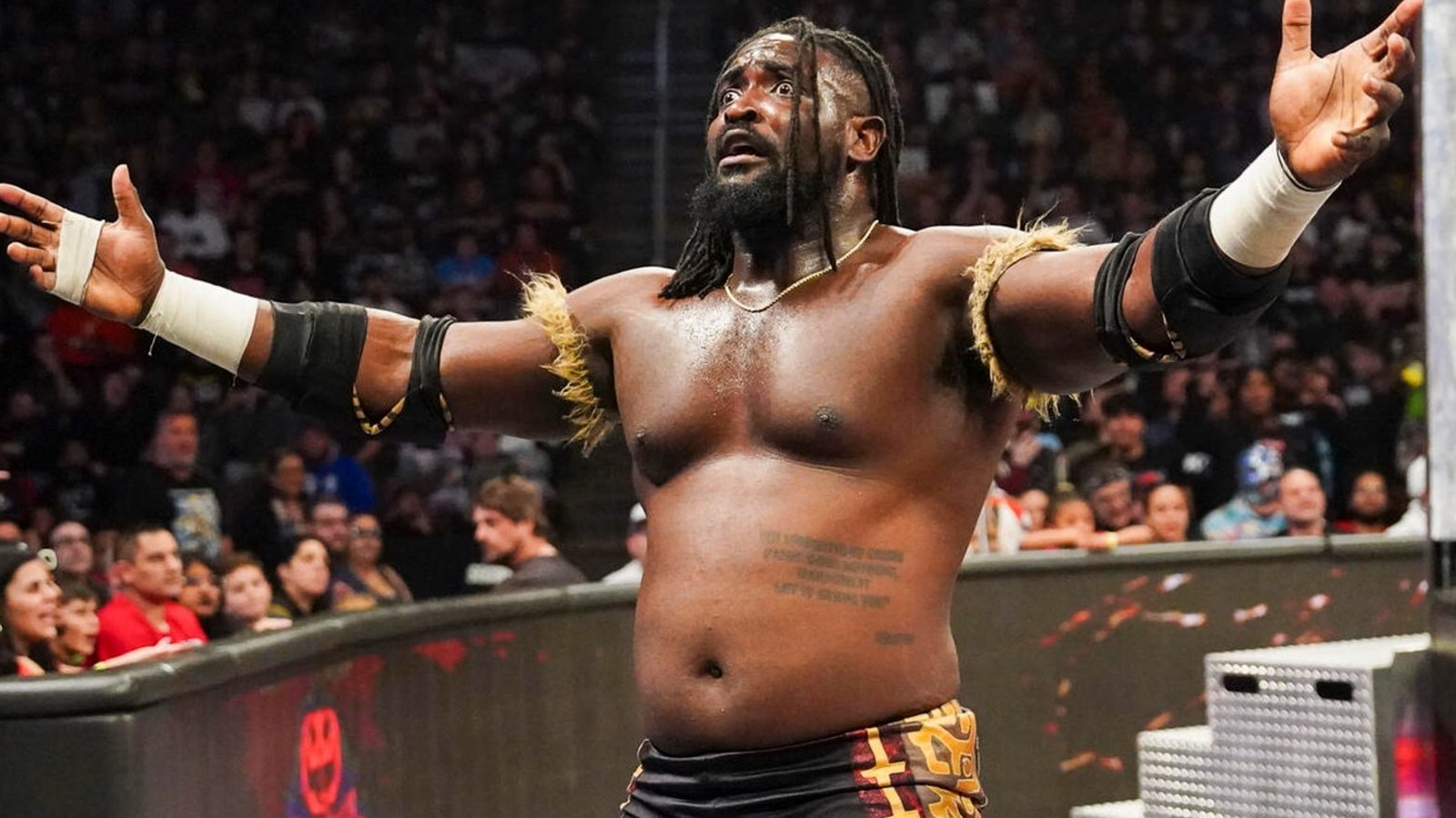
Oba Femi is absolutely right about WWE's aging roster
3 months, 3 weeks ago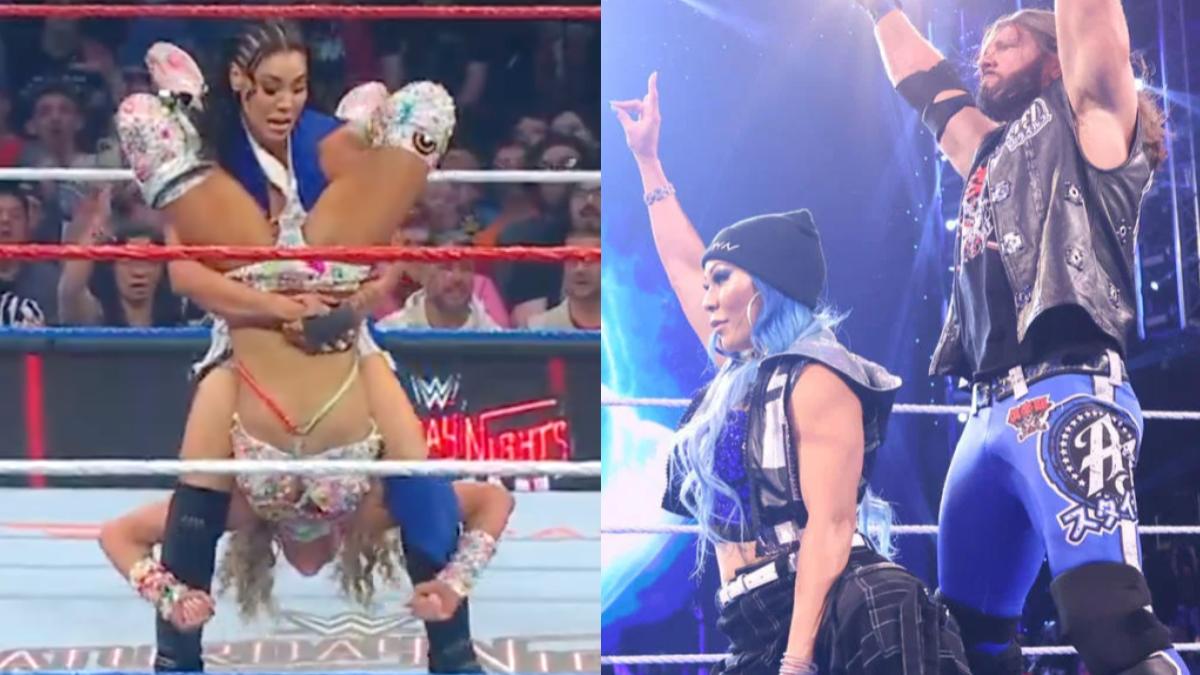
WWE is turning Italy into a high-stakes Netflix experiment
1 month, 3 weeks ago