AEW Double or Nothing might be just three days away, but the most important piece of wrestling media you need to consume this week does not involve a pay-per-view ring. It involves a guy in the front row.
If you grew up watching the World Wrestling Federation in the late 1980s and early 1990s, you know his face. You might not have known his name back then, but you knew exactly who he was.
He was the guy in the front row. The massive guy with the intense expressions, the thick build, and the constantly rotating wardrobe of brightly colored wrestling t-shirts.
Vladimir Abouzeide was not a wrestler. He was not a manager or a planted stunt double. He was simply a fan. But for a distinct generation of wrestling enthusiasts, Vladimir was as much a part of the broadcast as Gorilla Monsoon or Bobby Heenan.
Now, after years of unexplained delays, WWE has quietly uploaded "Superfan: The Story of Vladimir" to their WWE Vault YouTube channel.
It is a quiet release for a loud personality. And it demands your attention.
Let's get one thing straight right away. WWE completely fumbled the rollout of this project.
They announced this documentary back in 2021. They hyped it up. They told the press it was going to be the first in a brand new series of network documentaries.
Then, nothing. Complete silence.
It vanished into the corporate ether. While we got countless clean, heavily produced biographies about the same five Attitude Era stars, Vladimir's story sat on a hard drive somewhere in Stamford.
Dumping it on a secondary YouTube channel three years later feels incredibly dismissive. It is a classic WWE front-office move. They sit on archival gold, fail to monetize it properly, and then quietly push it out the door without fanfare.
But despite the botched release strategy, the film itself is a fascinating, mandatory watch for anyone who cares about wrestling history.
Here is what you need to look out for.
The Madison Square Garden era
The documentary heavily focuses on Vladimir's roots at Madison Square Garden. This was before national television became the absolute focus of the wrestling business.
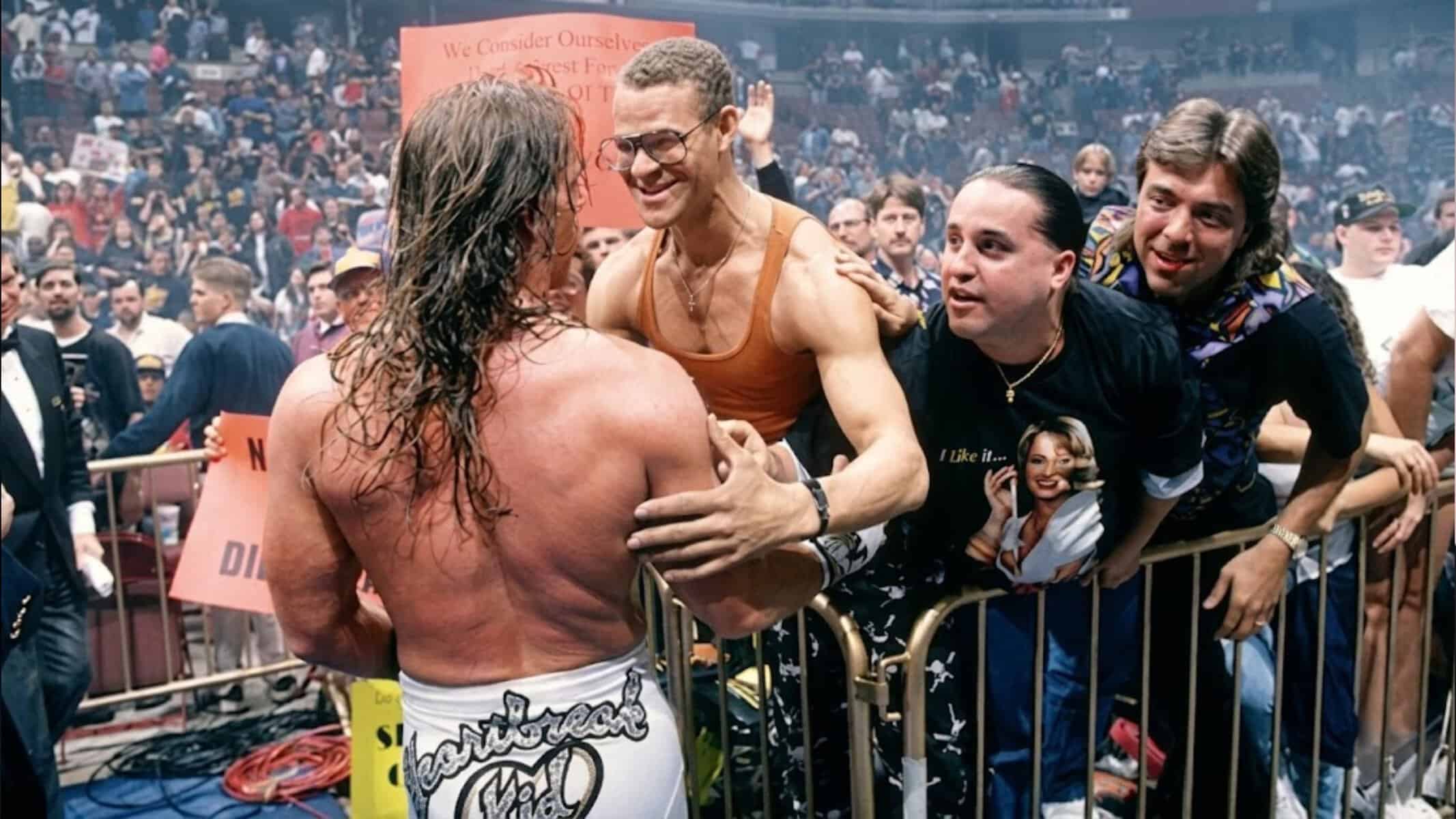
House shows at MSG were legendary. The air was thick with cigar smoke. The crowds were genuinely aggressive. You didn't go to MSG to politely golf-clap; you went to scream yourself hoarse.
Vladimir was the undisputed king of that violent room.
Before the internet allowed fans to organize chants, crowd heat was entirely organic. It relied on a few loud, charismatic individuals to lead the charge in the arena. When you watch the Madison Square Garden footage, look closely at the surrounding crowd. They are all watching Vladimir. He dictates the emotional temperature of the building.
It is a level of crowd control that most actual wrestlers spend their entire careers trying to master, and he was doing it from a folding chair.
If Vladimir started a chant in the front row, the entire section followed. If he stood up to berate Bobby "The Brain" Heenan, thousands of people behind him joined in.
Watch how the wrestlers interact with him in the old archival footage. Hulk Hogan points him out during his entrance. Diesel acknowledges him from the apron.
There is a deep mutual respect there. The boys in the locker room knew that if Vladimir was sitting ringside, the crowd was going to be hot.
He was a human barometer for the WWF's booking. If a wrestler wasn't getting a reaction from Vladimir, they were dead in the water.
A sharp contrast in fan culture
This is where the documentary really shines, even if it does so accidentally. It highlights a massive shift in how fans interact with the product.
Look at the crowd during any modern wrestling show today. Look at the people in the front row.
You have the "Brock Lesnar Guy" in his replica shirt. You have "Frank the Clown." You have people holding up signs explicitly designed to get them noticed by wrestling Twitter.
Modern superfans are often trying to get themselves over. They are performing for the hard camera.
Vladimir never performed. He reacted.
He was authentically losing his mind at every two-count. He was screaming at the top of his lungs because he legitimately hated the bad guys.
He was the perfect fan because he bought into the illusion completely. The documentary captures that pure obsession perfectly. It is something that feels increasingly rare in an era where everyone is trying to be a backstage insider.
The ECW crossover
One of the most interesting parts of Vladimir's story is his transition to Extreme Championship Wrestling.
When the WWF product got stale in the mid-90s, Vladimir started showing up in Philadelphia.
Philadelphia's bingo hall was the exact opposite of the polished WWF product. It was violent, crude, and deeply tribal. The fans there actively rejected anyone they viewed as a corporate outsider.
Paul Heyman built ECW on the concept of counter-culture. If you liked the WWF, you were the enemy. Yet, there was an unspoken exemption made for Vladimir. The notoriously hostile Philadelphia crowd, which would regularly spit on rival promotions' stars, let him stand right at the guardrail.
Seeing this massive, clean-cut WWF loyalist standing in the grimy, blood-soaked ECW Arena is jarring. But he fit right in.
He adapted to the chaos. The ECW mutants accepted him because they recognized his dedication. He wasn't a tourist looking for a cheap thrill. He was a lifer.
Pay attention to the interviews from the ECW alumni in the film. They speak about him with a bizarre mix of reverence and utter confusion. They couldn't understand how this guy afforded to travel to every single show.
Bubba Ray Dudley practically demands that Vladimir hit him during a ringside brawl in one clip. It shows that Vladimir's love for the sport went beyond brand loyalty.
The physical and emotional toll
The documentary does not shy away from the darker side of this lifestyle.
Being a superfan is brutally expensive. It is exhausting. It requires sacrificing almost every other aspect of a normal life.
Vladimir was not a millionaire. He was a regular guy who spent every disposable dime he had on wrestling tickets, rental cars, and terrible hotel rooms.
There is a lingering sadness in some of the interviews. You have to wonder what his life would have been like if he had channeled that obsessive energy into a career or building a family.
But the most impactful moments of the film have nothing to do with ticket prices. They have to do with mortality.
Recently, Vladimir was diagnosed with Parkinson’s disease.
Watching this towering, energetic man grapple with a debilitating illness is tough to stomach. The man who used to jump out of his seat and shake the guardrail is now fighting just to control his own movements.
WWE handles this with surprising grace. They don't exploit his illness for cheap tears. Instead, they use it to underscore why his fandom mattered so much to the people in the ring.
When you see the wrestlers reaching out to him in his time of need, the whole thing clicks into place. Triple H visiting him. Shawn Michaels breaking character to talk about what Vladimir meant to the locker room.
It proves that the relationship was never one-sided. The boys noticed him. They appreciated him. And when he needed them, they stepped up.
What this means for the Vault
We also need to talk about the platform itself.
WWE Vault has quietly become the best thing the company produces on YouTube. While the main channels are clogged with raw recaps and heavily edited highlight packages, the Vault is dropping uncut, rare footage.
They are putting up old dark matches. They are releasing unedited Coliseum Video exclusives.
Putting the Vladimir documentary here is a strange choice, but it signals a potential shift in strategy.
Maybe WWE is finally realizing that their hardcore archival fans don't want to dig through the messy Peacock interface. Maybe they are using the Vault channel to test the waters for more niche, historical content.
We don't need another heavily edited documentary telling us that D-Generation X invaded WCW on a tank. We know. We have seen it a hundred times.
We need more documentaries about the people who made the business feel alive on a random Tuesday night in Poughkeepsie.
The final word and a prediction
You need to set aside an hour this weekend to watch this.
Do not watch it while you are scrolling on your phone. Do not put it on in the background while doing dishes.
Sit down and actually watch it. Appreciate the dedication of a man who gave his entire adult life to cheering for grown men in spandex.
It is a love letter to a bygone era of fandom. An era before spoilers, before dirt sheets were mainstream, and before everyone thought they were an expert booker.
As for my prediction?
WWE is going to see the massive engagement numbers on this documentary and realize they made a huge mistake by burying it in the vault. Within six months, they will start producing shorter, 20-minute features specifically for the Vault channel.
They will start focusing on other legendary crowd regulars. We will get the "Tie-Dye Guy" story. We will get the "Sign Guy" history.
The Vladimir documentary is just the beginning of a new archival strategy. The superfan cinematic universe is coming to YouTube, and honestly, I am completely here for it. It beats watching another corporate-approved history lesson about the Monday Night Wars.