The Audacity of the Cold Pitch
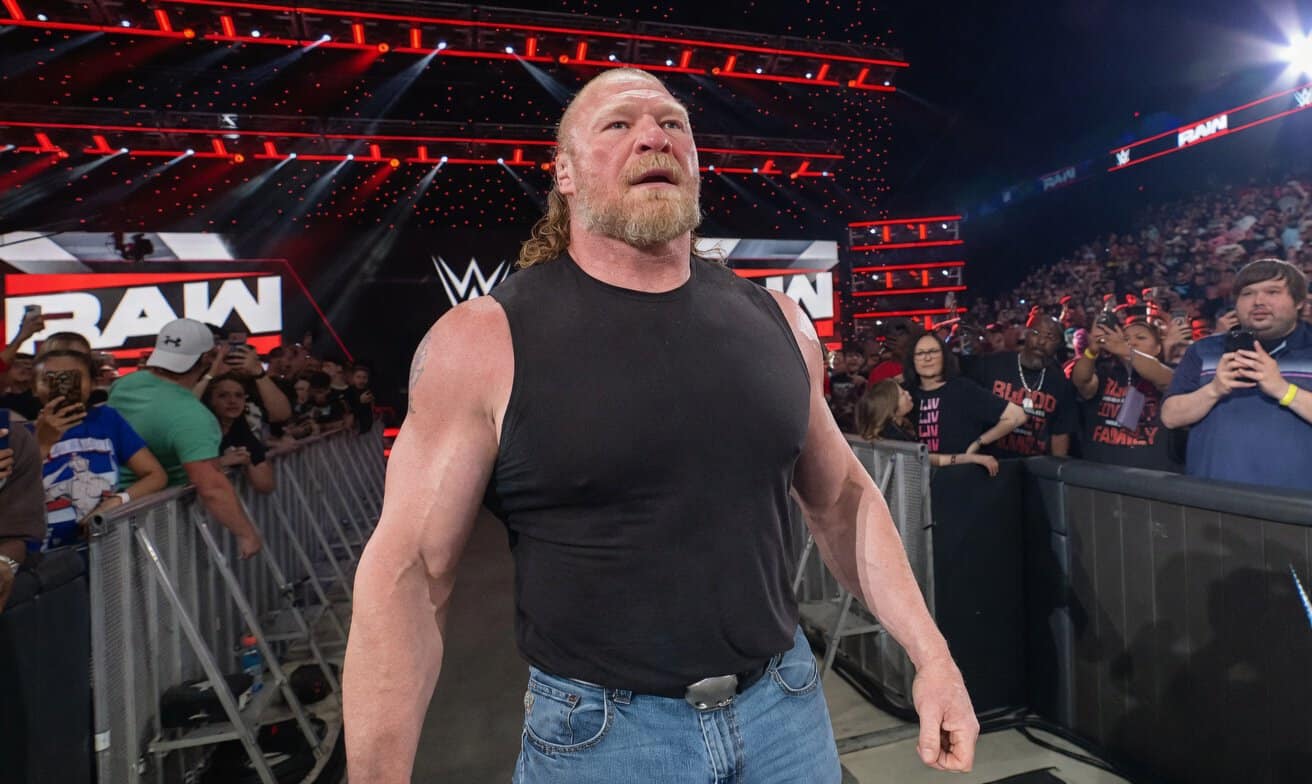
You do not just walk into the Ultimate Fighting Championship and demand a main card slot. The fight business requires a toll, usually paid in blood across regional circuits and half-empty gymnasiums. But Brock Lesnar has never recognized standard parameters.
Following his departure from professional wrestling and a brief, bruising attempt to make the Minnesota Vikings roster, Lesnar decided he wanted to fight for real. He had exactly one professional bout on his resume. A June 2007 appearance for K-1 Hero's against Min Soo Kim. It lasted exactly one minute and nine seconds, ending via submission to strikes. It proved nothing other than Lesnar's sheer physical size.
Yet, as recently noted in retrospective discussions, Lesnar simply cold pitched Dana White. He bypassed the traditional developmental curve entirely. He wanted the biggest stage, the brightest lights, and elite opposition immediately.
White accepted the meeting, taking a massive calculated risk. The MMA purist fanbase in 2008 was fiercely protective of the sport's hard-won legitimacy. Bringing in a sports entertainer was widely viewed as a cynical cash grab. To protect the integrity of his heavyweight division, White needed an opponent who served a specific function. A gatekeeper who would either validate Lesnar's raw athleticism or violently expose his lack of technical refinement.
The Selection of the Assassin
Frank Mir was the perfect test case. He was not a brawler who would engage in a sloppy striking match. He was a former UFC Heavyweight Champion and arguably the most lethal submission specialist the division had ever seen.
Mir's pedigree was undisputed. He was the man who snapped Tim Sylvia's forearm to win the undisputed title. But his career had been completely derailed by a horrific 2004 motorcycle collision that shattered his femur and tore every ligament in his knee. His journey back to the Octagon had been agonizing and inconsistent.
Upon his return, Mir suffered a heavy ground-and-pound loss to Marcio Cruz and a swift technical knockout defeat to Brandon Vera. While he had rebounded slightly with a win over Antoni Hardonk, severe questions lingered regarding his mobility, his durability, and his ability to handle explosive athletes.
Stylistically, the matchup was a fascinating inversion of the classic striker-versus-grappler trope. Here, both men were grapplers, but from entirely different universes. Lesnar was the pure American wrestler, a Division I National Champion at the University of Minnesota who built his game on top pressure. Mir was the Brazilian Jiu-Jitsu black belt who was incredibly dangerous off his back.
The Physics of the Matchup
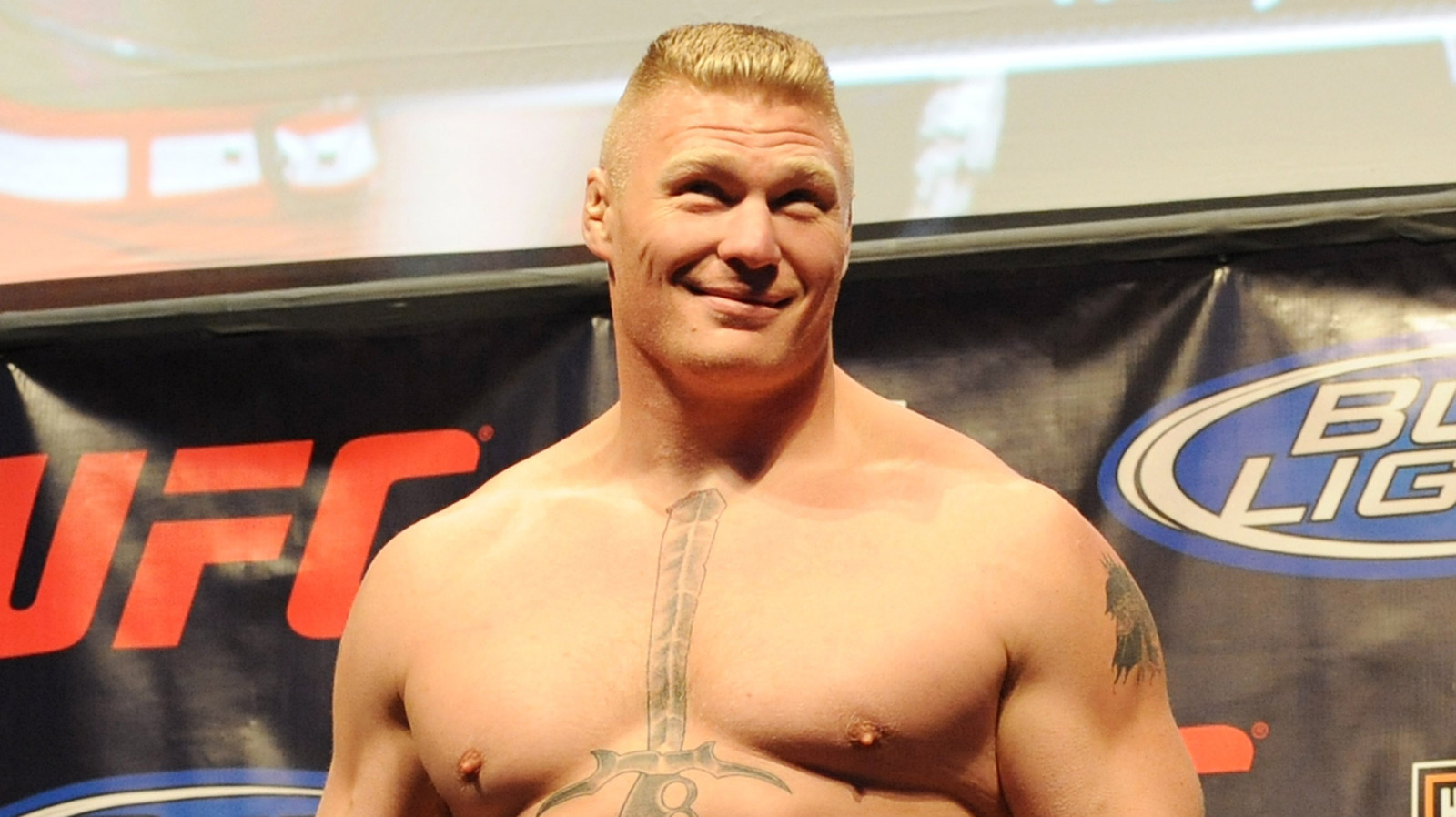
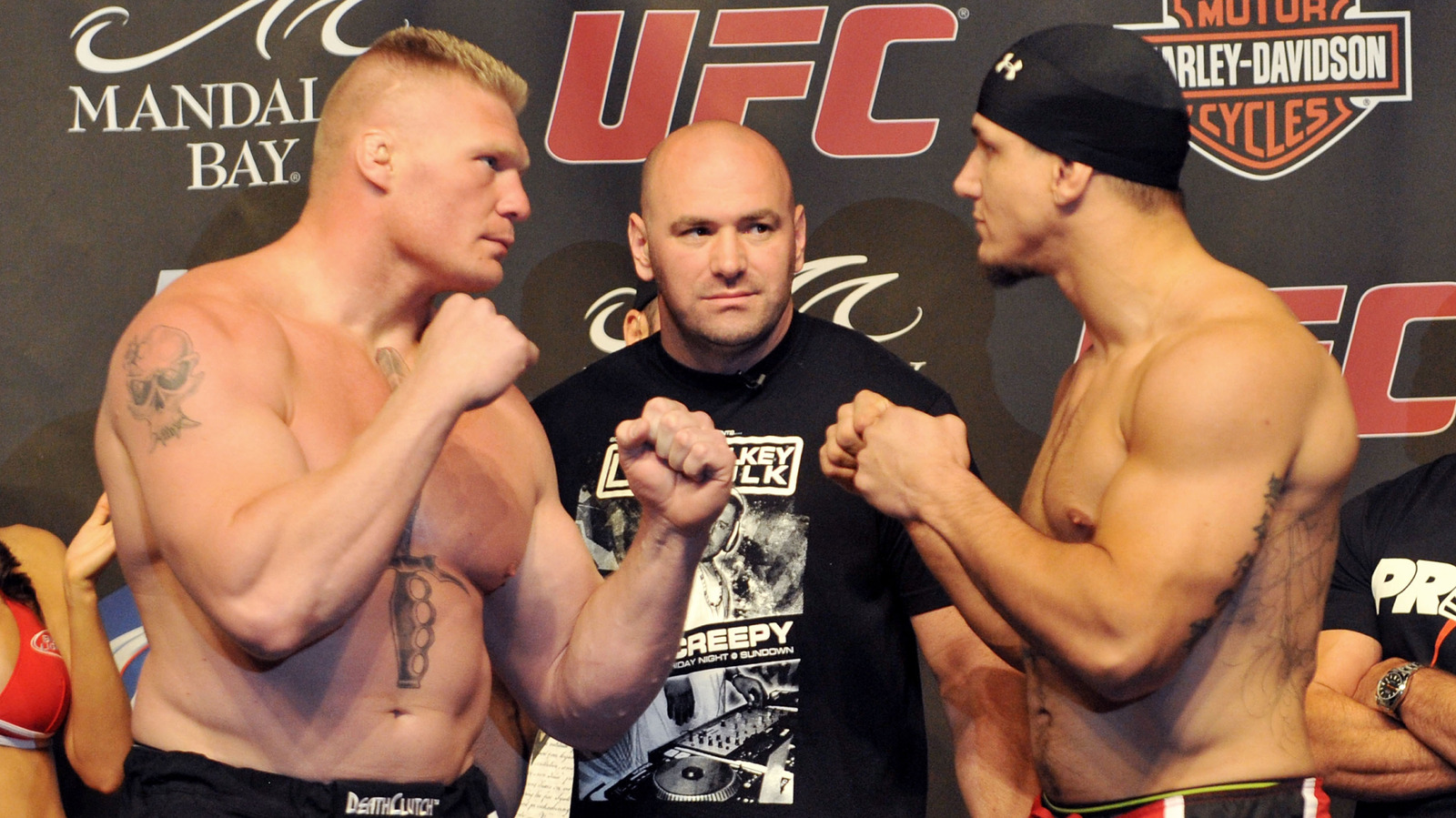
When the two athletes squared off at UFC 81 on February 2, 2008, the physical disparity was jarring. Mir stepped onto the scales at a relatively soft 255 pounds. Lesnar, meanwhile, had to actively cut weight to hit the heavyweight limit of 265 pounds.
Lesnar did not carry the lumbering physique typical of super-heavyweights. He was heavily muscled but remarkably lean. His explosive fast-twitch muscle fibers were evident before referee Steve Mazzagatti even initiated the sequence.
The tactical blueprints were obvious to everyone in the arena. Lesnar needed to close the distance, secure a heavy takedown, and utilize ground-and-pound from a dominant top position. He had to keep Mir pinned flat to neutralize the hips. Entering Mir's guard was dangerous; staying there without posture was suicidal.
Mir's defensive strategy relied on surviving the initial physical storm. He needed to absorb the early kinetic energy, find an opening during the inevitable scrambles, and drag the inexperienced wrestler into deep, uncomfortable waters.
The Opening Blitz
The bell rang, and Lesnar accelerated with terrifying speed. He did not bother with measuring distance or establishing a jab. He shot for a double-leg takedown with the velocity of a middleweight.
It was a pure collegiate blast double. Mir had zero time to sprawl or secure underhooks. The sheer mass and momentum of Lesnar crashed into him, planting the former champion violently onto the canvas within five seconds of the opening bell.
This sequence immediately highlighted the difference between amateur wrestling and mixed martial arts. In a wrestling match, securing that takedown and establishing control is the primary objective. In the Octagon, landing in the guard of an elite submission artist is merely the beginning of the danger.
Lesnar immediately unleashed a barrage of heavy strikes. His technique was unrefined—he threw wide, looping hammerfists that lacked rotational hip torque—but the sheer brute force made them effective. Even the strikes Mir managed to block with his forearms transferred massive amounts of blunt force trauma.
The Mazzagatti Intervention
Then occurred one of the most heavily scrutinized refereeing decisions of that era. During a chaotic scramble as Mir tried to improve his position, Lesnar landed a short, glancing right hand that struck the back of Mir's head.
Strikes to the back of the head are illegal, but in the fluid motion of ground grappling, glancing blows are often met with a stern verbal warning. Significantly, Mazzagatti opted for a different route. He immediately halted the action, stepped between the fighters, and deducted a point from Lesnar.
More importantly, Mazzagatti chose to stand both men up for the restart. This was a catastrophic shift in momentum. It completely nullified the dominant top position Lesnar had earned through his explosive entry. The decision disproportionately punished the attacking fighter and offered Mir a massive, unearned reprieve.
It was a deeply flawed piece of officiating. Lesnar had to rebuild his entire offensive sequence from scratch against an opponent who had just been granted time to recover his breath and clear his head.
The Knockdown and the Fatal Error
Lesnar's reaction to the restart was purely aggressive. He did not hesitate or show frustration. He simply walked forward and threw a massive right cross.
The punch lacked technical boxing mechanics, but it connected flush on Mir's jaw. The former champion's knees buckled immediately, and he collapsed back onto the mat. Lesnar smelled blood and swarmed instantly.
This was the sequence that defined the fight. Lesnar had Mir badly hurt. A methodical, composed fighter would have established a strong base, passed the guard, and finished the fight with measured strikes. Instead, Lesnar succumbed to adrenaline.
He poured on the ground-and-pound, but he completely ignored his own defensive responsibilities. He failed to control Mir's hips, leaving a massive gap in his posture. Worst of all, he left his right leg dangling recklessly between Mir's thighs.
Against a low-level grappler, this sloppiness goes unpunished. Against Frank Mir, it was a fatal miscalculation.
The Mechanics of the Submission
Mir's recovery was instantaneous. He absorbed the punches raining down on his face and went to work on the exposed limb. He isolated Lesnar's right leg, elevated his own hips to create an angle, and swept the massive wrestler backward.
The transition was seamless. Within seconds, Mir had locked in a deep kneebar. The mechanics of this submission are brutal. It forces the knee joint to bend backward against its natural hinge, threatening immediate structural failure of the ligaments.
Mir secured the hold, clamped his legs tight to prevent Lesnar from rolling, and applied immense backward pressure. The mechanical advantage he generated using his entire lower body against Lesnar's isolated joint was inescapable.
Lesnar's physical strength was entirely negated. You cannot flex your way out of a hyper-extended knee. The tap came frantically at 1:30 of the very first round. The crowd in Las Vegas erupted in a mix of shock and validation.
The Long-Term Tactical Impact
Frank Mir had executed his game plan perfectly in the end. He weathered a terrifying physical storm, capitalized on a rookie mistake, and proved that elite technique still held value against raw, unbridled power.
However, the tape told a secondary story. As Lesnar himself looks back on it, he had been severely beaten for eighty of those ninety seconds but he had demonstrated a frightening level of speed and aggression that the heavyweight division was completely unprepared for.
From a developmental standpoint, losing this fight was the most vital piece of MMA history for Lesnar's career. It was a harsh, undeniable lesson in the intricacies of submission defense. It forced him to acknowledge that his collegiate wrestling pedigree was incomplete without positional awareness.
Lesnar retreated to his training camp and radically altered his approach to top control. He learned to keep his hips heavy, to hide his limbs, and to maintain posture while striking. He recognized that bullying a high-level black belt was mathematically impossible.
When the two men eventually rematched at UFC 100, the tactical adjustments were clear. Lesnar secured the takedown, pinned Mir's hips to the mat, trapped his arms, and systematically destroyed him with short, controlled strikes. There were no dangling limbs. There were no wild scrambles.
Prediction: The Death of the Cold Pitch
Looking at Lesnar's reflections today, it is clear that we are looking at an era of combat sports that no longer exists. The barrier to entry has closed permanently.
My prediction is absolute: We will never see another athlete bypass the regional circuit to debut on a UFC main card against a former champion. The sport is simply too specialized now. The talent pool is too deep. A pure collegiate wrestler with zero MMA experience cold-pitching the president of the promotion and getting a co-main event slot is a statistical impossibility in 2026.
If a modern crossover star attempts this path, they will be violently exposed within thirty seconds, not ninety. Lesnar was the anomaly, the only man physically capable of turning a reckless cold pitch into a championship run. No one else will ever survive the attempt.