Why AEW Dynamite's May 13 viewership bump is no accident
The Wednesday night numbers are in for the May 13 episode of Dynamite. The viewership saw a steady, noticeable increase. For a company heading into Double or Nothing in just eight days, the timing is perfect.
But numbers in a vacuum are useless. The real story is in the quarter-hour retention and the actual structure of the television product that kept the audience from flipping the channel. As Ringside News noted, the metrics reflect a positive shift.
"AEW Dynamite viewership and key demo numbers are in for the May 13, 2026 episode of AEW Dynamite on TNT, reflecting steady…"
We have spent months dissecting the erratic pacing of Dynamite. The show often feels like a collection of excellent wrestling matches thrown into a blender without a binding narrative. This week felt entirely different.
The booking was deliberate. The matches had distinct, separate structural goals. When you look at the minute-by-minute flow, the increase in viewership isn't a fluke. It is the direct result of a tighter, more disciplined approach to television wrestling.
Opening the show with purpose
Let's look at the opening 20 minutes. AEW has built a reputation on starting hot. They throw a high-workrate match out first to hook the viewer.
But workrate alone doesn't hold a casual audience through the first commercial break. You need stakes. You need a match that feels like it matters. On May 13, they abandoned the chaotic, multi-man scramble format that often clutters the opener.
They opted for a focused, hard-hitting singles contest. The psychology of an opening match is totally different from a main event. You don't have 30 minutes to build a slow, methodical story.
You have to establish the dynamic immediately. The heel needs to cut off the ring. The babyface needs to show fire within the first three minutes. That happened perfectly here.
The transitions were crisp, and the heat segments weren't dragged out. They hit the commercial break precisely as the heel took control. This gave the viewer an actual, tangible reason to stick around through the commercials.
This is basic television wrestling logic. Yet, AEW frequently ignores it in favor of endless near-falls before the first ad break. This week, they showed restraint.
The babyface comeback was saved for the return from commercial. It popped the live crowd, and it translated directly through the screen. When the viewing audience feels the energy of the building, they stay tuned.
The opening match didn't rely on four top-rope dives to get a reaction. It relied on fundamental ring positioning. The heel kept the babyface grounded away from the ropes.
Every time the babyface fought to a vertical base, the desperation was visible. That is how you draw a viewer in without burning out the crowd early.
The midcard structural problem
But let's not pretend the entire two hours were flawless. The midcard still presents a glaring structural problem. The overall viewership held steady, but the granular quarter-hours always tell the truth.
The 9:00 PM transition
Every wrestling show on television struggles at the top of the hour. Viewers check their phones. They flip to live sports.
AEW usually tries to counter-program this drop-off with a major promo segment or a gimmick match. On May 13, they attempted to bridge the gap with a heavily produced backstage angle. It led directly into an in-ring segment.
It was undeniably clunky. The transition from the pre-taped package to the live arena felt disjointed. The audio mix was slightly off, and the crowd took a noticeable minute to realize what was happening.
This is where AEW's production sometimes fails the talent in the ring. You can have a brilliant promo written. If the execution lacks polish, the audience simply checks out.
We also need to talk about the women's division segment, which felt incredibly rushed. They crammed a backstage confrontation, an entrance, and a short match into a tight window. It barely allowed the talent to breathe.
If you want the audience to care about the stakes for Double or Nothing, you cannot treat the penultimate build like an afterthought. The lack of distinct character motivation in the midcard women's angles remains the most frustrating part of the weekly product.
They rely too heavily on basic title aspirations instead of deeply rooted personal animosity. The viewer can feel that lack of depth. Consider the tactical breakdown of that short midcard match.
The spacing was completely off. The referee lost control of the corner early on. There was a sequence where the illegal partner lingered on the apron for a full thirty seconds.
It distracted heavily from the central action in the ring. The camera caught the hesitation, making the entire sequence look amateurish. When the mechanics break down like that, the viewer loses the thread.
The fact that the overall viewership held steady is a minor miracle. It was likely carried solely by the promise of the main event angle later in the night.
The Double or Nothing hard sell
Despite the mid-show friction, the final 45 minutes of the broadcast delivered exactly what was required. We are staring down the barrel of Double or Nothing on May 24. The pay-per-view card needs to feel essential.
The main event segment of this Dynamite focused entirely on narrative escalation. Instead of a sprawling 20-minute match to close the show, they opted for an angle. It was absolutely the right call.
The audience doesn't need to see the top contenders burn through their best sequences on free television. We are a little over a week away from the pay-per-view. They need to see the hatred and believe the animosity is real.
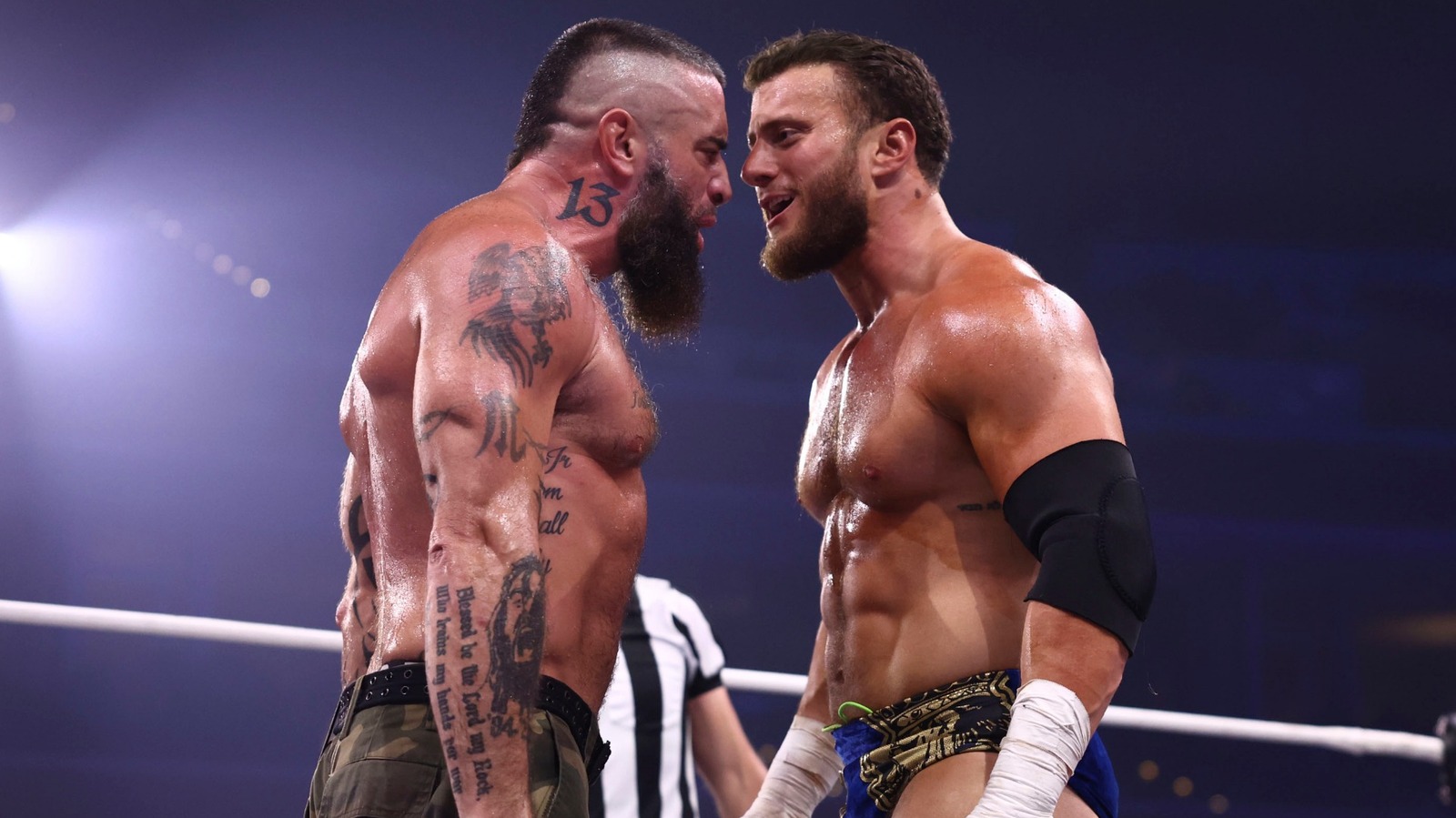
The blocking of the final segment was excellent. The visual of the ring filling with security worked perfectly. The chaotic pull-apart and the desperate attempts to get at one another translated beautifully to television.
The camera framing kept the focus tight on the facial expressions. Too often, wrestling directors cut to wide shots during a brawl, diluting the intensity. Here, the production team stayed close.
We saw the sweat. We saw the legitimate strain on their faces. This is exactly how you sell a main event on network television. You make it feel genuinely dangerous.
The steady increase in viewership reflects an audience that was given a reason to wait until 9:55 PM. The hook was established early in the night and referenced throughout the broadcast. It delivered upon its promise in the final minutes.
The commentary team deserves massive credit here as well. They stopped screaming over each other. They lowered their voices and treated the final brawl with the solemnity of a genuine crisis.
The in-ring tactical shift
Looking deeper at the matches themselves, there was a noticeable shift in the in-ring style compared to a month ago. We saw fewer synchronized, heavily choreographed sequences. The striking looked stiffer across the board.
There is a growing fatigue with the overly cooperative style of professional wrestling. The audience is smart, and they recognize an obvious setup. When a wrestler stands completely still waiting to catch an opponent diving out of the ring, the illusion shatters.
The matches on May 13 actively worked to hide that cooperation. The dives were less frequent, but they meant significantly more. The catch was disguised as a struggle rather than a coordinated gymnastic routine.
This matters heavily for viewer retention. If the action looks like an actual fight, the audience engages differently. They wince, they react, and their psychological investment deepens.
AEW built its brand on offering an alternative, more athletic style. But athleticism without struggle is just a gymnastics routine. The slight pivot toward a more aggressive, grittier presentation is actively paying off in the numbers.
Let's examine the pacing of the semi-main event. It was a masterclass in building to a single crescendo. The first five minutes were entirely mat-based, focusing on wrist control and positioning.
It wasn't flashy, but it established a gritty baseline. When the pace finally quickened in the final three minutes, every running strike felt monumental. They didn't desensitize the crowd by spamming high spots early.
Notice the use of the hard camera during the transition sequences. Instead of constantly cutting to different angles, the director allowed the viewer to digest the geography of the ring. When a wrestler created separation, you could actually see the distance.
You could anticipate the sprint into the corner. Wrestling is ultimately about spatial awareness. When the camera edits obscure that space, the viewer gets lost in the noise.
The cleaner editing on this episode kept the focus squarely on the athletic contest. The counter-wrestling was exceptionally sharp. We didn't get the standard sequence where a wrestler ducks a clothesline just to run the ropes again.
Instead, we saw immediate tactical responses. A missed lariat resulted in an immediate waist-lock takedown. A blocked suplex turned into a tight front facelock.
It looked like two athletes constantly adjusting to each other's weight distribution. That is the kind of detail that elevates a television match above the standard filler. It keeps the viewer glued to the screen.
Footwork and stamina
Look closely at the footwork in the ring during the second hour. The top guys know how to maximize their steps. They don't waste motion.
When a wrestler charges the corner, the angle of their approach dictates the bump. We saw incredibly precise corner bumps that protected the neck while looking devastating on television. It is the subtle art of professional wrestling that keeps the viewer visually hooked, even if they don't consciously recognize the technique.
Furthermore, the absence of excessive blood on this particular episode was a welcome change of pace. Blood is a highly effective tool when used sparingly to convey extreme violence. When it happens every week, it becomes visual white noise.
By keeping the blade in their pockets, the roster forced themselves to rely on facial expressions and selling to tell the story of physical exhaustion. That forces a higher standard of performance. The audience reacts louder to a well-sold limp than they do to a gratuitous crimson mask on free television.
Building through the commercials
Another massive factor in the viewership increase was the handling of the picture-in-picture commercial breaks. Historically, wrestlers slow down completely during these segments. They apply endless chinlocks while the broadcast cuts away.
The viewer notices this downshift in gear. They inevitably tune out. On May 13, the in-ring talent kept their foot on the gas during the breaks.
The picture-in-picture segments featured high-stakes submission attempts and aggressive ringside brawling. They gave the audience a tangible reason to keep their eyes on the smaller box. It requires immense conditioning to work through the breaks at that pace.
If you tell the audience that nothing important happens during a commercial, they will stop watching during the commercial. By keeping the tension high, AEW retained the viewers through the agonizing three-minute ad blocks.
We also have to analyze the lack of outside interference. So much of modern wrestling relies on managers pulling the referee out of the ring. It is a tired, lazy booking crutch.
This week, the decisive finishes were largely clean. A clean finish respects the viewer and provides actual narrative resolution. When every match ends in chaos, the audience stops caring about the matches themselves.
The officiating standard
Let's talk about the officiating. Referees in modern wrestling are often treated like useless props. They stand there and ignore blatant rule-breaking for the sake of the script.
On this episode, the officials showed actual authority. When a wrestler refused to break a hold on the ropes, the referee physically stepped in. The five-count was strictly enforced.
This seemingly minor detail changes the entire psychology of a match. It re-establishes the ropes as a legitimate boundary. It gives the heel real heat for ignoring the rules, rather than making the referee look incompetent.
When the rules are enforced, the struggle to overcome them actually means something. The pacing of the false finishes was also noticeably restrained. We have entered an era where the Canadian Destroyer is treated like an arm drag.
That overindulgence absolutely kills the dramatic weight of the main event. On Wednesday, they protected the finishing maneuvers. When a signature move was hit, the match logically ended.
It sounds revolutionary, but it is just fundamental booking logic. By protecting the finishes early in the night, they ensured that the audience would bite on the near-falls during the more important matches later in the broadcast.
The road to Las Vegas
The numbers are moving in the right direction. This is a massive relief for a company heading into a major pay-per-view weekend. Double or Nothing represents a massive test for AEW's 2026 business year.
If you look at the historical data for wrestling ratings, the go-home show before a pay-per-view is traditionally the highest-rated episode of the month. AEW has a golden opportunity here. By setting the table on May 13 with disciplined, logical booking, they have guaranteed a larger starting audience for the May 20 episode.
The key demo numbers, specifically the 18-49 male demographic, are highly responsive to main event angles that feel legitimate. When the security guards hit the ring, they didn't look like independent wrestlers waiting for their spot. They looked like terrified venue staff trying to break up a bar fight.
That level of immersion translates directly to the Nielsen boxes. The May 13 episode provided a highly effective blueprint. Start with focused, high-stakes wrestling and minimize the chaotic backstage segments.
Deliver a main event angle that genuinely escalates the tension. Hide the cooperation in the ring. Treat the audience's intelligence with respect and keep the formatting tight.
But the real test isn't one good week of television. The test is absolute consistency. Can they repeat this tactical formula on the go-home show?
Can they fix the glaring pacing issues in the middle of the broadcast? Will they ever figure out how to integrate the women's division seamlessly rather than isolating it in a designated, rushed quarter-hour? These questions still linger.
The viewership increase proves the audience is still there. They haven't abandoned the product entirely. They are simply waiting for the product to consistently reward their investment of time.
Wrestling isn't a complex puzzle to solve. You need credible athletes fighting for a discernible prize. You need a narrative framework that makes the viewer actually care about who wins.
And you need television production that enhances the violence rather than exposing the choreography. The May 13 episode of Dynamite hit those tactical marks more often than it missed them. The table is set for Las Vegas.
Now, the execution on pay-per-view has to match the television build. If they stumble next week, this ratings bump will look like an anomaly. If they hold the line, it might just be the start of a much-needed structural resurgence.
Read Next
- AEW's TV ratings are climbing, but the real test is 8 days away in Vegas
- Athena is dropping the ROH title to face Mercedes Moné at Double or Nothing
- AEW Double or Nothing 2026 preview: Tony Khan is betting the house again
- AEW Scotland tickets are on sale and fans are already fighting
- 🎲 AEW Double or Nothing 2026 — Full Coverage Hub
AEW Unrivaled Collection Series 15 - Will Ospreay Action Figure
The first-ever AEW figure for the 'Aerial Assassin,' featuring his signature ent
Frequently Asked Questions
What drove the viewership increase for the May 13 episode of AEW Dynamite?
How did AEW change their opening match strategy for the May 13 Dynamite?
Why was the commercial break placement in the opening match so effective?
What major event was AEW approaching during the May 13 broadcast?
What structural issue still plagues the AEW Dynamite television format?
More Coverage

Booking Bron Breakker requires more than just raw intensity
1 day, 9 hours ago
WWE's heavy-handed editing signals a shift in Lesnar's brand
2 days, 9 hours agoNXT is buckling under the weight of its own roster size
2 days, 14 hours ago
JD McDonagh's calculated gamble in the No DQ match against Danhausen
2 days, 20 hours ago
Why Claudio Castagnoli remains the most tactically sound wrestler in AEW
3 days, 13 hours agoNXT is forcing a reset after the Three Becomes One crisis
4 days, 2 hours agoMore Analysis
AEW's TV ratings are climbing, but the real test is 8 days away in Vegas
2 months agoAEW Dynamite's frantic pacing is hurting their build to Double or Nothing
3 months ago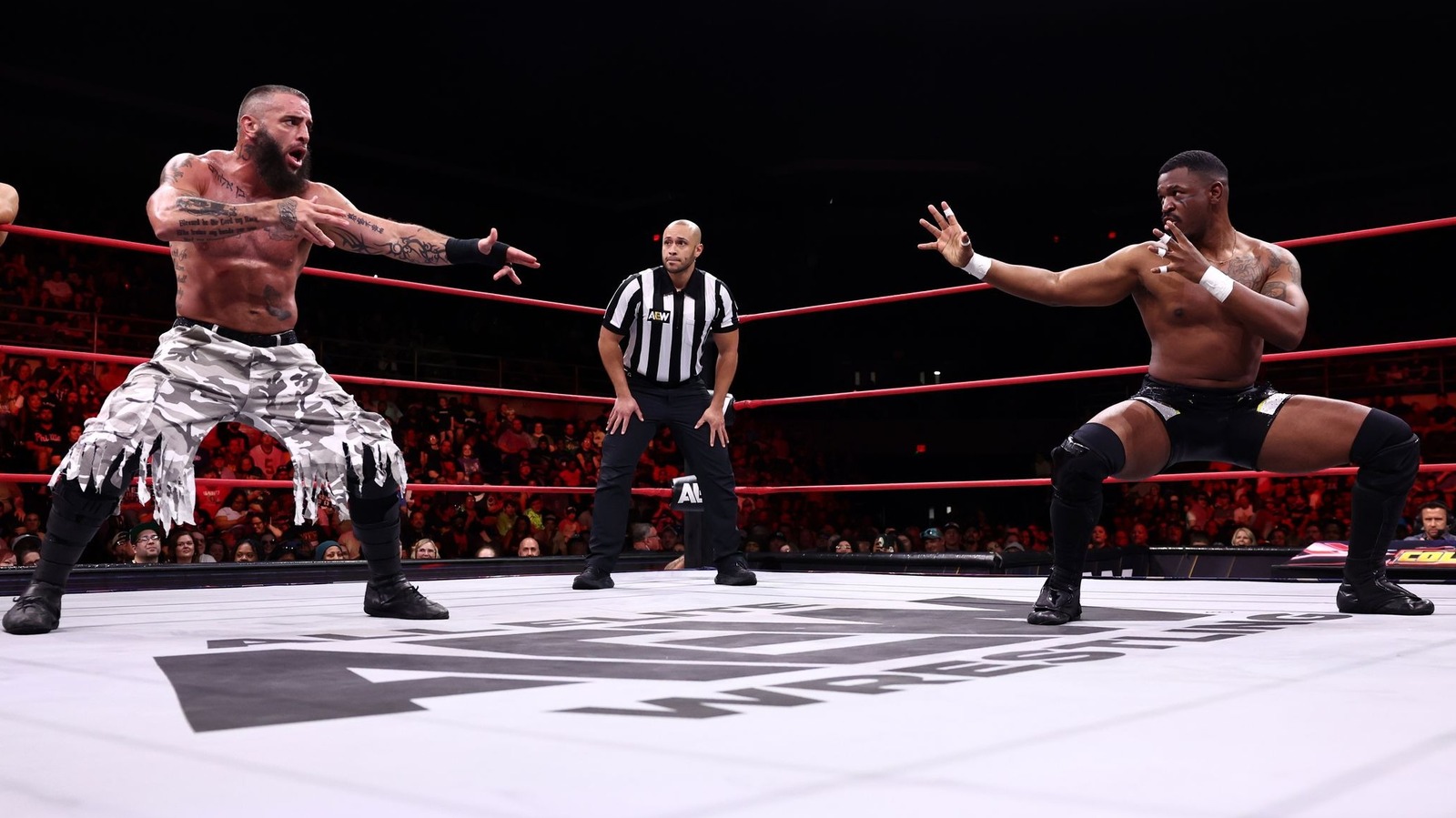
AEW Collision stops the bleeding right before Double or Nothing
1 month, 4 weeks ago
AEW ratings surge suggests a post-Double or Nothing momentum shift
1 month, 2 weeks agoAEW Dynamite has a pacing problem, and it's built into the format
3 months, 1 week ago