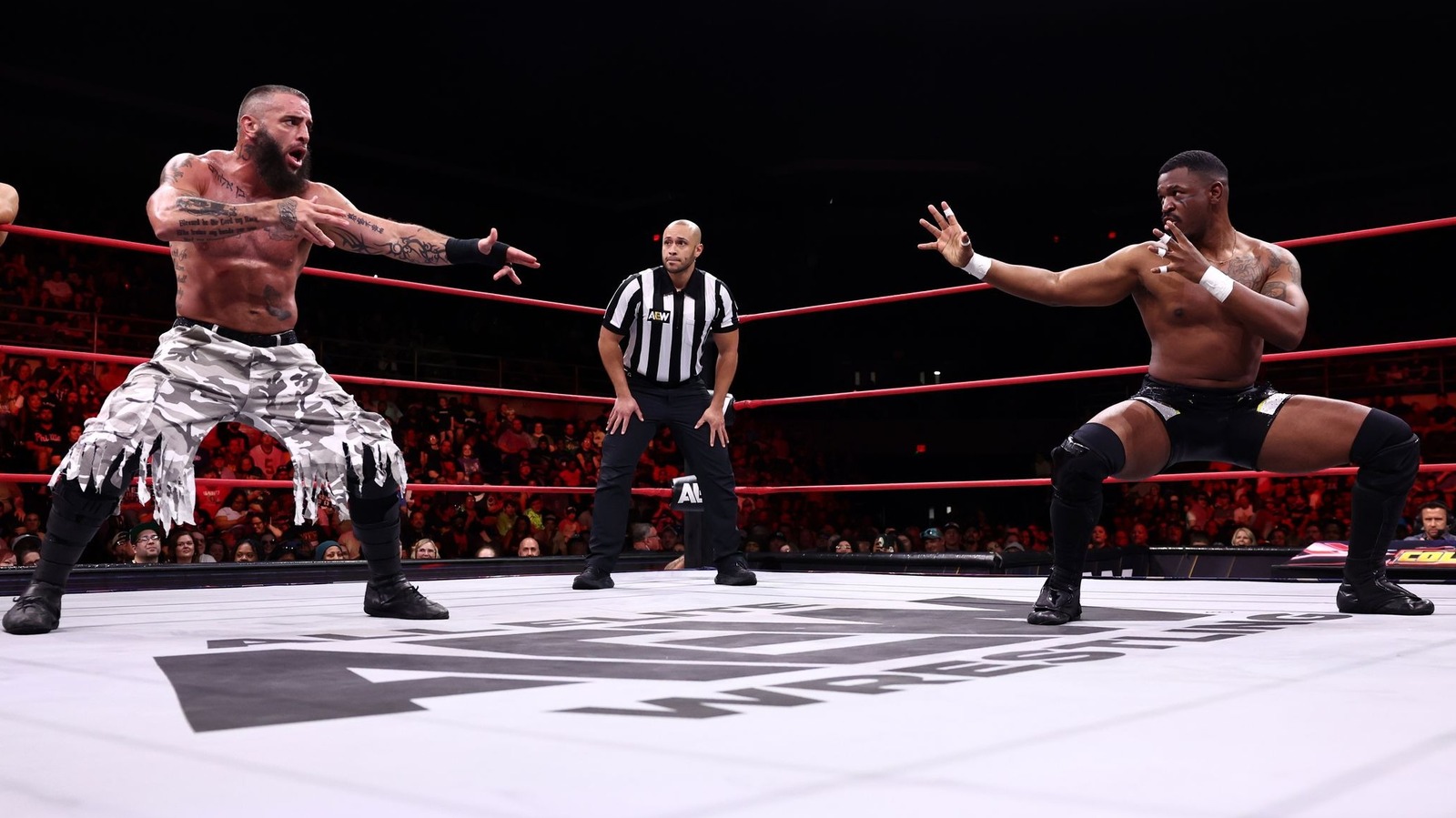
The Saturday night correction
Television momentum is a fragile thing. You can lose a quarter-hour of viewers in the time it takes to execute a poorly planned transition. For AEW, the Saturday night experiment has always been a tightrope walk.
You are constantly battling against live sports, local events, and the simple reality of the weekend. The numbers for the May 16th episode of Collision offer a sudden sigh of relief. As Wrestling Inc reported this week, average overall viewership finally ticked back up.
More importantly, the key demographic ratings recovered after both metrics took a concerning dive the week prior. The bleeding has stopped. This is not just statistical noise.
"AEW Collision saw increases in both average overall viewership and key demographic ratings after both metrics declined the previous week."
It is a direct response to a booking correction. With AEW Double or Nothing arriving on May 24, the promotion could not afford to limp into the weekend. They needed a stabilizing performance.
They needed to prove that the Saturday brand still matters to the bottom line. When you look at the broadcast pacing, the pattern becomes obvious. The audience did not tune in just out of habit.
They stayed because the show gave them a reason to stay. The opening segment held the initial audience, and the main event actually built on the lead-in. That is a rarity in modern wrestling television.
Dynamite pacing vs. Collision logic
Think of Dynamite as a high-pressing football team. It relies on chaotic energy, relentless pacing, and overwhelming the viewer with movement. When it works, it is brilliant.
When it fails, it looks disorganized, exhausting, and completely lacking in ring psychology. Dynamite trains its audience to expect a car crash before the first commercial break.
Collision was always designed to be the counter-tactic. It requires a methodical, possession-based approach to professional wrestling. It is meant to be the thinking fan's alternative.
Matches are built around limb targeting. The selling is extended. The ringside brawls are less frequent, replaced by rigid rules, strict referee counts, and traditional structures.
When you put a technician in the ring on a Saturday, the match breathes. A headlock is not a rest hold; it is a tactical choice to neutralize speed.
The chops matter more because there are fewer of them. The transition from a strike exchange into a submission feels earned, rather than rushed to hit a television time cue.
The beauty of a well-executed Saturday show is the emphasis on struggle. On Dynamite, a wrestler might pop straight up from a brainbuster to hit a superkick. It is visually spectacular, but it tells the viewer that the moves do not actually hurt.
On Collision, that same brainbuster should result in a two-minute sequence of selling. The struggle to reach the ropes is where the drama lives.
Two weeks ago, they abandoned that structure entirely. The show felt like a B-side version of Dynamite. The pacing was frantic, and the high spots were entirely unearned.
The audience recognized the lack of identity immediately and tuned out. Viewers do not dedicate their Saturday nights to watch a watered-down Wednesday product. They want the grit.
The May 16th episode fixed the spacing. Segments were given room to breathe. Promos were direct and anchored in actual grievances rather than vague, screaming threats.
The in-ring work slowed down just enough to let the live crowd process the near-falls. It felt like a combat sport again, which is exactly what the Saturday format demands.
The mechanics of audience retention
We have to look at how a wrestling show actually retains viewers through a commercial break. Picture-in-picture is a necessary evil of modern broadcasting.
But it destroys match psychology if the performers do not adapt to the screen size. During the ratings slump, AEW was booking high-complexity sequences right as the broadcast cut to split-screen.
The viewer at home misses the impact. The emotional peak of the match happens in a tiny box without audio. It is a fundamental unforced error.
This past Saturday, the pacing was adjusted. The heat segments—the prolonged periods where the villain isolates the hero—were perfectly timed to the commercial breaks.
When the show returned to full screen, the comeback began. It is an old-school trick, but it works because it respects the viewer's attention span. You do not punish them for watching the ads.
This subtle shift in match layout is exactly the kind of granular detail that separates a good television product from a great one. It shows a level of backstage coordination that has often been missing.
When you analyze the quarter-hour drops from two weeks ago, the correlation is impossible to ignore. Every time a match devolved into an unstructured brawl on the outside, the viewership dipped.
The television audience has been trained for decades on how a wrestling match is supposed to flow. When you violate that structure without a very good reason, you lose trust.
The geometry of the broadcast
One of the most overlooked aspects of the Saturday show is how it is actually shot. In football, the width of the pitch changes the match. In wrestling, the hard cam is the touchline.
You have to play to the camera without making it look obvious. During the recent ratings dip, the action was bleeding outside the ring entirely too often.
When you brawl in the crowd, you lose the lighting. You lose the tight camera angles. The broadcast becomes a blurry mess of shaky-cam footage and obscured punches.
It looks amateurish, and the viewer instinctively changes the channel. The May 16th recovery coincided with a return to the center of the ring. It sounds incredibly simple.
But keeping the fight between the ropes completely changes the presentation. The lighting catches the sweat. The camera captures the facial expressions. The referee's count actually matters.
When the action stays in the ring, the geometry of the match makes sense. The viewer understands the spatial relationship between the competitors. They know how far away the ropes are for a break.
They know the distance required for a top-rope dive. That spatial awareness builds tension. You strip that tension away the second you throw someone over the barricade into a sea of folding chairs.
The Double or Nothing stakes
We are now exactly four days away from AEW Double or Nothing. This event is the historical foundation of the company. It is where the brand was born.
Historically, the final push for pay-per-view buys happens in the last 72 hours. That places an immense burden on the go-home episode of Collision. It has to serve as the final, undeniable sales pitch.
If the momentum had stayed negative, the buyrate would have inevitably suffered. By recovering their viewership base on May 16, they have established a floor. The audience is engaged again.
They are tuned in to see how the final pieces of the chessboard are arranged before Sunday. The tactical adjustments have bought them goodwill at the exact right time.
But building anticipation is only half the job. You have to convert those casual observers into paying customers. That requires clear, unambiguous stakes.
Every segment on this upcoming weekend must answer one simple question. Why should I spend my money to see this fight on pay-per-view?
Where the cracks still show
It would be a massive mistake to pretend everything is fixed. The structural flaws that caused the previous week's decline are still lurking just beneath the surface.
The biggest issue remains roster rotation. You cannot build a loyal Saturday audience if your anchor stars disappear for three weeks at a time. It shatters the episodic continuity.
Television requires familiarity. If the viewer does not know who is going to be on the show, they will not make it appointment viewing. You have to build a dedicated Saturday crew and stick to it.
When a mid-card act is suddenly thrust into a 20-minute main event, the viewer can see the strings being pulled. It feels like stalling. Workrate alone does not draw television ratings.
A 40-minute broadway means absolutely nothing if the audience does not care about the men in the ring. You have to build the emotional foundation first.
We also need to talk about the promo segments. There is a terrible habit on the Saturday broadcast of letting wrestlers ramble without a time cue. A live microphone is a weapon.
If a performer does not have a clear, concise point to make within ninety seconds, they should not be holding it. Long, meandering promos drain the energy from the building and encourage the viewer to check their phone.
There is also a recurring problem with match finishes. Too many bouts on Collision end with a distraction roll-up or a post-match beatdown that goes on a minute too long.
It is a lazy booking crutch. It deflates the live crowd and sends the broadcast viewer straight to the remote control. If you book a match, you need to deliver a clean, decisive finish.
The final push and prediction
Tactical adjustments only matter if you stick to them. The bounce-back on May 16 proves that the audience wants Collision to succeed. They just want it to be a distinct, logical wrestling show.
As we head into May 24, the strategy should be painfully obvious. Lean into the heavy hitters. Keep the in-ring action grounded. Let the promos do the heavy lifting for the pay-per-view builds.
If a match does not directly sell Double or Nothing, it should not be on the broadcast this Saturday. There is no time left for exhibition bouts. Every minute of television must serve the pay-per-view.
My prediction for the weekend? Double or Nothing is going to overperform on late buys, entirely because of this Saturday night correction. The May 16th episode saved the build.
The card has enough authentic heat to justify the price tag. But the booking committee needs to learn the right lesson here. The margin for error on Saturday nights is virtually zero.
If they revert to the rushed, erratic pacing of two weeks ago, the viewership will plummet right back down. They found their footing just in time. Now they have to hold the line.
Read Next
- AEW heading into Double or Nothing under a cloud of injury concerns
- AEW is ignoring the real problem with the Moxley versus O'Reilly booking
- Double or Nothing needs a clear outcome for the main event
- AEW's pre-Double or Nothing mess is a booking disaster
- 🎲 AEW Double or Nothing 2026 — Full Coverage Hub