The Big Picture
Tag team wrestling in 2026 is defined by two distinct philosophies: the chaotic evolution of mixed-gender units and the ruthless efficiency of established stables. This ranking prioritizes championship pedigree, recent high-stakes victories, and the ability to dictate the flow of a match.
The Rankings
1. Fatal Influence
Fallon Henley and her cohorts represent the gold standard of current WWE tag team efficacy. Their tactical precision was on full display at the July 18 edition of Saturday Night’s Main Event, where they decimated Paige and Brie Bella to capture the WWE Women’s Tag Team Championships. This win wasn't just a title change; it solidified their status as the division's gatekeepers. Their ability to minimize interference while maximizing impact is their primary strategic advantage. Others may have flashier maneuvers, but none currently hold the gold with such clear intent.
2. The Judgment Day
The Judgment Day remains the most consistent force on the RAW brand, acting as a constant threat to any champion. Their chemistry is built on a shared willingness to bend the rules until they snap. They operate with a level of internal accountability that keeps them ahead of more individualistic units. Whether it is Damian Priest or Finn Balor in the rotation, the threat of an immediate ringside numbers advantage is ever-present. They are the benchmark for a successful faction-based tag structure.
3. The Bloodline
Solo Sikoa’s version of the Bloodline brings a heavy-handed approach that is difficult to game-plan against. Their reliance on power maneuvers and total control of the ringside area makes them a nightmare for technical teams. While they lack the diversity of offense seen in previous iterations of the group, their effectiveness is undeniable. They treat every tag match like a fight for the identity of the promotion, which is exactly why they sit this high.
4. DIY
Johnny Gargano and Tommaso Ciampa offer a Masterclass in babyface synergy that contrasts sharply with the villainy atop the list. Their history provides a built-in rhythm that allows them to anticipate each other's movements without looking. Despite the technical brilliance of their double-team sequences, they often struggle against larger, more imposing teams who refuse to engage in a technical wrestling match. They prove that history and heart aren't always enough to beat pure size.
5. The Street Profits
Montez Ford and Angelo Dawkins remain the most explosive team on any roster. Their transition speed from defense to a high-impact offensive finish is unmatched. However, they frequently lapse in focus during the mid-bout segment, often allowing challengers back into the match unnecessarily. It is a recurring flaw that keeps them from the absolute top spot, though their highlight reel potential remains elite.
6. Alpha Academy
Chad Gable has successfully weaponized the Alpha Academy into a squad of high-level technicians. They are the smartest workers in the locker room, frequently targeting limbs to force a submission rather than chasing a flash pin. The issue lies in their execution; they are often too rigid in their game planning. When a match spills into a brawl or a high-chaos environment, their discipline rarely serves them well.
7. The New Day
Xavier Woods and Kofi Kingston are the veterans every team hopes to emulate. They bring a level of match psychology that only two decades of combined experience can provide. While they lack the sheer physical frequency of the younger teams, their ability to manipulate the crowd and the referee creates a hidden advantage. They are ranked seventh because their title windows are closing, yet their relevance persists through pure craft.
8. AOP
Akam and Rezar provide a massive power element that is desperately needed in the tag hierarchy. Under Paul Ellering, they have rediscovered the brutality that made them stars during their first run. Their limitation is pace; they struggle to keep up with faster, smaller teams who utilize the perimeter of the ring. They are essentially a brick wall that teams either run through or eventually get buried under.
9. AAA Mixed Tag Champions
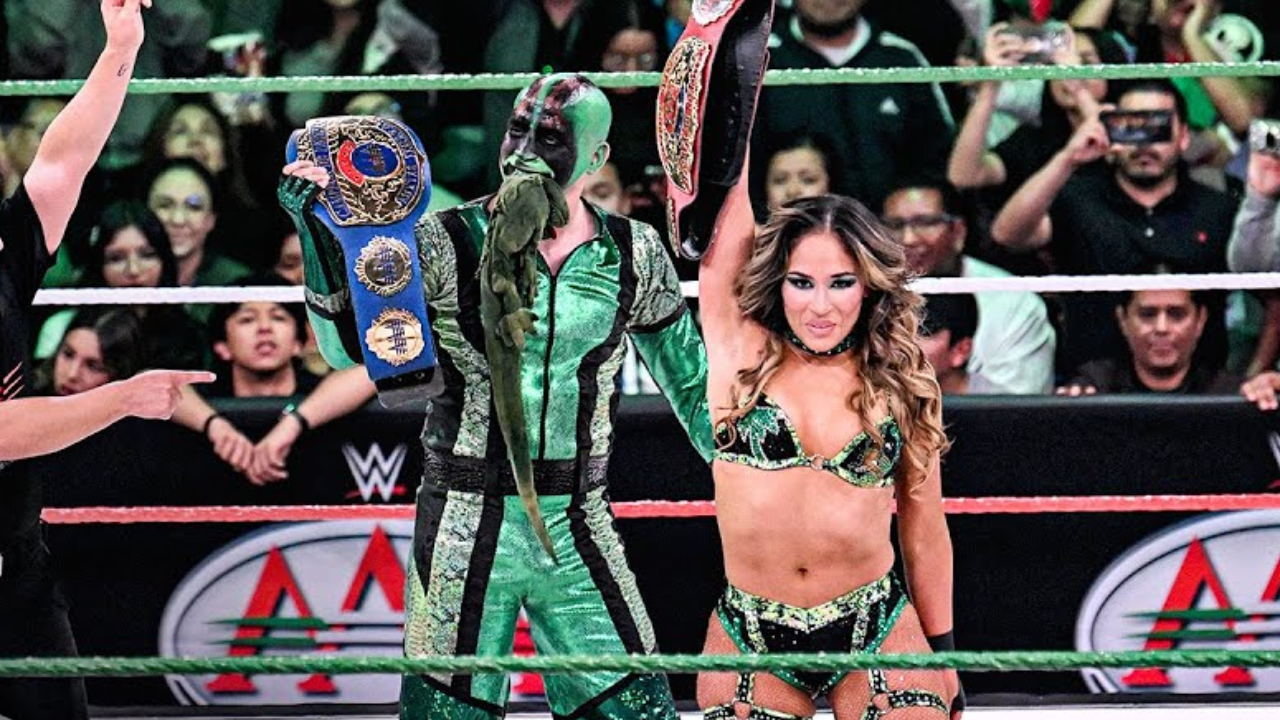
The AAA World Mixed Tag Team landscape is currently a volatile mess of fresh challengers aiming to disrupt the title holders. This division thrives on high-speed Lucha Libre principles that emphasize aerial risk over traditional tag-in procedures. While the talent level is extreme, the lack of long-term status for these contenders keeps them near the bottom of this specific list. It remains the most unpredictable division in the industry today.
10. The Grayson Waller Effect Tag Pairing
Grayson Waller and Austin Theory are the most annoying team in the business by design. They succeed primarily through constant distraction and cheap tactics that drain the energy right out of a match. You hate to watch them, but you cannot stop watching to see them finally lose. They are effectively the bottom because their longevity is dubious at best, relying more on ego than cohesive strategy.
Honorable Mentions
The Viking Raiders remain a credible threat if they can manage to stay healthy for an entire calendar quarter. The Wyatt Sicks offer a bizarre, psychological edge, but their lack of traditional tag structure makes them difficult to quantify against standard athletics. Finally, the LWO continues to show heart and team cohesion, though their offensive ceiling against the heavier teams like AOP remains limited by their smaller frame.