The Cockroach of Professional Wrestling Strikes Again
If you survive a nuclear apocalypse, you will find three things wandering the wasteland. Twinkies, Keith Richards, and TNA Wrestling. You literally cannot kill this promotion. They have been written off more times than I have rewritten my local server configs.
Yet here we are in late April 2026, and Ringside News just dropped a report that TNA iMPACT viewership saw a massive increase on April 24. Not just a bump. A massive increase. In an era where cable television is bleeding out on the living room floor, TNA somehow found a tourniquet.
Every time this happens, the internet wrestling community loses its collective mind. The tribalism immediately flares up. You get the loyalists shouting from the rooftops that the latest rebranding effort is finally working. Then you get the skeptics demanding minute-by-minute breakdowns to prove it was just a lead-in from a rerun of some forgotten sitcom. But strip away the noise, and a spike is a spike. When you are operating in the margins like TNA does, any upward momentum is oxygen.
We have danced this dance before. TNA gets a hot angle, the numbers jump, and everyone rushes to declare them the definitive alternative again. It is the most exhausting cycle in wrestling media. Sometimes a good rating is just a good rating because you booked a logical television show that people actually wanted to sit through.
Deconstructing the "Massive Increase"
Here is the problem with wrestling viewership discourse right now. We throw around words like massive without context. If WWE Raw adds two hundred thousand viewers, nobody bats an eye. If TNA adds forty thousand viewers, it is a huge percentage jump. It is all relative math.
Dismissing it because the raw numbers are smaller completely misses the point of how difficult it is to grow an audience on a tertiary cable network in 2026. Nobody is accidentally stumbling onto TNA iMPACT anymore. Channel surfing died a decade ago.
If you are watching TNA on an April night, you made a conscious decision to be there. You navigated the grid, you set the DVR, or you tuned in live. That implies intent. A massive increase means that something in their marketing, their social media clips, or word of mouth actually broke through the algorithm and convinced people to invest two hours of their life.
I spend half my week fighting with open-source models trying to get them to output coherent JSON, and honestly, figuring out wrestling ratings feels like exactly the same kind of dark magic. It is like watching a local 7B model suddenly punch way above its weight class on a complex reasoning benchmark. You do not entirely trust the result, but you have to respect the output. You tweak one variable, maybe put a highly anticipated match in the main event slot, and suddenly the output spikes. The challenge is replication.
The Booking Tax and the Consistency Problem
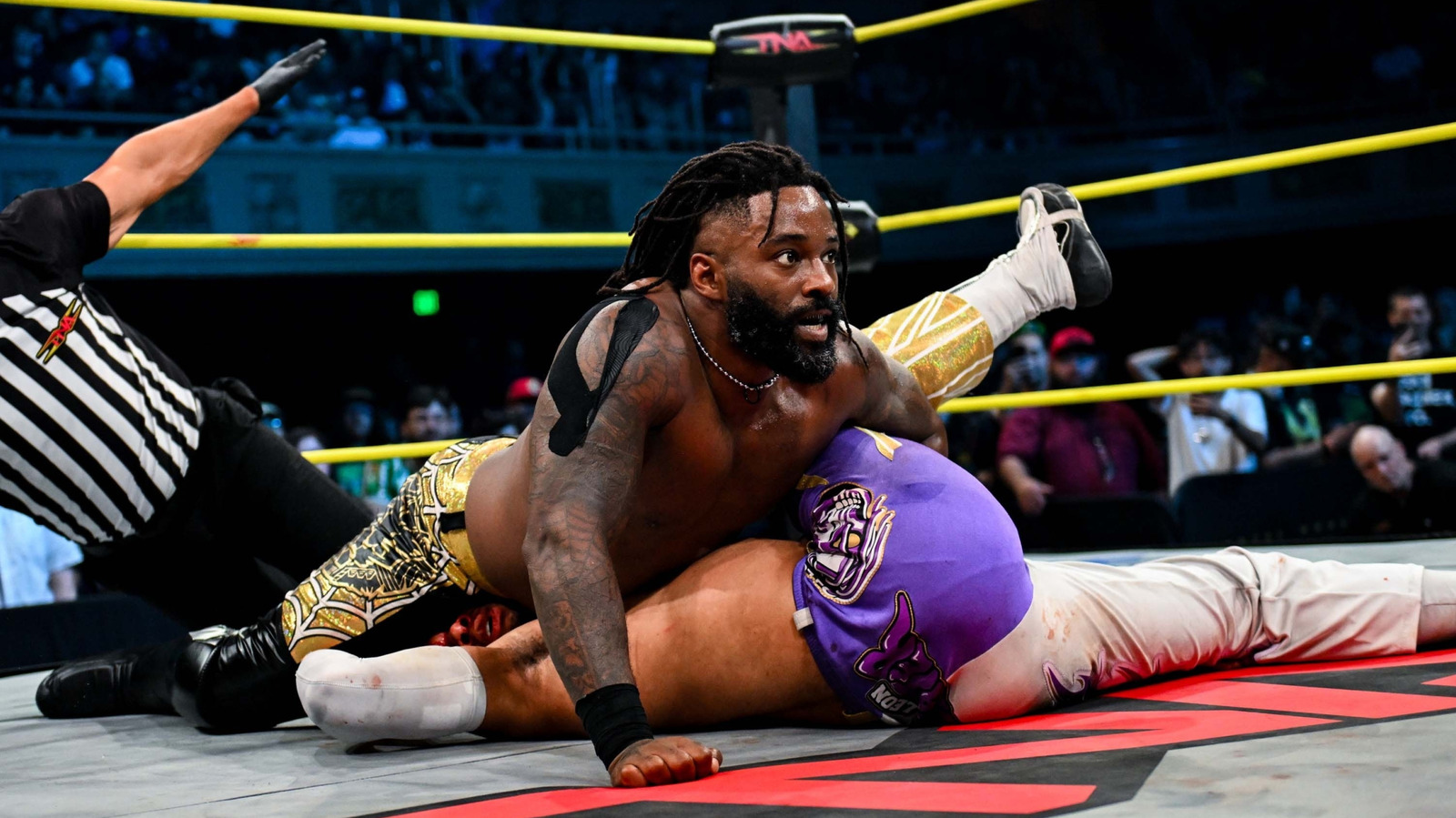
Let us get to the critical part, because nobody gets a free pass. TNA has a historic, deeply frustrating habit of squandering goodwill. They build a compelling main event picture around someone like Moose, draw in lapsed fans, and then immediately deliver a confusing finish or pivot to a comedy angle that kills the momentum dead.
The April 24 jump is fantastic news. But it also puts a massive target on the back of their creative team. When you get extra eyeballs, you are being audited by the wrestling public. Those returning viewers are looking for a reason to leave. They have been burned by TNA before.
If the follow-up episode features terrible audio mixing or a deeply illogical run-in during a match that was supposed to deliver, those viewers are gone. And they are not coming back for another two years. The margin for error is essentially zero.
The Attention Economy in 2026
Look at the calendar right now. It is late April 2026. We have the Champions League semi-finals dominating global sports chatter today. The NBA playoffs are rolling. On the wrestling side, WWE is entering their post-WrestleMania transition phase, setting up for Backlash on May 9. AEW is slowly building the card for Double or Nothing on May 24.
The amount of professional sports and sports entertainment competing for your retina time is absurd. In this environment, capturing any sort of viewer increase is like trying to light a match in a hurricane. Fans are exhausted. There is simply too much content.
You have to monitor three different promotions, listen to four different insider podcasts, and keep an eye on Japanese results just to understand a basic promo on Wednesday night. It is a full-time job. For TNA to cut through that noise on April 24 requires something special.
It means someone, somewhere, made a conscious choice to skip the NBA highlights and ignore the Champions League discourse to watch a product that has been fighting for respect for two decades. The victory is entirely about proving your product holds intrinsic value in a saturated, hyper-competitive attention market.
Nielsen Boxes and the Measurement Mess
Can we also take a minute to talk about how absurd it is that we are still analyzing television success using a completely archaic measurement system? In the tech world, we have real-time analytics. I can tell you exactly how many milliseconds it takes for an API call to resolve.
But in television, we are still relying on a fragmented, opaque extrapolation of data that feels like it belongs in the stone age. We are cheering for a massive viewership increase without having any real transparency into the granular data. When Ringside News reports this spike, they are dealing with the numbers the industry agrees to pretend are absolute truth.
It ignores the DVR plus three metrics, the streaming platform replays, and the international syndication packages. TNA actually does incredible numbers internationally. They have distribution deals that keep the lights on regardless of what the domestic cable number looks like on a random broadcast. Yet the entire online discourse lives and dies by this single, domestic data point.
It is infuriating. It is like judging the performance of a cutting edge web application based purely on how it loads on Internet Explorer 11. It is a metric, sure, but it is deeply incomplete. Still, the game is the game. If you want the perception of success in the professional wrestling industry, you have to win the archaic metrics.
The Road Ahead
So where do we go from here? The absolute worst thing TNA could do right now is pat themselves on the back and coast. The April 24 number is a challenge. It is the audience saying they are willing to look, but demanding a reason to stay.
They need to follow up with a ruthless, streamlined television product. Cut the fat. Stop giving fifteen minutes of screen time to inside jokes that only the locker room understands. Put Josh Alexander in the ring, let him tell physical stories, and keep the finishes clean. Give Jordynne Grace the television time she has continually earned. Wrestling is not actually that complicated when you strip away the ego.
I will be watching the numbers next week. We all will. Because if they retain even fifty percent of that initial jump, then we are looking at a genuine resurgence. If they drop right back to their baseline, then we will add the April 24 episode to the long, hilarious list of TNA false starts. But for right now? You have to respect the hustle. The cockroach lives to experiment with weird cinematic matches just to see what sticks.