TNA is winning on AMC, but their booking is stuck in the past
The AMC Ratings Bump Cannot Hide The Flaws
Pro wrestling is a business built on television real estate. For years, TNA Wrestling existed in the cable television equivalent of a witness protection program. They bounced from network to network. They slowly bled the massive audience they once commanded during their peak years. The survival of the brand became a running joke. But on January 15, the narrative shifted. TNA moved its flagship weekly series, Impact, to AMC. It was a massive upgrade from the obscurity of AXS TV.
The numbers over the last two months reflect that upgrade. PWTorch reported this week that Impact is experiencing sustained, much higher viewership on AMC. The key demographic data is up. People are actually finding the product again. The problem is what they are seeing when they tune in.
We are currently looking at a promotion that has finally been handed a larger microphone, yet seems entirely unsure of what to say. You can change the channel. You can update the graphics. But if the booking philosophy remains trapped in a bygone era, the ratings bump will only be temporary. And right now, the booking on Thursday nights is showing massive structural cracks.
The System Is Failing The Geometry Of Dominance
Let us look at the most recent March 26 episode of Impact. The core of any major wrestling promotion is its dominant faction. You need a centralized heel power structure for the babyfaces to chase. For TNA, that faction is The System. The problem is simple. The System loses too much to be taken seriously. It breaks the fundamental geometry of faction warfare.
When a heel group loses regular television matches, they lose their gravitational pull. The entire point of a heel stable is to create a numbers disadvantage that requires heroics to overcome. If the heels are routinely outsmarted or beaten cleanly on weekly television, the audience stops buying them as an obstacle. They are presented as the final bosses of TNA, yet their win-loss record tells the story of mid-card placeholders.
Contrast this with how TNA handled its monsters exactly ten years ago. The Impact episode that aired on March 8, 2016, was headlined by Bobby Lashley taking on Kurt Angle. Lashley did not trade wins. He did not lose momentum via disqualifications or messy roll-ups. Following his match with Angle, Lashley unleashed chaos on Drew Galloway and Ethan Carter III.
"Lashley 'rocks Impact to its core'"
— PWTorch Impact Report, March 8, 2016
That is how you book a threat. You make them an immovable object.
The System lacks that sheer, undeniable force. Moose stood tall alongside his former Atlanta Falcons teammates on the recent broadcast. It felt hollow. Surrounding your champion with mainstream sports alumni is a nice visual. It does not fix the underlying issue. If the group cannot establish in-ring dominance, bringing in outside celebrities only highlights the weakness of the actual roster members.
Squash Matches And Nostalgia Bait
If the handling of The System is frustrating, the undercard booking borders on managerial negligence. TNA has an incredible roster of young, athletic talent. Yet on the same March 26 show, we watched Eric Young win a pure squash match. Eric Young is a TNA legend. He bled for this company and carried it through its darkest days. But in 2026, devoting television time to an Eric Young squash match is a baffling allocation of resources.
Squash matches serve a specific purpose. You use them to establish a new threat. You show off the devastating finisher of a debuting giant. You do not use them for a veteran whose moveset has been known to the audience for two decades. It halts the momentum of the show. It tells the viewer that nothing of consequence is happening.
Worse still was the random on-air mention of Buff Bagwell. When a wrestling promotion starts leaning on WCW nostalgia from twenty-five years ago, it signals creative bankruptcy. TNA has fallen into this trap before. They constantly reference a past that most of their current viewers either do not remember or do not care about. The AMC audience is tuning in for modern athletic competition. They do not want winking references to 1999.
The Ghosts Of 2016
It is fascinating to look back at the Impact tapings from the Barclaycard Arena in Birmingham, U.K., exactly ten years ago. The March 1, 2016 episode featured a stacked lineup. Kurt Angle wrestled Bobby Roode. EC3 took on Rockstar Spud in a deeply personal rivalry. Drew Galloway, long before his current WWE megastar run, took a loss to Mike Bennett.
That 2016 roster was incredibly top-heavy. The talent level was undeniable. However, the product felt disjointed because the network situation was always in flux. Pop TV did not have the reach to make those matches feel important. The production values suffered. The lighting was dark.
Today, the dynamic is flipped. TNA finally has the platform. AMC provides a level of legitimacy that Pop TV never could. The sustained viewership proves that the audience is willing to give TNA a chance. But the current roster, while talented, lacks the sheer star power of that 2016 era. You cannot replace Kurt Angle and Bobby Roode with backstage exchanges between Mike Santana and Leon Slater and expect the same results.
Let us examine that exact backstage exchange between Santana and Slater from the March 26 broadcast. Santana is a polished, hard-hitting veteran who knows how to lay out a match. Slater is a phenomenal athletic prospect with a limitless ceiling. When you put them on screen together, the goal should be immediate, visceral friction. Instead, the segment felt completely unmoored from the rest of the show. It was a standalone piece of content that did not weave into the broader narrative of the broadcast. In a two-hour television window, every segment must push the viewer toward the next commercial break. You cannot afford to have top-tier athletes trading generic threats in a vacuum. It wastes television time and dulls the momentum of both men.
Mustafa Ali And The Blueprint For Success
There is one glaring bright spot on the current TNA roster. Mustafa Ali is delivering the best character work of his career. On the March 26 broadcast, Ali teamed with Jason Hotch, John Skyler, Special Agent 0, and Tasha Steelz to take on BDE and Rich Swann. This multi-man bout delivered a masterclass in faction psychology.
Ali operates with a level of precision that the rest of the roster lacks. He understands spacing. He knows exactly when to tag out to preserve his heat. He knows when to blindside his opponent to maximize the unfair advantage. His campaign character is infuriatingly arrogant because he backs it up in the ring. When Ali hits a rolling neckbreaker, it is perfectly timed for maximum crowd reaction.
The interactions between Ali and Rich Swann were the highlight of the episode. Swann has the exact type of explosive, high-flying offense that makes him the perfect foil for Ali's calculated, grinding heel work. PWTorch rightly pointed out that if this is leading to another Ali versus Swann series, it is a massive hit. It provides a blueprint for what the rest of the show should look like.
Let us analyze the tactical geometry of a Mustafa Ali match. Unlike the chaotic brawls that characterize TNA's main events, an Ali match is structured like a political debate. Every move is a calculated talking point. During the clash against BDE, Ali did not waste energy on high-risk maneuvers early in the contest. Instead, he isolated Rich Swann in the corner. He utilized sharp, targeted stomps to the lower back. By attacking the base, Ali neutralized Swann's ability to explode off the ropes. It forced the babyface team to wrestle at a grinding pace. This is the methodical pacing that TNA desperately needs across the board.
Contrast Ali's meticulous approach with the sloppy booking of The System. The divide is striking. The System operates on brute force and interference. Their timing is frequently disastrous. In a promotion that features the aggressive, hard-hitting style of Moose, the faction should be trapping opponents in the center of the ring. They should be cutting off the ring laterally. Instead, their matches often devolve into disorganized brawls around the ringside area. This negates their size advantage and exposes them to unnecessary losses. You simply cannot maintain a terrifying aura when your tactical execution is sloppy.
Furthermore, the reliance on older talent like Eric Young creates a pacing issue on the broadcast. A veteran squash match operates at half speed. The strikes are slower. The bumps are carefully managed. The transitions lack the snap of a modern contest. When you sandwich a low-gear Eric Young segment between the hyper-kinetic backstage promos of Leon Slater or the smooth technical execution of Mike Santana, it gives the television show a jarring rhythm. It feels like a sketch show stitched together from completely different eras of the business.
The Live Event Atmosphere: Then And Now
Another critical element missing from current TNA television is the sheer scale of the live crowds they used to draw overseas. The 2016 U.K. tapings at the Barclaycard Arena provided a massive, echoing venue that made the broadcast feel important. When Kurt Angle locked in the Ankle Lock on Bobby Roode, the roar of a legitimate arena elevated the hold. The visual presentation of a packed building masks a multitude of creative sins. It tells the viewer at home that this product matters.
TNA in 2026 does not have that luxury. The move to AMC has drastically increased the television audience. The live event touring business remains a work in progress. Broadcasting from smaller soundstages and intimate venues puts a microscope on the in-ring work and the creative storylines. When you run an angle involving a former NFL player like Moose bringing out his Atlanta Falcons teammates, you need a stadium-sized reaction. When that segment happens in a small room with a few hundred people, the disconnect is jarring.
This is exactly why the booking must be flawless. A smaller, tighter room demands a different style of wrestling. It requires intense, logical storytelling. The audience can hear every strike. They can see every missed step. You cannot get away with the lazy interference finishes that plagued the most recent episode. The System losing matches in front of a small studio crowd does not feel like a shocking upset. It feels like another match on the card. The promotion has to adapt its tactical approach to the environment it currently occupies.
Emotional Stakes Over Empty Spectacle
Consider the deeply personal rivalry between Ethan Carter III and Rockstar Spud from that same March 1, 2016 broadcast. On paper, it was a mismatch. EC3 was a heavyweight golden boy. Spud was an undersized underdog. The feud worked because it was built on a foundation of genuine betrayal. The violence meant something. When EC3 finally turned his attention to Drew Galloway and Lashley a week later on the March 8 episode, the chaotic fallout felt earned. The audience had invested in the emotional stakes.
Where are those emotional stakes in 2026? We have Leon Slater and Mike Santana sharing backstage exchanges. The tension feels manufactured. It feels like two wrestlers reading dialogue rather than two athletes who genuinely despise each other. The Mustafa Ali and Rich Swann dynamic is the rare exception. When Swann hits the ring, his offense carries a sense of urgency. He wrestles like a man trying to solve a puzzle before the clock runs out. That urgency is what TNA needs to bottle and distribute to the rest of the locker room.
Pro wrestling is fundamentally a conflict resolution engine. Two people have a problem. They solve it with violence. If the viewer does not care about the problem, the violence is just choreography. The AMC viewership data proves that wrestling fans are tuning in to see what TNA has to offer. They are giving the brand a second chance, or perhaps a third or fourth chance. Patience in modern television is a rapidly depleting resource. You cannot keep feeding a growing audience a diet of pointless squash matches and inconsistent booking.
Conclusion: The Clock Is Ticking
TNA Wrestling has achieved the hardest part of the modern media equation. They found a bigger platform and brought eyeballs to it. The move from AXS to AMC on January 15 was a masterful stroke of corporate maneuvering. The sustained ratings increase over the past two months is a massive victory for a company that many had written off entirely. But television executives do not grade on a curve. They do not care about the struggles of the past decade. They only care about what is on the screen right now.
Right now, what is on the screen is a deeply flawed product. The top faction is bleeding credibility. The undercard is clogged with legacy acts eating up valuable minutes. The creative direction feels tentative, as if they are afraid to commit to a singular vision. If TNA wants to be viewed as a legitimate alternative in 2026, they need to stop booking like it is 2016. The AMC audience is waiting to be entertained. It is time for TNA to finally step up and deliver.
Read Next
WWE Elite Collection Series 108 - Solo Sikoa Action Figure
A highly articulated action figure of one of the current Bloodline's top stars.
Frequently Asked Questions
What network did TNA Wrestling move to recently?
Why are TNA ratings increasing on television?
Who is the dominant heel faction in TNA Wrestling?
What is the main problem with TNA's current booking?
How did Bobby Lashley's booking in 2016 compare to The System?
More Coverage
TNA is throwing gasoline on the Philadelphia fire
5 hours agoWWE Saturday Night's Main Event sets a dangerous precedent at MSG
1 day, 8 hours agoWhy the Scenic City Invitational is the indie wrestling heart we need
1 day, 9 hours ago
TNA is loading up the July 23 Impact card to fix their momentum issues
1 day, 9 hours ago
The Vision and Maxxine Dupri are built for a main event collapse
1 day, 23 hours ago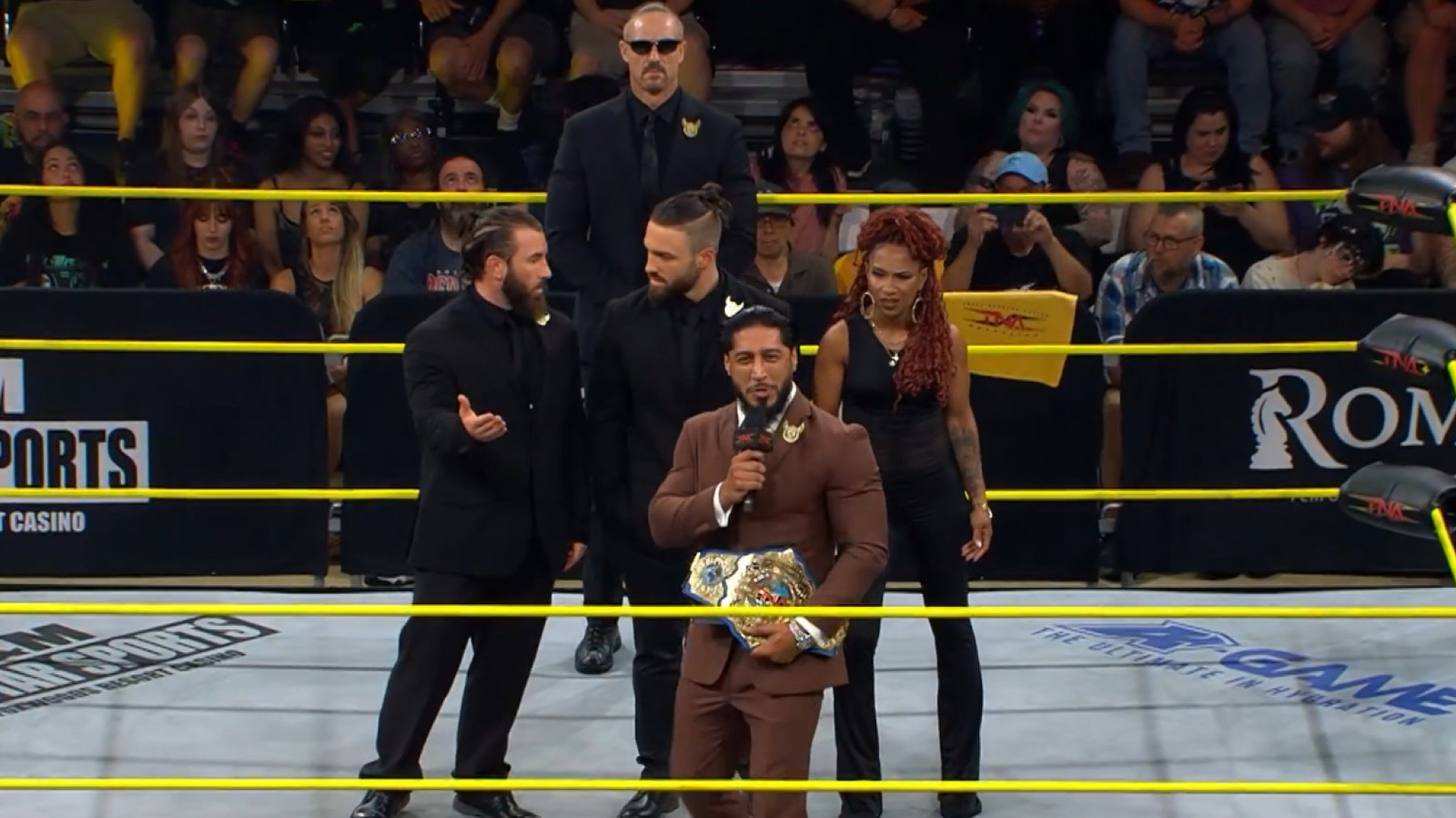
Cedric Alexander is proving he is the anchor of TNA's X-Division
2 days, 11 hours agoMore Analysis
TNA is betting big on its AMC move as the roster faces a reality check
3 months, 2 weeks agoTNA is playing a dangerous game with their move to AMC
1 month, 1 week agoTNA Impact needs more than a hot opener to stabilize their trajectory
1 month, 2 weeks ago
TNA is spinning its wheels while the rest of the industry accelerates
1 week, 2 days ago