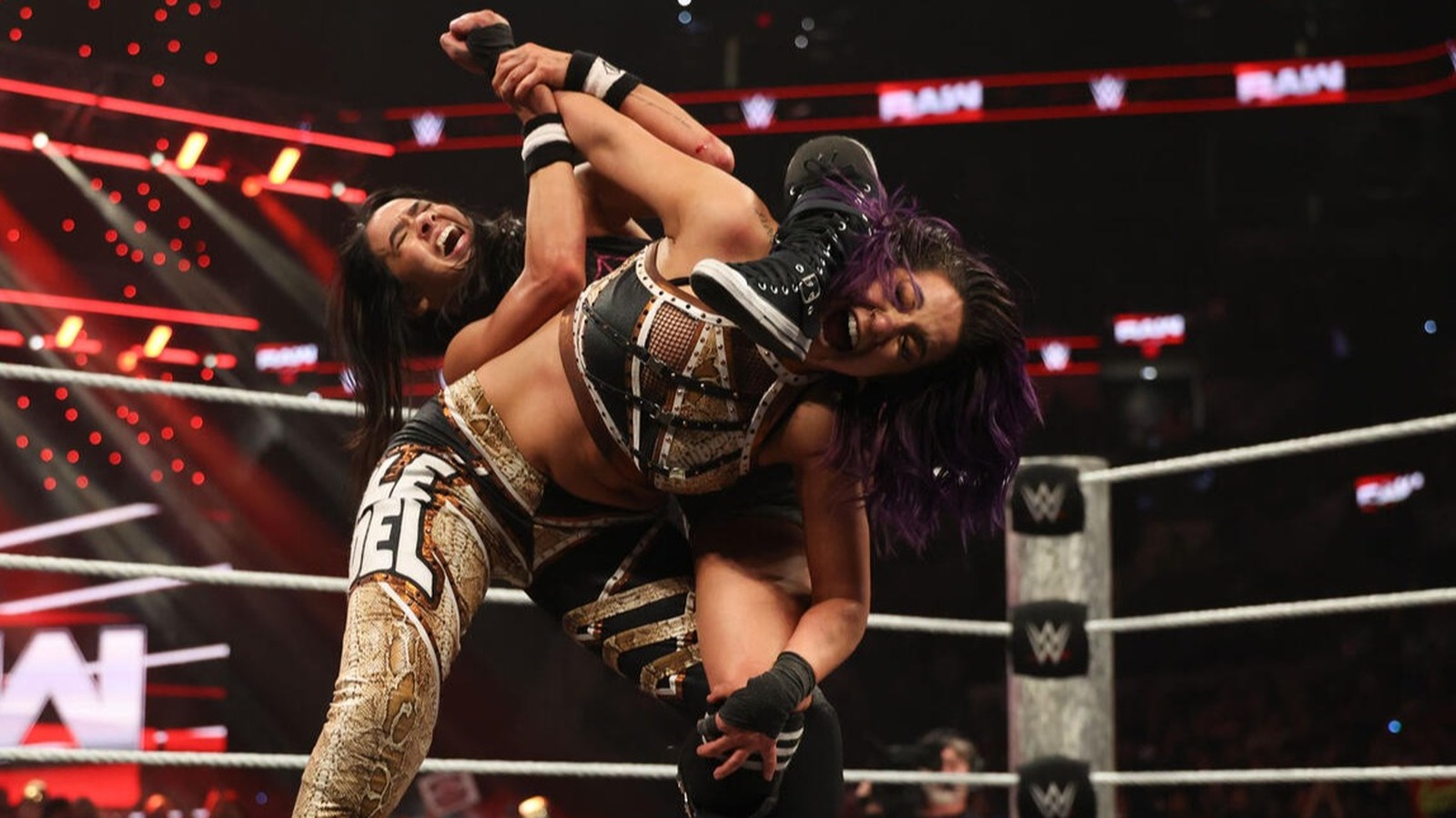
WWE’s Bayley is currently operating at a work rate that defies modern sports medicine. Following her recent push to appear for TNA Wrestling, she is actively teasing matches against former WWE stars Indi Hartwell and Elayna Black, as recently noted by WrestleTalk. This isn't just a fun storyline expansion. It is a massive, unprecedented physical escalation.
The Raw star is already pulling double duty across WWE's main roster, appearing regularly on both Raw and SmackDown. Add in her recent excursions to Lucha Libre AAA Worldwide in Mexico, and the physical toll starts to compound exponentially.
From a kinesiology perspective, this is a dangerous game. Wrestling across four different promotions with distinct ring builds, travel schedules, and match styles is a direct path to severe muscular fatigue. The human body is simply not built to absorb this kind of sustained trauma without significant off-seasons, something professional wrestling famously lacks.
The Biomechanics of Ring Hopping
Fans and pundits often assume a wrestling ring is a standard, uniform construct. That is completely false. WWE rings are notoriously stiff. They are designed primarily for television aesthetics and to support the massive frames of heavyweight wrestlers. They use real ropes wrapped in tape, which require a specific physical technique to hit safely.
Lucha Libre AAA Worldwide uses cable ropes. These react entirely differently when a wrestler hits them at full speed, requiring different torque from the hips and knees to maintain balance. TNA rings have their own specific mat density, bounce, and underlying crossbeam structure.
When a wrestler's body is acclimated to the tension and give of a WWE ring, suddenly working a high-stakes match in a AAA or TNA ring forces intense micro-adjustments. The footwork changes. The landing angles for bumps change. The shock absorption required by the ankles and knees shifts dramatically.
Those micro-adjustments tear at the ligaments. Bayley has a well-documented history of knee issues, having previously suffered a torn ACL. Operating in unpredictable physical environments places extreme stress on the medial collateral ligament and the anterior cruciate ligament. The knee joint relies on muscle memory to fire the stabilizing muscles before a high-impact landing. When the surface changes, the timing of that muscle firing is thrown off by fractions of a second, leaving the ligament exposed to the full force of the impact.
The Endocrine Cost of Relentless Travel
The travel schedule required to sustain appearances on Raw, SmackDown, AAA, and TNA is a medical red flag. WWE's domestic schedule alone requires a minimum of three to four days on the road per week. Adding trips to Mexico or separate US tapings means navigating chaotic time zones, delayed flights, and completely disrupted circadian rhythms.
Sleep is the only time the human body produces the necessary levels of human growth hormone required to repair micro-tears in muscle tissue sustained during a match. When a performer is living in airports, their sleep quality plummets.
In response to sleep deprivation and physical stress, the adrenal glands pump out massive amounts of cortisol. While cortisol is useful for short-term fight-or-flight scenarios, chronic elevated cortisol leads directly to systemic inflammation.
Inflamed joints are brittle joints. The connective tissue loses its elasticity. A routine flat-back bump that Bayley has taken thousands of times suddenly results in a ruptured Achilles or a torn rotator cuff. The surrounding muscles are simply too fatigued to provide the necessary stabilization. You cannot outwork biology.
Analyzing the Moveset Risks
We also have to look specifically at Bayley's offensive arsenal. Her finishing maneuver, the Rose Plant, requires a sudden dropping impact that drives the opponent face-first while putting significant strain on Bayley's own lower back and knees. Executing this perfectly requires explosive core strength and stable knees.
If she performs this move in a TNA ring against Indi Hartwell or Elayna Black while operating on four hours of sleep from a AAA appearance, the margin for error shrinks to zero.
Furthermore, Bayley frequently utilizes a top-rope flying elbow drop. The impact of landing on the hip and elbow sends a shockwave through the cervical spine and the shoulder joint. Doing this night after night across different rings accelerates cartilage degeneration in the shoulder. This is a fast track to labrum tears or severe impingement syndrome.
Historical Precedents and Industry Impact
We have seen this exact scenario play out before, and it rarely ends well. The most obvious historical comparison is Kenny Omega’s Belt Collector run. Omega wrestled for AEW, AAA, and IMPACT Wrestling simultaneously. The result was catastrophic physical breakdown.
Omega suffered from vertigo, a torn labrum, severe knee injuries, and a sports hernia. He pushed through the pain until his body forced him to stop, resulting in a massive hiatus. Jon Moxley attempted a similar grueling schedule across AEW, NJPW, and independent dates. He ultimately required significant time off for physical rehabilitation. Wrestlers who attempt this cross-promotional grind typically hit a severe physical wall within 12 to 18 months.
This brings us to the strategic implications for WWE and TNA. Allowing talent to cross promotional lines is great for fan engagement, but it requires strict medical oversight. Allowing a top-tier star to grind her body down across three countries is negligent management.
WWE has historically protected its top investments, so their willingness to let Bayley run this gauntlet is genuinely baffling. If Bayley suffers a severe injury in TNA or AAA, WWE loses a major television draw.
Expected Timeline and Critical Outlook
For TNA, the impact is equally precarious. They are banking on Bayley's appearances to elevate talents like Hartwell and Black. But if Bayley comes into these matches exhausted, the match quality suffers. Worse, the injury risk transfers to her opponents. A fatigued worker is a dangerous worker. A fraction of a second of hesitation can lead to a broken neck.
The expected timeline for a resolution here is grim. Without a forced reduction in dates, the physical breaking point is likely to occur before the end of 2026. As the wrestling calendar heats up heading into the summer months, the pressure will only intensify.
There is a glaring lack of preventative sports medicine in professional wrestling. In professional basketball, a player showing this level of fatigue would be subjected to load management. In wrestling, the mentality is still rooted in the outdated concept of pushing through the pain.
Bayley teasing matches with Hartwell and Black is exciting on paper, but it represents an unsustainable workload. If she continues wrestling for AAA, Raw, SmackDown, and TNA, an injury is not just a possibility—it is a biomechanical certainty. The medical staff across all these promotions need to step in before a major ligament snaps.