The Physical Toll of a Surprise Return
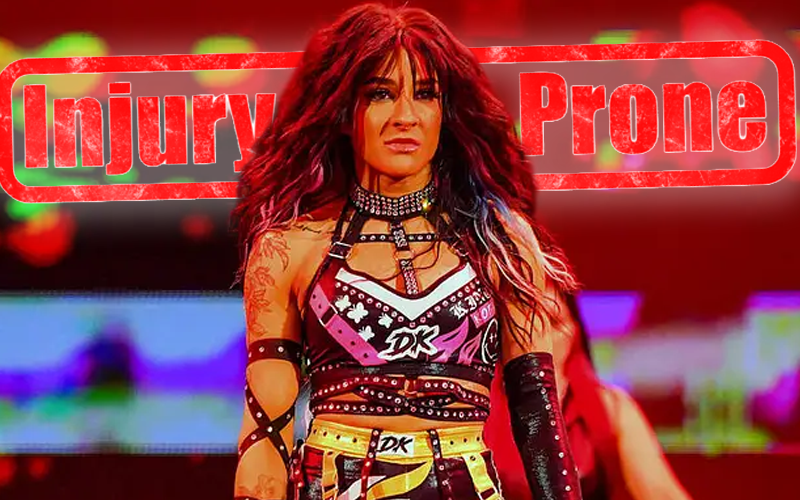
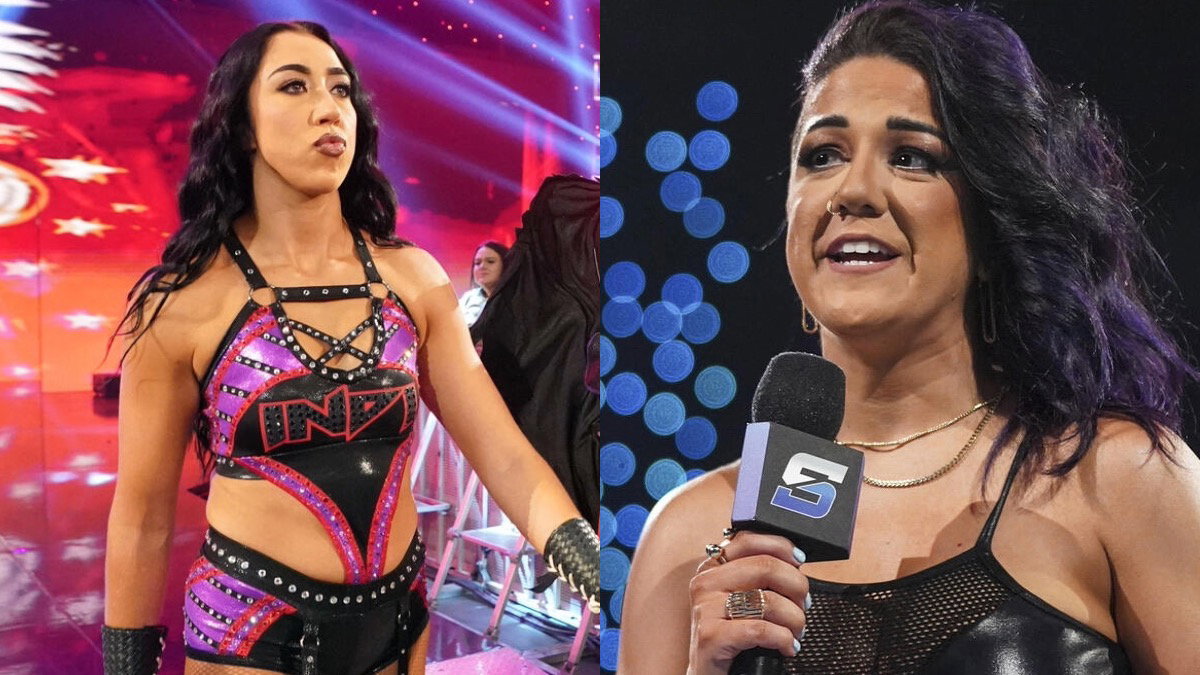
Charlie, known to WWE fans as Dakota Kai, recently opened up about her sudden return at SummerSlam 2022. She walked down the aisle in Nashville to form Damage CTRL alongside Bayley and IYO SKY. From a booking perspective, it was brilliant. From a physiological standpoint, it was a massive risk.
When an athlete is released, they lose access to world-class performance centers, daily physical therapy, and the highly regimented medical oversight of a major promotion. Returning to television just months after a release means ramping up cardiovascular and musculoskeletal output from zero to a hundred. Soft tissue doesn't care about storyline pops. Ligaments require gradual loading.
She pulled it off that night. But looking at her medical history, that 2022 return was just one chapter in a brutal war of attrition with her own lower body.
The Biomechanics of a Kicking Specialist
To understand her injury profile, you have to look at how she moves. Her offensive arsenal is almost entirely based on sudden, high-impact lower-body strikes. The running facewash in the corner. The scorpion kick. The devastating facebuster variations.
Every time she throws a heavy kick, the non-striking leg absorbs the entirety of her body weight multiplied by the rotational force of her hips. This puts an immense shearing force on the anterior cruciate ligament (ACL). Female athletes already face a heightened risk of ACL tears due to a wider Q-angle—the angle between the hips and knees. When you add a relentless striking style, the structural integrity of the knee is constantly living on the edge.
Her stubborn refusal to adapt this style is a glaring issue. It is thrilling for the crowd, but medically, it is a ticking clock. Continuing to rely on hard-plant pivoting after multiple reconstructive surgeries borders on reckless.
A History of Joint Failure
Her knee troubles didn't start during the Damage CTRL run. The foundation was compromised way back in late 2018 when she suffered her first torn ACL. An ACL reconstruction is not a cure; it is a salvage operation. Surgeons drill tunnels into the tibia and femur, anchoring a graft—usually from the patellar tendon or hamstring—to replace the ruptured ligament.
The standard recovery timeline is 9-12 months. But even when cleared, the biomechanics of the knee are permanently altered. Proprioception—the body's ability to sense its position in space—takes years to fully return. Athletes unconsciously favor the repaired knee, shifting the load to the opposite leg or to other structures like the meniscus.
Female wrestlers specifically have an alarming rate of ACL tears. Look at the careers of Tegan Nox or Chloe Christmas. The human knee was simply not designed to absorb the repetitive, chaotic impacts of professional wrestling. The surface of a modern wrestling ring provides some flex, but it is ultimately wood and steel. Landing awkwardly from the second rope with another person's weight bearing down on your joint is a recipe for catastrophic ligament failure.
The 2023 Rupture
The bill came due in May 2023. Teaming with Bayley against Liv Morgan and Raquel Rodriguez, she suffered another torn ACL. This wasn't a freak accident. It was the statistical probability of a high-impact style wearing down a compromised joint over time.
When the second rupture happened, you could see the exact moment the joint gave out. The knee buckled inward under the weight of a routine sequence. In sports medicine, we call this the valgus collapse. It is the visual hallmark of an ACL snapping.
The rehab for a second reconstruction is vastly different from the first. Scar tissue from the previous surgery creates stiff, unyielding barriers inside the joint capsule. Breaking through that scar tissue during physical therapy is excruciating. The patient literally has to force the knee to bend, tearing the internal adhesions just to achieve normal range of motion. The risk of re-rupture in the first year after a second ACL surgery is exceptionally high, hovering around 20-25 percent for pivoting athletes.
During her time away, Damage CTRL relied on her as a mouthpiece. But standing at ringside is its own hazard. Ringside managers are constantly required to take unexpected bumps, interfere, or pivot sharply on concrete floors to evade babyface attacks. Even wearing a heavy functional knee brace, the structural risk was omnipresent.
The Meniscus Compromise
Then came August 2024. Another knee injury, this time a torn meniscus requiring surgery. This is a classic downstream effect of ACL reconstruction. The meniscus acts as the shock absorber between the femur and tibia.
When an ACL is grafted, the knee loses some of its natural rotational stability. The meniscus ends up taking the brunt of those twisting forces. Eventually, the cartilage gives way. If a surgeon performs a meniscectomy—snipping out the torn cartilage—the athlete can return in 4-6 weeks, but they are left with bone-on-bone friction that guarantees early-onset osteoarthritis.
If they repair the meniscus by suturing it, the recovery is closer to four months, but the joint is preserved. The relentless television schedule usually forces wrestlers into the quicker, more destructive option.
Strategic Implications and the Cost of Loyalty
Her recent interview with WrestleTalk shedding light on the SummerSlam return proves how disposable athletes can feel. You are released without warning, expected to stay in peak physical condition on your own dime, and then expected to return to television-ready shape the moment creative changes their mind.
This boom-and-bust cycle of employment forces wrestlers to bypass proper periodization training. In legitimate combat sports, an athlete goes through a structured off-season. They rebuild muscle mass, address imbalances, and slowly ramp up to competition. In this industry, you get a phone call on a Tuesday and you are taking a suplex on a Saturday. The soft tissue simply cannot adapt that fast. It is a massive indictment of the medical and talent relations pipeline.
Bayley pushed hard to get her rehired to form that stable. That loyalty salvaged her mainstream career, but the physical cost was immense. She spent the better part of three years oscillating between television main events and the surgical table. The fact that she managed to hold the faction together as the tactical anchor while physically falling apart is impressive. But it also masks the systemic failure of letting compromised athletes push themselves too far for the sake of a storyline.
Looking Ahead
As she speaks about her journey now, the tone is reflective. The industry moves incredibly fast. While she was rehabbing, new talent emerged. The standard for in-ring athleticism continues to rise.
The reality of multiple knee surgeries is inescapable. Every intervention introduces more inflammation, more scar tissue, and further degrades the articular cartilage. We are looking at a classic case of early-onset osteoarthritis before the age of forty.
To survive the next phase of her career, the kicking specialist needs to stop kicking. She has to ground her style, rely on submissions, and use her veteran timing to manipulate crowds without leaving her feet. It is a harsh truth, but it is the only path forward if she wants to walk without a pronounced limp when her in-ring days are finally over.