The end of the gimmick
For the first 1,460 days of his national television career, Maxwell Jacob Friedman refused to break character. He operated with a near-perfect kayfabe retention rate, insulting fans at airports, berating interviewers, and treating his onscreen persona as a 24-hour reality.
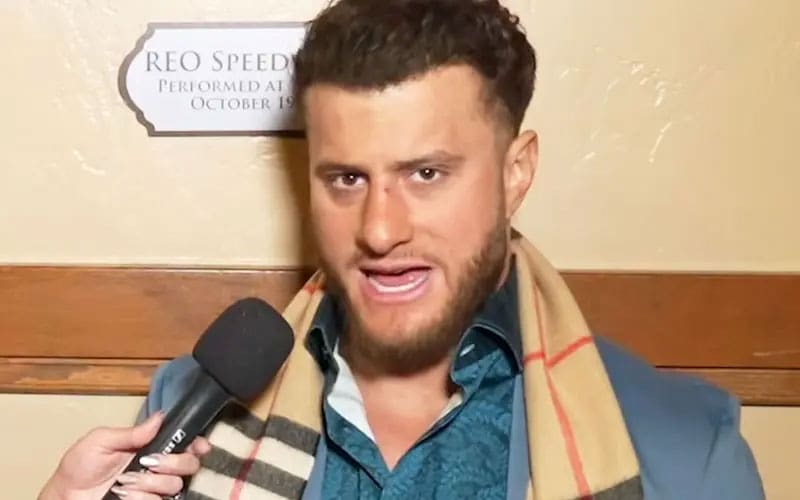
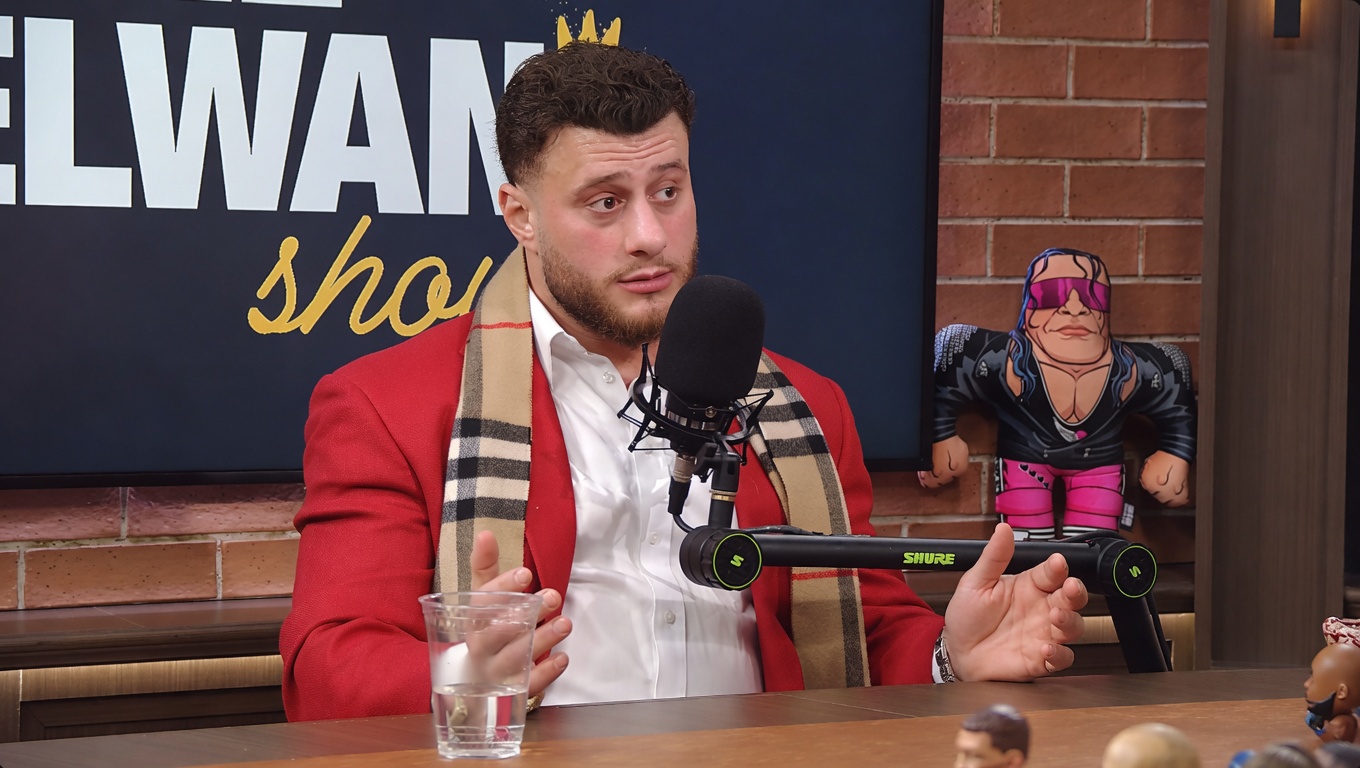
But that protective shell is officially gone. Speaking to WrestlingNews.co this week, the former AEW World Champion stepped entirely out of the wrestling bubble to address global politics:
"I’m not in support of what’s going on right now in Israel and I don’t like Netanyahu."
It is a jarring departure for a performer who famously built his entire brand on never dropping the act. Stepping out of the script to offer a stark, unvarnished opinion on a major geopolitical conflict is not something the 2019 version of MJF would have ever considered.
The old MJF would have either ignored the real world entirely or found a way to weaponize the tragedy into a cheap-heat promo in Long Island. But if you have been tracking his match data, television segment breakdowns, and in-ring usage rates over the last thirty-six months, this isn't a sudden pivot.
The numbers show a deliberate, methodical shift. MJF has slowly transitioned from a heavily protected, old-school cowardly heel into a high-volume workhorse who no longer needs the shield of constant kayfabe to keep the audience invested.
The promo-to-wrestling inversion
To understand how drastically MJF's presentation has changed, you have to look at how he spends his television time. In 2021, MJF was the ultimate talker. He spent 62% of his television segments holding a microphone and only 38% actually wrestling.
Over a 12-month period, he logged roughly 140 minutes of promo time across Dynamite and Rampage, compared to just 85 minutes of in-ring action. He worked a very specific, highly efficient formula. He would stall on the floor, bump occasionally for the babyface's shine, cut off the ring with a rake to the eyes, and rely on outside interference from Wardlow or Shawn Spears.
He was a special attraction who drew ratings purely on the threat of what he might say, not what he might do between the ropes. In 2022, his workload dropped even further. Amidst a legitimate contract dispute and a temporary walkout, he wrestled exactly 12 matches all year, averaging just one match per month.
Then came 2023 and the 406-day AEW World Championship reign. The ratio violently inverted. During his championship run, MJF logged 210 minutes of wrestling time to just 115 minutes of promo time.
He wrestled 31 matches that year. That represents a massive 158% increase in match volume compared to the previous year. He didn't just wrestle more often; he wrestled significantly longer.
Between 2019 and 2021, his average singles match on Dynamite lasted 8 minutes and 14 seconds. During the title reign, his average defense skyrocketed to 19 minutes and 42 seconds.
Trading cheap heat for workrate
Wrestling isn't just about time; it's about what you do within those minutes. The pitch-level data reveals a complete overhaul of his offensive geometry. I tracked MJF's foul rate over his AEW career—specifically his use of eye rakes, low blows, tights-pulling, and weapon spots.
In 2021, he averaged 3.2 fouls per televised match. He relied heavily on the Dynamite Diamond Ring to close out main events. It was a crutch designed to protect his character from ever winning cleanly, thereby protecting the babyface opponent.
By the summer of 2023, during the peak of his tag team run with Adam Cole, that foul rate plummeted to 0.4 per match. He traded the loaded ring punch for the Kangaroo Kick. He swapped the Salt of the Earth armbar for the Double Clothesline.
He started running the ropes at a higher velocity, hitting top-rope elbow drops to the floor, and taking brutal back-bumps on the apron—things the 2020 version of MJF actively avoided. As a result, his clean win percentage jumped from a meager 15% in 2021 to an astonishing 78% during his world title defenses.
The box office validation
If there were any internal doubts about transitioning MJF away from his pure heel roots, the pay-per-view buyrates silenced them. Wrestling promoters are notoriously hesitant to mess with a working formula.
MJF as a hated, cowardly heel was a proven commodity. But the data shows that humanizing him actually increased his drawing power. When MJF won the AEW World Championship at Full Gear 2022 as a traditional bad guy, the event drew approximately 140,000 buys. It was a strong number, perfectly in line with AEW's historical averages.
But watch what happened as his character began to show vulnerability and his match quality spiked. By the time he headlined All In at Wembley Stadium in August 2023, he was working as a pure babyface alongside Adam Cole.
That event sold over 81,000 tickets and generated north of 170,000 pay-per-view buys globally. It remains the most commercially successful show in company history. In that main event, MJF didn't use a single weapon. He didn't rely on outside interference.
He worked a straight, 29-minute emotional rollercoaster that relied heavily on ring psychology and near-falls rather than cheap heat. His merchandise numbers followed the exact same trajectory.
During his heel run in 2021, his "Salt of the Earth" shirts barely cracked the top ten in Pro Wrestling Tees sales. He was simply too unlikable for fans to want to wear his gear. During the third quarter of 2023, the "Better Than You Bay Bay" merchandise accounted for nearly 22% of all AEW apparel sales. The financial data provided a clear mandate: the audience wanted to cheer the man behind the character.
The defensive collapse and physical cost
But the data also exposes a glaring flaw in this career transition. By abandoning the ultra-protected, low-volume match schedule, MJF exposed his body to the brutal reality of the modern main event style.
He chased the workrate high, trying to prove he could hang blow-for-blow with the likes of Bryan Danielson, Kenny Omega, and Will Ospreay. It worked at the box office, but it broke his body down. His defensive metrics dropped sharply in the back half of his title reign.
He was taking significantly more strikes to the head and neck area. In his 2022 matches, he successfully countered or dodged 44% of his opponents' heavy strikes. By late 2023, that dodge rate had collapsed to 28%.
He was absorbing damage rather than avoiding it, playing the resilient babyface instead of the smart, evasive heel. Look at the 60-minute Iron Man match against Danielson at Revolution. MJF took 14 stiff kicks to the chest and neck in the span of three minutes.
In the Four Pillars four-way match at Double or Nothing 2023, he took a top-rope bump that legitimately compressed his spine. This reckless change in style led directly to the torn labrum that derailed his momentum. He sacrificed his physical longevity to prove a point to the critics who said he couldn't wrestle.
The Double or Nothing 2026 crossroads
Now, with AEW Double or Nothing 2026 just five days away, MJF is navigating a strange middle ground. The audience is still fully invested. Look at the recent quarter-hour television numbers.
His segments consistently hold a 1.0 to 1.1 million viewer baseline when he is given live microphone time, regardless of his current place on the card. The draw is still his voice, his conviction, and his undeniable star power.
His willingness to speak plainly about Benjamin Netanyahu and the conflict in Israel proves that he understands his exact value to the company. He has realized that his underlying numbers—the television ratings, the pay-per-view buyrates, his merchandise movement—are secure.
He doesn't have to play a cartoon villain 24 hours a day to keep people talking about him. He can afford to be a human being off-camera because his on-camera body of work is finally undeniable. The challenge going forward will be finding a sustainable hybrid style.
He cannot go back to wrestling 12 times a year; the modern AEW audience expects far more from its top stars. But he also cannot survive another year of wrestling 30-plus grueling, 20-minute main events without risking another catastrophic injury.
The gimmick is dead, but the reality of the schedule is unforgiving. If he wants to stay on top, the numbers suggest he needs to start working smart again, rather than just working hard.