The Main Event Was a Lie
Let’s be honest, the advertised main event for the Ring of Honor tapings in Jacksonville on May 18th was a bit of a mirage. On paper, it was Mark Briscoe, the heart and soul of ROH, defending his World Championship against Johnny TV. And by all accounts, it was a damn good match. Of course it was. Mark Briscoe could have a four-star classic with a broomstick and Johnny’s aerial playbook is second to none.
Briscoe got the win, as he should have. It’s his company, his belt, his brother’s legacy etched into the plates. It’s the one pure, good thing this version of ROH has going for it. But that’s not the story. The real main event happened after the bell. The real story is that for the first time since Tony Khan bought the company, someone showed up who looked, talked, and acted like he didn’t just wander over from the AEW catering table.
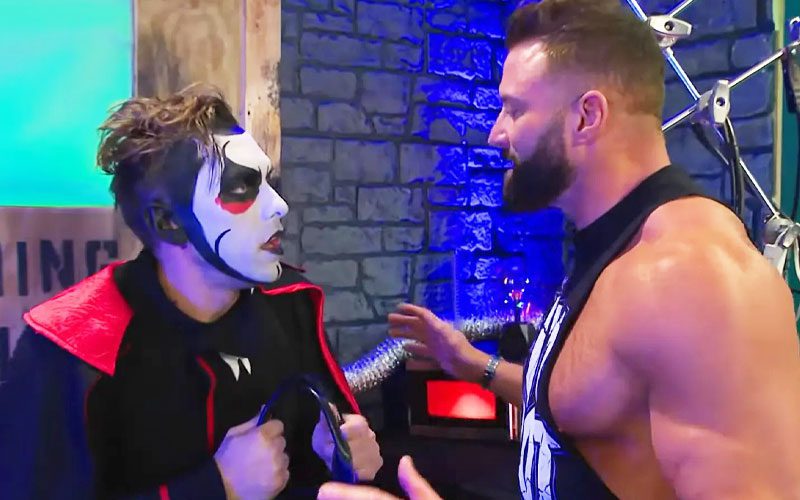
The lights go down, the music hits, and out walks Matt Cardona. Not some AEW mid-carder on a weekend pass. Not a New Japan guy fulfilling a booking obligation. The Indy God himself, flanked by Steph De Lander, looking like a million bucks and oozing main-character energy. He laid out the feel-good champion without breaking a sweat and grabbed a microphone. What he said next wasn't just a heel promo; it was a mission statement that exposed the fundamental flaw of the entire project.
The 'Charity Case' of Honor
Cardona called Ring of Honor a 'charity case' for AEW. And you know what? He’s not wrong. For two years, ROH has been AEW’s little brother, the kid who gets the hand-me-down clothes and is allowed to tag along to the movies as long as he doesn’t say anything embarrassing. It’s AEW Dark with better lighting and a more prestigious video library. It’s a place for great wrestlers to have great matches with zero stakes, zero context, and zero identity.
Look at the rest of the card from Jacksonville. Komander vs. AR Fox? A visual spectacle, no doubt. Two human highlight reels trying to out-flip each other for fifteen minutes. But what does it mean for Ring of Honor? What story does it tell? The Gates of Agony squashed some local talent. Great. Lee Moriarty had a Pure Rules match. Fine. These are all competent, talented wrestlers who are also… All Elite Wrestling talent. They are tourists in a land that used to have its own proud citizens.
The entire operation feels transient. It’s a brand extension in name only, a place to park wrestlers who don’t have a program on Dynamite. And the crowd feels it. The reported lulls in energy during the undercard aren’t because the wrestling is bad; it’s because the audience subconsciously knows none of it *matters*. It’s an exhibition. A well-wrestled, professionally produced exhibition, but an exhibition nonetheless. There is no 'Ring of Honor'. There is only the 'Tony Khan Wrestling Universe', and this is his third, least-important galaxy.
A Ghost in Its Own House
This wasn't always the case. There was a time when the ROH locker room was the most important dressing room in the entire business. It was the proving ground. If you could get over in front of *that* crowd, in *that* ring, you were legit. CM Punk, Samoa Joe, Bryan Danielson, Nigel McGuinness—they didn’t just pass through ROH; they *built* it with blood, sweat, and a vision of what professional wrestling could be.
That ROH had an identity so strong it felt like a religion. It was about technical proficiency, athletic legitimacy, and the unwavering belief that the World Championship was the most important prize in the sport. When a guy from another promotion showed up, it was an invasion, a clash of styles and philosophies. It felt like a big deal. Now, the roster is a revolving door connected directly to the AEW tunnel.
This is what makes Cardona’s arrival so genius. He isn’t just another ex-WWE guy looking for a payday. He’s the physical embodiment of the alternative. This is a man who was handed his walking papers, refused to fade away, and instead built an empire out of spite and savvy. He became a bigger star on his own, on the grimy indie circuit, than the big-budget machine ever let him be. He is everything the old ROH spirit was about, and he just walked into the new ROH and called it a fraud to its face.
A Battle for the Soul of ROH
Suddenly, Ring of Honor has its most compelling angle in years, and it has nothing to do with five-star work-rate clinics. Mark Briscoe vs. Matt Cardona is a legitimate blood feud before the first punch is even thrown in a sanctioned match. It’s a war of ideals. It’s the company man, the legacy, the heart of ROH against the ultimate outsider, the self-made king who sees a hollow crown and wants to melt it down for scrap.
This is the gut check for Tony Khan. Is he content with ROH being a content library filler for HonorClub? Or does he actually want to build a second wrestling promotion with its own vision, its own stars, and its own soul? Cardona just drew a line in the sand. He’s the antagonist this story desperately needed, the villain who tells an uncomfortable truth.
For the first time since the sale, ROH has a pulse. It has a central conflict that isn’t borrowed or temporary. The Indy God is here to tear down the country club replica and see if there’s any honor left in the rubble. For the sake of a brand that used to mean everything, let’s hope he finds some.