The tournament meat grinder
AEW officially revealed the return of the Owen Hart Foundation Cup for 2026. Fans are already fantasy booking the brackets. Backstage, the reality is much different. For the medical and training staff, a multi-week tournament is a red alert.
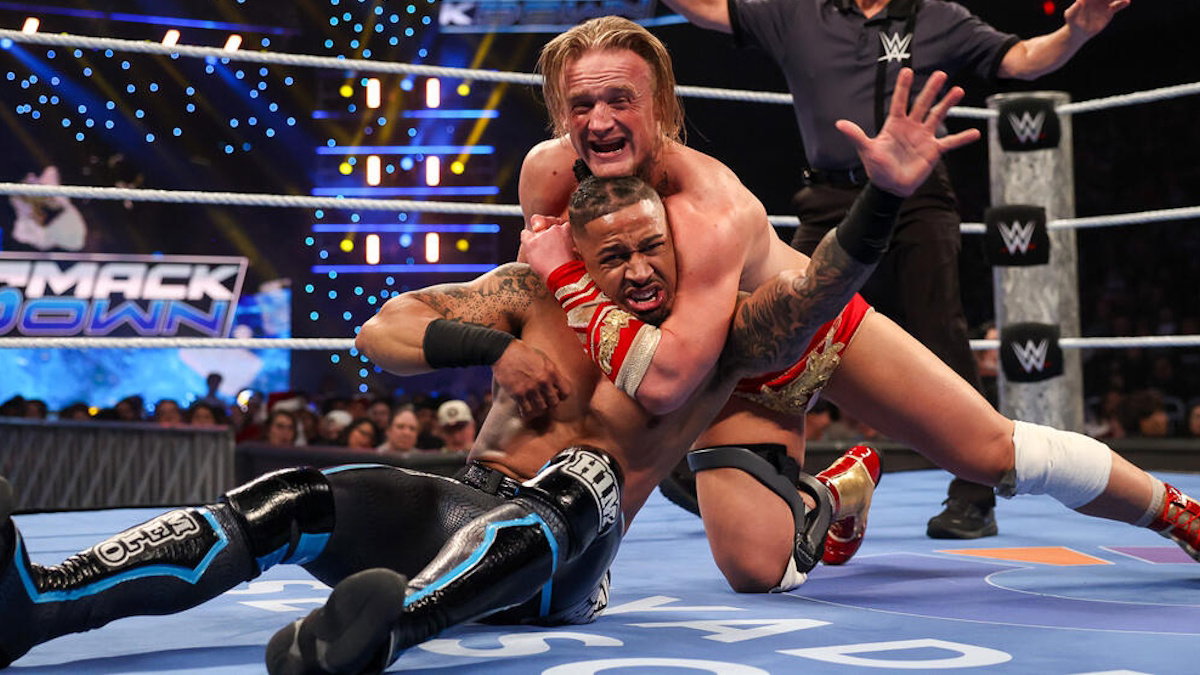
While no immediate injuries have been reported alongside the announcement, the entire participating roster is now on the clock. Tournaments are a staple of professional wrestling. They create natural stakes and easy storylines. But they also create a physical meat grinder. The human body is not designed to absorb professional wrestling bumps multiple times a week at a high level.
The biomechanics of a compressed schedule
Wrestling is punishing on a normal schedule. You work a match, you take a few bumps, you recover for a week. A tournament throws that recovery window in the trash. When you advance, you wrestle again, often against a completely different style of opponent.
You go from lifting a heavy brawler on Wednesday to chasing a high-flyer on Saturday. That constant shift in muscle recruitment patterns is where soft tissue injuries happen. The torque on the knees and lower back changes with every opponent.
Let's talk about fast-twitch muscle fibers. Wrestling relies heavily on explosive movement. When you wrestle multiple times a week at a high intensity, those fibers do not repair fully. Micro-tears accumulate. The body is operating on a deficit from the second round onward.
Ignoring the warning signs
We have seen this play out before in AEW. The Owen Hart Cup, the Continental Classic, and various eliminator tournaments have all claimed their pound of flesh. The G1 Climax in New Japan is famous for breaking bodies down. AEW's schedule isn't quite as compressed, but the matches are often just as intense. Think back to previous iterations of the Owen Hart Cup. We watched Bryan Danielson wrestle through a broken orbital bone. We saw Jon Moxley completely drain himself to reach the finals of past tournaments.
When wrestlers see a trophy at the end, they push through nagging issues. A tweaked knee on Dynamite becomes a torn meniscus by Collision because nobody wants to lose their spot in the bracket. Adrenaline masks the initial tear. The structural damage worsens with every suplex.
AEW has a spotty history of protecting wrestlers from themselves. We have seen guys clearly concussed or favoring blown joints allowed to finish matches. While the protocol has tightened up over the last two years, a tournament environment tests the discipline of the ringside doctors. Will they throw up the X when a star is bleeding in the semi-finals?
The concussion threat
The most terrifying aspect of a tournament is head trauma. If a wrestler suffers a low-grade concussion in the first round, the symptoms might not manifest until the adrenaline wears off the next day. In a regular week, that wrestler might just take a week off. In a tournament, they are scheduled to wrestle three days later.
The pressure to clear the impact test is massive. AEW's medical team has to be completely ruthless here. If someone is wobbly, they are out. Period. There can be no gray area when dealing with brain injuries. A secondary impact syndrome in the middle of a live television broadcast is the nightmare scenario.
Joint degeneration and ring rust
Beyond concussions, the joints take a massive beating. The cartilage in the knees and shoulders acts as a shock absorber. Every time a wrestler takes a flat back bump, that cartilage compresses. In a tournament, that compression happens repeatedly without time to decompress and rehydrate the discs in the spine.
This leads to bulging discs, pinched nerves, and radiculopathy shooting down the arms or legs. You will see wrestlers adjusting their style as the tournament progresses. A guy who normally hits a 450 splash might switch to a submission finisher by the semi-finals. His knees simply cannot handle the landing impact anymore.
While we do not have the brackets yet, the roster is already dealing with the usual bumps and bruises. Guys returning from long-term injuries often circle the Owen Hart Cup as their comeback target. We saw Adam Cole try to push through his own physical limitations in past years. That is a massive mistake. Jumping straight from physical therapy into a high-workrate tournament is a recipe for a secondary injury.
The rush to get back into the mix often leads to the body breaking down in a new way. Compensating for a bad ankle means you blow out your opposite knee. The kinetic chain is completely thrown off by favoring one side. Tendons need time under tension to regain their elasticity. You cannot simulate a live television match in an empty training facility.
The production schedule nightmare
AEW's production schedule adds another layer of physical stress. Taping Collision and Dynamite sometimes in close proximity means wrestlers are performing at a high level with less than 48 hours of rest. Sometimes they are taping Rampage immediately after a grueling Dynamite main event.
Your central nervous system needs time to reset after a major bump. A top-rope suplex does not just hurt your back. It scrambles your equilibrium. Doing that twice in 72 hours degrades your reaction time.
When reaction time drops by a fraction of a second, somebody catches a boot to the jaw instead of blocking it. The margin for error in professional wrestling is razor-thin. Fatigue obliterates that margin.
Hydration and weight cuts
People forget that wrestling is a weight-class sport in disguise. While there are no strict weigh-ins for most matches, wrestlers still manipulate their water weight to look a certain way on television. They wear sweat suits on the StairMaster. They sit in the sauna for an hour before call time.
Doing a severe water cut to look shredded for a first-round match dehydrates the brain. A dehydrated brain is significantly more susceptible to concussions because there is less fluid cushioning the skull.
The medical staff has to monitor hydration levels aggressively. If a wrestler is cramping in the final five minutes of a match, it is not just a conditioning issue. It is a dangerous lack of electrolytes that makes every bump twice as hazardous.
The shadow rehab process
Behind the curtain, the trainer's room will look like a triage center. Between matches, the physical therapists are working overtime. They are using dry needling to release muscle spasms in the traps and lats. They are using ultrasound therapy to increase blood flow to strained hamstrings.
But these are just band-aids. You cannot heal a grade-two muscle tear with ice and a massage gun. You can only numb it enough to get the wrestler through the next fifteen minutes on television. The real bill comes due after the finals.
The most common tournament injuries
Based on historical data from multi-week wrestling tournaments, the medical staff will be preparing for three specific types of trauma:
- Soft tissue tears: Hamstrings and groins are the first to go when fatigue sets in and explosive movement is required.
- Joint sprains: Knees and ankles lose their stability as the surrounding muscles exhaust, leading to grade-one and grade-two sprains on awkward landings.
- Neurological fatigue: Not just concussions, but a drop in reaction time that makes routine spots significantly more dangerous.
Managing the booking
The booking committee has a medical responsibility here. You cannot put two injury-prone wrestlers in a 25-minute ironman sprint in the first round. They need to structure the matches to protect the talent. Shorter matches in the early rounds. Strategic use of ground wrestling to limit high-impact bumps.
Management likes to deliver pay-per-view quality matches on free television. That is great for the viewers. It is a disaster for the orthopedic surgeons who have to put these guys back together. The pacing has to be managed intelligently.
What to watch for
As the tournament kicks off, keep an eye on the tape. Literally. Wrestlers will start showing up with kinesio tape on shoulders and knees by the second round.
That tape is not just for show. It is a desperate attempt to stabilize joints that are begging for rest. It provides proprioceptive feedback, but it does not fix a torn ligament. Also, watch the match pacing. If a usually fast-paced wrestler suddenly starts working a slow, methodical style, they are hiding an injury. They are buying time. They are hoping the opponent can carry the physical load.
The ultimate cost
Winning the Owen Hart Foundation Cup is a massive honor. It guarantees a push and cements a legacy within the promotion. But the physical cost of holding that trophy is astronomical.
The winner will likely need at least 30 days of light duty just to repair the damage. We are about to see who has the conditioning to survive, and who will end up on the operating table. The 2026 tournament will be a test of wrestling skill, but more importantly, a test of physical endurance.