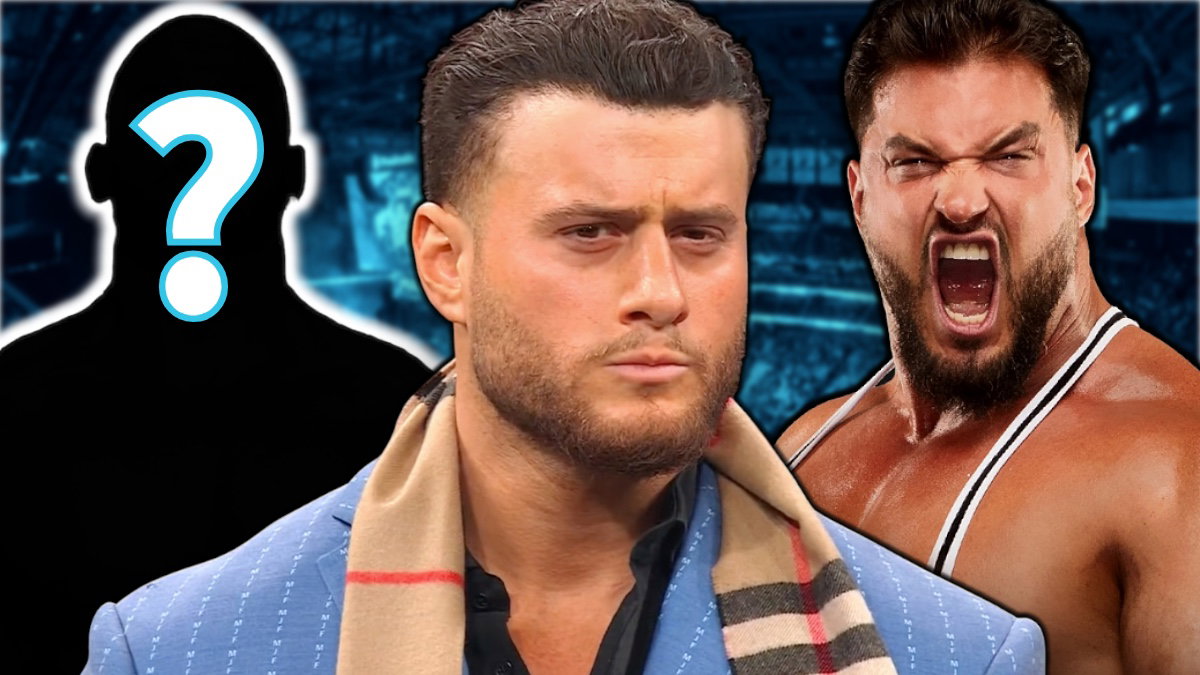
MJF just put his entire character on the line for Double or Nothing
The existential threat of the barber's chair
Professional wrestling operates on a sliding scale of consequences. Championship titles change hands constantly. Contracts expire or are torn up. Blood washes off in the post-match shower. The physical toll of the ring is largely invisible to the audience by the next television taping.
But hair takes months to grow back.
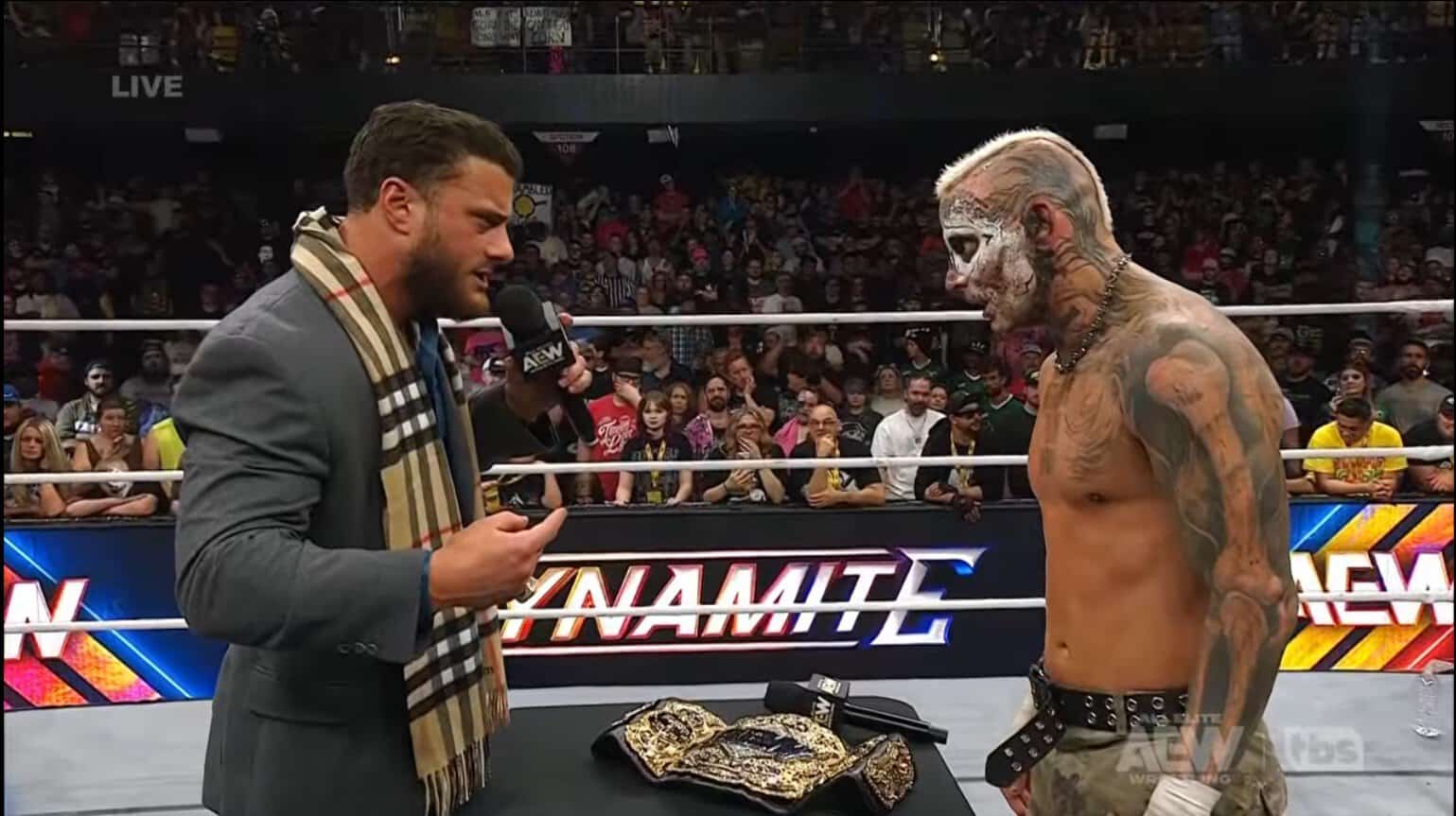
On the May 13 edition of AEW Dynamite, Maxwell Jacob Friedman signed a contract that fundamentally alters his trajectory. At Double or Nothing on May 24, 2026, he is putting his hair on the line. It is a stipulation pulled straight from the carnival roots of the industry. The Lucha de Apuestas. The hair versus hair match is designed to strip a performer of their dignity in the most public, humiliating way imaginable.
For a character like MJF, this is not a simple match constraint. It is an existential threat to his entire presentation.
Think about the meticulous construction of the MJF persona. Every single element is engineered to project unearned superiority. The Burberry scarf. The custom-tailored suits. The spray tan. The heavy, perfectly styled hair. He weaponizes his aesthetics. He uses his grooming to separate himself visually and psychologically from the audience he despises. He tells the crowd he is better than them, and his immaculate styling serves as his visual proof.
Take that styling away, and what exactly remains?
A bald MJF is a fundamentally different character. He loses the frat-boy smugness. He loses the arrogant sheen. He becomes something exposed, vulnerable, and likely highly dangerous.
The historical weight of a shaved head
History tells us exactly how this psychological shift plays out in the ring. When a vanity-driven heel loses their hair, they do not simply accept the new look. They unravel entirely.
Look at CM Punk during his Straight Edge Society era in WWE. When Rey Mysterio shaved his head at Over the Limit in 2010, Punk did not immediately transition into a violent monster. He hid in shame. He wore a mask to conceal his bald head. The loss of his hair drove him into a state of paranoid delusion, making his character far more compelling and unpredictable.
Kurt Angle experienced a similar transformation when he lost his hair to Edge in 2002. Angle was already a technical machine, but losing his hair stripped away the goofy, milk-drinking Olympian veneer. He became a wrestling cyborg. The bald head made him look meaner, more severe, and completely devoid of humor.
In the Memphis territory during the 1980s, Jerry Lawler made a living humiliating arrogant interlopers by buzzing their heads. It was a visceral, satisfying conclusion to months of television build. The villain would scream, beg, and thrash in the chair. The crowd hung on every pass of the clippers.
MJF is facing a similar crossroads. Double or Nothing is exactly 10 days away. The timeline is fixed. We will either see MJF survive with his vanity intact, or we will watch him be physically dismantled in the center of the ring in Las Vegas.
This is the brilliance of the stipulation. It completely bypasses the need for a championship belt to create interest.
Stripping away the Burberry armor
AEW has often struggled to create non-title feuds that feel genuinely important. Too frequently, blood feuds devolve into endless, rambling promos or convoluted multi-man tag matches that dilute the hatred between the two performers. A Hair vs. Hair match cuts through all of that noise. The stakes are immediate, visual, and permanent. You do not need to explain why MJF wants to keep his hair. The audience instantly understands the terror of the barber chair sitting on the stage.
But the booking carries a massive, unavoidable risk.
If MJF wins, the stipulation was merely a tease. A cheap pop to sell pay-per-view buys for Double or Nothing. His opponent loses their hair, and MJF continues exactly as before. The status quo is maintained, and the threat of the clippers feels entirely hollow in hindsight.
If MJF loses, AEW is committing to a months-long character arc. They are forcing their top heel to navigate a humiliating visual change. It requires careful, sustained booking to ensure he does not turn into a comedy act. There is a very real danger of overplaying the humiliation. If a bald MJF is simply mocked every week on Dynamite, the heat dissipates. He becomes a joke rather than a threat.
The transition from an arrogant heel to an unhinged, violent heel is difficult. It requires the performer to completely shift their in-ring psychology.
Currently, MJF wrestles a defensive, opportunistic style. He stalls. He bails out of the ring to yell at fans. He hides behind the referee. He relies on cheap shots, eye rakes, and his Dynamite Diamond Ring. If he loses his hair, that style no longer makes logical sense. A humiliated, exposed man does not stall. He attacks out of raw desperation.
We saw brief flashes of this violent desperation during his feud with Bryan Danielson. When pushed to his absolute physical limit in their Iron Man match, MJF stopped running and started throwing vicious elbows. He found a gear of malicious aggression. He will need to live entirely in that gear if he leaves Las Vegas completely bald.
Consider MJF’s standard offensive repertoire. The Heat Seeker requires an opponent draped over the middle rope, a move he sets up through methodical pacing. His salt-of-the-earth armbar is a submission that relies on wearing an opponent down over 20 minutes of grinding mat work. None of these techniques apply in a chaotic Hair vs. Hair environment.
In a match driven by the threat of sheer humiliation, technical wrestling takes a back seat to survival instincts. If MJF attempts to wrestle a standard professional wrestling match on May 24, he will lose his hair. He must abandon the playbook that brought him the AEW World Championship and embrace a purely brawling style.
AEW's booking problem and the aftermath
The contract signing on the May 13 edition of Dynamite was a masterclass in tension. Contract segments in wrestling are notoriously formulaic. A table is set up in the ring, two rivals trade generic insults, someone flips the table, and a brawl ensues.
But MJF treats these segments differently. He treats the paperwork as a weapon. When he picked up the pen, there was a visible hesitation. The audience could see the exact moment the reality of the stipulation washed over him. He was no longer trading verbal barbs; he was signing away his physical identity. That momentary pause—that flicker of genuine doubt—sold the pay-per-view better than a long monologue ever could.
Signing a Hair vs. Hair contract implies one of two realities. Either he is supremely confident that he has a backup plan—a run-in, a hidden weapon, a corrupt official—or he has been pushed into a psychological corner where his massive ego overrode his tactical sense.
The latter makes for far superior television.
When a master manipulator is forced to play fair, they panic. The television build to Double or Nothing over the next week and a half should focus entirely on that panic. We should see MJF sweating. We should see him frantically trying to find a legal loophole in the contract he just signed. The visual of the clippers needs to hang over every promo he cuts.
This brings up a persistent negative trend in AEW's creative process. The company has a troubling history of abandoning character arcs when they become difficult to write. Think of Wardlow's stuttering momentum after powerbombing MJF, or the mishandling of the Devil storyline that dragged on for months before ending with a whimper.
Tony Khan maps out the destination for his major feuds, but often fumbles the journey immediately following a pay-per-view. If MJF loses his hair, the creative team cannot simply move on to the next challenger on Wednesday night. They must live in the consequences. The failure to capitalize on narrative momentum is AEW's most glaring weakness.
Let us look at the actual in-ring reality of the match. A Hair vs. Hair bout is rarely a technical masterpiece. It is usually a chaotic, bloody, sprawling brawl. The psychology dictates that both men are fighting not to win, but to avoid losing. It creates a frantic, scrambled pace. Pin attempts are broken up not with tactical kick-outs, but with desperate, thrashing kicks and eye-gouges.
MJF excels in highly structured environments. He likes to control the tempo, work holds, and systematically target limbs. A frantic, unpredictable brawl neutralizes his technical proficiency. He cannot win a Hair vs. Hair match with a side headlock takeover. He has to be willing to get exceptionally ugly.
Too often in AEW, high-stakes matches devolve into cooperative spot-fests. Competitors trade complex maneuvers on the ring apron and kick out at one. The sheer volume of moves actively damages the impact of the stipulation. If MJF is fighting to save his hair, he should not be executing picture-perfect springboard maneuvers. He should be clawing at eyes, biting fingers, and throwing wild punches. The sheer terror of the barber chair has to be reflected in his physical movement.
Every time his opponent grabs a handful of his hair during the match, MJF should react as if he has been stabbed.
The details matter. The physical sell matters entirely.
AEW has a habit of over-promising and under-delivering on brutal stipulations. The Exploding Barbed Wire Deathmatch is the most infamous example, where a massive build ended in sparklers. While a Hair vs. Hair match does not rely on pyrotechnics, it relies on an equally fragile element: audience suspension of disbelief.
If the haircut looks faked, or if the clippers magically jam, the entire angle dies in the ring. The production team must be entirely synchronized. The lighting must isolate the barber's chair. The commentary team of Excalibur, Tony Schiavone, and Taz must treat the moment with the gravity of a career-ending injury. Any hint of comedy from the booth will instantly ruin the psychology of the moment.
And then there is the aftermath. Assuming the match delivers, and assuming MJF loses, the post-match execution is essential. The shaving process cannot be rushed to fit a television time limit. It has to be methodical. It has to be agonizingly humiliating.
In modern wrestling, there is a temptation to cut the cameras away or quickly transition to the broadcast booth to sell the next segment. That is a massive mistake. The audience paid for the spectacle of the haircut. They deserve to see every second of the clippers doing their work.
The immediate reaction of the shaved wrestler dictates the next three months of television. Does MJF cry? Does he throw a massive temper tantrum in the ring? Or does he go eerily quiet, staring at his reflection in a handheld mirror, a completely new, darker persona forming in real-time on his face?
The silent, unhinged reaction is almost always the more effective choice. It signals to the audience that the arrogance is dead, replaced by something much more dangerous.
Double or Nothing suddenly carries a massive narrative burden. The main event extends far beyond mere workrate. It requires executing a dramatic character shift that AEW desperately needs to get right.
MJF has been the most consistent heel in the company since its inception. His character has evolved, but the core foundation of smug vanity has remained totally intact. By putting his hair on the line, he is pulling the bottom block from his own psychological tower. It is a massive risk. It is compelling television. And it forces us to ask a question we haven't had to ask in years.
What happens to Maxwell Jacob Friedman when he is no longer visually better than you?
Read Next
- Tony Khan's tournament obsession returns with the Owen Hart Cup
- AEW heading into Double or Nothing needing a massive win in Queens
- AEW's Double or Nothing Gamble in Queens is About to Pay Off Big
- Ospreay and PAC Clash For a Shot at Swerve's Crown
- ⚡ AEW Dynasty 2026 — Full Coverage Hub
- 🎲 AEW Double or Nothing 2026 — Full Coverage Hub
WWE Elite Collection Series 100 Action Figure
Poseable, high-detail figures that capture the intensity of the ring.
Frequently Asked Questions
When is MJF putting his hair on the line?
Why is the hair versus hair match significant for MJF?
What happens to vanity-driven heels when they lose their hair?
Who shaved CM Punk's head in WWE?
How did losing his hair change Kurt Angle's character?
More Coverage
Top 10: Wrestling Moments That Changed How We Watch
1 day, 4 hours agoDanhausen's NYC street march highlights the changing nature of wrestling reach
1 day, 7 hours ago
The end of the wrestling bidding war era
2 days, 19 hours ago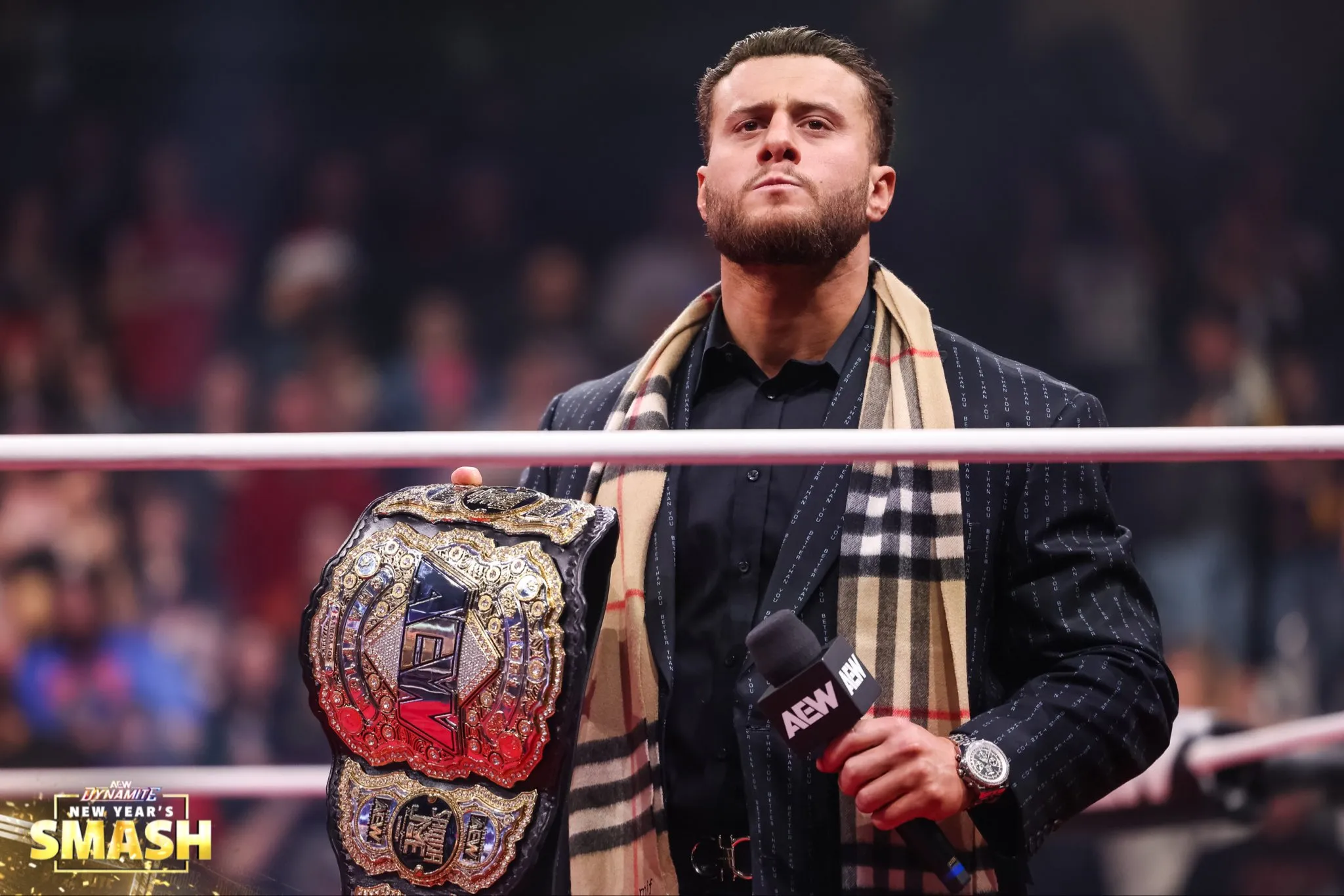
MJF is gone and the internet is losing its mind
3 days agoHang up the boots, big guy: It’s time to face the curtain
3 days, 3 hours agoLudwig Kaiser's legal nightmare just got a lot uglier
3 days, 15 hours agoMore Analysis
MJF is right about the hair match but the WWE shots are getting old
1 month, 3 weeks ago
Why MJF is the only reason to watch Double or Nothing this weekend
1 month, 4 weeks ago
Darby Allin is about to shave MJF's head at Double or Nothing
1 month, 3 weeks ago