The Rarity of the Main Event Stoppage
During the late 1990s, the percentage of pay-per-view main events stopped for legitimate head injuries was effectively zero percent. Wrestlers were expected to finish the match, regardless of their neurological state.
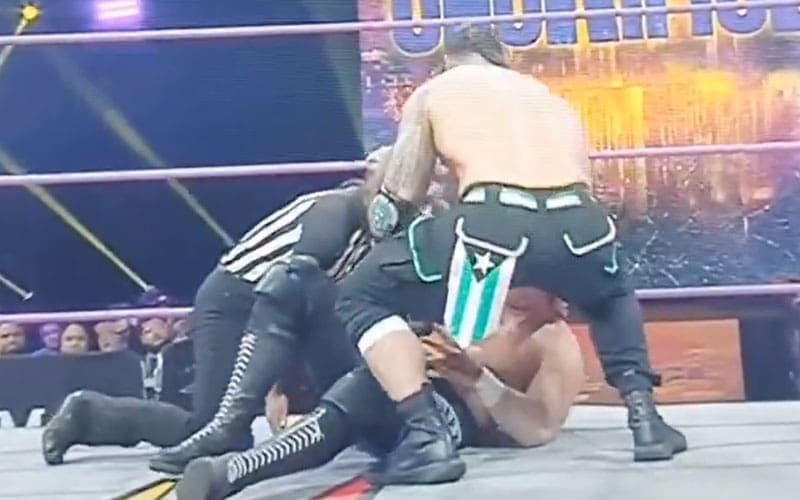
The main event of TNA Sacrifice 2026 didn't end with a pinfall. It didn't end with a submission. It ended with the referee crossing his arms in an 'X' and waving the match off.
Mike Santana versus Steve Maclin was supposed to be the violent crescendo of the night. Instead, it became a jarring reminder of the physical toll this industry demands. The bout was ruled a No Contest after Maclin was taken out mid-match.
As reports from F4WOnline quickly confirmed, Maclin likely suffered a concussion.
We are conditioned to expect a definitive finish. The phrase "the show must go on" is baked into the DNA of professional wrestling. But that mentality is actively changing, and this stoppage is the proof.
We all remember the stories. Mick Foley at King of the Ring 1998. The Rock and Triple H working through concussions. It was a badge of honour to drag yourself to the finish line.
Today, the calculus is entirely different. The industry has absorbed decades of medical data regarding Chronic Traumatic Encephalopathy. We have seen the protocols tighten significantly since the mid-2010s. Medical personnel are no longer just suggestions. They are the ultimate authority.
The Collision of Styles
You cannot separate the injury from the style. Steve Maclin and Mike Santana are both known for a heavy-hitting, uncompromising approach to their craft. They don't work light.
When you put two athletes with that particular velocity into a main event scenario, the risk multiplies. Modern wrestling demands a higher work rate. The bumps are faster. The impacts are harder. The margin for error is razor-thin.
Consider the physical demands. The average pay-per-view main event length in modern wrestling sits around the 22-minute mark. Fatigue is a massive factor. As a match stretches past 15 minutes, reaction times drop. A wrestler who is a fraction of a second late on a rotation or a catch is suddenly in a highly vulnerable position.
It takes roughly 60 to 90 Gs of linear force to cause a concussion in contact sports. A standard wrestling bump on a stiff canvas, if taken poorly or with whiplash, can easily generate dangerous force vectors.
It only takes a fraction of a second. A slightly misjudged angle on a suplex. A knee strike that connects a centimeter too high. The brain rattles against the skull, and the night is over.
The Singles Workload
We also have to look at the workload of the men involved. Mike Santana has spent the vast majority of his career as a tag team specialist. His transition to a singles main eventer changes the physical math entirely.
In a tag team match, a performer might spend 40 percent of the bout on the apron, recovering. The physical output is broken into manageable chunks.
In a singles main event, you are the focal point for every single second. There is no respite. There is no partner to tag when the lactic acid builds up or when a bump rattles your jaw. Santana's cardiovascular output and bump card have increased exponentially since he committed to this singles run. That fatigue is cumulative.
The same applies to Steve Maclin. Since arriving in TNA, Maclin has wrestled an incredibly physical style. He has carved out a niche as the company's resident brawler. But brawling takes a toll. The human body is a ledger, and every hardway shot, every stiff lariat, is an entry on the negative side.
The Burden on the Referee
The most vital observation here isn't about the wrestlers. It is about the officiating.
For years, referees were instructed to let the boys work it out. If someone was hurt, the opponent would stall, grab a chinlock, and wait for them to clear the cobwebs. That archaic system failed repeatedly.
Now, 100 percent of the responsibility in that immediate moment falls on the referee to make the split-second 'X' call. It is a massive burden.
Throwing the 'X' in a dark match is one thing. Doing it in the main event of a live broadcast, with a paying audience demanding a finish, requires immense professional courage. The referee at Sacrifice saw the impact. They saw Maclin's response. They didn't hesitate. They shut it down.
That is exactly what is supposed to happen. Yet, there is always a lingering frustration with TNA's production team in these moments.
When a legitimate injury occurs, the camera work often becomes chaotic. The broadcast scrambles, caught between trying to document the reality of the situation and trying to protect the performer's dignity. They still struggle to find the right balance between sports presentation and kayfabe protection during a crisis. This is a glaring weakness in their live execution.
The Changing Face of Sacrifice
Look at the history of the Sacrifice event itself. Historically, TNA used Sacrifice to blow off major feuds, often relying on extreme stipulations.
If we look back at the 2000s and 2010s, Sacrifice cards were littered with gimmick matches. Texas Death matches, Full Metal Mayhem, cage matches. The inherent danger was baked into the weapons and the environment.
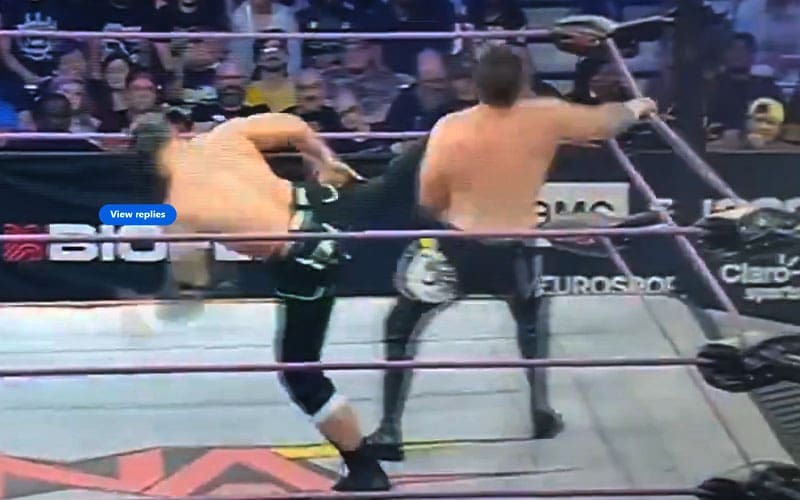
The Santana versus Maclin match was a straight wrestling bout. Yet, it resulted in a stoppage.
This highlights a counterintuitive finding in modern professional wrestling. The standard straight match has become so fast, so physically demanding, and so high-impact that it can carry a similar risk profile to a weapon-heavy brawl. You don't need a steel chair to cause a concussion. A standard back suplex on the ring apron, or a mis-timed dive to the floor, carries enough kinetic energy to cause severe neurological damage.
The ring canvas itself is not a soft landing. Beneath the thin layer of padding are wooden planks and steel crossbeams. A wrestler taking a flat back bump is essentially decelerating from a height of six feet directly into a solid surface. When fatigue sets in, the ability to tuck the chin and protect the brain stem is compromised.
The Television Metrics
We also have to consider the pressure of the broadcast. TNA Sacrifice 2026 was a major tentpole event for the company. The pressure to deliver a memorable main event is immense.
Wrestlers know the metrics. They know that audience retention drops if a match drags. They know that social media engagement spikes during high-risk spots. That underlying pressure often pushes performers to take risks they might otherwise avoid.
When a main event hits the 15-minute mark, the pace usually accelerates. This is exactly the window where injuries are most likely to occur. The body is depleted, but the narrative demands an escalation in violence.
F4WOnline reported the match was stopped mid-match. This implies it happened during that peak escalation phase.
A Necessary Disappointment
Nobody buys a ticket to see a medical stoppage. It is inherently unsatisfying.
The live crowd in the arena likely experienced a wave of confusion, followed by concern, and eventually, disappointment. The television viewer at home is left with a sudden, jarring cut to the commentators trying to fill time while maintaining a somber tone.
Despite the awkward television presentation, the core action was correct.
The immediate aftermath of a concussion is often a fog. But Maclin's response has been characteristically intense. As Ringside News noted, Maclin quickly broke his silence with a defiant message. He also took the time to thank the fans for their support, as reported by PWInsider.
This is the dichotomy of the modern wrestler. They understand the risks, but the drive to perform remains overwhelming. Maclin's defiance isn't surprising. It is expected.
But defiance does not clear you for in-ring competition. There is no negotiating with a brain injury. Maclin will have to pass baseline neurological testing. He will have to prove he is symptom-free at rest, and then symptom-free under exertion.
A No Contest in a main event is a statistical anomaly. Over the last five years of major North American promotions, fewer than 2 percent of main events end in a referee stoppage due to legitimate injury.
It deflates the live crowd. It leaves the television audience confused. But it is an absolute necessity.
TNA management made the right call at Sacrifice. Stopping a main event is a terrible feeling for a promoter. It ruins the planned narrative. But it saves lives. We are long past the era of the 'tough guy' working through a concussion. The fact that Mike Santana versus Steve Maclin was stopped is not a failure of the event. It is a massive success for wrestler safety.