Sol Ruca's match with Becky Lynch will expose her flaws or make her a star
The spotlight of network television returns
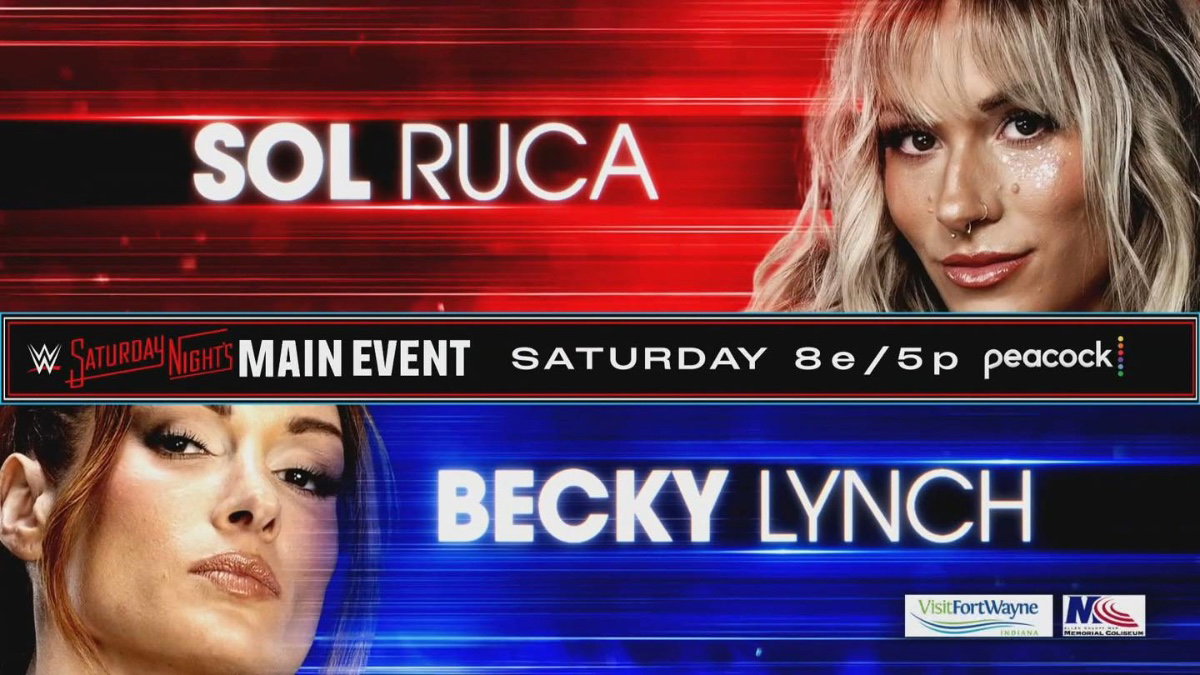
Tomorrow night, WWE revives Saturday Night's Main Event on network television. This is not just another premium live event or a standard cable broadcast. Returning to NBC brings a completely different pressure cooker than a standard episode of Monday Night Raw. The pacing is significantly tighter. Commercial breaks dictate the flow of the match rigidly.
The casual audience tuning in is massive, and they do not possess granular knowledge of NXT storylines from the past two years. They want immediate, recognizable star power.
Into this absolute crucible steps Sol Ruca. The 26-year-old athletic phenom is scheduled to face Becky Lynch in what looks, on paper, like a classic veteran-versus-rookie showcase. But look closer at the booking patterns of the Paul Levesque era. You quickly realize this isn't just a basic showcase. It is a severe examination of a prospect who has been fast-tracked.
Ruca recently spoke to the media, admitting she is "definitely nervous" ahead of the May 23 match. She praised Lynch as "incredible" in the process. That vulnerability is endearing outside the ropes. It fits perfectly with her laid-back, surfer-adjacent babyface persona. Fans naturally want to cheer for the humble rookie who respects the legends.
But in the ring, nerves translate to rushed sequences. They lead to blown spots, heavy breathing, and a failure to let the live crowd breathe. Lynch is the ultimate ring general for this exact scenario. She will test Ruca's timing, her physical stamina, and her ability to tell a cohesive story under the brightest lights possible.
The Sol Snatcher problem
We need to talk about the Sol Snatcher. Ruca's springboard backflip cutter is undeniably spectacular. When she first debuted it in NXT, it lit up social media algorithms immediately. It marked her as a blue-chip prospect and practically forced management to accelerate her push.
But relying on a hyper-athletic, highly cooperative finisher is a dangerous trap in professional wrestling. It requires precise positioning from the opponent. It takes far too much time to set up organically.
Most importantly, it creates a massive structural issue in match psychology. If the audience is just sitting on their hands waiting for the Sol Snatcher, the preceding 12 minutes of grappling feel entirely irrelevant.
This has been the glaring flaw in Ruca's main roster transition. Her athleticism is top-tier. She rivals Tiffany Stratton and Kelani Jordan in pure physical ability. However, her offensive transitions remain clunky and heavily rehearsed. When she works from underneath, her selling often lacks genuine desperation.
She takes a beating, hits a sudden explosive counter, and instantly resets her facial expressions. The connective tissue of a professional wrestling match is still missing from her repertoire. The agonizing struggle, the targeted limb work, the gradual escalation of violence — these elements are entirely absent. Lynch is the perfect opponent to either expose this flaw brutally or help her fix it in real-time.
Lynch as the final boss of the division
Think back to Lynch's recent runs and her stint with the NXT Women's Championship. She went down to the Performance Center with a distinct, aggressive purpose. It was not just to pop a television rating for a Tuesday night. She went to drag the next generation into incredibly deep waters.
Lynch worked methodical, grinding matches with Lyra Valkyria and others. She forced younger talent to adapt to a main-event style. She operates heavily on character work, relentless trash talk, and joint manipulation. Her offense is built entirely around the Dis-Arm-Her and wearing down her opponent's upper body.
This means she will spend significant portions of tomorrow's match actively grounding Ruca. She will isolate the arm and dictate a slow, suffocating pace. This nullifies the high-flying sequences that Ruca relies on. If Ruca tries to speed things up unnecessarily, Lynch will simply drag her right back to the mat with a headlock takeover or a stiff lariat.
The veteran's approach is highly deliberate. She is evaluating Ruca in real-time under the bright lights. Can Ruca sell an arm injury while executing a springboard maneuver? Can she register the pain in her eyes when Lynch locks in a deep submission? Does she abandon the selling the exact moment it is time to hit her signature comeback sequence?
These are the micro-details that separate mid-card athletes from actual main event draws. You cannot flip your way to the top of the card forever. Eventually, you have to work a 20-minute broadway where the narrative carries the physical exertion.
The reality of the Performance Center pipeline
Ruca’s collegiate background is a major factor in her current development stage. She competed in acrobatics and tumbling at the University of Oregon. That background grants her elite spatial awareness inside the squared circle. She knows exactly where her body is at all times, which makes her aerial offense incredibly safe.
But there is a massive difference between executing a gymnastics routine and working a professional wrestling match. The Performance Center pipeline produces incredible athletes by the dozen. Yet, it frequently struggles to produce organic ring generals who can call a match on the fly.
We see this constantly with modern NXT call-ups. They hit their marks perfectly. They perform their flips with flawless, textbook technique. But their eyes are totally blank. They are actively thinking about the next step in the sequence rather than reacting to the living, breathing opponent in front of them.
Ruca also had to recover from a devastating ACL tear during her NXT run. Returning from a major knee injury requires intense psychological rehabilitation. You have to trust the surgically repaired knee when springing off the middle rope. If she second-guesses a springboard tomorrow night against Lynch, the margin for error vanishes entirely. She could easily injure herself or spike Lynch on her head.
A glaring failure in main roster booking
We must also address the glaring negative in WWE's handling of this specific situation. The booking strategy for NXT call-ups under Paul Levesque has been heavily flawed in recent months. The transition from developmental to the main roster is jarring and poorly paced.
Talent arrives on Raw or SmackDown and receives a brief, heavily protected undefeated streak. They beat enhancement talent or lower-card workers in three minutes. Then, abruptly, they hit a brick wall against an established, main-event star. There are rarely any transitional feuds to test their endurance or build their character depth.
Ruca has been protected heavily since her call-up. Throwing her into a high-profile singles match against Lynch on network television is an abrupt and dangerous escalation. It is lazy booking. WWE is bypassing the necessary mid-card struggles that build actual connection with the audience. They are throwing her into the deep end without a life vest.
If this match fails to deliver, the blame will inevitably fall on Ruca. But the stark reality is that creative failed to prepare her for this moment. They relied entirely on her viral highlights instead of giving her a meaningful, gritty storyline to sink her teeth into over the past two months.
Clashing styles and physical mechanics
Tomorrow's bout presents a fascinating stylistic clash. Lynch is a cerebral, gritty brawler. Her strikes are stiff, her movements are calculated, and she reads the crowd masterfully. Ruca is explosive, kinetic, and deeply reliant on constant forward momentum to generate offense.
A significant portion of Ruca's offense involves bouncing off the ropes. She utilizes the turnbuckles heavily to gain an athletic advantage. Lynch, however, excels at cutting off the ring and minimizing physical space. We can expect a specific sequence where Ruca attempts a springboard attack, only to be caught abruptly mid-air.
Lynch could easily swat her down with a European uppercut. She could drag her straight down into a Fujiwara armbar the moment her feet hit the canvas. The psychology writes itself instantly. The hardened veteran grounds the impulsive, flashy rookie.
Lynch's use of the Manhandle Slam is another massive variable. It is a sudden, high-impact maneuver that requires significantly less setup than Ruca's offense. Lynch can hit it out of nowhere, countering a simple waist-lock or a desperate charge. Ruca, conversely, requires spatial setup. She needs the ropes. She needs the corner. She needs the distance. This spatial disadvantage means Ruca must dictate the geography of the ring. If she gets trapped in the center, she loses.
Here is the critical failure point for WWE's recent agenting of these types of matches. Too often, producers force the veteran to wrestle at the rookie's frantic pace. This turns the bout into a mindless spotfest rather than a valuable learning tree.
If Lynch is instructed to simply stand awkwardly in the middle of the ring and wait to catch Ruca for a flip, the match will be a complete disaster. The beauty of this pairing lies entirely in the inherent struggle. Ruca should have to fight desperately just to create enough distance to climb the ropes.
Every aerial attempt should feel earned through sweat and blood. If the agents handle this poorly, we will get a disjointed sequence of rehearsed choreography. It has happened before with Ruca in multi-woman matches. Her timing occasionally feels completely disconnected from the organic flow of the bout.
The corporate stakes for Saturday Night
Consider the lineage of Saturday Night's Main Event. This was the exact stage where legends cemented their drawing power in the 1980s. Hulk Hogan, Randy Savage, and Jake Roberts used this specific broadcast format to reach millions of viewers who never rented a pay-per-view.
The stakes are identical today. The broadcast is NBC's way of testing WWE's current roster depth. If a match like Lynch versus Ruca loses viewers, the executives notice. The pressure is not just internal; it is completely corporate.
For Ruca, admitting her nerves is an honest first step. Channelling that nervous energy into a gritty, believable physical performance is the actual test. She does not need to win this match to succeed. A clean, decisive loss where she pushes Lynch to the absolute physical limit does far more for her trajectory than a fluke victory.
A sudden roll-up victory protects the veteran but robs the rookie of a definitive, star-making performance. She needs to show the audience that she is more than a fleeting social media highlight. She needs to demonstrate that she can suffer, fight from underneath, and survive a severe beating.
Lynch will give her absolutely nothing for free. Every near-fall will be violently contested. Every submission attempt will be snug and punishing. Ruca has to prove she belongs in the main event picture right now.
If she fails, she risks being pigeonholed forever. She will become a highly athletic novelty act. She will be the mid-card attraction brought out to do a cool flip before losing to the actual stars.
Tomorrow night, the bell rings. The nerves must vanish immediately. The Sol Snatcher might generate the loudest pop of the night. But what happens in the grueling 15 minutes before she hits it will dictate the entire future of her career.
Frequently Asked Questions
When is Sol Ruca wrestling Becky Lynch?
What is Sol Ruca's finishing move?
Why is the match against Becky Lynch a major test for Sol Ruca?
What are Sol Ruca's biggest weaknesses in the ring?
How has Sol Ruca reacted to her upcoming match with Becky Lynch?
More Coverage

Big E nearing WWE return following neck injury evaluation
6 minutes ago
Sheamus hitting the indies is still a waiting game
33 minutes ago
Sheamus faces Drew McIntyre on Raw with his WWE contract ticking down
an hour ago
Top 10: Defining Moments in Recent Wrestling History
an hour agoRicochet to AEW rumors gather steam ahead of major TV pivots
2 hours ago
Creative shifts and the Triple H era: A post-McMahon reality check
2 hours agoMore Analysis

Why Sol Ruca faces a high-stakes fitness test at Saturday Night's Main Event
1 month, 3 weeks ago
Sol Ruca's spectacular style is putting her joint history to the test
1 month, 3 weeks ago
Sol Ruca is the most dangerous wildcard in the Becky Lynch feud
2 months, 2 weeks ago
The brutal math behind Sol Ruca challenging Becky Lynch
2 months ago
Becky Lynch and Sol Ruca are about to define WWE's summer roadmap
1 month, 3 weeks ago