Going Back to the Roots
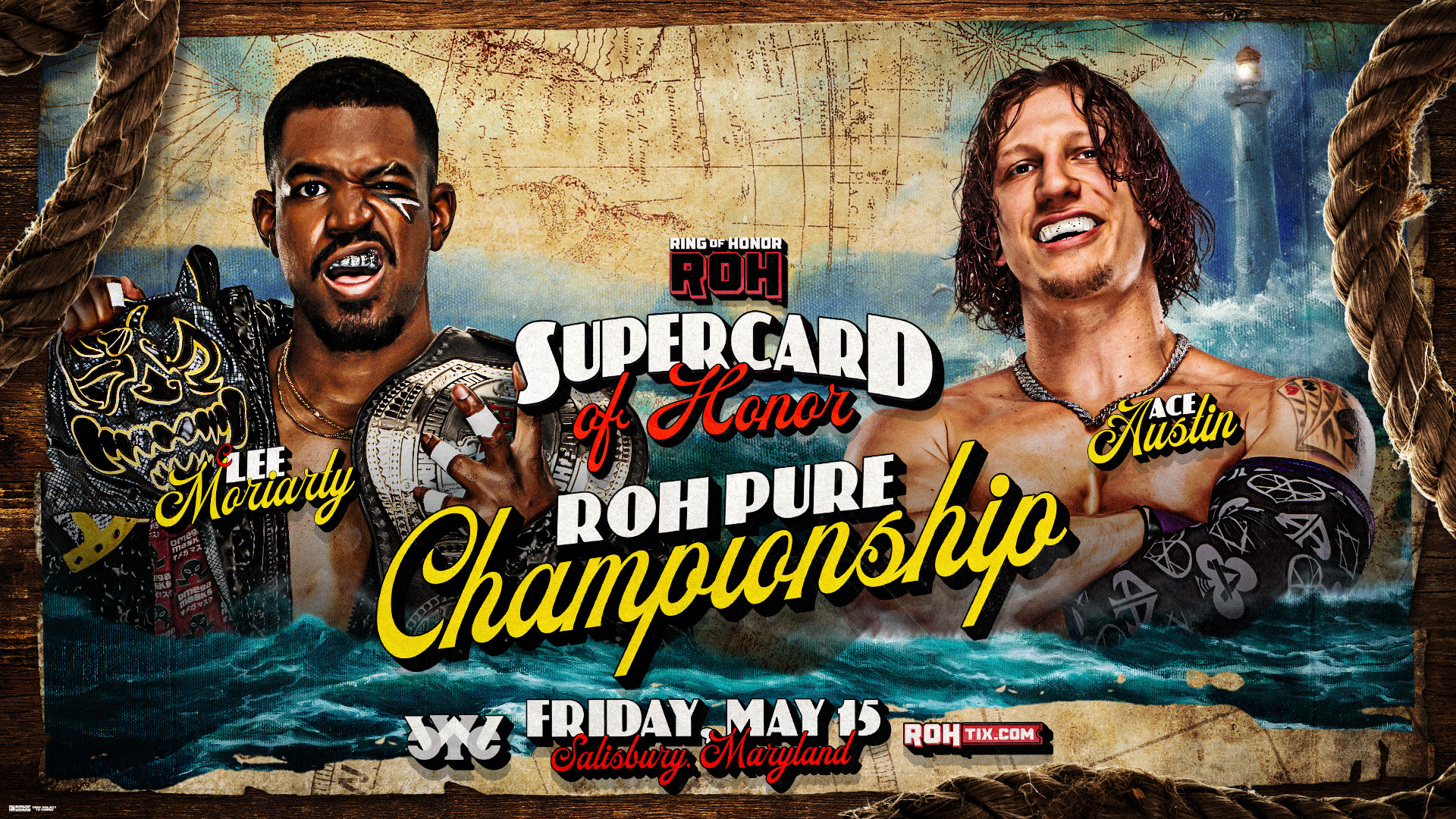
Ring of Honor is packing its bags and heading to Maryland for Supercard of Honor. As PWInsider confirmed the location, the stage is set for one of the promotion's most important nights. For longtime fans, Maryland carries heavy historical weight. It was the nerve center during the Sinclair broadcasting era.
Now, under Tony Khan's ownership, returning to this territory feels like a deliberate nod to the past. But nostalgia only sells so many tickets. The reality is that this roster needs a massive spark. The weekly TV product on HonorClub has moments of brilliance, but it often lacks the urgency of a live pay-per-view build.
Supercard of Honor has to deliver on the in-ring promise that built the three letters. The fans in Baltimore and the surrounding areas do not accept lazy efforts. They expect hard-hitting, technically sound grappling. If the roster treats this like a standard television taping, the crowd will turn on the main event within five minutes.
Roster Form Guide and Tactics
Let's talk about the form guide. Athena has been the undeniable anchor of this brand. Her run as ROH Women's World Champion has been a masterclass in aggressive, grounded offense. She doesn't just wrestle; she dismantles opponents with calculated strikes and brutal submission transitions.
Her tactical approach is fascinating to watch unfold. Athena targets a limb early, usually the left arm or shoulder, and spends twenty minutes systematically breaking it down. Her O-Face finisher is the highlight reel moment, but the real damage happens on the mat. Any challenger stepping up in Maryland is going to face a steep uphill climb.
Then there is Mark Briscoe. You cannot discuss Ring of Honor without saying his name. He represents the soul of the company. His recent performances have shown a slight shift in style, relying more on striking exchanges and brawling rather than high-impact dives, preserving his body while maintaining that chaotic energy.
If Mark finds himself in a high-stakes match in Maryland, expect the crowd to treat it like a religious experience. The Redneck Kung Fu will be on full display. Opponents trying to out-grapple him usually end up catching a sudden lariat that resets the tempo entirely.
The tactical preview for the rest of the card looks heavily dependent on the pure wrestling division. The Pure Rules format remains ROH's best differentiator. With exactly three rope breaks allowed per wrestler, the entire psychology of the match changes. It forces workers to actually wrestle instead of spamming spots.
When you watch a Pure Rules match, you are watching a chess game. Guys like Wheeler Yuta or Lee Moriarty excel here. They use the rope breaks offensively, baiting opponents into burning theirs early. Once a wrestler is out of rope breaks, the middle of the ring becomes an inescapable trap.
The Glaring Problem
The tag team division, however, needs CPR. This is my biggest issue with the current iteration of Ring of Honor. The tag division used to be the lifeblood of this promotion. The Briscoes, ReDragon, The Young Bucks—they defined a generation of tag team wrestling.
Today? It feels like an absolute afterthought. Teams are thrown together haphazardly. There is no sustained narrative focus on tag team excellence. If Tony Khan wants this Maryland show to feel like a true Supercard, he needs to book a tag team match that actually means something. Stop relying on impromptu pairings.
Let's look at the broader roster news. Injuries and AEW call-ups have constantly shuffled the deck. This creates a volatile environment. You never quite know who is going to show up on an HonorClub taping. While that unpredictability can be fun, it makes long-term storytelling incredibly difficult.
Maryland fans are smart. They know when they are being handed a filler card. The matches need to be built on personal animosity, not just respect and handshakes. We need promos that bite. We need segments that end in genuine chaos.
Tactical Expectations for the Undercard
Consider the pacing of the typical pay-per-view. They are marathons. Supercard of Honor usually runs a tighter ship, and that needs to remain the case. A four-hour show with zero breathing room exhausts the live crowd. Keep it tight. Give the main event thirty minutes to breathe.
The technical matchups are where this show will live or die. I want to see chain wrestling that doesn't look choreographed. I want to see struggle. When a wristlock is applied, the defender shouldn't just flip out of it cleanly every time. Make it look like a real fight.
Let's dive deeper into the potential main event scene. Eddie Kingston's legacy with ROH is complicated, but his presence elevates everything. If Kingston is on the card, the emotional stakes skyrocket. His strikes aren't pretty, but they look like they hurt, which is exactly the point.
Kingston's Uraken spinning backfist isn't a flashy maneuver. It's a blunt force instrument. He throws it when he's exhausted, relying on momentum and grit. Against a technical wizard, that clash of styles is exactly what Supercard needs.
The venue in Maryland will play a huge factor. Depending on the size of the arena, the acoustics can completely change the viewing experience. An intimate, low-ceiling venue traps the noise. It makes every chop echo. That environment forces the workers to hit harder.
We also have to talk about the refereeing. In ROH, the officials are usually given more leeway to enforce the rules, especially in Pure matches. Paul Turner and the crew need to be strict. If you let the rules slide, you lose the entire identity of the brand.
A Crossroads for the Brand
What happens if the card underdelivers? The critics are already circling. The narrative that ROH is just AEW Dark with belts is loud and growing louder. This Maryland show is the perfect opportunity to kill that narrative permanently. Book matches that could never happen on Dynamite.
Give us thirty minutes of uninterrupted grappling. Give us a blood feud that ends in a dog collar match. Give us something distinct. If the show is just a collection of good matches with no overarching theme, it will be completely forgotten by the time the next AEW event rolls around.
Let's focus on the midcard. The TV title picture has historically been the workhorse division. The champion needs to be someone who can wrestle a different style every week. You defend against a luchador one week, a brawler the next. It requires incredible versatility.
Whoever holds that TV title heading into Maryland has a target on their back. The tactical approach to a TV title match is fascinating. With a strict time limit, usually capping at 15 minutes for regular TV bouts, the pacing is frantic. You can't spend five minutes feeling each other out.
The challenger has to push the pace immediately. We often see sprint matches in this division, where both competitors burn their energy reserves in the first five minutes. It creates a breathless, desperate atmosphere that is completely different from the World title picture.
I am expecting a lot of high-angle suplexes. The sheer physicality of the ROH midcard is demanding. German suplexes, Dragon suplexes, half-and-half variations. The neck bumps are terrifying, but they pop the crowd. The key is knowing exactly when to deploy them.
A suplex shouldn't just be a transition move. It needs to be a momentum shifter. If a wrestler gets caught in a strike exchange and is losing ground, a desperation German suplex can instantly reset the board. That's the kind of ring psychology I want to see in Maryland.
The International Equation
Let's not forget the international flavor. ROH has always been a gateway for Japanese and Mexican talent to showcase their skills in the US. A Supercard of Honor isn't complete without a representative from NJPW or CMLL stepping through the curtain.
Here is what makes an international invasion work on an ROH card:
- A clash of styles that forces American talent out of their comfort zone.
- High-stakes matchups with zero interference or overbooking.
- Clean finishes that establish a clear pecking order.
A CMLL luchador brings a completely different rhythm to the match. The arm drags, the complex pinning combinations—it forces the American talent to adapt. If they try to wrestle a standard US indie style against a CMLL veteran, they will look slow and foolish.
The key to countering lucha libre is grounding. You have to take out the legs. A smart tactician will immediately start attacking the knee with dragon screws and targeted stomps. If the luchador can't jump, their entire offensive arsenal is completely neutralized.
That's the kind of tactical warfare we demand from Ring of Honor. It's not just about hitting your spots; it's about solving a physical puzzle in real-time. The Maryland crowd will respect that. They will heavily boo a lazy performance, but they will stand and applaud a smartly wrestled match.
Final Prediction
My confident prediction for the event? We are going to see a massive title change that shakes up the entire promotion. The current holding pattern simply cannot last. Someone is going to step up in Maryland, deliver a career-defining performance, and force Tony Khan to push them on the main AEW programming.
I'm betting on a breakout performance in the Pure division. We will see a match that goes Broadway—a full time-limit draw—that steals the entire show. A grueling, technical masterpiece that leaves both men exhausted and the crowd screaming for five more minutes.
That is exactly what Supercard of Honor is supposed to be. It is the ultimate proving ground. It is the night where reputations are forged in the fire of high expectations. Maryland is getting a major event, and the locker room knows exactly what is at stake.
The pressure is entirely on the booking committee right now. You have the talent. You have the historic location. Do not overcomplicate this. Put your best workers in the ring, ring the bell, and let them remind everyone why Ring of Honor was once the most important independent promotion in the world.