A wild story with grim physical implications
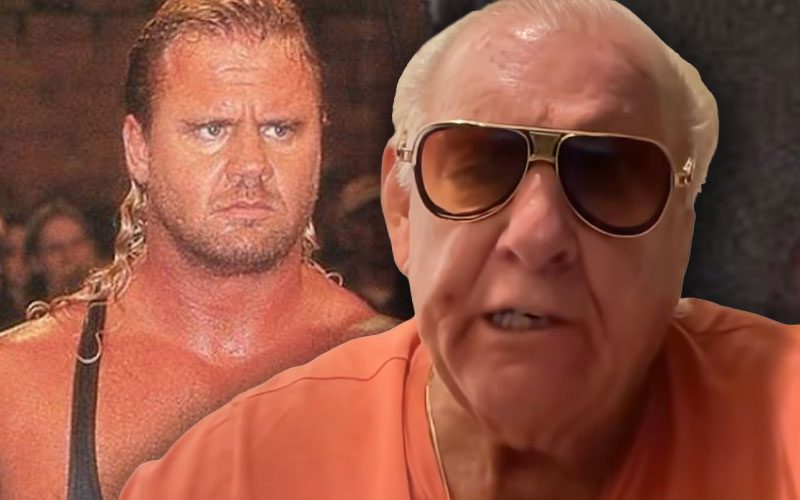
Ric Flair just dropped another vintage road story. It features missing jewelry, late-night chaos, and Curt Hennig. On the surface, it reads like typical wrestling folklore from a bygone era. Ringside News reported the broad strokes this week: Flair claims Hennig "roofied" him during a wild night out. The event allegedly ended with the Nature Boy missing three Rolex watches.
Fans usually eat these stories up. They fit the mythological framing of the 1980s and 1990s locker rooms. Performers operating entirely outside normal societal boundaries. But from a medical perspective, the casual admission of non-consensual drugging is alarming. It sheds a harsh light on the severe physiological dangers wrestlers routinely faced away from the ring.
The science behind the blackout
Flair used the term "roofied". In medical toxicology, this usually points to Rohypnol (flunitrazepam) or similar potent benzodiazepines. These are central nervous system depressants. They do not just put you to sleep. They actively shut down specific neurological functions.
When a drug like that enters the system of an elite athlete, the reaction is unpredictable. The primary danger is respiratory depression. The central nervous system slows down, heart rate drops, and breathing becomes shallow.
Flair was notorious for heavy alcohol consumption. Mixing a high volume of ethanol with a potent benzodiazepine creates a massive multiplier effect. It is a lethal combination treated as a top-tier emergency in hospitals today.
Alcohol alone depresses the nervous system. Adding a sedative strips away the body's natural defense mechanisms. The gag reflex disappears. Aspiration—choking on one's own vomit—was a very real threat for performers passed out in hotel rooms during this era. The fact that Flair simply woke up is fortunate. Many individuals facing that specific pharmacological cocktail never do.
Neurological trauma and missing time
The loss of three Rolex watches is the punchline of Flair's anecdote. The actual medical reality behind that loss is anterograde amnesia.
Drugs in the Rohypnol family block the brain's ability to transfer short-term memories into long-term storage. The person might remain semi-conscious or compliant. They are capable of walking or handing over expensive watches. However, the hippocampus is essentially offline.
This is not a severe hangover. It is a chemically induced brain injury, temporary but profound. The brain's encoding process gets interrupted by the suppression of neurotransmitters. Flair waking up without his property, and without the memory of how he lost it, is the textbook clinical presentation of this chemical exposure.
A culture lacking medical oversight
It is jarring to hear these incidents recounted as humorous road tales. It highlights the total lack of medical oversight in the business during Hennig and Flair's prime.
Today, a performer reporting they had been drugged triggers an immediate medical protocol. WWE and AEW employ dedicated medical staffs. Blood panels get drawn. Neurological baselines get checked.
Back then, the standard protocol was to wake up, find your gear, and drive to the next town. There was no wellness policy. There were no concussion protocols. There certainly were no toxicology screens following a night at the bar.
Wrestlers carried massive amounts of muscle mass, often fueled by their own questionable chemical enhancements. Introducing unknown sedatives into that mix meant playing Russian roulette with the cardiovascular system.
The physical baseline of the 1990s wrestler
To truly understand the danger, look at the baseline physical condition of a professional wrestler back then. These athletes worked 300 days a year. Their bodies lived in a constant state of inflammation. Muscle tissue was perpetually torn. Joint degradation was universal.
To manage this, many relied on a steady stream of over-the-counter anti-inflammatories, prescribed painkillers, and alcohol. When you introduce a powerful sedative into that specific environment, the risks multiply exponentially.
The liver already works overtime to process the alcohol and pain medication. Adding a drug like flunitrazepam forces the hepatic system to filter a complex chemical load it is completely unprepared for. This leads to acute hepatotoxicity. The liver struggles to metabolize the compounds, causing a rapid buildup of toxins in the bloodstream.
The danger of the delayed half-life
The physical demands of the job require precise motor control and kinesthetic awareness. In the ring, a fraction of a second is the difference between a safe landing and a broken neck. The half-life of many "roofie" style drugs extends well beyond the initial period of unconsciousness.
Even if Flair woke up, realized his watches were gone, and felt coherent, his central nervous system remained suppressed. His reaction times were blunted. His peripheral vision and spatial awareness were heavily compromised.
Stepping into a wrestling ring 24 hours after an acute sedative exposure is incredibly reckless. It endangers not just the drugged performer, but their opponent. Trust forms the foundation of every match. A wrestler cannot trust a partner whose neurological responses operate on a severe delay due to lingering chemical interference.
The lingering effects of the party era
Fans look at the mortality rates of professional wrestlers from that generation and often point to steroids or pain pills. Those were undeniable factors. The structural damage to knees, necks, and backs forced many into dependency.
But the lifestyle itself was a constant physical trauma. Sleep deprivation wrecks the endocrine system. Heavy drinking destroys the liver. Nights involving unknown sedatives push the body right to the edge of organ failure.
Curt Hennig possessed a reputation as a legendary prankster. Ribbing was the primary currency of the locker room. But the line between a prank and a medical emergency was virtually non-existent.
Slipping a drug into a drink is a massive physiological assault. It bypasses the liver's initial filtration and hits the brain hard. The historical context of the industry during this period is genuinely grim. We lost an entire generation of performers to heart failure, accidental overdoses, and compounding physical trauma. The stories told with a laugh today are often just the near-misses. They are the times the dice rolled favorably and the performer woke up.
Curt Hennig himself passed away tragically in 2003 at the age of 44. His passing remains a stark, brutal reminder of the reality behind the mythology. The substances that fueled the jokes ultimately claimed one of the greatest in-ring technicians the business has ever seen.
Redefining the locker room survivor
Flair’s casual recounting of the story ignores this dark reality. It frames a dangerous chemical assault as a boys-will-be-boys prank. It functions as a coping mechanism for an era that demanded inhuman resilience from its stars.
Flair survived that era. He survived a plane crash. He survived a ruptured appendix and severe kidney failure much later in life. His physical resilience remains an absolute anomaly.
But we have to stop looking at these stories simply as wild myths. They serve as direct case studies in extreme physical abuse. The missing Rolexes are just a footnote.
The real story is the staggering amount of chemical trauma these men subjected themselves to, often without realizing how close they were to the breaking point. A story about a wild night out is really a story about surviving an acute toxicological event without any medical intervention.
The modern era looks completely different. The locker rooms are quiet. Video games replaced hotel bar benders. Some veterans lament the loss of the wild days.
But from a medical standpoint, the death of the party era stands as the best thing that ever happened to the physical health of the professional wrestler. If a similar incident occurred today, it would not be a funny story on a podcast twenty years later. It would be a police matter. It would involve immediate medical evaluation, IV fluids, and strict monitoring of vital signs. The performer would be pulled from the road instantly.
There is no return timeline to report here, as this is a historical event. But the broader impact of normalizing these stories remains a significant problem. It skews our understanding of what these athletes survived. They were not just tough guys having fun. They were individuals enduring constant, unmonitored physical and chemical stress. Flair's casually dropped anecdote about Hennig proves that the most dangerous moments of a wrestler's life almost always happened after the bell rang.