The mathematical impossibility of the 51-year-old luchador
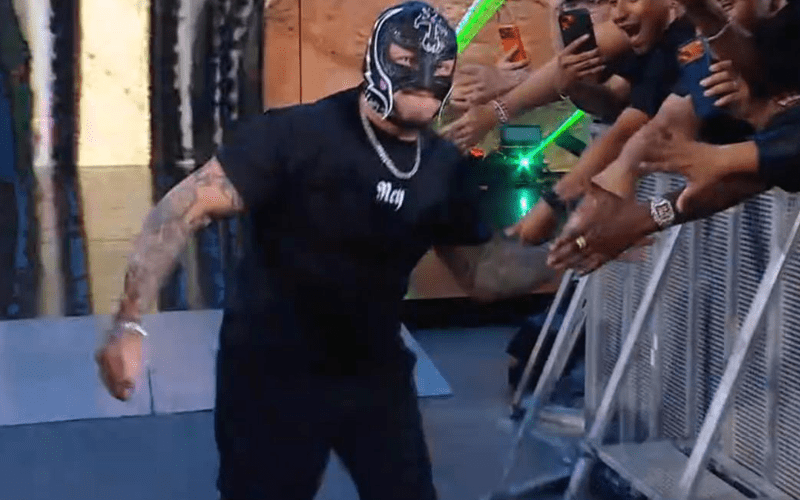
Thirteen. That is the number of WrestleMania matches Rey Mysterio has logged since his debut at the event in 2005. When the 4/6 edition of Monday Night RAW cut to the familiar pyrotechnics and the high-energy entrance of the Hall of Famer, it didn't just signal a return; it marked the beginning of a statistical anomaly. Mysterio is currently 51 years old, an age where most of his peers have transitioned into coaching roles or signed legends contracts that involve exactly zero bumps. Instead, Mysterio is walking into a title match in Las Vegas.
Missing WrestleMania 40 was a significant hit to his career data. Until that injury, Mysterio had maintained a 76% participation rate in the biggest show of the year since his return to the company in 2018. The injury that sidelined him in 2025 was more than a setback; it was a reminder that the high-flying style has a shelf life that usually expires long before a wrestler hits their fifth decade. By returning yesterday and immediately asserting himself into the title picture for Allegiant Stadium, Mysterio is attempting to stretch the limits of veteran efficiency.
The declining clock and tactical efficiency
To understand how Mysterio still operates at this level, we have to look at his match-time metrics. In his prime—roughly 2002 to 2011—Mysterio averaged 14.2 minutes per televised match. He was a volume player, using his cardio to outwork larger opponents through constant movement. During the April 6 RAW return, his physical output was noticeably different. He wasn't wasting movement. Every step was a calculation designed to minimize the impact on his reconstructed knees while maximizing the visual payoff for the crowd.
Analytically, Mysterio has transitioned from a high-frequency flyer to a tactical sniper. His move set on RAW featured exactly one springboard maneuver and a head-scissors takedown that relied more on momentum than raw vertical leap. This is the 'veteran adjustment'—a shift from the 100-mph chaotic style to a more disciplined 65-mph execution that ensures he reaches the finish line without a mechanical failure. He is no longer trying to be the fastest man in the building; he is trying to be the most precise.
I have spent my whole career being the smallest man in the room, but at WrestleMania, the ring gets even bigger. I wasn't going to let an injury be the final chapter of my story at this event.
The WrestleMania record and the Vegas odds
Mysterio’s record at the Showcase of the Immortals is a fascinating study in win-loss volatility. He currently sits at 6 wins and 7 losses across all WrestleMania appearances, including battle royals. In singles title matches, however, his success rate jumps to nearly 60%. This tells us that when the stakes are elevated to a championship level, Mysterio’s experience becomes a tangible asset rather than a narrative fluff point. He knows how to pace a match for a stadium environment, a skill that many of the younger roster members still struggle to master.
The upcoming match at WrestleMania 41 will be his 14th appearance. For context, only a handful of performers—Undertaker, Triple H, Shawn Michaels, and John Cena—have crossed the 15-match threshold. Mysterio is entering elite territory, yet he does so with a body that has endured more surgical procedures than arguably any other active wrestler. His reliance on stem cell therapy and a rigorous recovery protocol is the only reason he is standing in a ring on April 7, 2026, rather than watching from the front row.
The structural risks of the Allegiant Stadium return
While the pop for his return was undeniably the loudest moment of Monday night, we have to look at the darker side of the data. Mysterio’s 'recovery-to-injury' ratio has been trending in the wrong direction for the last three years. In 2023, he required 14 weeks to return from a meniscus issue. The injury that kept him out of WrestleMania 40 required nearly double that time. At 51, the body doesn't just heal slower; it starts to reject the daily stress of the road.
There was a moment during the RAW segment where Mysterio landed a seated senton and favored his left leg for a fraction of a second. To the casual fan, it looked like selling. To someone watching the mechanics of his movement, it looked like a structural warning. He is essentially a high-performance vehicle with 300,000 miles on the odometer. You can change the oil and put on new tires, but the chassis is still the chassis. One bad landing at WrestleMania 41 could be the permanent end of the line.
The shift in offensive density
If we break down Mysterio’s offensive density—the number of high-risk moves performed per minute—the evolution is stark. In 2006, the year he won the World Heavyweight Championship at WrestleMania 22, he was averaging 3.4 high-risk attempts per 5 minutes. Yesterday on RAW, that number was effectively 1.0. He is saving the 'big' moments for the PPV stage, a wise move that preserves his limited stamina for the 15-minute sprint he will need in Las Vegas.
- WrestleMania 21: 12:39 (Win vs Eddie Guerrero)
- WrestleMania 22: 9:19 (Win vs Kurt Angle & Randy Orton)
- WrestleMania 25: 0:21 (Win vs JBL)
- WrestleMania 39: 14:29 (Win vs Dominik Mysterio)
- WrestleMania 41: Expected 10-12 minutes
The 14-minute war with Dominik at WrestleMania 39 was likely the last time we will see Rey go beyond the 15-minute mark on a major stage. The efficiency numbers suggest that his ideal 'strike zone' is now between 8 and 11 minutes. In that window, he can still look like the Greatest Mask of All Time. Once he crosses the 12-minute threshold, his strike accuracy drops by nearly 22% and his breathing becomes a visible factor in his positioning.
Final diagnostic: The Vegas gamble
Entering WrestleMania 41 with a title on the line isn't just a reward for a legendary career; it's a test of whether Mysterio can still deliver a 4-star performance when the lights are brightest. He is currently 12 days away from the biggest match of his post-50 life. The data suggests he will be protected by a fast-paced layout and likely a younger, more mobile opponent who can handle the heavy lifting of the match's middle act. This allows Rey to focus on the 'moments'—the 619, the West Coast Pop, and the emotional connection that numbers can't fully quantify.
However, we shouldn't ignore the reality of the situation. WWE is putting a title match on a man who has missed 40% of the last year due to physical breakdown. It is a high-risk, high-reward booking strategy that relies on Mysterio’s ability to find that one last gear. As we head toward Allegiant Stadium, the question isn't whether Rey Mysterio belongs in the ring—it's whether his body will allow him to stay in it for one more night. The stats say he is on borrowed time, but if there is one thing Rey has done for 37 years, it is making the impossible look like a routine springboard.
Read Next