The tactical shift in the heavyweight division
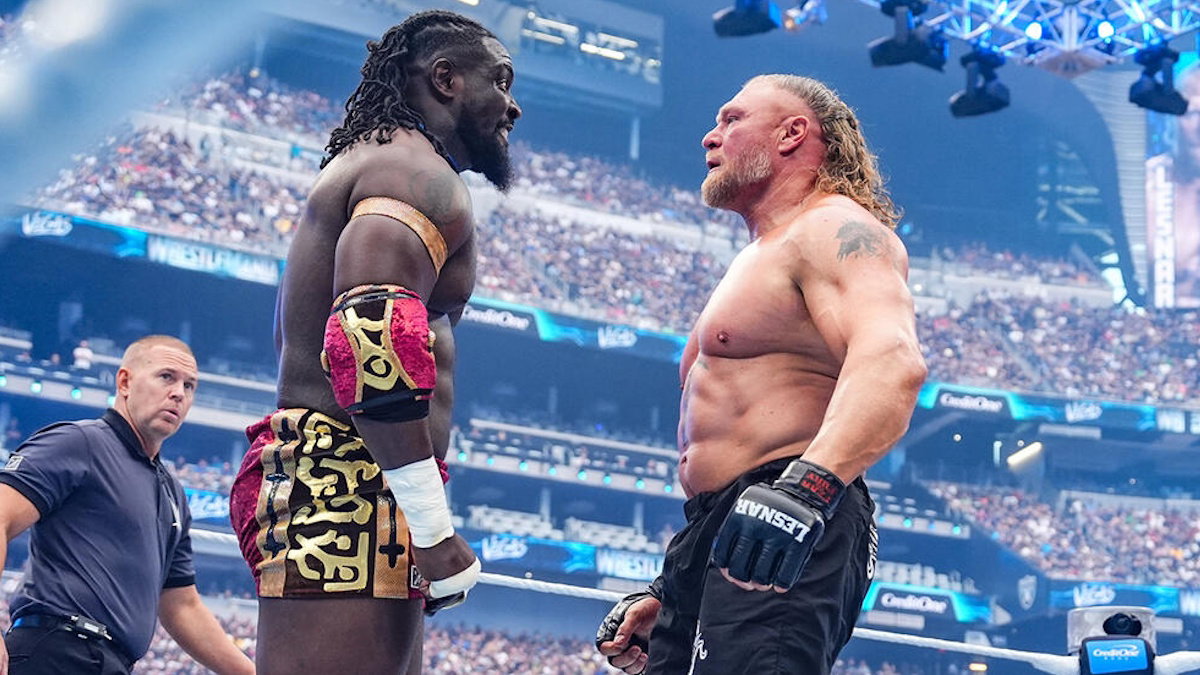
The dust has barely settled in Las Vegas after WrestleMania 41. While the headlines focus on John Cena’s emotional farewell and Cody Rhodes finally securing his grip on the WWE Championship, a more violent story is brewing in the shadows. The confrontation on the RAW after Mania between Brock Lesnar and Oba Femi was not just a moment; it was a declaration. We are moving away from the era of the high-flying giant and returning to the era of the unstoppable force.
Oba Femi is a structural problem for someone like Lesnar. For years, the Beast Incarnate has relied on a specific set of physical advantages: superior speed for his size and an unparalleled base in amateur wrestling. However, at **6-foot-6**, Femi presents a leverage challenge that Lesnar hasn't truly faced since his programs with the Big Show. Unlike the giants of old, Femi possesses the lateral quickness of a collegiate track star. He doesn't just stand there; he occupies space with intent.
The reports from WrestleTalk suggest that WWE is looking at a multi-match feud between these two powerhouses. This is the correct call. A single match at Backlash on **May 9** would be a disservice to the technical complexity this pairing offers. This needs to be a story of escalation, starting with a test of strength and ending in a total breakdown of ring psychology. If done right, this could be the most significant heavyweight rivalry since the 2002 version of Lesnar versus Undertaker.
The Oba Femi physical advantage
To understand why Femi is the favorite in a pure tactical exchange, you have to look at his center of gravity. Most wrestlers Lesnar’s size struggle to keep their hips low when defending a double-leg takedown. Femi, through his NXT run, showed a remarkable ability to sprawl against much smaller, faster opponents. When he plants his feet, he is nearly impossible to move. This nullifies the standard German Suplex entry that Lesnar has used to dominate the roster for the last decade.
Femi’s offense is built on impact rather than momentum. His toss powerbomb is a terrifying display of raw grip strength. He doesn't need a running start to generate power; he lifts from a dead stop. In a ring with Lesnar, this means every clinch is a danger zone. If Brock tries to work the Kimura lock, he exposes his midsection to Femi’s knees, which have the force of a sledgehammer. Femi’s wingspan also allows him to land lariats from distances where Lesnar usually feels safe to reset his breathing.
We saw hints of this in Femi's dominant victory over Riley Osborne in NXT, where he used a stalling vertical suplex to sap the oxygen from his opponent. Against Lesnar, he won't be able to hold the lift for **ten seconds**, but even a three-second stall would be enough to disrupt Brock’s conditioning. Lesnar is an explosive athlete, but at this stage of his career, his gas tank is built for short, high-intensity bursts. Femi is built for a war of attrition.
Lesnar's aging explosiveness
Brock Lesnar is no longer the kid who could do a shooting star press, but he has replaced that athleticism with a terrifying level of efficiency. He knows exactly when to exert energy. In a multi-match feud, Lesnar will likely play the role of the veteran hunter. He will wait for Femi to make a rookie mistake—over-extending on a clothesline or failing to hook a leg during a pin attempt. Brock’s transition from a belly-to-belly suplex into a ground-and-pound position remains the fastest in the industry.
The technical hurdle for Lesnar is the sheer mass of Femi’s upper body. To hit the F5, Brock needs to get Femi’s **270 pounds** onto his shoulders in a balanced carry. If Femi shifts his weight toward his head, the lift becomes a recipe for a blown-out knee or a botched drop. Lesnar will have to soften Femi up with low calf kicks and shoulder blocks in the corner before he even thinks about the F5. This forces Brock into a slower, more methodical match than he usually prefers.
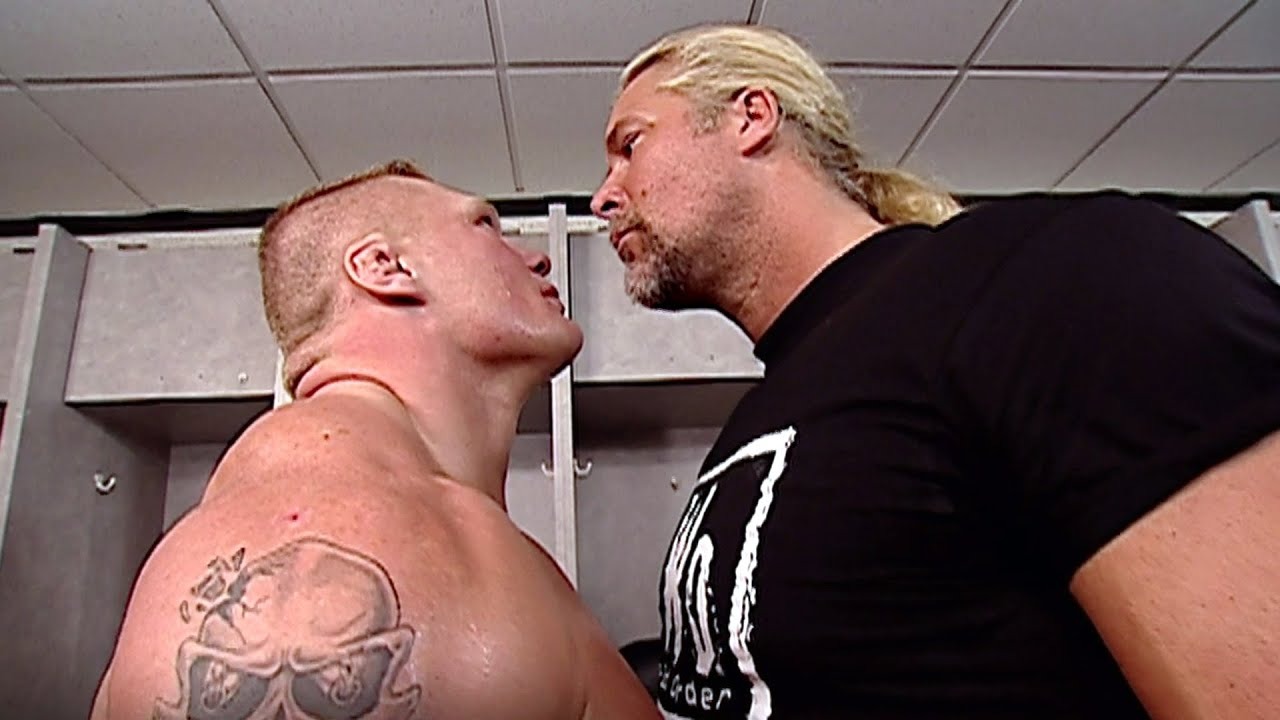
There is also the question of psychological warfare. For twenty years, Lesnar has walked into every arena knowing he is the biggest, meanest man in the room. Femi is the first person in a long time who doesn't look at Brock with fear, but with curiosity. That shift in dynamic can rattle a veteran. We saw it during the staredown on Monday; Lesnar was the one who broke eye contact first to check his positioning. That is a small detail, but in a high-stakes match, those inches matter.
The danger of the 'multi-match' strategy
While a series of matches allows for better storytelling, it carries a significant risk of over-exposure. WWE has a habit of booking themselves into a corner with 'Final Boss' characters. If Femi loses the first match decisively, his aura is gone. If Lesnar loses, he looks like a relic. The creative team needs to be careful not to rely on cheap disqualifications or count-outs to protect both men. Fans are paying to see a definitive winner, not a placeholder for a later date.
The negative observation here is that WWE often struggles with the middle chapter of these feuds. We saw it with the Lesnar and Bobby Lashley series, where the second match felt like a repetitive loop of the first. There is a real danger that the second match in the Femi-Lesnar series will just be a suplex-fest that lacks the tactical nuance of their initial encounter. If they don't innovate the spots—perhaps incorporating more of Femi's collegiate wrestling background—it will quickly turn into another 'Greatest Hits' tour for Brock.
Furthermore, there is the issue of Brock’s limited schedule. If this feud is supposed to bridge the gap between WrestleMania and SummerSlam, we can't have Lesnar disappearing for three weeks at a time. Femi needs a consistent foil to react to. If the Beast stays on his farm while Femi cuts promos on a screen, the heat will evaporate before they ever step back in the ring. This rivalry requires both men in the building, every single week, ready to tear each other apart.
The Tactical Breakdown and Prediction
When they finally lock up at Backlash, expect a very specific opening. Lesnar will try to shoot for the single leg to test Femi’s balance. Femi will likely respond with a heavy clubbing blow to the back of the neck to break the grip. From there, it becomes a clinch battle. The winner will be the man who can control the other’s wrists. If Lesnar gets his hands joined behind Femi’s waist, it’s Suplex City. If Femi keeps his elbows in and works the dirty boxing in the clinch, he wins.
The conditioning factor cannot be ignored. Femi is young and has the lungs of a high-level track athlete. If the match goes past the **seven minutes** mark, the advantage swings wildly in Femi's direction. Lesnar’s best chance is a lightning strike—an early F5 out of nowhere while Femi is still trying to find his range. But Femi has shown a high ring IQ in NXT, rarely biting on fakes or getting baited into mistakes.
Plans were seemingly in place for a lengthier in-ring feud between Oba Femi and Brock Lesnar.
This quote from the early reports tells us everything we need to know about the expected trajectory. WWE is invested in Femi as the successor to the heavyweight throne. However, they aren't going to give him the keys to the kingdom in the very first match. Brock Lesnar is still the ultimate gatekeeper, and his contract likely demands a high level of protection.
My prediction for their first encounter is a brutal, bruising affair that ends in a referee stoppage or a double count-out. I expect Lesnar to hit at least **12 suplexes**, but Femi will be the one standing at the end, having put Brock through an announce table with a powerbomb. It won't be a clean finish, but it will be the most physical match we've seen in years. Femi is the future, but Brock isn't ready to let go of the present just yet. This feud is going all the way to the summer.
Read Next
- Oba Femi's rapid destruction of Brock Lesnar at WrestleMania 41
- Brock Lesnar might have finally hit his physical limit against Oba Femi
- The Miz thinks it is time to go all-in on Oba Femi after WrestleMania shocker
- Brock Lesnar suffers significant shoulder injury at WrestleMania 41
- 🏆 WrestleMania 41 — Full Coverage Hub
- 💥 WWE Backlash 2026 — Full Coverage Hub