The Reality of March 24
The internal assessment was brutal, but it was accurate. According to multiple sources, the March 24 broadcast of NXT was heavily criticized by the very people employed to produce it.
The episode was a structural nightmare. It felt disjointed. It felt rushed. The broadcast severely lacked the fundamental in-ring storytelling that built the brand.
When an episode is labeled terrible from within the house, it usually points to a breakdown in formatting. We saw segments bleeding into each other without logic. We saw heat segments drag past the commercial breaks without a clear hope spot.
Finishes relied on interference rather than decisive, star-building victories. The problem is not the talent on the roster. The problem is the geometry of the booking.
You cannot fit five overlapping angles into a twelve-minute television window and expect the live audience to care about any of them. The viewer fatigue was painfully evident by the second hour. Yet, despite the creative collapse, the NXT audience remained largely even week-over-week.
The viewer base is highly resilient. They are deeply habituated to the Tuesday night slot. But plateauing viewership in the final stretch before WrestleMania 41 is a massive red flag. Standing still in late March is the exact same as moving backward.
Authority and Structure
For months, the brand operated in a strange leadership vacuum. The booking often felt like a series of disjointed, chaotic experiments. That era is officially over.
The revelation of a full-time General Manager fundamentally changes the narrative geometry of the show. A designated authority figure provides a much-needed anchor.
When chaos breaks out in the ring, there is a logical endpoint. The GM can step in, make a ruling, and officially set up a main event. This prevents the endless, unstructured brawls that completely plagued the March 24 episode.
It gives the babyfaces a corporate obstacle or an impartial judge. But a GM is only as effective as the strict rules they choose to enforce.
If the new leadership immediately resorts to the same tired television tropes—contract signings ending in table spots, or impromptu tag team main events—the structural issues will persist. The roster needs strict match guidelines. They need clear, unquestionable divisional rankings.
Tactical Breakdowns and Match Geometries
Let us look closely at the in-ring product. The current iteration of NXT leans heavily on athletic high spots. The work rate is undeniably high, but the connective tissue is entirely missing.
A 450 splash means nothing if the setup feels contrived and cooperative. Consider the typical NXT television match format occurring right now.
The opening bell rings. We get two minutes of frantic chain wrestling, ending in a standoff. Both men stare at each other as the crowd delivers a polite round of applause. The heel takes control via a distraction from a manager or a cheap shot to the throat. We go directly to a picture-in-picture commercial break. We return to find the heel holding a generic chin-lock.
The babyface makes a fiery comeback exactly 180 seconds later. This pacing formula is completely predictable.
It teaches the viewing audience that the first five minutes of the match simply do not matter. The fans in the Performance Center sit quietly on their hands. They know the real match does not begin until the final sequence kicks off.
The solution is asymmetrical booking. We need violent squash matches that last exactly forty seconds. We need competitive sprints that go ten minutes without a single rest hold.
We need main events that build slowly, utilizing methodical limb work and logical psychology. If Oba Femi is the recognized monster of the brand, he should not work competitive, back-and-forth matches with cruiserweights. He should physically dismantle opponents with sheer blunt force. A powerbomb should end the match instantly, not serve as a lazy transition to a two-count.
The Women's Division Bottleneck
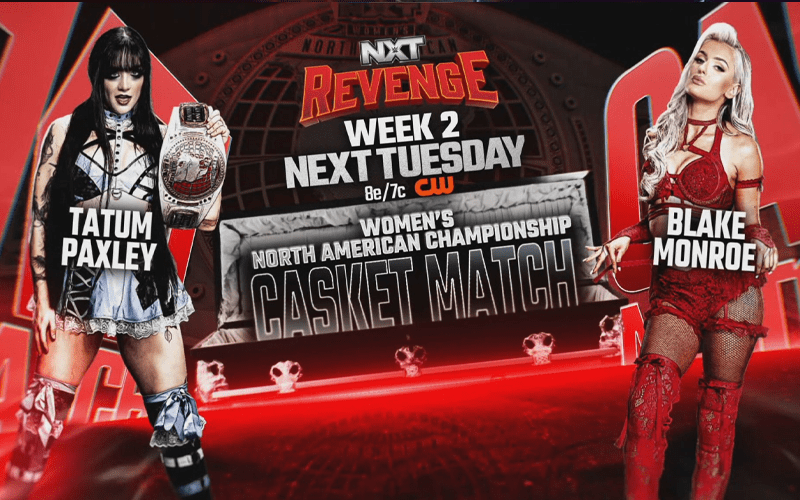
The NXT women's division has long been considered the undisputed crown jewel of the brand. However, the current layout is causing a massive traffic jam.
There are simply too many talented performers and not enough television minutes to properly establish clear hierarchies. Roxanne Perez operates at a vastly different speed than the rest of the roster.
Her transitions are crisp. Her striking has visibly improved. But she is constantly trapped in multi-woman feuds that actively dilute her impact.
When you put four women in a single backstage segment, you inevitably end up with a forced tag team match. This strictly limits individual progression and hides star power. The new General Manager must urgently separate the division into clear tiers.
The main event scene needs singular focus. The midcard needs highly structured television time. The developmental talent absolutely needs live event reps before they are completely exposed on a national broadcast.
The Tag Team Division Vacuum
If we thoroughly analyze the structural failures of the March 24 broadcast, we must point directly at the tag team division. Tag team wrestling, when executed correctly, is the most mathematically sound art form in the entire industry.
It entirely relies on the isolation of the babyface. It relies heavily on cutting off the ring. It relies strictly on the precise timing of the hot tag. It is a proven formula that has successfully worked for fifty years.
Currently, NXT is failing to execute this basic formula. Instead of dedicated tag teams operating with unified, coherent strategies, we continually get thrown-together pairings of singles stars. This is a booking shortcut. It rapidly destroys the tactical depth of the matches.
A real tag team cleverly uses blind tags to manipulate the referee's limited field of vision. A real tag team routinely utilizes tandem offense to maximize physical damage and carefully minimize energy expenditure. They intuitively know how to cut the ring strictly in half.
When two singles wrestlers briefly team up, they default directly to taking turns. The matches rapidly become a series of one-on-one exhibitions casually happening inside a loose tag team framework.
There is absolutely no psychological isolation. The heels do not aggressively cut the ring in half. They simply hit their individual signature moves and politely wait for the tag. This stunningly lazy geometry was fully on display during the March 24 episode.
The new General Manager must violently reinstate the strict enforcement of standard tag team rules. The referee desperately needs to matter again.
If a wrestler does not physically hold the tag rope, the tag should be immediately disqualified. If the illegal man deliberately stays in the ring past the standard five-count, it should strictly result in an immediate disqualification. Enforcing these basic rules creates instant, localized heat.
The WrestleMania 41 Shadow
We are exactly 22 days away from WrestleMania 41 Night 1. The main roster is currently dominating the entire professional wrestling news cycle.
John Cena's farewell tour is eating up massive amounts of digital real estate across every platform. Cody Rhodes and the Bloodline are taking up all the oxygen in the room. NXT has to fight twice as hard for attention during this crowded window.
Historically, the major NXT event during WrestleMania weekend serves as an incredible alternative. It is the designated work-rate show. It is the hardcore fan's direct reward for patiently sitting through the massive corporate spectacle of the main roster.
But this year, the television build has been noticeably sluggish. The March 24 episode was supposed to be a major escalation point for feuds. Instead, it was an undeniable misfire.
Now, the brand essentially has two weeks of television left to drastically correct the course. They have to actively build genuine animosity. They cannot continuously rely on polished video packages. They need real, palpable in-ring tension.
The main event picture for the WrestleMania weekend show heavily needs clarity. Trick Williams possesses the undeniable charisma, but his matches desperately need strict structural support. He works incredibly best when he is selling from underneath, utilizing his explosive athleticism for sudden, dramatic comebacks.
The booking absolutely must isolate him against a technically superior heel who can securely ground him and clinically dissect his limbs. This smartly forces Trick to rely fully on his striking and his deep connection with the crowd to survive.
The Prediction
The internal panic deeply felt over the March 24 disaster is actually a highly positive indicator. It means the creative complacency has been completely shattered.
The management team explicitly knows they delivered a subpar product to their audience. More importantly, they definitely have the raw talent to quickly fix it. I firmly expect the new General Manager to make an immediate, highly polarizing decision regarding the main event scene on Tuesday.
They will aggressively strip away the convoluted multi-man booking and firmly force a direct, one-on-one confrontation. Expect a very heavy reliance on established, reliable veterans to securely carry the in-ring workload over the next two critical weeks.
The new General Manager has a totally blank canvas. They have the supreme authority to rebuild the match structures from the ground up. If they enforce the rules strictly, the in-ring action will immediately feel profoundly more authentic. It will genuinely feel like a legitimate sporting contest rather than a scripted television segment.
NXT will heavily recover from this stumble. The core audience held remarkably steady through the absolute worst of it, proving their deep, unwavering loyalty. Tuesday night will undoubtedly be a violent, structurally sound course correction.
The lazy era of the chaotic twelve-man backstage brawl is definitively over. The focused era of the full-time General Manager officially begins now.
Read Next