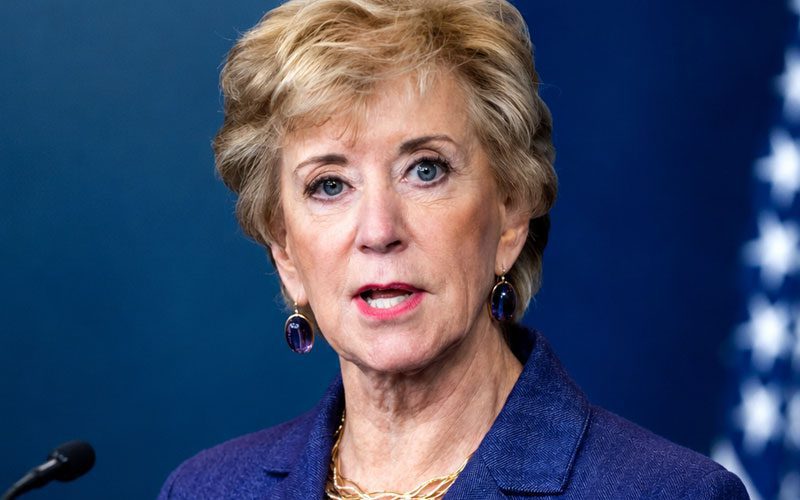
The political ring has always been a second home for the McMahon family, but the stakes have never been quite this high. On Thursday, June 25, 2026, Representative Suzanne Bonamici of Oregon led a group of House Democrats to file a formal impeachment resolution against United States Secretary of Education Linda McMahon. This is not just a standard policy disagreement; it is a direct assault on her office.
The resolution, designated as H. Res. 1391, marks the beginning of a high-stakes legislative battle. As PWInsider reported, the resolution names McMahon as a threat to the Constitution and seeks her immediate impeachment. For fans who have watched the McMahon family navigate corporate and legal minefields for decades, the tactical setups of this fight will look remarkably familiar.
In any major matchup, the opening minutes dictate the tempo. Bonamici and her co-sponsors did not waste time with soft testing holds. They went straight for the heavy offense, laying out a multi-pronged attack designed to corner McMahon before she can establish her defense.
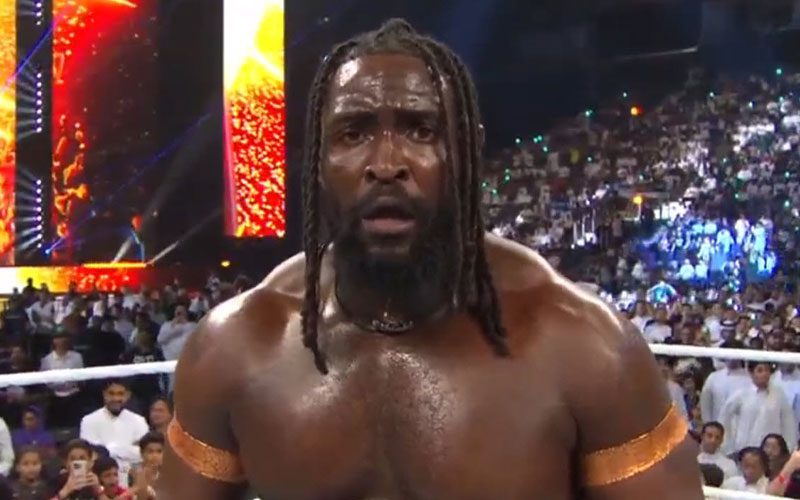
The news has emerged during a somber week for the wrestling community. On Friday, as F4WOnline reported, former powerhouse Joe Doering passed away after a long battle with brain cancer. Yet, the industry's attention is also being pulled to the political arena.
This confrontation has been brewing since she transitioned from corporate executive to cabinet member. Her return to the cabinet as Secretary of Education placed her directly in the crosshairs of federal oversight. Her administrative style mirrors the WWE corporate structure, where power is concentrated at the top and executed with minimal external input.
Working the Leg: The Specificity of the Impeachment Charges
A great wrestler targets a single weakness and returns to it repeatedly. Bonamici's tactical plan focuses on three distinct areas of alleged misconduct. The first is an accusation of providing false testimony under oath.
According to the resolution, McMahon gave "knowingly, willfully, and materially false" testimony before the Senate Committee on Health, Education, Labor, and Pensions on February 13, 2025. This was during the lead-up to her confirmation, where she allegedly misled Senators regarding her long-term plans for the department. By anchoring the resolution to this specific date, the prosecution is establishing a clear timeline of intent.
The second part of the attack targets her actions since taking office on March 3, 2025. The resolution claims McMahon bypassed Congress to dismantle the Department of Education, transferring statutory operations and programs to other federal agencies. This is a direct challenge to the balance of power, suggesting she acted as a rogue operator.
Finally, the offense points to the cancellation of congressionally authorized grant funding. The resolution characterizes this as a systemic refusal to comply with federal law. It argues that her actions are completely incompatible with the duties of her office.
"Wherefore Linda M. McMahon, by such conduct, has demonstrated that she will remain a threat to the Constitution if allowed to remain in office"
The details of the funding cuts are particularly damaging, with documents showing she halted approved urban development and rural literacy grants. By cutting off the cash flow, she effectively halted operations without needing a legislative vote. Bonamici describes this move as grossly incompatible with the rule of law.
The McMahon Playbook: A Masterclass in Rope Breaks and Stonewalling
How do you counter a technical submission specialist? You look at the history books. Linda McMahon did not build a global entertainment empire by backing down from federal challenges, establishing a long record of surviving high-profile legal battles.
In 1994, Vince McMahon stood trial in federal court against steroid distribution charges. The prosecution had witnesses, documents, and the full weight of the Department of Justice. The McMahon team did not panic; they systematically picked apart the government's witnesses, secured an acquittal, and established a defensive template that Linda still uses today.
During her two Senate campaigns in Connecticut, where she spent over $100 million of her own money, she faced intense scrutiny over her corporate record. She did not deflect the attacks. Instead, she reframed them, presenting herself as a battle-tested executive who knew how to manage large systems.
Now, as Secretary of Education, she will employ the same defensive strategies. Expect her to use executive privilege as a rope break to halt the committee's momentum. She will likely delay hearings, challenge the subpoena power of the House Judiciary Committee, and force the opposition to grind out every single yard.
She has already assembled an elite legal defense team composed of corporate attorneys with decades of experience in intellectual property and labor disputes. These lawyers know how to exploit every loophole in administrative law. They will make the process as slow and painful as possible for the committee.
The Flaws in the Offensive Play: Why the Resolution Faces Heavy Resistance
No tactical analysis is complete without examining the flaws in the offensive game plan. While Bonamici's charges are legally detailed, the political math does not add up. The resolution is currently referred to the House Judiciary Committee, which is a hostile territory for Democratic initiatives.
Without bipartisan support, this resolution is a purely symbolic move. It acts as a pressuring trigger to keep McMahon on the defensive, but it has little chance of reaching the House floor for a full vote. It will not work.
By launching a failed impeachment bid, the Democrats risk giving McMahon a powerful talking point. She can easily frame this as a partisan witch hunt. This would mobilize her supporters and strengthen her position within the cabinet.
Furthermore, proving "knowingly, willfully, and materially false" intent in court or a congressional hearing is notoriously difficult. The McMahon defense team will argue that any discrepancies in her testimony were minor administrative adjustments. They will paint the restructuring as an effort to streamline bureaucracy, not a constitutional threat.
This highlights the primary weakness of the Democratic strategy of choosing a high-profile show trial over quiet, effective legislative work. By focusing on impeachment, the Democrats are neglecting other avenues of resistance. They are failing to pass budget riders that could block her funding shifts.
The Prediction: Who Walks Out with the Gold?
So, how does this matchup end? Do not expect a quick submission or a clean three-count. The House Judiciary Committee will likely hold hearings that will stretch over several months.
McMahon will absorb the initial strikes, use procedural maneuvers to run down the clock, and rely on party-line votes to protect her position. The resolution will likely stall in committee, failing to secure the necessary crossover votes to advance.
My prediction is a tactical draw that favors the defender. McMahon will survive the impeachment attempt, retaining her office and demonstrating once again why she is one of the most resilient political figures of the era. The Democrats will have to content themselves with the headlines, while the Secretary continues her restructuring work.
In the end, this battle will be decided by endurance, not a sudden knockout. McMahon has the resources, the legal backing, and the political cover to outlast her opponents. Bonamici has launched a bold offensive, but she lacks the numbers to secure a submission.