A Clash of Statutory Authority in Washington
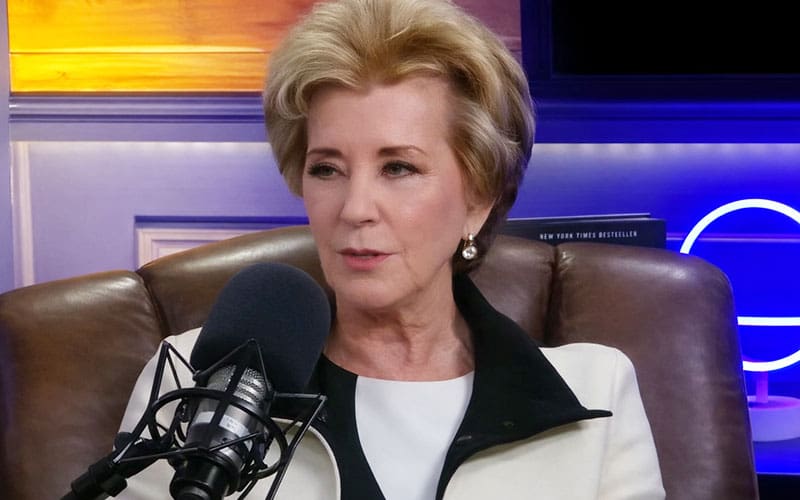
The transition from corporate wrestling execution to federal administration was never going to be smooth. For Linda McMahon, her tenure as U.S. Secretary of Education has been defined by administrative aggression. On June 25, 2026, that aggressive posturing met a hard legal counter when Representative Suzanne Bonamici of Oregon led a group of House Democrats to file articles of impeachment against McMahon.
As Ringside News reported, this political fight has moved far beyond standard WWE booking. The resolution, officially designated as H.Res.1391, accuses the former WWE executive of high crimes and misdemeanors and has been referred to the House Judiciary Committee. This move sets up a high-stakes legislative matchup that will test the boundaries of executive power.
The core of the dispute lies in the mechanics of departmental control. Bonamici argues that McMahon has overstepped her legal boundaries by unilaterally dismantling parts of her own department. To understand the gravity of this charge, one must look at the specific organizational shifts that triggered the filing.
The Five-Office Pressing Strategy
The impeachment resolution focuses on a specific set of administrative maneuvers. According to the press release from Bonamici’s office, McMahon unlawfully ordered the transfer of at least five offices and their programs to other federal agencies without congressional consent. By moving these offices, McMahon allegedly obstructed the department's ability to conduct statutory oversight and disburse federal funds.
The tactical defense from the Secretary's office has been to bypass congressional approval entirely. Under McMahon's new alignment, responsibilities for civil rights and special education have reportedly been shifted to the Department of Health and Human Services. This significant formation shift fundamentally changes how federal education policy is enforced at the ground level.
Bonamici’s offensive strategy relies on the strict text of the law, noting that Congress created the department and must authorize its closure. She pointed out that about 90 percent of students in the United States attend public schools. These children possess statutory rights to equal access and appropriate educational resources.
McMahon's opponents are using a classic containment strategy by filing articles of impeachment to box her in. They want to force a public trial on the limits of a Cabinet secretary's authority. The target is McMahon's administrative method, which critics describe as an illegal attempt to dissolve the department from within.
“Secretary McMahon has betrayed students, families, and educators by dismantling and demolishing the Department of Education, something she does not have authority to do.”
The Counter-Attack on the Public Record
McMahon is not one to back down from a fight, having spent decades navigating the chaotic corporate environment of professional wrestling. Taking to X, she launched a direct verbal counter-attack against her congressional opponents. She accused House Democrats of targeting her for simply trying to reform a broken system.
McMahon's defense strategy does not engage with the fine print of statutory law. Instead, she redirects the focus toward the chronic failures of the public school system to justify her restructuring. Among her targets were low test scores, the failed FAFSA rollout, and classrooms shuttered during the pandemic.
She also raised cultural flashpoints, citing the designation of parents as terrorists and the presence of males in female locker rooms. This deliberate tactical pivot is designed to rally her political base. She wants to turn a technical debate over administrative law into a broad ideological battle.
This counter-punching style is familiar to anyone who watched her career in WWE. Reframing the impeachment as a political stunt, she argues that the real offense is her attempt to reduce federal bureaucracy. She is betting that public frustration with the educational status quo will shield her from legal accountability.
“It speaks volumes that House Democrats think an impeachable offense is working to improve student outcomes and reduce the federal bureaucracy.”
A Questionable Administrative Booking Choice
While McMahon's aggressive strategy has energized her supporters, it contains a significant structural weakness. By bypassing Congress to transfer offices, she has created a massive target for her opponents. She has relied on executive orders where statutory legislation was required.
This is a booking mistake where, in her haste to dismantle the bureaucracy, she has ignored the referee's book. The Constitution assigns the power of the purse and departmental structure to Congress under Article I. By ignoring this rule, McMahon has left her reforms vulnerable to judicial overrides.
Furthermore, this unilateral approach alienates potential moderate allies who might otherwise support reform. By forcing the issue without legislative consensus, she has elevated the stakes of the conflict. It has become a zero-sum game where one side must completely defeat the other.
The reliance on cultural grievances also limits her defensive options by making a compromise impossible. The battle lines are now drawn so deeply that neither side can retreat. This high level of polarization ensures that the upcoming hearings will be hostile and unproductive.
The Judiciary Committee Battle Lines
The immediate destination for the resolution is the House Judiciary Committee. This is where the technical wrestling ends and the political brawl begins. The tactical setup here favors the Secretary, given the current partisan balance of the House.
According to the official Congress.gov tracking, the bill must clear the committee before it can reach the House floor. Republican committee members are expected to form a defensive wall around McMahon. They will likely mirror her arguments about reducing federal overreach and fighting bureaucracy.
Democrats, on the other hand, will use the hearings to document the transfers and get McMahon on the record. The questioning will be sharp. It will focus on the separation of powers and the protection of student civil rights.
Watch for the debate to center on the statutory definition of her duties. The key matchup will be between Bonamici's legalistic arguments and the committee's conservative majority. While the majority will frame the transfers as standard administrative efficiency, the minority will label them a constitutional crisis.
The Predicted Finish
Impeachment is a political process, not a purely legal one. The Democrats have initiated a high-intensity press, but they do not have the votes to secure a conviction in a Republican-controlled House. The legislative math is simply against them.
Our prediction is clear and firm. The Republican majority will vote to table or reject H.Res.1391 in committee. This tactical block will protect McMahon from formal impeachment in the short term by preventing a full floor vote.
However, this will not be a clean victory for the Secretary. The documentation gathered during these hearings will fuel future civil lawsuits from external advocacy groups. The political win in committee will not stop the legal challenges in federal district courts.
McMahon will survive the legislative attack, but her reforms will remain frozen in legal limbo. The fight will shift from the committee rooms to the federal courts where statutory text matters more than political rhetoric. The result will be a long, drawn-out battle over the structure of public education.