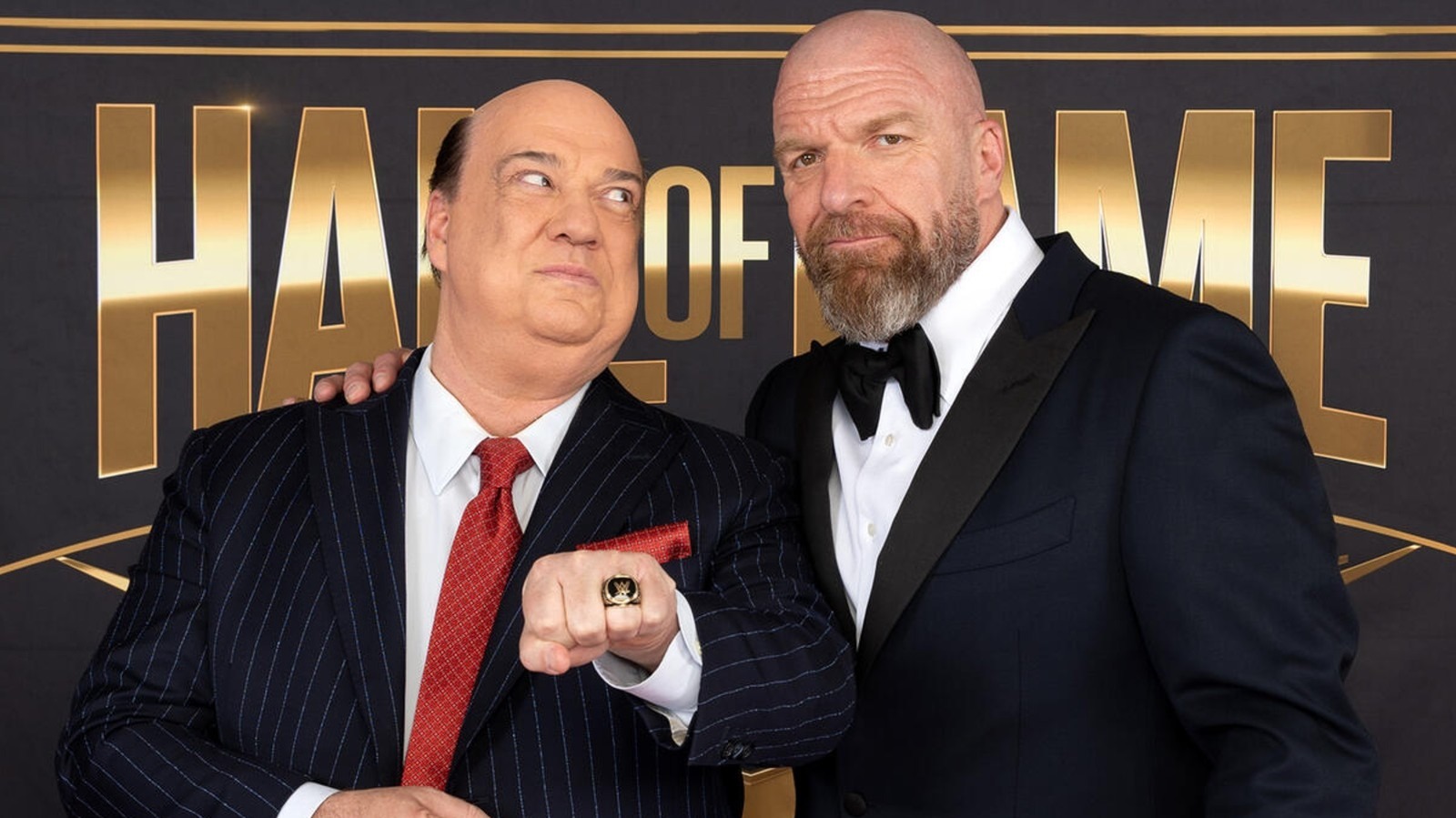
Imagine running a massive neural net where some legacy dev tears up the codebase three minutes before inference. That was Vince McMahon's WWE, complete with scripts shredded at 5:58 PM, writers weeping in closets, and wrestlers learning their matches while walking down the ramp. It was toxic, chaotic, and occasionally brilliant.
Now, Triple H has the keys to the model. We've got long-term planning, collaborative scriptwriting, and stories mapped out months in advance. But some fans are starting to wonder: did we trade creative genius for a sanitized, over-engineered product?
The Levesque Algorithm: Collaborative Masterpiece or Algorithmic Snore?
The debate kicked off again after Paul Heyman's recent appearance on the Insight podcast. Heyman praised Levesque’s ability to pivot in an era ruled by algorithms, describing his own behind-the-scenes role in a Wrestling Inc report as a creative liaison for top talent like Brock Lesnar. But it was his defense of Triple H’s style that got the internet wrestling community arguing.
Paul Levesque is the best person for that job. He's a collaborator. He pivots. He understands. And he understands that what works today may not work tomorrow, and what works tomorrow may not work in two days.
On Reddit and Twitter, enthusiasts are eating it up, pointing to the Bloodline saga or Cody Rhodes' journey as proof that patience pays off. One fan on the SquaredCircle subreddit argued that Levesque has saved WWE from Vince's erratic whims. They claim that wrestlers now have room to breathe, develop actual character depth, and avoid the sudden, logic-defying heel turns that used to ruin months of building.
But the contrarians are out in force with a valid point: the current WWE product is incredibly safe and predictable. A championship reign under Triple H is a multi-month commitment where you already know the challenger is losing the first three PLE matches. Raw and SmackDown have started to feel like they are written by a corporate committee trying to hit quarterly targets, replacing the shocking moments that made the Attitude Era legendary with endless, slow-burn promos that lead nowhere.
My take? The skeptics are right to complain about the pacing. Triple H is booking WWE like a long-running television drama, which is great until you realize you are watching the same mid-card feud for the fifth consecutive month. Sometimes, you need to tear up the script and throw a wild card into the ring.
The Open-Source Challenger: TNA Eyes Apollo Crews
While WWE fine-tunes its main-event picture, TNA Wrestling is looking to bolster its roster with WWE's cast-offs. Rumors are swirling that TNA has serious interest in Apollo Crews, the 38-year-old high-flyer who was cut in the WWE roster sweep on April 24, 2026. A human cheat code in the ring, Crews spent 12 years in the WWE system, but the company never figured out what to do with him besides giving him a questionable Nigerian royalty gimmick.
According to a F4WOnline report via WrestleVotes Radio, TNA has internally discussed bringing Crews in later this year. However, the promotion's front office is in a state of flux after recently losing veteran figures Sami Callihan and Tommy Dreamer. It is unclear if these departures will derail the push to sign Crews.
There is also the headache of the non-compete clause, meaning if Crews is bound by WWE's standard 90-day release terms, he cannot show up on another televised show until July 23, 2026. That has not stopped fans from speculating. TNA International Champion Mustafa Ali is scheduled to defend his gold at Slammiversary on June 28, 2026—which is tomorrow—against a mystery opponent.
Some hopeful fans online are dreaming of Crews showing up as the surprise challenger, which would be a massive splash. But unless Crews' contract simply expired instead of being terminated, the legal department would have a collective heart attack over the non-compete terms. TNA is acting like a scrappy, open-source AI project trying to capture market share by picking up discarded corporate assets, though they have a bad habit of signing ex-WWE talent only to bury them in the same uninspired mid-card roles they just escaped.
Speaking Two Languages: Thunder Rosa's Cross-Border Lucha Dilemma
Meanwhile, AEW's Thunder Rosa is dealing with her own transition issues. She has been pulling double duty lately, working matches for CMLL in Mexico while staying on the AEW roster in the United States. In a Wrestling Inc comparative piece, Rosa opened up about the mental gymnastics required to jump between the two promotions.
Speaking on the TV show Houston Life, Rosa compared the gig to speaking two completely different languages because the fans react to completely different stimuli. In America, the crowd chants her name the second her music hits because they are familiar with her TV character. In Mexico, they do not chant as much, but they instantly dance along with her, forcing her to change her entire wrestling psychology depending on which side of the border she is on.
Rosa highlighted three key points of friction in her cross-border travel:
- The match length: Mexican lucha matches are fast-paced two out of three falls, whereas US matches are single-fall television products.
- The crowd dynamic: American fans are highly vocal with name chants, but Mexican audiences respond better to physical showmanship.
- The in-ring psychology: US television relies heavily on commercial break pacing, while CMLL allows for continuous high-flying action.
This is the classic cross-platform deployment problem where you cannot just copy-paste your AEW code into Arena México and expect it to run. If you do not adjust for the local hardware, the fans will sit on their hands. While Rosa's ability to balance both styles is impressive, her heavy CMLL workload highlights a messy AEW women's division that currently has very little creative direction for her on Dynamite.
The Verdict: Stable Code vs. The Chaos Factor
Wrestling fans are divided because we are caught between two distinct philosophies of television production. On one hand, you have Triple H’s collaborative, logical machine that runs smoothly with clean progression and happy investors. But it lacks soul, missing the raw, unhinged magic of live television where anything can happen at any moment.
On the other hand, you have the wild west of TNA, CMLL, and cross-border partnerships. It is a messy, unpredictable style that frequently crashes but occasionally delivers moments you will remember forever. Personally, I would take a little more chaos over perfect optimization any day of the week.