The Physical Toll of the Las Vegas Hall of Fame
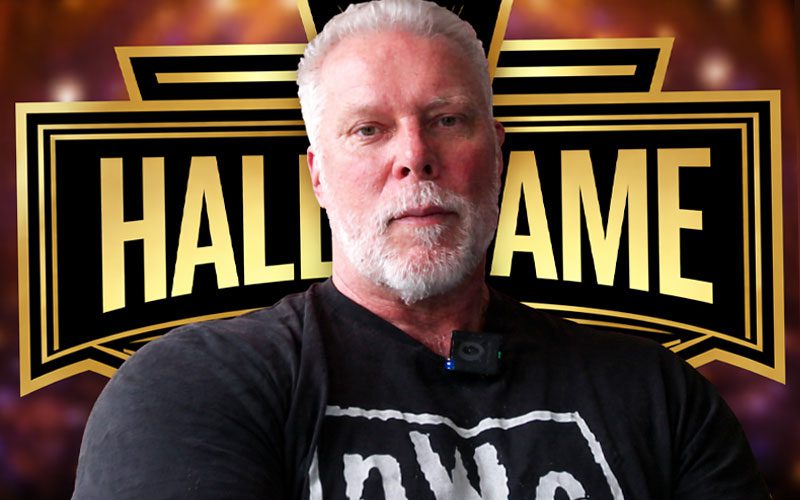
The glitz of Las Vegas during WrestleMania 41 week hides a grueling reality for the legends who built the industry. Kevin Nash, a man who has never been shy about his physical or financial requirements, has gone public with a list of grievances that sound less like Diva complaints and more like a medical red flag for veteran performers. According to Nash, the WWE Hall of Fame ceremony in Nevada was a nutritional disaster for the talent involved.
For a man of Nash’s size—standing nearly seven feet tall and weighing well over 270 pounds in his mid-60s—metabolic maintenance is not a suggestion. It is a biological necessity. Nash revealed that the lack of catering at the event left legends sitting for hours without access to basic sustenance. In a high-stress environment like a televised broadcast, especially one involving travel and red-carpet obligations, this lack of support creates a significant risk of hypoglycemic episodes and physical exhaustion.
This is not just about a missing sandwich or a cold steak. It is about the physical management of a workforce that is largely composed of individuals with histories of joint replacements, heart issues, and metabolic disorders. When you ask a 66-year-old former world champion to sit in a tuxedo for five hours under hot stage lights without a meal, you are inviting a medical incident. Nash’s vocal frustration highlights a breakdown in the wellness protocol that usually governs these massive productions.
The Scripted Burden and Cognitive Fatigue
Beyond the caloric deficit, Nash pointed to a fundamental shift in how the Hall of Fame operates. The transition from self-written promos to a teleprompter-heavy production is a significant change in the cognitive load required of the inductees. While teleprompters are intended to keep the show on schedule, they often add a layer of performance anxiety for older wrestlers who are used to working 'off the cuff' or from a basic outline.
Nash noted that the process today involves reading lines rather than speaking from the heart. For a generation of performers who were trained to read a crowd and react in real-time, the rigid structure of a teleprompter can be mentally draining. It removes the organic flow of a speech and replaces it with a technical requirement that many legends find restrictive. This shift is a direct result of WWE’s move toward a more polished, corporate-friendly broadcast under the TKO era, but it comes at the cost of the talent's comfort.
The move to scripted speeches also serves as a safety net for the company. By controlling every word, WWE avoids the potential PR disasters that can occur when a legend gets a live microphone and twenty minutes of airtime. However, Nash’s criticism suggests that this safety net is becoming a straitjacket. The mental energy spent trying to track a moving script on a screen can lead to the kind of cognitive fatigue that makes these long nights feel even more like a marathon than they already are.
Lifting the Ban on the McMahon Name
Perhaps the most intriguing historical context Nash provided was the lifting of the unspoken ban on mentioning Vince McMahon. Nash revealed that there was a time in the company when uttering the former chairman’s name during a Hall of Fame induction was strictly forbidden. This period of erasure was a strategic move to distance the product from McMahon’s various controversies and the looming shadow of his creative legacy.
The fact that this restriction has been loosened in 2026 is a major indicator of the company’s current stability. While the legal and personal issues surrounding McMahon haven’t disappeared, the current leadership seems confident enough in the new brand identity to allow performers to acknowledge the man who hired them. Nash’s observation confirms that the internal culture has shifted from one of fear and censorship to a more relaxed, albeit still heavily produced, environment.
This change matters because it allows for a more honest historical record. Trying to tell the story of a 1990s wrestling star without mentioning the man who ran the company was an exercise in futility. By allowing these mentions again, WWE is acknowledging its own history while still maintaining the tight control over the present that the teleprompters provide. It is a delicate balance of looking backward while moving forward under new management.
The Strategic Impact on Legend Relations
The feedback from a high-profile veteran like Nash cannot be ignored by the WWE front office. Legends are a vital part of the WrestleMania ecosystem, providing the nostalgia that drives ticket sales and Peacock subscriptions. If the word gets out among the 'Old Guard' that the Hall of Fame is a physically punishing experience with no food and too many scripts, the company may find it harder to recruit top names for future ceremonies.
WWE has historically been excellent at 'pampering' their legends when they come to town, but the Vegas logistics seem to have failed the test. The industry is more competitive than ever, and while AEW doesn't have a Hall of Fame on this scale yet, the general treatment of veterans across the board is a talking point in locker rooms. If WWE wants to keep the prestige of the Hall of Fame intact, they need to address the basic human needs of the people they are honoring.
Nash’s comments suggest a disconnect between the production team and the talent relations department. While the production team is focused on the **1080p** clarity of the broadcast and the timing of the segments, talent relations should be focused on the fact that their honorees haven't eaten since noon. Fixing this is a simple matter of logistics, but it requires a shift in priority back toward the performers who are the actual stars of the show.
Historical Context of Hall of Fame Exhaustion
This isn't the first time the Hall of Fame has come under fire for its length and lack of organization. For years, fans and wrestlers alike complained about ceremonies that stretched past the midnight mark. In 2018, the company attempted to fix this by capping speech times, which led to its own set of frustrations. The move to Las Vegas was supposed to streamline everything, but instead, it seems to have introduced new problems related to the venue and catering contracts.
We have seen similar situations in the past where legends have checked out early or looked visibly exhausted on camera. The physical toll of the 'WrestleMania Grind' is real. These performers are often doing signings for eight hours a day before heading to the ceremony. By the time they hit the red carpet, they are already at a deficit. If the catering is missing, they are essentially running on fumes by the time the cameras start rolling.
The strategic implication is that WWE may need to rethink the Hall of Fame as a standalone television product. If the requirements of making a 'good TV show' are making the experience miserable for the inductees, the prestige of the ring itself begins to fade. Nash’s public call-out is a warning shot. He is essentially stating that the honor of the induction isn't worth the physical discomfort of the event as it is currently structured.
The Medical Reality of the 60-Plus Athlete
From a fitness perspective, Kevin Nash represents a specific challenge for event organizers. He is a 'Big Man' in every sense of the word. Larger athletes often have higher caloric needs and are more susceptible to the physical stresses of long periods of inactivity followed by bursts of social performance. The risk of deep vein thrombosis (DVT) on long flights followed by hours of sitting at a ceremony is a documented medical concern for men of his stature.
Adding a nutritional deficit to that equation is a recipe for trouble. Nash’s complaints about the catering shouldn’t be dismissed as a veteran being difficult. They should be seen as a critique of a health and safety failure. If WWE is going to continue to build their biggest weekend around these icons, they must ensure the environment is conducive to their well-being. A $5,000 catering bill is a small price to pay to ensure that a legend doesn't collapse during a live broadcast.
The move to Vegas was a gamble in more ways than one. While the city provides a spectacular backdrop for WrestleMania 41, the logistical hurdles of the Strip and the massive convention centers can make the simplest tasks—like getting a meal to a locker room—a nightmare. Nash has made it clear that he won't be staying silent about these failures, and his peers are likely nodding in agreement as they recover from a long weekend in the desert.