Finn Balor’s vanity project puts athletic performance at risk
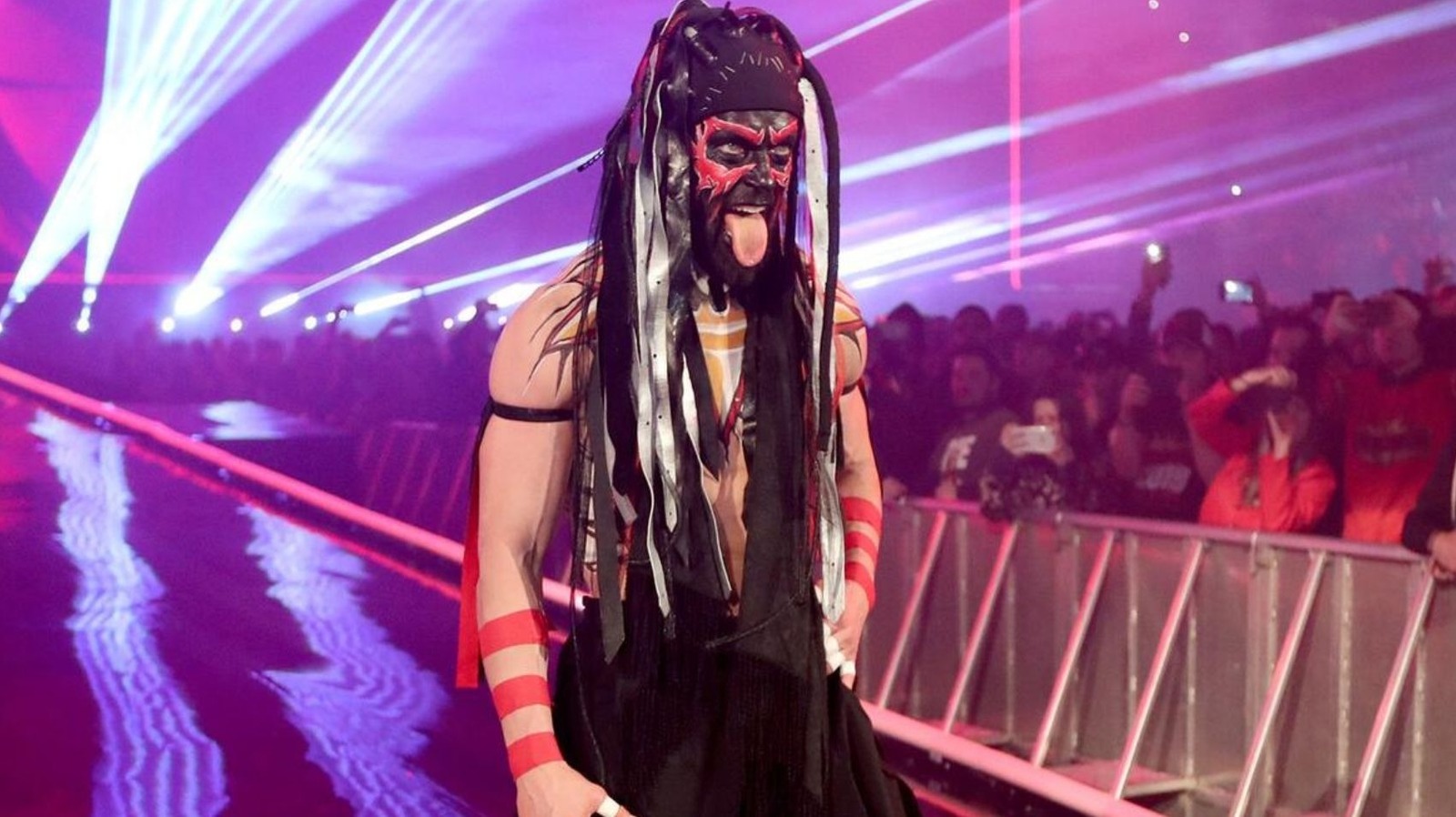
The physics of the paint
Finn Balor’s commitment to his Demon persona has always been a high-variance gamble. During his match against Andrade at WWE Super Showdown in Saudi Arabia, that gamble nearly turned into a safety disaster. Balor recently revealed that the heavy application of his signature body paint seeped into his eyes during the contest, rendering him effectively blind for the final stretch of the bout.
Technical wrestling relies on minute adjustments to spatial awareness. When a performer loses their sight, the margin for error on high-impact exchanges drops to zero. Andrade, a worker known for his blistering pace and sharp striking, could have easily miscalculated a landing or a strike velocity if Balor had failed to communicate the sensory deprivation.
We need to look at the professional cost of aesthetics over utility. While the visual impact of the Demon entrance is a massive draw for ticket sales and social media engagement, the physical reality is fundamentally flawed. If you cannot track your opponent's footwork or anticipate a corner dropkick, you are no longer a competitor; you are a target.
The danger of non-functional gear
This incident reflects a recurring issue with performers prioritising external branding over their functional requirements in the ring. The paint acts as a barrier, not just to the audience, but to the athlete’s own performance metrics. When Balor takes to the ring at WWE Super Showdown, his primary objective should be the win condition, not the integrity of his face paint.
There is a specific logistical failure occurring here where the makeup department is not accounting for the environmental factors of high-intensity performance. Saudi Arabia’s climate, combined with the heat-generating lights of a stadium show, turns conventional face paint into a molten, irritant hazard. It is a fundamental lack of preparation that mirrors the issues highlighted in other recent conflicts, such as the recent tensions regarding CM Punk’s boundaries.
If a wrestler cannot see their opponent, the match quality suffers. We saw disjointed transitions during that Super Showdown bout that, in retrospect, make perfect sense. Balor was operating at a 30 percent reduction in spatial intelligence as the chemicals burned his corneas. That is not a stylistic choice; it is an amateur mistake that exposes the performer to unnecessary injury.
Refining the persona
The wrestling business is currently obsessed with the visual narrative, often at the expense of sound technical fundamentals. If the Demon paint does not have a sweat-resistant, medical-grade formulation, it should be abandoned until it does. The performer deserves to work in a safe environment, but they also have a duty to ensure they are actually capable of performing the tasks they are booked for.
We should question why this is acceptable in a tier-one promotion. If a football player wore a helmet that obscured their vision, they would be benched immediately. In wrestling, we treat this as a "character piece" rather than a gross failure of professional equipment maintenance. Balor is an elite worker, but he nearly ended his own championship push because he prioritized a dark aesthetic over clear vision.
Management needs to step in. A character that physically hinders the performer is a character that kills potential. When Balor walked out of the ring, he wasn't just managing the win; he was managing a medical emergency. Future bookings involving the Demon need to enforce a stricter testing protocol on materials. Otherwise, we are just waiting for the match where an blinded performer takes a botched bump that they cannot recover from.
The era of "suffering for the art" only applies when the art is improved by the suffering. Here, the art was actively compromised by a lack of basic hygiene and chemical safety documentation. Until Balor and the makeup team reconcile the reality of the ring with the requirements of the show, this gimmick remains a liability.
WWE Encyclopedia of Sports Entertainment (4th Edition)
The definitive history of the ring, updated for the modern era.
Frequently Asked Questions
What caused Finn Balor to lose his vision at Super Showdown?
How did Balor's vision impairment impact the match?
Why is the Demon body paint considered a safety risk?
What is the primary criticism regarding aesthetic choices in WWE?
How can performers improve safety while maintaining their personas?
More Coverage

SummerSlam 2026 is missing its spark
2 hours agoShelf Space & Storylines: A Fan’s Guide to Wrestling Merch
3 hours agoShelf Space Real Estate: Evaluating the Latest Dominik Elite and the Squared Circle Deep-Dive
3 hours ago
Top 10: Defining Moments of the Modern Era
5 hours ago
CM Punk's hotel baggage is becoming a distraction for WWE
5 hours ago
Jade Cargill is playing a dangerous game with Charlotte Flair
7 hours agoMore Analysis
SummerSlam 2026 is missing its spark
2 hours agoShelf Space & Storylines: A Fan’s Guide to Wrestling Merch
3 hours agoShelf Space Real Estate: Evaluating the Latest Dominik Elite and the Squared Circle Deep-Dive
3 hours ago
Top 10: Defining Moments of the Modern Era
5 hours ago